Solfeggio frequencies are specific acoustic tones used to promote relaxation, meditation, and spiritual well-being through sound stimulation. The modern Solfeggio set comprises nine primary tones stretching from 174 Hz to 963 Hz, each linked to a distinct healing or meditative purpose. You will find this list of Solfeggio frequencies referenced across sound healing practices, wellness retreats, and frequency-based music productions worldwide. Composers such as Robert Emery and Moritz Schneider have built entire meditative soundscapes around these tones, bringing them into professionally recorded orchestral contexts that make them genuinely accessible for daily practice.
1. What is the full list of Solfeggio frequencies?
The nine Solfeggio frequencies form the backbone of modern sound healing practice. Each tone serves a specific wellness purpose, from grounding the body to activating higher states of awareness. Think of them less like a musical scale and more like a toolkit. You pick the right tool for the job.
-
174 Hz — Foundation and pain relief. The lowest tone in the set acts as a natural anaesthetic for the body. Practitioners associate it with reducing physical pain and creating a sense of security. It grounds the listener before deeper meditative work begins.
-
285 Hz — Tissue repair and cellular restoration. This frequency is linked to healing wounds and regenerating damaged tissue at an energetic level. Sound healers use it when working with physical recovery and vitality.
-
396 Hz — Liberation from fear and guilt. The first of the original six tones identified by Joseph Puleo, 396 Hz targets emotional blockages. Listeners report a release of grief, guilt, and fear when working with this frequency consistently.
-
417 Hz — Facilitating change and clearing trauma. This tone is associated with breaking negative cycles and clearing past trauma. It carries a quality of forward momentum, making it useful at the start of a new chapter in life.
-
528 Hz — Transformation and DNA repair. The 528 Hz Solfeggio frequency is arguably the most discussed tone in the entire set. Proponents call it the “love frequency” and link it to cellular repair and transformation. Whether or not you buy the DNA claim, the tone has a warm, resonant quality that many listeners find deeply calming.
-
639 Hz — Connection and relationships. This frequency focuses on interpersonal harmony. Practitioners use it to support communication, empathy, and the repair of strained relationships. It sits in a mid-range that feels open and warm to the ear.
-
741 Hz — Expression and problem-solving. Associated with clarity of thought and creative expression, 741 Hz is often used during focused work or creative meditation. It carries a slightly brighter, more alert quality than the lower tones.
-
852 Hz — Intuition and spiritual order. This tone is linked to intuition and returning to spiritual balance. Listeners working with 852 Hz often report a heightened sense of inner knowing and calm clarity.
-
963 Hz — Crown activation and universal connection. The highest tone in the set is associated with the pineal gland and a sense of oneness with the universe. It is the most “spiritual” of the nine, often used in deep meditation or before sleep.
2. What is the history and origin of Solfeggio frequencies?
Here is where things get genuinely interesting, and a little bit cheeky. The story most people tell about Solfeggio frequencies involves ancient Gregorian monks chanting these exact tones in medieval cathedrals. It is a beautiful image. It is also not accurate.
The six core frequencies trace back to Joseph Puleo’s 1974 numerological analysis of verses from the Book of Numbers in the Bible. Puleo applied a specific mathematical reduction method to arrive at the original six tones: 396, 417, 528, 639, 741, and 852 Hz. Later practitioners extended the set to nine by adding 174, 285, and 963 Hz. The full nine-tone set is therefore a 20th-century construction, not an ancient one.
The link to medieval Gregorian chant is a modern myth. The medieval solfège system (do, re, mi, fa, sol, la, ti) is a completely separate framework for teaching pitch and sight-singing. It has no numerical frequency values attached to it in the way Solfeggio healing tones do. Confusing the two is a bit like mixing up a compass and a clock because they both have a round face.
What does this mean for you as a practitioner? Quite a lot, actually. Understanding the modern origin of these tones helps you set realistic expectations. You are not tapping into a 1,000-year-old tradition. You are working with a 20th-century acoustic framework that has genuine relaxation and meditative benefits, even if its historical credentials are overstated.
Pro Tip: When you encounter claims that Solfeggio frequencies are “ancient” or “rediscovered from Gregorian chant,” treat them with healthy scepticism. The tones themselves are worth exploring. The mythology around them is not a prerequisite for benefit.
3. How do Solfeggio frequencies support relaxation and meditation?
Solfeggio frequencies act as acoustic stimuli that influence the listener’s nervous system and attention rhythm. They are not magic. They are sound. But sound, delivered at the right frequency and in the right environment, genuinely shifts how the body and mind respond. Small studies support their calming effects, and practical integration in wellness settings is growing steadily.
The most effective approach combines Solfeggio tones with other grounding frequencies. Pairing them with 136.1 Hz OM, for example, creates a layered soundscape that grounds the body while the Solfeggio tone works at a higher level. Single-tone listening has its place, but a curated sound environment produces deeper results. Think of it like cooking: a single spice can be lovely, but a well-balanced blend is what makes a dish memorable.
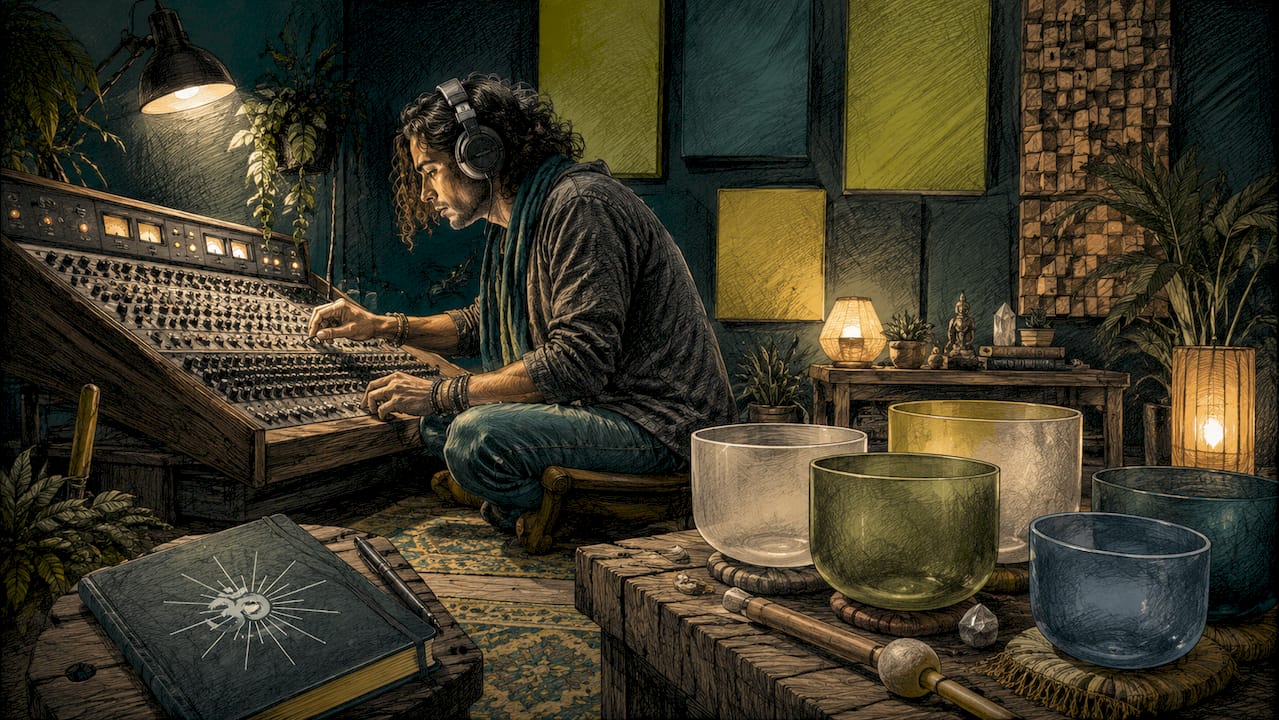
Robert Emery and Moritz Schneider, the composers and producers behind Orchestralmeditations, have spent considerable time crafting exactly these kinds of layered soundscapes. Their work incorporates Solfeggio-based compositions recorded with live orchestras at Abbey Road Studios, which adds a warmth and depth that purely synthesised tones cannot replicate. When a cello section plays in the frequency range of 528 Hz, the harmonic overtones create a richness that a simple sine wave simply cannot match.
Practical tips for using Solfeggio frequencies in your meditation practice:
- Choose your frequency based on intent. Use 396 Hz for emotional release, 528 Hz for a sense of transformation, and 963 Hz for deep spiritual meditation.
- Use headphones where possible. The brain wave effects of frequency-based audio are more pronounced when sound reaches both ears directly and consistently.
- Set a minimum listening duration. Most practitioners recommend at least 20 minutes per session to allow the nervous system to settle into the frequency.
- Combine with breathwork. Slow, diaphragmatic breathing amplifies the calming effect of lower frequencies like 174 Hz and 285 Hz.
Pro Tip: Start with 528 Hz if you are new to Solfeggio practice. It sits in a comfortable mid-range, has the most written about it, and most listeners find it immediately pleasant rather than jarring.
4. Solfeggio frequencies and chakra alignment
The nine Solfeggio tones map loosely onto the chakra system used in yogic and Ayurvedic traditions, which is one reason they have become so popular in spiritual wellness circles. The alignment is not exact or scientifically validated, but as a framework for intention-setting during meditation, it is genuinely useful.
The lower frequencies (174 Hz and 285 Hz) correspond broadly to the root and sacral chakras, governing physical safety and creative energy. The mid-range tones (396 Hz through 639 Hz) align with the solar plexus, heart, and throat chakras, addressing emotional balance, love, and communication. The higher frequencies (741 Hz, 852 Hz, and 963 Hz) correspond to the third eye and crown chakras, supporting intuition and spiritual connection.
Using the Solfeggio frequencies for chakra work does not require you to hold any particular spiritual belief. You can approach it purely as a structured listening practice, moving through the tones from lowest to highest over the course of a session. Many practitioners find this progression naturally mirrors the arc of a good meditation: grounding first, then opening, then expanding.
5. Applications and frequency combinations for therapeutic use
Single-tone listening is where most people begin, but experienced practitioners rarely stay there. The real depth of Solfeggio work comes from combining tones and integrating them into broader therapeutic contexts.
Stress relief and nervous system regulation
The lower tones (174 Hz and 285 Hz) are the workhorses of stress relief. They slow the listener’s attention, reduce physical tension, and create a sense of bodily safety. Therapists working in somatic healing contexts often use these as background frequencies during bodywork or breathwork sessions.
Emotional processing and relationship repair
639 Hz is the go-to frequency for emotional work. Sound healers use it in group settings, couples’ retreats, and individual therapy contexts where the goal is to open communication and soften defensiveness. It pairs well with 528 Hz for sessions focused on self-compassion.
Creative and cognitive focus
741 Hz has found an unexpected audience among writers, artists, and knowledge workers who use it as a focus aid. Unlike binaural beats, which require headphones and specific frequency differentials, 741 Hz works as a simple background tone through speakers. It carries a clarity that many people find conducive to sustained concentration.
Spiritual and contemplative practice
963 Hz is the frequency most associated with deep spiritual work. Moritz Schneider’s compositions for Orchestralmeditations incorporate this tone within orchestral arrangements that build gradually, allowing the listener to settle before the higher frequency takes hold. The effect is quite different from a bare sine wave at 963 Hz. The orchestral context gives the frequency emotional weight.
The table below summarises common therapeutic applications by frequency range:
| Frequency range | Primary application | Suggested context |
|---|---|---|
| 174–285 Hz | Pain relief, physical grounding | Bodywork, somatic therapy, sleep |
| 396–528 Hz | Emotional release, transformation | Meditation, journalling, breathwork |
| 639–741 Hz | Relationship harmony, creative focus | Group sessions, creative work |
| 852–963 Hz | Intuition, spiritual connection | Deep meditation, contemplative prayer |
Sound healing practices increasingly integrate these frequency ranges into structured sessions rather than relying on a single tone. The result is a more complete and satisfying experience for the listener.
Key takeaways
The complete list of Solfeggio frequencies comprises nine tones from 174 Hz to 963 Hz, each serving a distinct purpose in sound healing and meditation, with their modern origin in Joseph Puleo’s 1974 numerological work rather than ancient Gregorian chant.
| Point | Details |
|---|---|
| Nine primary tones | The Solfeggio set runs from 174 Hz (grounding) to 963 Hz (spiritual connection). |
| Modern, not ancient | Joseph Puleo derived the original six tones in 1974; the nine-tone set came later. |
| Combine for best results | Pairing Solfeggio tones with 136.1 Hz OM creates a more effective meditation environment. |
| Match frequency to intent | Choose your tone based on the emotional or physical outcome you are working towards. |
| Orchestral context adds depth | Live orchestral recordings, as produced by Robert Emery and Moritz Schneider, add harmonic richness that synthesised tones cannot replicate. |
My honest experience with the Solfeggio frequency list
I will be straight with you: when I first encountered the list of Solfeggio frequencies, I was sceptical in the way that only a musician who has spent too long in recording studios can be. The claims about DNA repair and pineal gland activation made me raise an eyebrow so high it nearly left my face entirely.
What changed my mind was not the mythology. It was the listening. There is something genuinely different about sitting with 528 Hz for 30 minutes in a quiet room compared to sitting in silence. The tone does something to your attention. It narrows it, in a useful way, like a lens bringing a blurry image into focus. Whether that is the frequency itself or simply the act of sustained, intentional listening is a question I cannot fully answer. Honestly, I am not sure it matters.
What I have come to appreciate about the work of composers like Robert Emery and Moritz Schneider is that they take these frequencies seriously as musical material, not just as wellness marketing. Recording at Abbey Road Studios with the National Philharmonic is not a small undertaking. It signals a commitment to sonic quality that the frequency-healing world genuinely needs more of. A badly produced 528 Hz track played through tinny laptop speakers is not going to do much for anyone.
My practical advice: ignore the ancient history claims, pick two or three frequencies that resonate with your current needs, and give them a proper trial over several weeks. The effects are subtle and cumulative. They reward patience rather than instant gratification, which, if you think about it, is rather the point of meditation in the first place.
— ROBERT
Solfeggio frequency music, professionally produced
Knowing the theory is one thing. Hearing it rendered by a full orchestra is quite another.
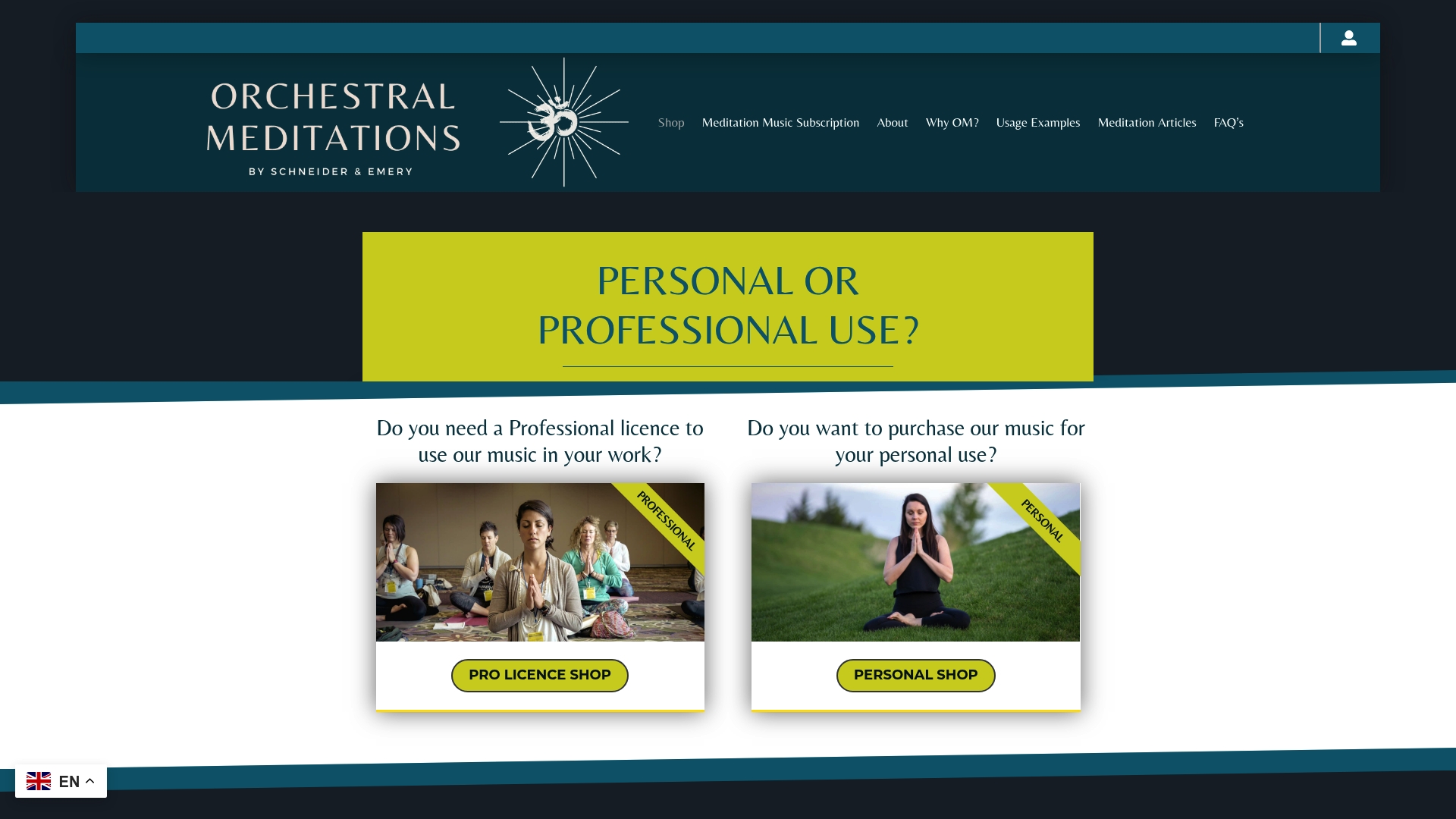
Orchestralmeditations offers a curated library of Solfeggio frequency tracks composed and produced by Robert Emery and Moritz Schneider, recorded at Abbey Road Studios with the National Philharmonic Orchestra. Each track is built around specific tones from the nine-frequency set, layered with binaural beats and 3D surround sound for maximum meditative depth. Whether you are working with 528 Hz for transformation or 963 Hz for spiritual connection, you will find a professionally produced meditation track in the Orchestralmeditations library that matches your practice. The difference between a synthesised tone and a live orchestral recording is not subtle. You will notice it immediately.
FAQ
What are the nine Solfeggio frequencies?
The nine Solfeggio frequencies are 174, 285, 396, 417, 528, 639, 741, 852, and 963 Hz. Each tone is associated with a specific healing or meditative purpose, from pain relief at 174 Hz to spiritual connection at 963 Hz.
Is 528 Hz the most powerful Solfeggio frequency?
528 Hz is the most widely discussed Solfeggio frequency and is often called the “love frequency” due to its association with transformation and emotional warmth. Its popularity comes from its accessible, pleasant sound quality as much as its claimed properties.
Are Solfeggio frequencies based on ancient Gregorian chant?
No. The six core tones were derived by Joseph Puleo in 1974 using numerological analysis of biblical verses. The link to medieval Gregorian chant is a modern myth. The medieval solfège system is a separate, unrelated framework for teaching pitch.
How long should I listen to a Solfeggio frequency per session?
Most practitioners recommend a minimum of 20 minutes per session to allow the nervous system to respond to the acoustic stimulus. Longer sessions of 45–60 minutes are common in structured sound healing contexts.
Can I use multiple Solfeggio frequencies in one session?
Yes. Combining frequencies within a curated soundscape often produces better results than single-tone listening. A common approach is to progress from lower to higher frequencies across a session, mirroring the arc of a meditation from grounding to expansion.
Recommended
- Exploring The Solfeggio Frequency Benefits For Healing And Well-Being
- The Healing Power Of Solfeggio Frequency: A Comprehensive Guide
- Essential Solfeggio Frequencies Free Download For Healing And Harmony
- Solfeggio Tones: A Simple Guide To Sound Healing And Inner Peace (2026) – Orchestral Meditations