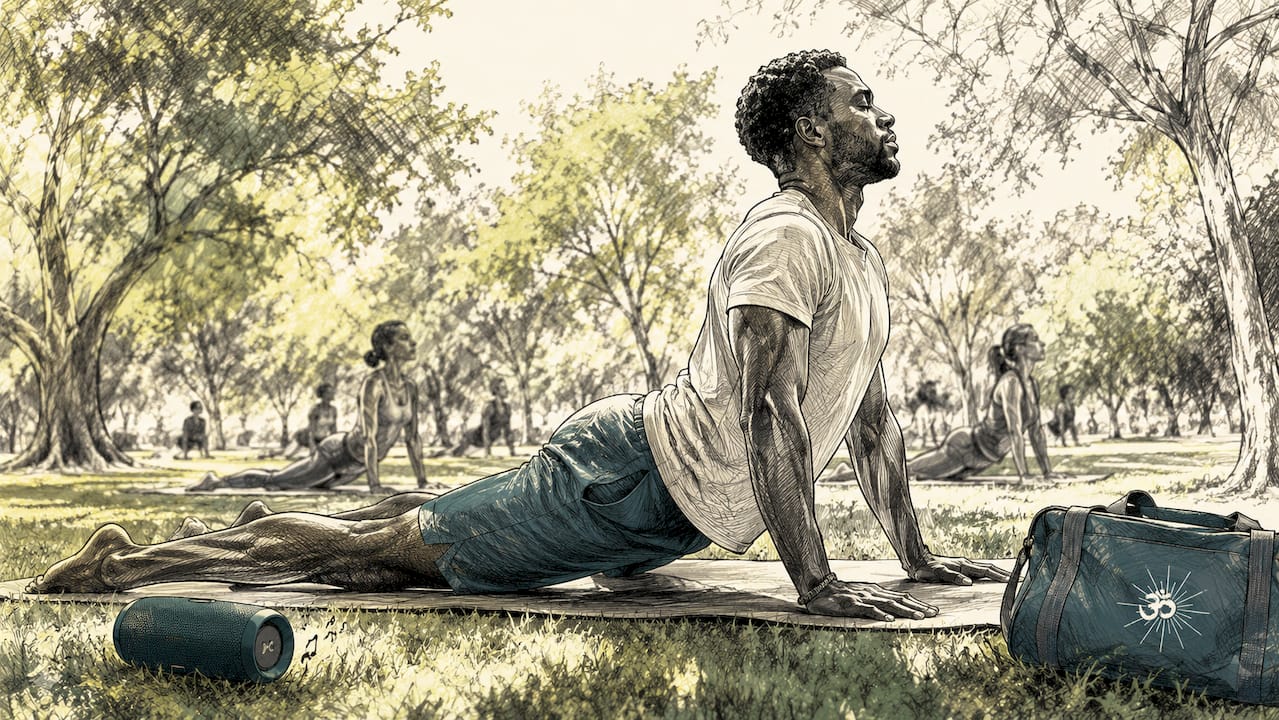
Using music for yoga meditation fusion is a deliberate process that balances tempo, tone, and timing to deepen relaxation and mindfulness during practice. The industry term for this approach is sonic sequencing, and it describes the intentional layering of sound to support each phase of a combined yoga and meditation session. Research shows that a 12-week programme combining yoga and music therapy improved cardiovascular health significantly, with systolic blood pressure dropping by 10.55 mmHg. That figure tells you something important: music is not decoration. It is a physiological tool. Composers such as Robert Emery and Moritz Schneider, whose orchestral work underpins the Orchestralmeditations catalogue, build their compositions around exactly this principle.
How to use music for yoga meditation fusion: matching tempo to style
The single most useful number in yoga music selection is BPM, or beats per minute. BPM tells you how fast a piece of music moves, and matching it to your practice style is the foundation of effective sonic sequencing.
Optimal music tempo correlates directly to yoga style:
- Restorative yoga: 40–60 BPM. Think long, slow breaths and held stillness. Music at this range feels like a warm blanket rather than a metronome.
- Yin yoga: 50–70 BPM. Slightly more presence, but still deeply passive. Sparse acoustic textures work beautifully here.
- Hatha yoga: 60–90 BPM. A gentle pulse that supports deliberate movement without rushing the breath.
- Vinyasa yoga: 100–120 BPM. This is where you want a steady, motivating rhythm. Not a nightclub, but not a lullaby either.
Here is a quick reference table to keep things clear:
| Yoga style | BPM range | Suggested instrumentation |
|---|---|---|
| Restorative | 40–60 | Ambient drones, singing bowls, silence |
| Yin | 50–70 | Acoustic guitar, soft piano, nature sounds |
| Hatha | 60–90 | Light percussion, flute, gentle strings |
| Vinyasa | 100–120 | Rhythmic world music, upbeat electronic pads |
Matching BPM alone is not enough, though. Energy quality matters just as much as tempo. A piece at 60 BPM with aggressive brass stabs will not calm anyone down, regardless of the number. Instrumentation and emotional tone carry the room. Acoustic fingerstyle guitar and electronic pads with no sharp attack or decay are ideal for slower practices. Live orchestral strings, as found in Robert Emery’s compositions, add warmth and emotional depth that synthesised sounds rarely replicate.
Pro Tip: If you are building a playlist for a mixed-level class, start at the lower end of your target BPM range and let the music rise gradually. Practitioners self-regulate better when the sonic environment gives them room to settle first.
How do you structure a yoga session musically for maximum impact?
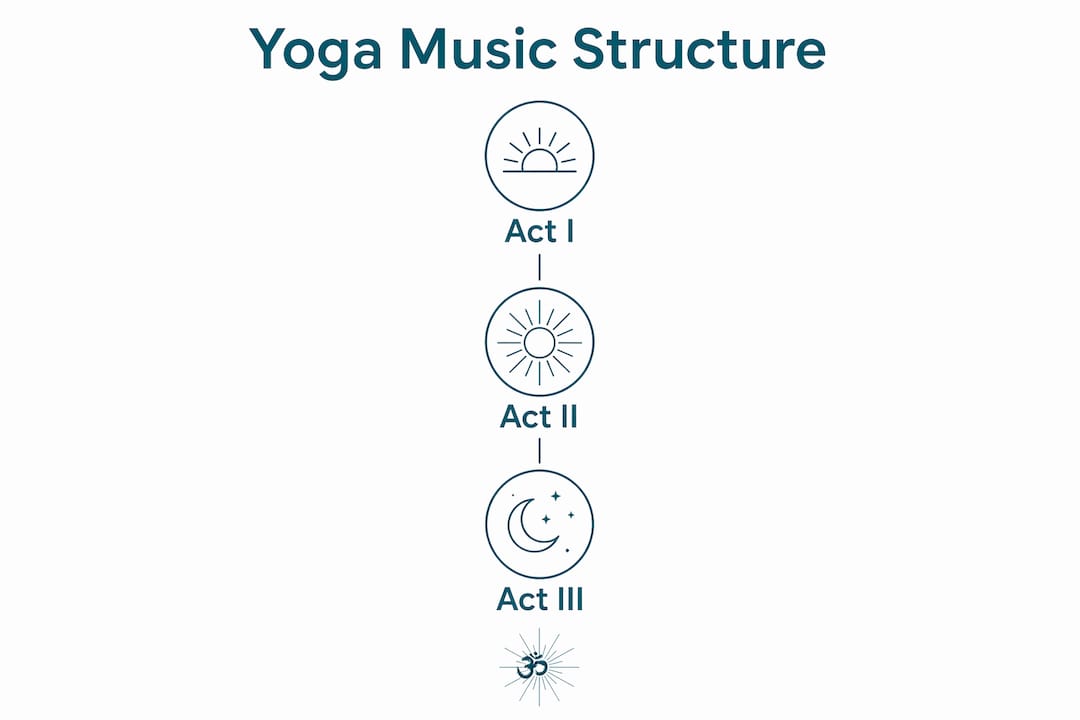
The most effective musical structure for a yoga meditation fusion session follows a three-act arc. Think of it like a good film: a quiet opening, a rising middle, and a gentle resolution. Effective yoga music sequences mirror this arc precisely, with Act I running roughly 10 minutes, Act II covering 25–30 minutes, and Act III lasting 15–20 minutes.
Act I: grounding (0–10 minutes)
Open with ambient drones, nature sounds, or sparse melodic fragments. No percussion. The goal is to signal to the nervous system that it is safe to slow down. This is not the moment for a dramatic orchestral swell (save that for Act II). Silence between sounds is your friend here. Let the room breathe.
Act II: active flow (10–40 minutes)
Introduce a steady rhythm that matches your chosen yoga style’s BPM range. This is where the music does its heaviest lifting. Intentional sequencing of musical energy mirrors physiological effort, optimally engaging the parasympathetic nervous system during recovery phases after peak exertion. In practical terms, this means your music should swell slightly during challenging poses and ease back during transitions. Moritz Schneider’s compositional approach, with long evolving harmonic progressions, does this naturally without requiring you to manually fade tracks.
Act III: cool-down and rest (40–60 minutes)
Strip the music back. Return to ambient washes or near silence. For Savasana specifically, many experienced teachers prefer complete silence or a single sustained tone. Live sound instruments such as gongs and singing bowls are highly effective at marking this transition and deepening the final rest.
| Act | Duration | Musical character | Intended effect |
|---|---|---|---|
| I: Grounding | 10 min | Ambient drones, no percussion | Nervous system settling |
| II: Active flow | 25–30 min | Steady rhythm, evolving melody | Sustained focus and exertion |
| III: Rest | 15–20 min | Ambient wash or silence | Deep recovery and integration |
Pro Tip: Crossfade between tracks using an 8–12 second overlap. Crossfading tracks maintains emotional continuity and prevents the jarring silence that can yank a practitioner out of a meditative state mid-flow.
What are the best practices for incorporating music in yoga classes?
Getting the practical details right separates a transformative session from a frustrating one. Volume is the first thing to get wrong. Music should sit beneath the teacher’s voice and the sound of breath, not compete with either. A useful test: if you can hear the music clearly when the room is silent but cannot make out lyrics during instruction, you are in the right range.
Speaking of lyrics, avoid them. Lyrics activate the language-processing centres of the brain, which pulls attention away from the body and breath. This is the opposite of what you want in a meditation-forward practice. Slow tempos and sparse arrangements support relaxation far better than complex, lyric-heavy pieces.
“Music serves as a powerful container shaping nervous system state. Abrupt musical transitions should be avoided to maintain meditative flow. The sonic environment you create is as deliberate as the sequence of poses you choose.”
Legal considerations matter too, particularly for group or public classes. Playing recorded music in public yoga classes requires licensing from applicable performing rights organisations. Many streaming subscriptions do not cover public performance. Royalty-free catalogues, such as those produced by Orchestralmeditations, sidestep this entirely. The music is licensed for use, and you are not left hoping nobody from a performing rights body walks through the door.
Common mistakes worth avoiding:
- Confusing BPM with energy quality (a fast, gentle piece feels different from a fast, aggressive one)
- Neglecting to plan silence windows, which are as therapeutic as the music itself
- Using music as a crutch to fill discomfort rather than as an intentional tool
- Failing to have a backup playlist or device ready for technical failures
- Switching tracks abruptly, which disrupts meditative flow and pulls practitioners out of their internal state
Pro Tip: For Yoga Nidra or deep Savasana, consider Yoga Nidra audio resources that pair ambient sound with guided relaxation. The combination of voice and minimal music is particularly effective for nervous system reset.
How does music physiologically support yoga meditation fusion?
Music changes the body, not just the mood. The mechanism behind this is called entrainment, which is the tendency of the brain’s electrical activity to synchronise with external rhythmic stimuli. When you play music at a frequency associated with alpha or theta brainwave states (roughly 8–12 Hz for alpha, 4–8 Hz for theta), the brain tends to follow. This is why binaural beats and theta-frequency compositions, both central to the Orchestralmeditations catalogue, are not marketing language. They describe a real neurological process.
Music reduces perceived exertion during difficult poses by limiting attentional capacity and gating pain signals. The brain’s cognitive bandwidth is finite. When part of it is occupied by processing music, less of it registers physical discomfort. This is not distraction in the negative sense. It is attention management, and it keeps practitioners in poses longer and with less resistance.
The cardiovascular evidence is equally compelling. A 12-week yoga and music therapy programme showed 95% adherence among participants and produced measurable reductions in both systolic and diastolic blood pressure. High adherence matters because it means people actually kept showing up. Music made the practice sustainable, not just pleasant.
The psychological benefits compound over time:
- Breath synchronisation improves when music provides a consistent rhythmic anchor
- Emotional regulation deepens as the nervous system learns to associate specific sonic textures with safety and stillness
- Long-term practitioners report that music supports mental health by reinforcing the parasympathetic response built during practice
- Intentional silence periods between musical passages allow nervous system consolidation and amplify the therapeutic effects of the music itself
Robert Emery’s orchestral compositions use long evolving pads and gentle harmonic progressions specifically designed to support this physiological process. The music does not demand attention. It holds space for the practitioner’s own internal experience to unfold.
Key takeaways
Effective yoga meditation fusion music works because it matches sonic energy to physiological state, using tempo, instrumentation, and intentional silence to guide the nervous system through each phase of practice.
| Point | Details |
|---|---|
| Match BPM to yoga style | Use 40–60 BPM for restorative, 60–90 for Hatha, and 100–120 for Vinyasa to align music with breath and exertion. |
| Follow a three-act arc | Structure music across grounding, active flow, and rest phases to mirror the session’s physiological progression. |
| Prioritise energy quality | BPM alone is insufficient; instrumentation and emotional tone shape the nervous system response as much as tempo does. |
| Manage volume and lyrics | Keep music beneath the teacher’s voice and avoid lyrics, which activate language processing and reduce body awareness. |
| Use silence intentionally | Silence between musical passages consolidates nervous system recovery and deepens interoceptive awareness. |
What I have learned from years of listening to yoga sessions go wrong
I will be honest with you. The first time I sat in on a yoga class where someone had queued up a playlist without thinking it through, the music shifted from a gentle ambient wash to something that sounded like a film trailer for an action blockbuster. Right in the middle of Savasana. You could feel the entire room flinch. It was, to put it charitably, not ideal.
What that experience taught me is that music in a yoga meditation fusion context is not about filling silence. It is about shaping it. The silence is already there. The music either supports it or fights it. And when music fights silence in a yoga room, silence loses, and so does everyone lying on a mat.
I have also noticed something that does not get discussed enough: the relationship between music and practice stage changes as a practitioner develops. Beginners often need music as a kind of emotional scaffolding. It gives them something to hold onto when the internal quiet feels unfamiliar or uncomfortable. Advanced practitioners, by contrast, frequently find that music can obscure the very awareness they have spent years cultivating. Both responses are valid. The skill is in reading the room and adjusting accordingly.
Live instruments change everything, by the way. A single singing bowl struck at the right moment does more work than twenty minutes of ambient playlist. There is something about the physical resonance of a live instrument in a shared space that recorded music simply cannot replicate. If you ever get the chance to work with a live sound practitioner, take it.
The composers who understand this best are the ones who write music that knows when to step back. Robert Emery’s orchestral work has that quality. It does not insist on being noticed. It simply holds the space open, which is exactly what good yoga music should do.
— ROBERT
Orchestralmeditations: professional music built for your practice
If you have ever spent forty minutes building a yoga playlist only to realise halfway through class that track three has a sudden key change that sounds like a car alarm, you will understand why professionally composed meditation music matters.
Orchestralmeditations produces high-quality meditation music recorded at Abbey Road Studios with the National Philharmonic, composed by Robert Emery and Moritz Schneider. Their catalogue includes binaural beats, theta-frequency compositions, and orchestral soundscapes designed specifically for the kind of deep, sustained relaxation that yoga meditation fusion requires. The music is royalty-free for personal use, which means no licensing headaches for your practice. You can browse the full collection and find tracks suited to every phase of your session, from grounding to Savasana.
FAQ
What BPM should yoga meditation music be?
BPM depends on the yoga style. Restorative and Yin practices suit 40–70 BPM, Hatha works well at 60–90 BPM, and Vinyasa flows best with music at 100–120 BPM.
Can I use any music in a public yoga class?
Playing recorded music in a public or group yoga class requires a licence from a performing rights organisation. Royalty-free catalogues, such as those from Orchestralmeditations, are a legally straightforward alternative.
Should I use music during Savasana?
Many experienced teachers prefer silence or a single sustained tone during Savasana. Live instruments such as singing bowls are highly effective at deepening the final rest phase without overstimulating the nervous system.
How does music reduce discomfort during difficult poses?
Music occupies cognitive bandwidth, which limits the brain’s capacity to process pain signals. This attention-gating effect allows practitioners to hold challenging poses longer with less perceived discomfort.
Is silence part of a good yoga music session?
Silence is an active tool, not an absence. Intentional silence periods between musical passages allow the nervous system to consolidate the effects of the music and deepen interoceptive awareness during practice.