
Settling into a meditation session only to find your mind sprinting through tomorrow’s to-do list is, frankly, a rite of passage for most practitioners. You sit, you breathe, you try — and then you spend twenty minutes mentally debating whether you left the oven on. If that sounds familiar, you are in very good company. The good news is that advances in spatial audio technology have quietly been reshaping what is possible inside a meditation session. Specifically, 3D sound meditation — audio engineered to move around your head in three-dimensional space — is giving practitioners a remarkably effective way to drop into deep states far more quickly than silence or standard music alone. This article unpacks the science, the genuine advantages, the honest caveats, and exactly how to use 3D sound in your own practice.
Key Takeaways
| Point | Details |
|---|---|
| Immersive calm | 3D sound surrounds you, deepening relaxation and presence in each session. |
| Health benefits | Spatial audio boosts heart rate variability and quickly reduces stress and anxiety. |
| Sharper focus | Optimised 3D sound parameters sharpen attention and foster mindfulness. |
| Personal experience varies | Results depend on quality, individual sensitivity, and expectations. |
| Easy to start | With good headphones and the right tracks, anyone can try 3D sound meditation at home. |
How 3D sound creates immersive meditation
Let us start with the mechanics, because understanding why something works makes it considerably easier to trust it. Traditional stereo audio sends sound to a left channel and a right channel. That is it. Your brain processes the result as a flat, two-dimensional plane sitting somewhere between your ears. Mono is even blunter — everything arrives from one point, like someone reading to you from a fixed spot across the room. Neither format particularly convinces your nervous system that it has been transported anywhere interesting.
3D (or 8D) audio is a different animal altogether. Using a technique called binaural processing, sound engineers position audio cues above, below, behind, and in front of the listener, creating the sensation that sound is orbiting your entire skull. The result is something closer to standing inside a forest or floating in the centre of an orchestra than pressing your ear against a speaker. As 8D audio research confirms, this spatially moving sound creates meditative immersion, reduces stress and anxiety, enhances focus, mindfulness, sleep, and emotional well-being in ways that static formats simply cannot replicate.
The immersive quality is not just a clever parlour trick, either. Spatial audio research from 2025 reviewing VR and meditation contexts found that spatial audio consistently enhances presence, emotional involvement, and immersion based on both self-reported experience and physiological measurement. In other words, it is not merely that people feel more absorbed — their bodies register a difference too.
So what does that immersive quality actually produce during a meditation session? Here is where it gets genuinely exciting:
- Spatial awareness: Your brain interprets the moving sound as environmental, triggering a sense of being somewhere — which quiets the restless mental chatter almost immediately.
- Heightened presence: The effort of tracking three-dimensional audio keeps the mind anchored in the moment, making it far harder to drift toward anxious planning.
- Enveloping environment: The sense of being surrounded creates a cocoon-like safety that encourages deeper relaxation states.
- Emotional engagement: Spatially dynamic sound activates emotional processing in ways that a steady, static tone rarely achieves.
If you are curious about the wider world of soundscape options available to practitioners, there is a genuinely rich range beyond 3D audio — though few match its particular talent for immediate immersion.
“I put on the 3D recording and within minutes I genuinely forgot I was sitting in my living room. It was as if the music was breathing around me. I have never dropped into that state so quickly before.”
The contrast between that experience and pressing play on a standard playlist is stark. Think of it like the difference between watching a film on your phone versus sitting inside an IMAX. Both involve the same story; only one makes your palms sweat during the tense scenes. For serene sounds for meditation, the three-dimensional quality is what transforms listening from a passive activity into an immersive practice. And mindfulness in therapy contexts increasingly acknowledge that the quality of the sensory environment shapes how deeply a practitioner can settle.
Key health and wellness advantages
Feeling immersed is lovely, but let us talk about what that immersion actually does to your body, because the physiological story is where things get particularly compelling.
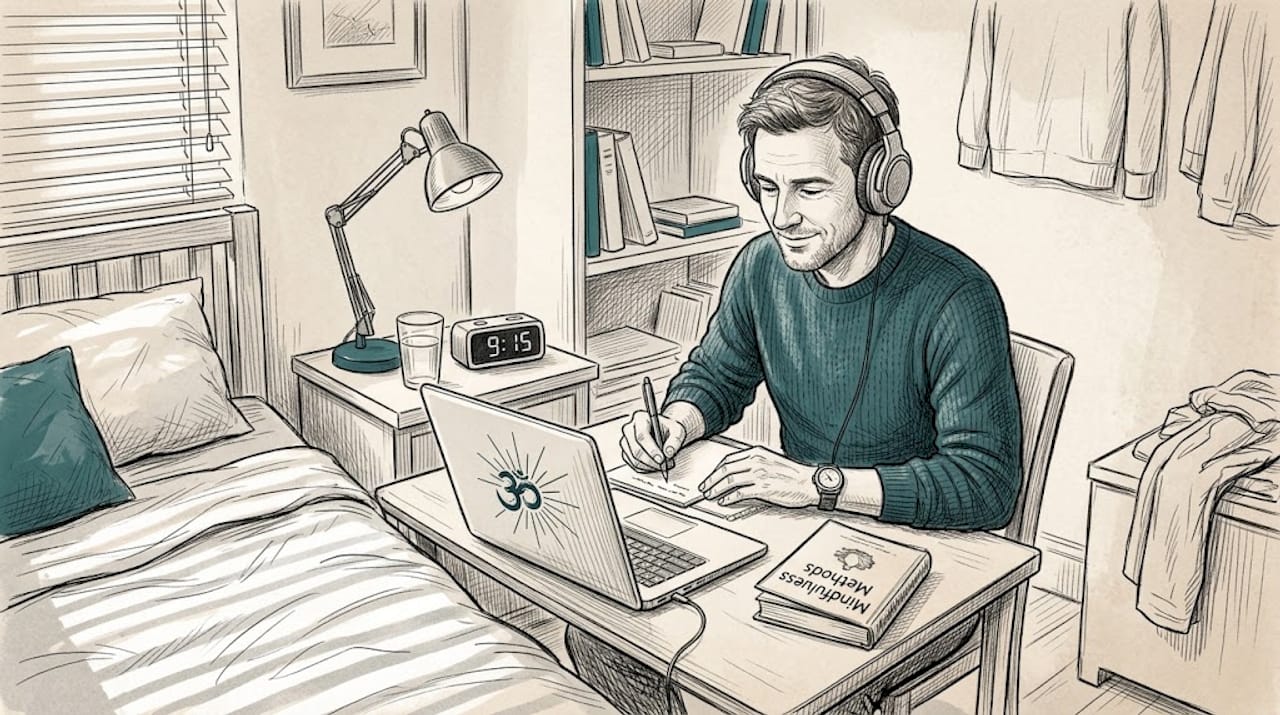
The most striking finding comes from a controlled study comparing the autonomic nervous system (ANS) responses to 3D audio, stereo, and mono formats. The spatial audio relaxation study found a stronger ANS relaxation response — specifically a measurable boost in heart rate variability (HRV) — with 3D audio compared to either stereo or mono. HRV is one of the body’s clearest indicators of parasympathetic activation, meaning a higher reading signals that your nervous system has genuinely shifted into rest-and-recover mode. Importantly, no significant change in cortisol was detected in the short term, suggesting the effect is immediate parasympathetic calm rather than a slow hormonal process.
That distinction matters. You do not have to wait weeks for results. Even a single session can produce a measurable shift.
The broader wellness picture looks like this:
- Reduced stress: Parasympathetic activation lowers the physiological stress signature almost immediately upon immersion.
- Better sleep onset: The deeply relaxed state produced by 3D audio makes transitioning into sleep considerably easier.
- Faster relaxation response: Compared to mono and stereo, the body settles more quickly.
- Improved emotional well-being: Sustained use supports mood regulation and reduces the background hum of anxiety that many practitioners are trying to address in the first place.
For those specifically chasing better nights, pairing 3D audio with established techniques for improving sleep quality can meaningfully accelerate results. Similarly, exploring soothing music for healing alongside spatial audio opens up a genuinely restorative combination.
| Feature | 3D / spatial audio | Stereo audio | Mono audio |
|---|---|---|---|
| HRV (ANS relaxation) | Measurably higher | Moderate | Lower |
| Stress marker reduction | Strong, fast onset | Moderate | Slower |
| Sleep quality support | High | Moderate | Lower |
| Sense of immersion | Very high | Moderate | Low |
| Emotional engagement | High | Moderate | Low |
The pattern is consistent across the table. 3D audio does not merely add novelty — it shifts the needle on measurable physiological markers. For anyone exploring holistic sleep wellness as part of a broader self-care routine, 3D sound meditation sits very comfortably alongside nutrition, movement, and breathwork as a genuinely evidence-informed tool.
Cognitive benefits: Focus, attention, and mental clarity
Relaxation and sleep are wonderful, but plenty of practitioners come to meditation specifically for the cognitive edge — the sharper focus, the cleaner thinking, the ability to actually sit with a single thought without the mind scattering like startled pigeons. 3D sound has something interesting to offer here, though the science requires a little nuance.
A notable study on gamma binaural beats at 40Hz found that specific parameters — a 40Hz gamma frequency combined with a low carrier tone at 340Hz plus white noise — produced statistically significant improvements in attention performance, with a result of p=0.002. EEG recordings confirmed neural entrainment, meaning the brain was genuinely synchronising with the beat rather than simply responding to a placebo effect. The caveat is equally worth noting: vigilance decrements (the tendency to lose sustained focus over time) were not consistently reduced, which means 3D audio sharpens your initial attention, but is not a magic shield against mental fatigue during prolonged tasks.
Here is what you can realistically expect on the cognitive side:
- Sharper initial focus: Entrainment to optimised frequencies boosts attention performance measurably from the start of a session.
- More effective neural entrainment: EEG confirmation means this is not wishful thinking — the brain is actually following the frequency cues.
- Improved mindfulness quality: Greater immersion correlates with fewer mind-wandering episodes during the session.
- Occasional limits: Sustained vigilance benefits are less consistent, so do not expect 3D audio alone to replace sleep or structured cognitive training.
Pro Tip: For cognitive benefits specifically, look for tracks that specify their carrier frequency and binaural beat frequency rather than simply labelling themselves as “3D” or “immersive.” A 40Hz gamma beat with a carrier around 340Hz is currently the most research-supported combination for attention. The science of meditation music matters enormously here — not all tracks are built with the same intention or rigour.
The parameter settings are not secondary details. They are the mechanism. A poorly configured 3D track is like a finely tuned car with the wrong fuel — the engineering is there, but the results will disappoint.
For practitioners looking to pair enhanced clarity with deeper rest, relaxing music for clarity offers a useful starting point. And if you are exploring the broader case for meditative practice, the evidence on mindfulness benefits continues to grow across psychological and physiological domains.
Are there limits or cautions to 3D sound meditation?
Honesty feels important here, because the wellness space has a tiresome habit of overselling everything until the inevitable backlash arrives. So let us be straightforward: 3D sound meditation is genuinely effective for most people, and genuinely imperfect for some.
Research on binaural beats specifically has produced mixed EEG and mood results across different studies, with some reviewers noting inconsistent outcomes that may partly reflect placebo response or suboptimal audio parameters rather than the technology itself failing. Not everyone emerges from a 3D session feeling transformed. A small number of users find the spatial movement of sound distracting rather than immersive, particularly in early sessions.
Common cautions worth keeping in mind:
- Placebo potential: Expectation shapes experience. If you go in convinced it will not work, the effect is likely to be smaller — though physiological measurements suggest some real benefit exists independent of belief.
- Equipment dependency: You need quality headphones to receive the full spatial effect. Laptop speakers will not do the job. This is non-negotiable.
- Individual preference variation: Some practitioners respond far more strongly to theta frequencies than gamma, or to orchestral textures rather than pure tones. One track does not suit all nervous systems.
- Not a therapeutic replacement: 3D sound meditation is a brilliant supplement to mindfulness training, therapy, or structured wellbeing practices. It is not a standalone treatment for clinical anxiety or sleep disorders.
Pro Tip: Start with a ten or fifteen minute 3D sound session rather than committing to an hour-long recording. Note how your body responds — does tension release? Does the mind settle? Does the spatial movement feel engaging or irritating? Your honest observations after a few shorter sessions will tell you more than any study. Tracks designed for music for deep rest make ideal entry points because the pacing is gentle and the immersive quality builds gradually.
Realistic expectations are not pessimism. They are what allow you to use a genuinely useful tool well, rather than abandoning it after one underwhelming session.
How to select and use 3D sound for your practice
Right, so you are persuaded enough to try it. Excellent decision. Here is how to do it properly rather than haphazardly.
- Choose reputable, parameter-conscious tracks: Look for producers who specify the frequencies used and the recording technique. Vague labels like “immersive vibes” are a red flag; specifics like “40Hz gamma binaural with 340Hz carrier” are a green one.
- Use quality headphones: Over-ear headphones with good frequency response are ideal. In-ear buds can work, but the spatial effect is often less pronounced. Bluetooth is fine; wired is marginally better.
- Create a quiet, consistent environment: Ambient noise competes with spatial cues and collapses the immersive effect. Even fifteen minutes of dedicated quiet outperforms an hour of distracted listening.
- Observe your comfort and duration: Begin with shorter sessions and extend as your comfort grows. Notice whether you feel calmer, clearer, or more rested afterwards — and keep a simple note of it.
- Integrate deliberately into your routine: Morning sessions tend to sharpen focus; evening sessions lean towards relaxation and sleep preparation. Matching the track type to your intention amplifies the benefit considerably.
For a broader guide to building a sustainable practice, the relax and unwind guide covers the full range of approaches worth considering. And pairing audio practice with herbal oils for wellness or breathwork can create a genuinely layered self-care experience.
| 3D audio type | Best use case | Equipment needed |
|---|---|---|
| Binaural beats (theta/gamma) | Deep focus, entrainment, sleep | Quality over-ear headphones |
| 8D audio | General immersion, stress relief | Any headphones |
| Orchestral / ambient 3D | Relaxation, emotional processing | Over-ear headphones preferred |
| VR-based spatial audio | Full immersive meditation environments | VR headset or spatial headphones |
Experiment freely. Record your responses honestly. The right combination of format, frequency, and listening environment is personal, and the process of finding it is itself a worthwhile meditation.
Our take: Why 3D sound meditation succeeds where others fall short
Having spent considerable time in the world of immersive audio, we have developed a fairly strong opinion on this: the reason 3D sound meditation works where ordinary music often does not is precisely because it refuses to let the mind wander off and do its own thing.
Standard meditation music can become wallpaper. Beautiful wallpaper, certainly, but the kind you stop noticing after ten minutes. 3D sound, by contrast, creates a continuously evolving sensory environment that keeps the mind gently occupied — not distracted, but anchored. It is the difference between trying to hold your attention on a single candle flame and being surrounded by a slowly shifting, luminous landscape. Both can lead to stillness, but one requires considerably more effort.
What mainstream guides about this technology consistently miss is the parameter dependence. Choosing a 3D track is not like selecting a playlist by mood. The carrier frequency, the beat frequency, the presence or absence of white noise, the quality of the spatial processing — all of these shape the outcome. Personalisation here is not a luxury; it is the mechanism by which results become consistent.
“One-size-fits-all” is the enemy of effective meditation. The more precisely you match the audio parameters to your nervous system’s current state, the more reliably the experience delivers.
We have seen this repeatedly in the feedback from practitioners exploring our soundscape perspectives: the people who experiment thoughtfully with formats and frequencies consistently report deeper, more reliable results than those who simply press play on whatever is trending.
Ready to experience 3D sound meditation?
If anything in this article has nudged you towards curiosity — whether it is the HRV evidence, the cognitive focus research, or simply the idea of a meditation session that actually holds your attention — then the obvious next step is to hear it for yourself. Reading about spatial audio is a bit like reading about swimming. Interesting, informative, and absolutely no substitute for getting in the water.
At Orchestral Meditations, we have built a curated library of the best meditation music specifically engineered for immersive, spatially aware listening. Recorded at Abbey Road Studios with the National Philharmonic, our tracks combine the emotional depth of live orchestral performance with the precision of binaural and 3D audio production. Whether your focus is sleep, stress relief, focus, or simply finding a few genuine minutes of quiet, you will find something that fits. Explore meditation music and take your practice somewhere it has not been before.
Frequently asked questions
What equipment is needed for 3D sound meditation?
Quality headphones are essential to experience the full spatial effect, as 3D audio moves sound around the head in ways that speakers and earbuds cannot fully reproduce.
Is 3D sound meditation safe to use daily?
Yes, daily use is appropriate for most people. Research confirms a stronger ANS relaxation response with 3D audio compared to mono or stereo, supporting regular integration into wellness routines.
Does 3D sound always improve meditation quality?
Not universally. As some reviews note, outcomes vary depending on audio parameters, individual sensitivity, and expectations, so experimentation is genuinely necessary.
How quickly can benefits from 3D sound meditation be felt?
Often immediately. The parasympathetic activation and HRV boost observed in research can occur within a single session, making this one of the more rapid-acting audio wellness tools available.