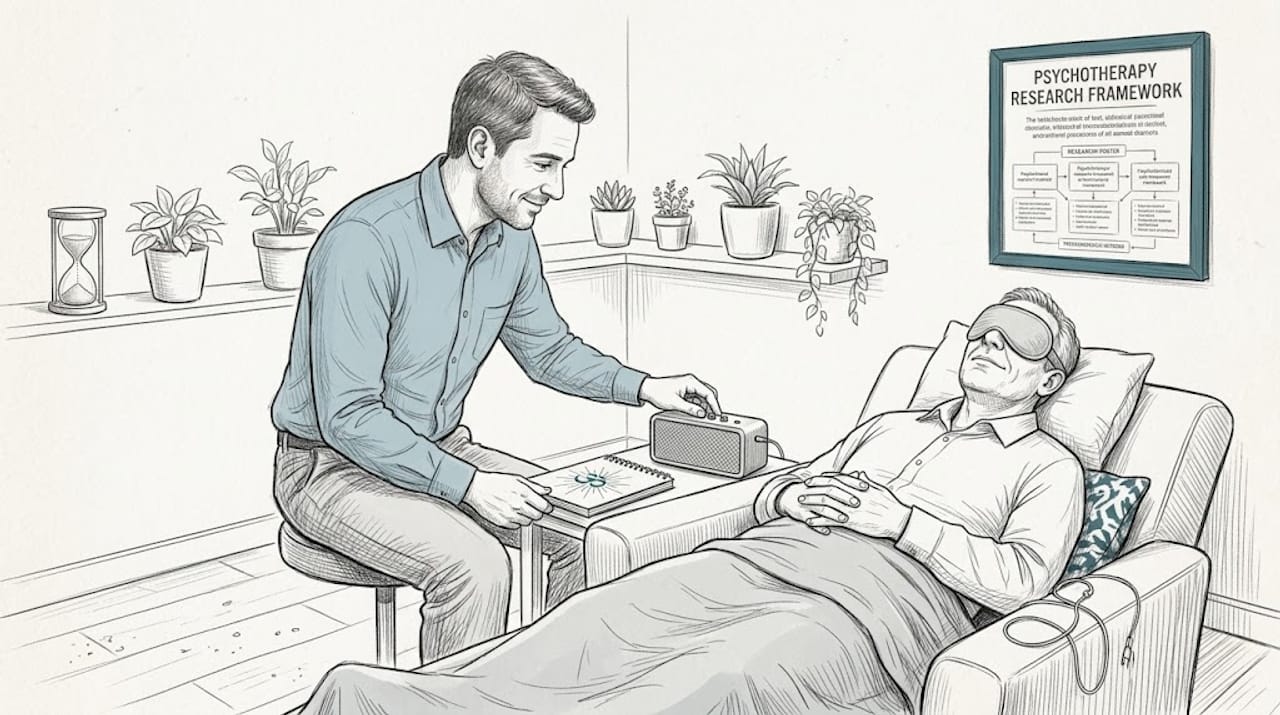
Not all relaxing music is created equal. You might have noticed that some tracks send you drifting off to sleep while others, despite being labelled “meditation music” somewhere on the internet, leave you feeling oddly wired and slightly irritated (we’ve all been there). The reason comes down to something far more specific than mood or personal taste. Sound frequencies promote relaxation primarily through brainwave entrainment and autonomic nervous system modulation, meaning the specific Hz values in what you’re listening to are doing measurable, biological work. This article explains exactly how that process works, which frequencies are most effective, why orchestral music holds a unique advantage, and how to personalise your listening practice for real, lasting stress relief.
Key Takeaways
| Point | Details |
|---|---|
| Brain entrainment | Sound frequencies can synchronise brainwaves, leading to measurable relaxation and reduced stress. |
| Best relaxation frequencies | Theta (4–8 Hz), 432 Hz, and 528 Hz are most supported by evidence for stress relief and deep calm. |
| Orchestral advantage | Orchestral music, especially at slow tempi and major keys, shows superior effects over digital or electronic sounds. |
| Personal response matters | Not all sounds relax everyone; personal testing and adjustment are essential for best results. |
| Practical application | Sessions of 20–45 minutes, combined with meditation, can maximise the benefits of sound frequency relaxation. |
The science behind sound frequencies and relaxation
Let’s start with the basics, because these terms get thrown around rather loosely and it helps to know what you’re actually talking about.
Frequency is simply the number of vibrations per second in a sound wave, measured in Hertz (Hz). Your brain, meanwhile, produces its own electrical rhythms called brainwaves, also measured in Hz. When external sound frequencies match or nudge your brain’s own rhythms, something rather remarkable happens: your brain begins to synchronise with that external rhythm. This is called entrainment.
The autonomic nervous system (ANS) governs the body’s automatic functions, including heart rate, breathing, and digestion. It has two modes: the “fight or flight” sympathetic state, and the “rest and digest” parasympathetic state. Stress lives in the first; relaxation lives in the second. The science behind sound therapy shows that specific frequencies actively push the ANS toward parasympathetic dominance, lowering heart rate and reducing cortisol (your primary stress hormone).
Here’s a quick overview of the brainwave states most relevant to relaxation:
| Brainwave state | Frequency range | Associated experience |
|---|---|---|
| Beta | 13–30 Hz | Alert, focused, or stressed |
| Alpha | 8–13 Hz | Calm, relaxed awareness |
| Theta | 4–8 Hz | Deep relaxation, creativity, meditation |
| Delta | 0.5–4 Hz | Deep sleep, restorative rest |
| Gamma | 30–100 Hz | Heightened cognition, flow states |
For most people seeking stress relief, theta and delta are the golden zones. Theta is the state you drift into just before sleep, that hazy, beautifully relaxed limbo where worries lose their grip. Delta is deeper still, associated with the kind of restorative sleep that leaves you feeling genuinely refreshed.
A few key things happen physiologically when you listen to the right frequencies:
- Heart rate slows and becomes more regular
- Heart rate variability (HRV) improves, a key marker of stress resilience
- Cortisol levels decrease measurably
- Muscle tension reduces
- Blood pressure can drop modestly
“The relationship between sound and the body is not metaphorical. It is measurable, reproducible, and increasingly well-documented in clinical literature.”
It’s also worth noting that different sound frequencies produce genuinely different physiological outcomes, which is why lumping all meditation music together is a bit like saying all food is equally nutritious. And if you want the shortlist of frequencies with the strongest evidence behind them, relaxing frequencies backed by published research are a good place to start. Individual responses do vary based on musical background, current emotional state, and even the acoustic environment, which we’ll address properly in a later section.
Key relaxation frequencies and how they work
With the biological basis in mind, let’s explore which specific sound frequencies are most effective for relaxation and how you can use them.
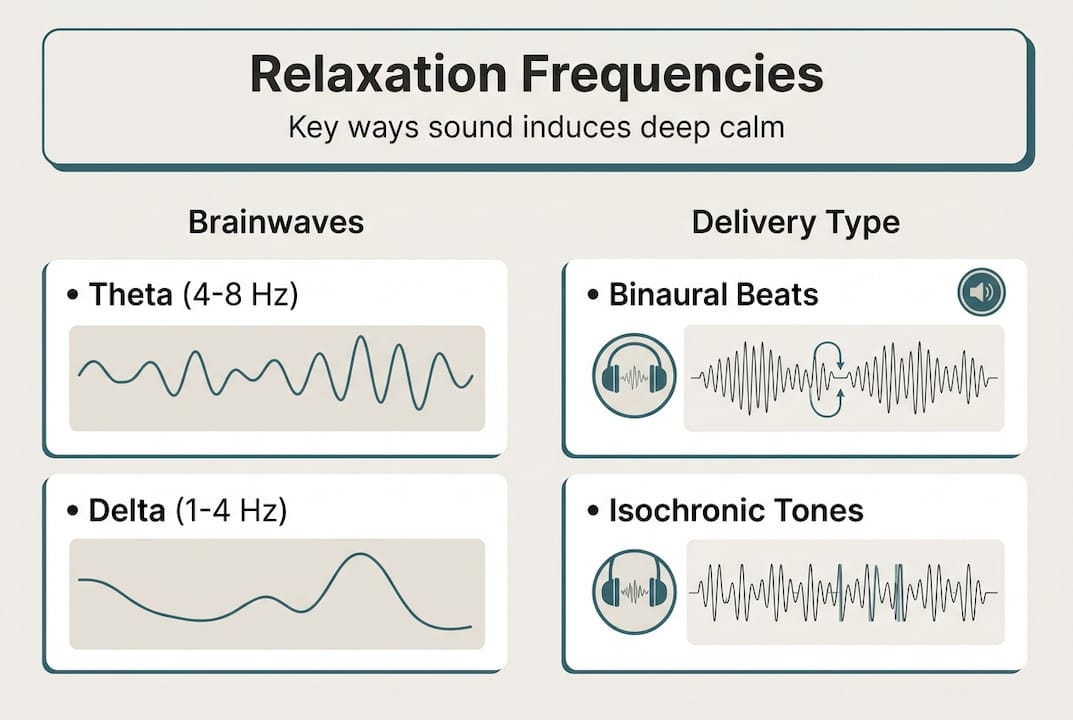
Not all frequencies are equal, and not all delivery methods work the same way. Here’s a practical breakdown of the heavy hitters:
| Frequency / type | Primary mechanism | Key benefit | Delivery method |
|---|---|---|---|
| Theta (4–8 Hz) | Brainwave entrainment | Deep relaxation, meditation | Binaural beats, isochronic tones |
| Delta (0.5–4 Hz) | Brainwave entrainment | Restorative sleep | Binaural beats |
| Gamma (40 Hz) | Neural synchronisation | Cognitive calm, focus | Binaural, isochronic, music |
| 432 Hz tuning | Physiological resonance | Reduced HR, emotional calm | Orchestral, instrumental music |
| 528 Hz (solfeggio) | Cellular resonance (proposed) | Reduced anxiety and cortisol | Tonal compositions |
| Vibroacoustic therapy | Whole-body vibration | Deep muscle and nervous system calm | Specialised speakers/mats |
Research into binaural beats explained describes how they work: your left ear hears one frequency, your right ear hears a slightly different one, and your brain perceives the difference between them as a third, internal beat. So if your left ear receives 200 Hz and your right ear receives 206 Hz, your brain generates a 6 Hz theta beat internally. This is why binaural beats require headphones. Without them, there’s no separation, and the effect simply doesn’t occur.
Isochronic tones are a different beast entirely. They’re single pulsing tones at regular intervals, and they don’t need headphones to work, making them more flexible for ambient listening.
Binaural beats, solfeggio frequencies, and 432 Hz tuning have all demonstrated measurable biomarker effects across different studies, including changes in heart rate, cortisol, and emotional state scores. More specifically, RCTs using 528 Hz showed significantly reduced stress, anxiety, and cortisol in participants following regular meditation sessions.
If you’re curious about how 432 Hz and 528 Hz compare in practice, the 432 Hz vs 528 Hz breakdown covers that in useful detail. For a wider view of which frequencies consistently perform well across studies, best relaxing frequencies for stress relief is well worth your time.
Here are the most practical steps to begin using frequency-based listening effectively:
- Choose your target state first: sleep (delta), deep meditation (theta), or calm focus (alpha/gamma).
- Select the appropriate format: binaural beats for targeted entrainment (headphones on), isochronic tones for ambient sessions.
- Set your session length between 20 and 45 minutes for best results.
- Minimise visual distractions and find a comfortable, reclined position.
- Track how you feel before and after using a simple 1–10 mood and tension score.
Pro Tip: Combining frequency-based music with a deliberate breathing practice (try a slow 4-7-8 breath pattern) dramatically accelerates the shift into theta. The two together are considerably more powerful than either alone, and the impact of frequencies on well-being goes into exactly why that synergy works.
Orchestral and classical music: why tempo and tuning matter
Having covered frequency basics, let’s see why orchestral music is uniquely powerful for relaxation and what the research says about its tempo and tuning.
Here’s something that surprises a lot of people: when it comes to reliable, reproducible relaxation, orchestral and classical music consistently outperforms electronic soundscapes and standalone solfeggio tones in head-to-head studies. Not because it sounds prettier (though, admittedly, a live string section is hard to argue with), but because of specific, measurable musical variables.
The two most important are tempo and tuning.
Tempo matters enormously. Music played at 60–80 beats per minute (bpm) synchronises naturally with the resting heart rate, a phenomenon sometimes called entrainment at the cardiac level. The brain and body essentially lock on to that steady, calm pulse and follow it downward. Faster tempos can do the opposite, activating rather than calming the nervous system.
The orchestral music study published via HAL Science found that orchestral music reduces anxiety through gamma oscillation engagement, lowers heart rate, and increases parasympathetic activity. That’s a trifecta of relaxation markers happening simultaneously.
Tuning adds another layer. Standard modern tuning places the note A at 440 Hz. Music tuned to 432 Hz instead is slightly lower and, according to the same research, produces a more pronounced physiological response. The statistic that stands out:
432 Hz tuning produced a heart rate reduction of approximately 3 bpm, compared to roughly 1 bpm with standard 440 Hz tuning.
That might sound modest, but in the context of a 20-minute session, it compounds meaningfully. The orchestral music’s calming effects article explores this in more depth if you want the full picture.
Here are the specific musical elements that drive orchestral relaxation responses:
- Slow tempo (60–80 bpm): Matches and gently slows resting heart rate
- Major key harmonics: Associated with emotional safety and reduced tension
- Sustained string tones: Particularly violin and cello, which the nervous system reads as smooth and non-threatening
- Low dynamic variation: Avoids sudden loud passages that spike the stress response
- 432 Hz tuning: Enhances HRV and produces deeper HR reduction than standard tuning
For practical listening, combining orchestral compositions with the right environmental conditions makes a significant difference. The guide to relaxation soundscapes covers ambient layering well, and if you want a thorough exploration of how to build a meditation practice around symphonic music specifically, the meditation with orchestra music guide is genuinely excellent.
Personalisation and the limits of sound therapy
While the science is compelling, it’s important to understand not everyone experiences sound therapy in the same way. Here’s how to make it work for you.
Here’s the honest truth that many frequency-focused websites quietly skip over: the research shows real, measurable effects, and it shows that those effects are not universal. Some people find binaural beats mildly headache-inducing. Some find 528 Hz compositions oddly energising rather than calming. A few find that sustained low-frequency drones increase rather than decrease their sense of anxiety.
This isn’t a failure of the science. It’s a reflection of how genuinely individual our nervous systems are.
Factors that influence your personal response include:
- Baseline anxiety level: Highly anxious individuals sometimes find low, droning tones initially activating before they relax
- Musical background: People with formal music training often show different entrainment patterns than non-musicians
- Current emotional state: A frequency that calms you on a quiet Tuesday may feel irritating on a high-stress Friday
- Listening environment: Background noise, posture, and even room temperature all modulate how your body responds
“Sound therapy’s effectiveness is highly context-dependent and individual. Standardised protocols should always allow for personal adjustment.”
This reflects a growing body of evidence. Personalisation in sound therapy is now considered essential in clinical contexts precisely because some listeners experience adverse responses to certain frequencies that would theoretically be relaxing. The research is unambiguous on this point.
So how do you find your own optimal approach? Follow these steps:
- Start with the gentlest options: slow orchestral music at 432 Hz tuning is typically well-tolerated as a baseline.
- Introduce binaural beats gradually, beginning with alpha range (8–12 Hz) before moving to theta.
- After each session, score your mood and physical tension on a simple scale and note which track you used.
- Adjust frequency type, session length, or listening volume based on your tracked data over two to three weeks.
- If any track consistently increases discomfort, agitation, or mental chatter, remove it from your rotation without guilt.
For a structured approach to choosing between formats, the selecting relaxation music checklist is a genuinely useful tool for narrowing your options based on your own preferences and responses.
Pro Tip: Always check in with yourself 10 minutes into a session. If you feel more agitated than when you started, that’s your nervous system giving you direct, useful feedback. Don’t push through. Change the track.
Our take: what truly matters when using sound frequencies for relaxation
After years of working at the intersection of music, science, and genuine human wellbeing, here’s where we’ve landed: the most powerful thing you can do is resist the pull of miracle-frequency marketing.
The internet is awash with bold claims about solfeggio frequencies unlocking ancient healing codes or 963 Hz connecting you to some cosmic source. We’re not here to mock that entirely, but we will say this plainly: the most reliable, reproducible relaxation effects in published research come from well-produced orchestral music at measured tempos, thoughtful tuning choices like 432 Hz, and consistent personal practice. The scientific perspective on orchestral music consistently backs this up.
Fads cycle through the wellness space quickly. Solfeggio tones are popular right now, and some of the 528 Hz data is genuinely interesting. But single-frequency compositions lack the harmonic richness, dynamic arc, and emotional complexity that make orchestral music so effective at guiding the nervous system into genuine calm. Evidence-based music findings repeatedly show that musical complexity and emotional engagement amplify physiological relaxation responses.
When it comes to the binaural vs isochronic question, both have merit. The isochronic vs binaural comparison is worth reading if you want to decide intelligently rather than on the basis of whichever YouTube thumbnail looks more sciency.
Our honest advice: trust your body over the hype, use science as a guide rather than gospel, and prioritise what genuinely makes you feel better after the session ends.
Discover meditation music tailored to your relaxation journey
If this article has left you wanting to actually hear what evidence-based, orchestral frequency work sounds like in practice, we’d love to help with that.
At Orchestral Meditations, our recordings are produced with live orchestras at Abbey Road Studios, tuned specifically to 432 Hz where the science supports it, and crafted around the tempos, harmonics, and frequency principles covered here. We’re not guessing at what might relax you; we’re engineering it deliberately. Browse our curated meditation music library to explore tracks designed for specific relaxation states, from light alpha calm to deep theta meditation. If you want something more personally matched, the best meditation music selector helps you find the right fit for your mood and goals. Start with one session. Your nervous system will know pretty quickly whether it’s working.
Frequently asked questions
Which sound frequency is best for deep relaxation?
Theta and 432 Hz have shown the strongest and most consistent relaxation effects across published studies, making them the most reliable starting point for deep relaxation practice.
Do binaural beats really help you relax?
Binaural beats in the theta and delta range can measurably entrain the brain into relaxed states, though individual responses vary and headphones are essential for the effect to occur.
How long should I listen to relaxing frequencies?
Sessions of 20 to 45 minutes are widely considered the evidence-based sweet spot, long enough for genuine physiological shifts without risking overstimulation or listener fatigue.
Is 528 Hz proven to reduce stress?
A recent clinical trial found that daily 528 Hz meditation significantly reduced anxiety, tension, and salivary cortisol in participants over the course of the study period.
What if sound frequencies make me feel worse?
Discontinue any track that increases agitation or mental discomfort immediately, as some listeners experience adverse responses to specific frequencies, and personal preference plays a central role in determining which sounds genuinely support relaxation.
Recommended
- The Best Relaxing Frequencies For Stress Relief And Peaceful Living
- Types Of Soundscapes For Relaxation: Find The Best Options
- Why Relaxation Music Matters For Stress Relief: Science
- Explore Deep Meditative States For Profound Relaxation
- Effectieve ontspanningstechnieken voor thuis: tips en voorbeelden