Most people assume that any relaxing song will help them drift off. Put on something soft, close your eyes, done. But why sleep practitioners use music is a far more deliberate and fascinating story than a bedtime playlist on shuffle. Practitioners choose specific sounds for specific physiological and psychological reasons, backed by a growing body of clinical evidence. This guide unpacks what the science actually says, what makes therapeutic sleep music genuinely different from your average Spotify chill mix, and how you can apply these insights tonight.
Key takeaways
| Point | Details |
|---|---|
| Music genuinely improves sleep | Clinical research consistently shows reduced sleep-onset latency and improved total sleep time compared with controls. |
| Tempo and structure matter enormously | Slow tempo (60–80 bpm), smooth melodies, and simple instrumentation produce measurably better sleep outcomes. |
| Practitioner involvement changes results | Therapists tailor music selections to individual needs, making interventions far more effective than self-selected playlists. |
| Multiple mechanisms are at work | Music regulates the autonomic nervous system, modulates emotion, and distracts racing thoughts simultaneously. |
| Timing and volume are part of the treatment | Listening for 30–45 minutes before bed at roughly 40–50 dB is the evidence-backed protocol, not just a rough guess. |
Why sleep practitioners use music: the evidence
Let’s get one thing out of the way: this is not about creating a cosy atmosphere. Sleep practitioners use music because it produces measurable, clinically significant changes in how people fall asleep and stay asleep. That is a very different claim, and the research backs it up.
A 2025 narrative review synthesising randomised controlled trials and meta-analyses found consistent improvements in sleep-onset latency, sleep efficiency, and total sleep time in participants who listened to music compared with control groups. Not subtle shifts. Consistent, reproducible improvements.
Here is what that evidence pool reveals when you pull the key findings together:
- Music reduces the time it takes to fall asleep, a metric clinicians call sleep-onset latency.
- It improves sleep efficiency, meaning the proportion of time in bed actually spent sleeping.
- It increases total sleep time, particularly in populations dealing with chronic sleep difficulties.
- It does all of this without the side-effect profile of pharmacological sleep aids. As the same 2025 Frontiers review notes, music is accessible, low-cost, and far better tolerated than medications.
- A 2025 randomised clinical trial demonstrated that music therapy improved sleep quality in patients with relapsing-remitting multiple sclerosis, a population where pharmacological options carry real risks.
The safety angle matters more than people realise. When a practitioner recommends music over a sleeping pill, it is not a soft option. It is a considered clinical choice that avoids dependency, morning grogginess, and the cascade of problems that long-term sedative use can trigger. Music is not the consolation prize. For many patients, it is the better prize.
What kind of music actually works
Here is where most people go wrong. They hear “use music for sleep” and immediately reach for whatever feels calming to them in the moment. That might be jazz. Film scores. Something with rain sounds layered underneath. The problem is that “feels calming” and “clinically effective for sleep” are not always the same thing.
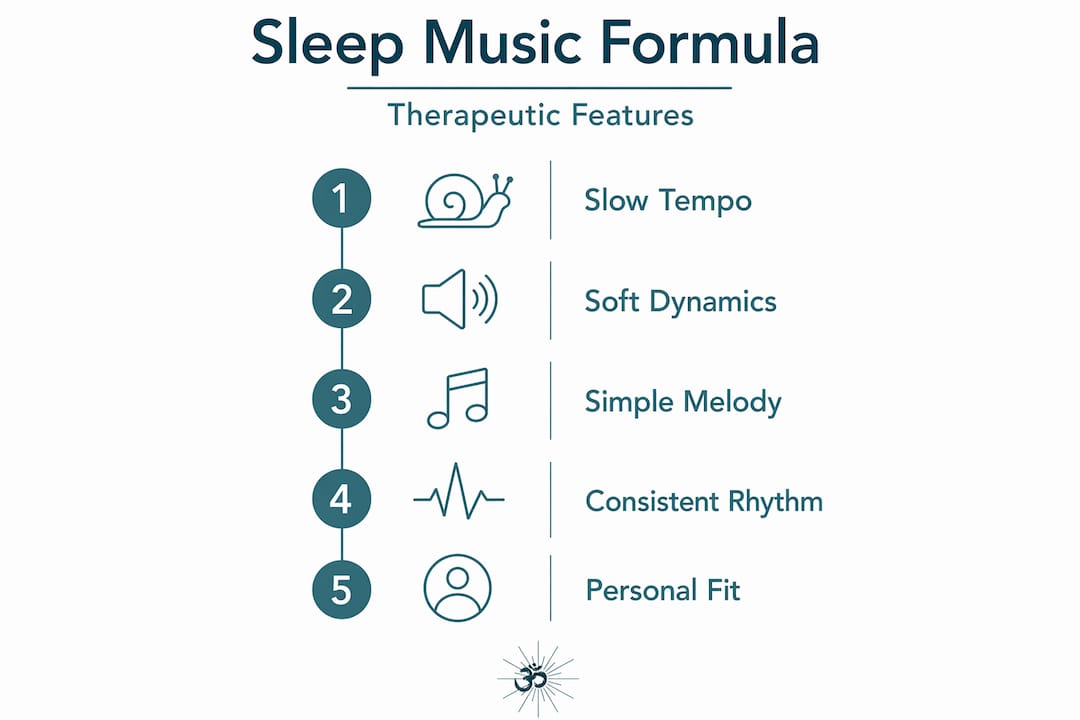
Research identifies very specific characteristics that make music therapeutically useful for sleep. A 2025 review of the evidence consistently points to four key features:
| Feature | Why it matters |
|---|---|
| Slow tempo (60–80 bpm) | Mimics and then gradually entrains the resting heart rate, signalling the body to slow down |
| Smooth, soft melodies | Avoids arousal spikes caused by dynamic contrast or sudden melodic surprises |
| Simple instrumental structure | Reduces cognitive processing load, allowing the mind to quieten rather than track complexity |
| Cultural familiarity | Familiar sounds bypass novelty-response arousal; unfamiliar music makes the brain work harder |
Individual preference matters, too. Music that feels aversive to a listener will not produce the same calming physiological response regardless of how technically “correct” it is. This is why a practitioner asking about your musical background is not small talk. It is assessment.
This is precisely where composers like Robert Emery and Moritz Schneider, the composers behind Orchestralmeditations, have made a genuinely interesting contribution. Their orchestral meditation compositions are built around these exact criteria: unhurried tempos, smooth melodic lines, minimal harmonic disruption. Emery, a prolific composer and arranger who has worked across orchestral and therapeutic genres, and Schneider, known for his meticulous approach to layering and sonic texture, have both brought a kind of architectural intentionality to their work. The music is not simply pleasant. It is constructed to allow the nervous system to do what it needs to do.
Pro Tip: If you are unsure whether a piece of music is suitable for sleep, count the beats per minute using a metronome app. Anything above 80 bpm is likely too stimulating for sleep onset, regardless of how gentle it sounds to you subjectively.
You can explore the specific criteria behind music for sleeping adults in more depth if you want a detailed breakdown of genre and track selection.
How therapists design sleep music programmes
There is a meaningful difference between pressing play on a playlist and a structured therapeutic music intervention. The gap between those two things is, in large part, the music therapist.
A 2026 scoping review published in Healthcare (MDPI) makes this point clearly: therapist involvement is not incidental. It is fundamental to outcomes. Therapists select music aligned not just with clinical goals but with a patient’s musical identity, their cultural background, their emotional relationship with particular sounds, and their specific sleep presentation. That level of personalisation is not something an algorithm currently replicates well.
So what does a structured therapeutic programme actually look like? Here is how practitioners typically design one:
- Assessment. The therapist evaluates the patient’s sleep issues (difficulty falling asleep, frequent waking, poor sleep quality), medical history, and musical preferences and background.
- Music selection. Based on assessment, specific tracks or compositions are chosen. This is not arbitrary. Volume, tempo, instrumentation, and cultural relevance are all considered.
- Protocol design. Sessions are timed, typically 30–45 minutes before bedtime with volume set at approximately 40–50 dB. That is roughly the sound level of a quiet library.
- Delivery method. Whether the patient listens via headphones or speakers affects the experience. Some interventions use binaural approaches for additional neurological effect.
- Review and adjustment. Effective programmes are not static. Therapists monitor outcomes and adjust selections as the patient’s needs and responses evolve.
Some clinical programmes go further than a single pre-bedtime session. Evidence from the RRMS music therapy trial suggests that using multiple listening sessions across the day to regulate emotional and autonomic states throughout waking hours can produce compounding benefits for night-time sleep. In other words, what you listen to at 3pm might matter as much as what you listen to at 10pm.
How music physically and psychologically aids sleep
Right. So the research shows music helps, and practitioners design these programmes carefully. But what is actually happening inside the body and brain when you listen to slow, smooth orchestral music before bed? The mechanisms are more layered than most people expect.
Autonomic nervous system modulation. Slow-tempo music does something genuinely clever. It mimics the resting heart rate, and the body tends to follow. Heart rate slows, blood pressure drops slightly, and the sympathetic nervous system steps back. This is not placebo. It is a measurable physiological response. The RRMS clinical trial specifically cites autonomic regulation as one of the core mechanisms through which music therapy improves sleep.
Emotional modulation. Music shifts mood. Most of us know this from experience. What is less obvious is that music’s mood-regulatory effect has a direct downstream impact on sleep. Anxiety and hyperarousal are among the most common barriers to sleep onset, and music specifically targets these states.
Cognitive distraction. This one is underappreciated. Racing thoughts are an almost universal sleep complaint. Music gives the auditory cortex something gentle to process, which competes with the rumination loop and gradually displaces it. Think of it as occupying the part of your brain that would otherwise be running through tomorrow’s to-do list at midnight.
“Music engages multiple mechanisms simultaneously: affect regulation, autonomic nervous system modulation, and cognitive distraction, each reinforcing the others toward sleep onset.” The evidence from multiple clinical trials consistently reflects this multi-pathway model.
What makes this genuinely interesting from a therapeutic music perspective is that these mechanisms do not work in isolation. They reinforce each other. Slower breathing slows the heart. A slower heart makes emotional regulation easier. Easier emotional regulation reduces rumination. Less rumination means the brain can finally stop running its nocturnal audit.
Applying practitioner insights at home
Understanding why sleep practitioners use music is genuinely useful, but only if you can translate it into something practical for your own evenings. Here is how the clinical evidence maps onto real-world listening.
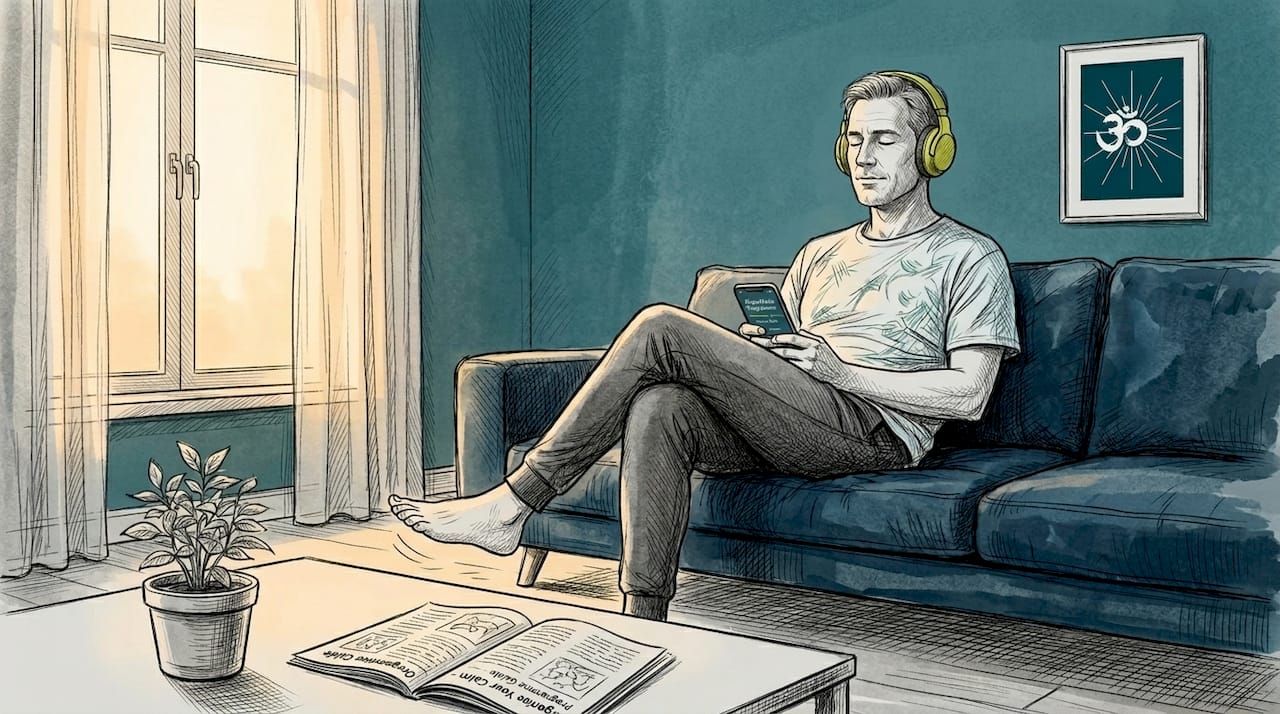
Timing and duration. The evidence is fairly specific: listening for 30–45 minutes before sleep onset, at a comfortable low volume around 40–50 dB, is the protocol that consistently appears in effective clinical trials. This is not a rough suggestion. Practitioners treat it as a dosage decision, the same way you would not take half a recommended amount of any other treatment and expect the same result.
Personalisation. The music needs to feel right to you. If orchestral music makes you think of stressful school concerts, it is probably not the best starting point regardless of its technical credentials. Start with what feels genuinely calm, and then refine from there toward the clinical criteria (tempo, simplicity, smoothness).
Pro Tip: Set a sleep timer so the music stops 20–30 minutes after you expect to fall asleep. Having music play all night can interfere with the deeper stages of sleep, which is the opposite of what you want.
Here are a few common mistakes worth avoiding:
- Using music with lyrics: lyrical content activates language-processing areas of the brain, which is the opposite of restful.
- Choosing music that is emotionally loaded: your wedding song might be beautiful, but the emotional associations will keep your brain busy.
- Playing music too loudly: above 50 dB, the arousal effect starts to outweigh the calming effect.
- Switching tracks frequently: consistency within a session matters. Jarring transitions between different pieces interrupt the physiological response you are trying to build.
Robert Emery and Moritz Schneider’s compositions for Orchestralmeditations address nearly all of these pitfalls by design. Emery’s background in orchestral composition and Schneider’s expertise in layered soundscaping mean their tracks are built for sustained, unbroken listening. No surprising key changes. No lyrical detours. Just the kind of musical architecture that lets your nervous system settle. Pairing that with the mental health benefits of music makes a compelling case for making their work part of a genuine sleep routine.
My honest take on music and sleep therapy
I have spent years watching people reach for sleep aids out of desperation, cycle through medications, and eventually find their way to something simpler and more sustainable. What I have noticed consistently is that the practitioners who get the best results with music are not the ones who hand patients a playlist. They are the ones who treat sound selection the way a pharmacist treats a prescription: with precision, individual context, and a proper rationale.
What I find genuinely exciting about where this field is heading is the convergence of personalised music generation and clinical sleep science. Emerging research into combined neuromodulation and music therapies suggests we are only beginning to understand how deeply sound can reach into the nervous system. AI-generated music tailored to a person’s biometric sleep data is not science fiction. It is probably five years away from being a clinical tool.
That said, I remain sceptical of any approach that strips out human curation entirely. The reason composers like Robert Emery and Moritz Schneider produce music that actually works in clinical and home settings is precisely because they bring human judgement to the process. They understand not just acoustic parameters but emotional resonance, musical arc, and the subtle way a phrase can feel like an exhale. No algorithm has cracked that yet, and I suspect it will remain elusive for longer than the tech industry would like to admit.
The future of sleep music will be a partnership between human artistry and intelligent personalisation. Not one or the other.
— Robert
Orchestralmeditations: music built for better sleep
If the clinical criteria for effective sleep music read like a description of what Orchestralmeditations produces, that is not a coincidence.

Orchestralmeditations records with the National Philharmonic at Abbey Road Studios, and the resulting sound carries the kind of acoustic weight and clarity that consumer production cannot replicate. Composers Robert Emery and Moritz Schneider apply the same principles that clinical researchers identify as effective: controlled tempo, smooth orchestral texture, minimal dynamic disruption. Their work is specifically designed to support deep relaxation, meditative states, and restorative sleep.
The library includes binaural and 3D sound recordings that engage neurological pathways beyond standard stereo listening, reflecting the same multi-mechanism approach that sleep practitioners use. You can explore the full curated meditation library and find individual tracks or collections suited to your sleep needs. Whether you want to begin with a single session or build a regular sleep programme, the music is available to purchase individually or as part of a subscription. This is orchestral music designed with the same intentionality that separates a clinical intervention from a shuffle playlist.
Common questions
How does music help you fall asleep faster?
Music with a slow tempo around 60–80 bpm entrains the heart rate and reduces sympathetic nervous system arousal, which shortens the time it takes to fall asleep. Research consistently shows that music reduces sleep-onset latency compared with no-music control conditions.
Can music therapy help with insomnia?
Yes. Multiple randomised controlled trials show that structured music-listening programmes improve sleep quality scores, reduce the time to sleep onset, and increase total sleep time in people with insomnia and related sleep disorders.
What tempo of music is best for sleep?
Music between 60 and 80 beats per minute is considered optimal for sleep by sleep practitioners and researchers, as this range mirrors the resting heart rate and encourages physiological calm rather than arousal.
Do you need a music therapist to benefit from music for sleep?
Not necessarily, though therapist-designed interventions produce better outcomes than unguided listening. For home use, following clinical guidelines on tempo, volume, timing, and music type will meaningfully improve your results compared with casual listening.
How long should you listen to music before bed?
The evidence-backed protocol is 30–45 minutes before sleep at a low volume around 40–50 dB. Listening for much longer than this, or through the entire night, may interfere with deeper sleep stages rather than support them.