
Most people think wellness is about what you eat, how much you sleep, or whether you remembered to meditate for at least five minutes before checking your phone. Sound rarely gets a look in. Yet sound-based therapies reduce anxiety with a standardised mean difference of -1.13 in high-quality trials — a figure that would make most pharmaceutical companies sit up and pay attention. The role of soundscapes in wellness is far more sophisticated than sticking on a playlist and hoping for the best. This article unpacks the science, the nuance, and the practical magic of aural environments, with contributions from composers Robert Emery and Moritz Schneider woven throughout.
Key takeaways
| Point | Details |
|---|---|
| Sound affects physiology directly | Soundscapes influence heart rate variability and cortisol levels, not just mood or perception. |
| Context shapes effectiveness | The same soundscape produces different benefits depending on cultural familiarity and listener mindset. |
| Multisensory pairings amplify results | Pairing sound with complementary visual stimuli significantly boosts emotional wellbeing beyond sound alone. |
| Orchestral quality matters | Live orchestral recordings, like those by Robert Emery and Moritz Schneider, deliver acoustic depth that digital alternatives cannot replicate. |
| Intentional design beats passive listening | Actively selecting soundscapes aligned with your wellness goals produces measurably stronger outcomes. |
The role of soundscapes in wellness: what the science actually says
Let us be honest about something. When most people hear the phrase “soundscape wellness,” they picture someone draped in linen, listening to whale noises, and calling it therapy. The reality is considerably more interesting. And considerably more useful.
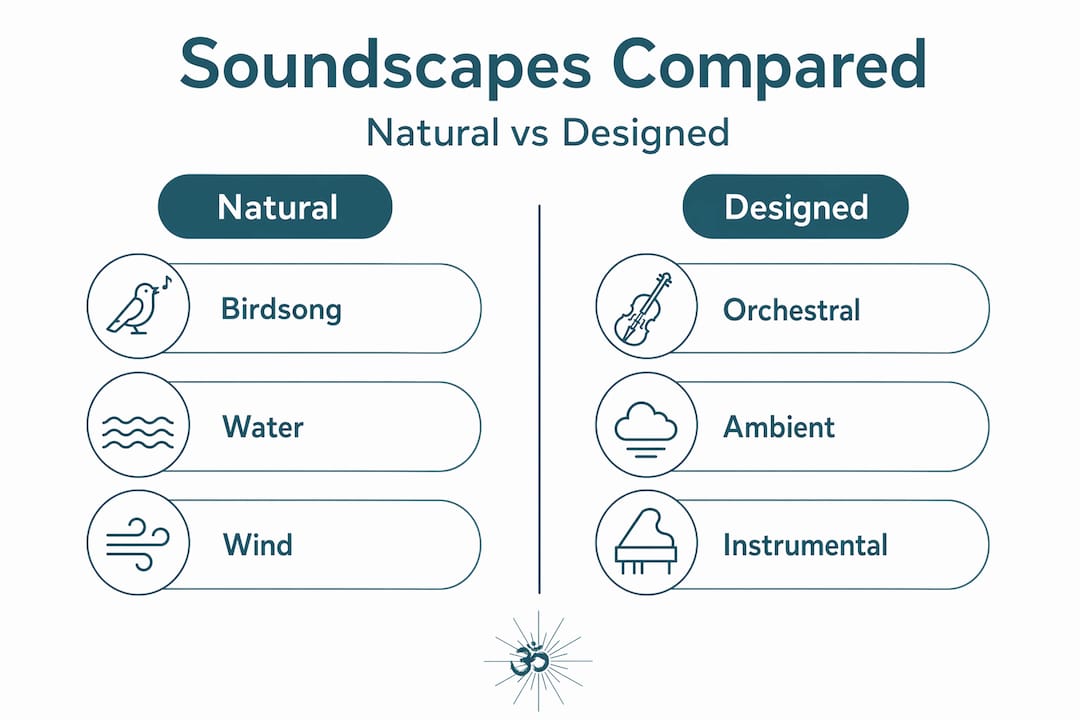
A soundscape is simply the acoustic character of an environment — natural or designed. Natural soundscapes include birdsong, running water, wind through trees, and the specific hum of a forest in early morning. Designed soundscapes include ambient music, orchestral compositions, binaural recordings, and the kind of intentionally crafted audio that composers like Robert Emery and Moritz Schneider produce for meditative and therapeutic purposes. Both categories have measurable, documented effects on the body.
How sound touches the nervous system
The physiological pathway is worth understanding because it explains why soundscapes do what they do. Sound enters the auditory cortex and simultaneously activates the limbic system, the part of the brain most responsible for emotion and stress response. This is not a slow, reflective process. It happens almost instantly, which is why a car alarm at 2am ruins your night before you have even fully woken up.

Phonation-based sound practices enhance vagal tone with an effect size of 0.92, and reduce cortisol with an SMD of -0.54. Vagal tone, for those unfamiliar, is essentially a measure of how well your parasympathetic nervous system is functioning. High vagal tone means you recover from stress efficiently. Low vagal tone means you stay wired long after the stressor has gone. Sound, in other words, is not just pleasant background noise. It is directly modulating your autonomic nervous system.
Natural vs designed soundscapes: a comparison
Both categories offer genuine benefits, though they work through slightly different mechanisms. Here is a practical overview.
| Soundscape type | Characteristics | Primary wellness impact |
|---|---|---|
| Natural (birdsong, water, wind) | Organic, variable, often associated with outdoor settings | Stress reduction, emotional restoration, improved mood |
| Designed orchestral | Layered, intentionally composed, live instruments | Deep relaxation, meditative state induction, cognitive clarity |
| Binaural / frequency-based | Stereo audio engineered to produce specific brainwave states | Focus enhancement, sleep support, anxiety reduction |
| Urban ambient | City sounds, café noise, background chatter | Mild cognitive stimulation, familiarity-based comfort |
Positive soundscape design should move beyond mere noise reduction and focus instead on actively fostering emotional regulation through intentional sound selection. That is a significant shift in thinking. It means the goal is not just removing what is harmful but adding what is genuinely restorative.
Pro Tip: When choosing a soundscape for relaxation, prioritise recordings made with live instruments in high-quality acoustic spaces. The natural resonance and imperfections of live performance engage the auditory system in ways that purely digital sounds cannot match.
Why your soundscape might not work the way you expect
Here is something that catches people off guard. Not all natural sounds are equally restorative for all people. The science on this is rather elegant, and slightly humbling if you assumed that ocean sounds were universally calming.
Benefits of natural soundscapes vary significantly depending on cultural familiarity. People experience stronger mental wellbeing from soundscapes they associate with home, what researchers describe as “local” sound environments. Someone who grew up near a Scottish loch will likely find the sound of lapping water deeply restorative. Someone raised in a city in Japan may find the same recording pleasant but not particularly moving.
This matters enormously for anyone trying to use soundscapes as part of a genuine wellness practice, rather than just ticking a mindfulness box. It also helps explain why generic “nature sounds” playlists sometimes feel a bit hollow. You are not just responding to the acoustic properties of the sound. You are responding to what the sound means to you.
The mindset and environment equation
Expert voices in this space make a point that is easy to miss. Sound bath effectiveness depends on the interaction of the soundscape, the listener’s mindset, and the surrounding environment rather than any fixed mystical property of specific frequencies. That is not a dismissal of sound therapy. It is actually a more sophisticated understanding of it.
This three-part interaction matters because it changes how you approach your soundscape practice. Dropping into a sound bath when you are distracted, stressed, or in an uncomfortable physical space will produce a fraction of the benefit you would receive in a calm, prepared state. The sound is not doing all the work. You are co-creating the experience.
When you add visuals into the mix
This is where things get particularly interesting. Pairing ocean sounds with blue light or rain sounds with specific colour environments produces emotional responses measurably stronger than sound alone. Cross-modal sensory interactions, as researchers call them, can meaningfully deepen the wellbeing impact of a soundscape session.
Think of it this way. A forest recording played in a grey, fluorescent-lit office does some good. The same recording played in warm, dappled lighting with natural textures in view does considerably more. Your brain is pattern-matching across senses simultaneously.
A few practical considerations when designing your soundscape environment:
- Match the temperature of your lighting to the emotional register of the sound (warm tones for relaxing orchestral music, cooler tones for focus-enhancing binaural audio)
- Reduce visual clutter in your listening space — a busy environment competes for attentional resources your nervous system needs for restoration
- Consider scent as an additional layer, since olfactory memory is closely linked to the same limbic pathways activated by sound
- Use headphones for binaural recordings but speakers for orchestral works, where spatial acoustic properties are part of the experience
Pro Tip: Before a soundscape session, take 60 seconds to settle physically, dim your lighting, and set a loose intention for the listening experience. This preparation primes your nervous system to receive the sound more fully, making the whole thing considerably more than background noise.
Soundscapes in wellness practices and therapy
The clinical application of soundscapes has moved well beyond the fringes. Music therapy, sound baths, mindfulness-based sound practices, and meditative audio programmes are now documented as legitimate interventions with measurable outcomes.
Mind-body therapies including music therapy and mindfulness demonstrate moderate-to-large beneficial effects on sleep quality, depression, and anxiety. These are not soft findings. These are systematic review results from randomised controlled trials, the gold standard in clinical research. Sound therapy and wellness are now firmly in the same sentence in serious academic literature.
What separates effective soundscape-based therapy from wishful thinking? A lot of it comes down to intentionality in the design of the sound itself. This is precisely where the work of composers like Robert Emery and Moritz Schneider becomes relevant. Emery, whose orchestral background spans decades of professional composition, and Schneider, whose work bridges acoustic theory and meditative practice, approach the creation of therapeutic soundscapes with the kind of rigour you would expect from clinical researchers rather than hobbyist producers. Their recordings for Orchestralmeditations incorporate live orchestral performance, binaural techniques, and frequency-specific design choices that align with the neurological mechanisms documented in peer-reviewed research.
Sound therapy and wellness integration can take many practical forms. Here is how to think about building it into your life without overcomplicating things.
- Start with intention. Decide whether you need relaxation, focus, sleep support, or emotional processing before selecting a soundscape. Different goals genuinely benefit from different acoustic qualities.
- Choose live recordings where possible. The harmonic complexity of a live orchestral performance engages the auditory system more richly than synthesised or digitally processed sound. This is not aesthetic snobbery. It has acoustic and neurological basis.
- Create a consistent listening environment. Your nervous system learns associations. A dedicated chair, a specific lighting setup, and a regular time of day all reinforce the restorative signal your soundscape is sending.
- Limit session length to 20 to 45 minutes initially. Longer sessions can be deeply beneficial, but starting shorter allows you to notice the effects without sensory saturation.
- Track your response over time. Pay attention to sleep quality, emotional stability, and stress reactivity in the days following regular soundscape sessions. The data is in your own experience.
For deeper exploration of how sound works within integrative wellness approaches, meditative soundscapes and healing offer a thorough look at the therapeutic mechanisms involved. You might also find value in reading about healing through harmonics for a more granular look at how specific frequencies interact with the body.
Choosing and creating your personal soundscape
Knowing that soundscapes matter is one thing. Knowing which soundscape to actually put on when you get home from a difficult day is quite another. Let us make that practical.
The most effective personal soundscapes tend to share a few characteristics. They are acoustically rich without being chaotic, culturally resonant for the listener, and designed with a specific emotional destination in mind. Restorativeness and pleasantness shape the quality of a soundscape’s effect more than volume or frequency alone. This means that a gentle orchestral piece played at low volume in a familiar, comfortable setting will outperform an aggressively relaxing white noise machine every single time.
Blending natural and orchestral elements is particularly effective. Recordings that weave birdsong into string arrangements, or incorporate flowing water beneath a cello line, engage both the primal restorative response to nature sounds and the cognitive and emotional depth that live orchestral music provides. This is an area where Emery and Schneider’s compositions genuinely stand apart. Their holistic orchestral soundscapes are not simply classical music repackaged as meditation content. They are purposefully constructed acoustic environments.
Here is a quick comparison of soundscape sources and what they do well.
| Source | Best for | Limitations |
|---|---|---|
| Streaming playlists (generic) | Casual background listening | Inconsistent quality, limited therapeutic intent |
| Nature sound apps | Quick stress relief, sleep | May lack cultural resonance for some listeners |
| Binaural beat programmes | Focus, sleep induction | Requires headphones, not suitable for all listeners |
| Live orchestral recordings | Deep meditation, emotional processing | Requires quality playback equipment for full effect |
| Curated orchestral meditation libraries | Holistic wellness, sustained practice | Varies by composer and production quality |
If you want to explore different soundscape types for relaxation and understand which categories suit different goals, there is a useful breakdown available that goes into considerably more detail.
Pro Tip: Try pairing your soundscape session with warm amber lighting and a view of something natural, even a houseplant or a window. The multisensory congruence actively deepens the restorative effect by engaging multiple neural pathways simultaneously.
My perspective on sound and genuine wellness
I have noticed something over the years that I think deserves saying plainly. People come to soundscapes and meditation music with either too much faith or too little. The too-much-faith crowd believes a specific frequency will cure everything from insomnia to existential dread. The too-little-faith crowd dismisses it as glorified background noise. Neither position is doing anyone any favours.
What I have come to understand, partly through working with the extraordinary compositions that Robert Emery and Moritz Schneider produce, is that high-quality orchestral soundscapes work precisely because they demand something from you. Not effort, exactly. More like presence. When you sit with a well-constructed orchestral meditation piece, the harmonic complexity, the dynamic variation, the spatial depth of a live recording made in an acoustic space like Abbey Road — it draws your attention inward without forcing it. That is an incredibly rare thing to achieve in audio production.
The science backs this up in ways I find genuinely moving. The fact that phonation and resonant sound modulate vagal tone, that cultural familiarity shapes restorative response, that pairing sound with the right visual environment measurably amplifies benefit — these are not quirks or fringe findings. They are telling us that sound is deeply woven into how our bodies and minds regulate themselves. We have just been underestimating it.
My honest advice? Stop treating soundscapes as the auditory equivalent of a scented candle, something nice but essentially decorative. Treat your listening environment with the same seriousness you bring to what you eat or how you exercise. Start with something crafted with genuine therapeutic intent. Notice what changes. You might surprise yourself.
— ROBERT
Discover Orchestralmeditations for your wellness practice
If reading this has made you want to actually experience the kind of soundscape quality we have been discussing rather than just reading about it, Orchestralmeditations is where I would point you first. The platform offers a curated library of orchestral meditation music composed by Robert Emery and Moritz Schneider, recorded with live musicians including sessions at Abbey Road Studios. This is not ambient wallpaper. These are purposefully designed acoustic environments built around the same principles the research supports: live harmonic complexity, frequency-specific intent, and multisensory depth.
Whether you are looking to support a mindfulness practice, improve sleep, reduce stress, or simply experience what a genuinely well-crafted soundscape feels like, the library has options worth exploring. You can also read more about why orchestral music outperforms digital alternatives for wellness purposes, if you want the acoustic science laid out clearly before you commit. The difference, once you hear it, is not subtle.
FAQ
What is the role of soundscapes in wellness?
Soundscapes influence wellness by directly modulating physiological stress responses, including cortisol levels and heart rate variability, while also supporting emotional regulation and cognitive restoration through sustained auditory engagement.
Why are soundscapes important for stress relief?
Natural and designed soundscapes activate the parasympathetic nervous system, reducing the body’s stress response and promoting recovery. Sound-based therapies significantly lower cortisol in high-quality clinical trials, making them a legitimate tool for stress management.
Do all soundscapes work equally well for everyone?
No. Research shows that soundscape benefits vary with familiarity and cultural context. Sounds associated with personal or regional experience tend to produce stronger restorative effects than unfamiliar acoustic environments.
How does multisensory experience affect soundscape benefits?
Pairing sound with complementary visual environments — such as warm lighting with relaxing orchestral music — amplifies emotional wellbeing beyond what sound alone achieves, thanks to cross-modal sensory interactions in the brain.
How do I incorporate soundscapes into a daily wellness routine?
Choose a consistent time and environment, select soundscapes matched to your specific wellness goal (relaxation, focus, or sleep), and consider pairing audio with supportive visual elements. Enhancing your practice with science-backed sound approaches can help you build a more intentional and effective daily habit.