Sound therapy is not simply pressing play on a relaxing playlist and hoping for the best. It is, in fact, a practice rooted in the relationship between specific tones, frequencies, and vibrations and the way your nervous system responds to them — often below the level of conscious thought. If you have ever felt your chest loosen during a swell of orchestral strings, or noticed your breathing slow near a gently struck singing bowl, you have already experienced a glimpse of what sound therapy can do. Sound therapy uses specific tones and vibrations to promote healing and relaxation, making it a genuinely distinct field from simply enjoying music.
Key Takeaways
| Point | Details |
|---|---|
| Sound therapy basics | Sound therapy uses tones and vibrations to promote relaxation and mental health as a complementary approach. |
| Diverse methods | Techniques like binaural beats, sound baths, and vibroacoustic therapy offer different sensory experiences and benefits. |
| Scientific evidence | Research shows sound therapy can reduce stress hormones and improve mood but results vary by individual and context. |
| Orchestral music’s role | Immersive orchestral compositions by experts enhance therapeutic effects through careful session design. |
| Safety and integration | Sound therapy complements traditional treatments and requires medical consultation for some conditions. |
Understanding sound therapy and its methods
“What is sound therapy for mental health?” is a question that sounds straightforward until you realise it is actually asking about a rather sprawling family of techniques. Sound therapy is not one thing. It is an umbrella term covering a diverse set of approaches, each with its own mechanism and flavour. Think of it less like a single instrument and more like an entire orchestra, with each section doing something different but contributing to the same overall effect.
Common sound therapy modalities include binaural beats, sound baths, and vibroacoustic therapy, each working through distinct auditory and physical pathways. Here is a quick breakdown of what each actually involves:
- Binaural beats: You listen through headphones, and each ear receives a slightly different frequency. Your brain then perceives a third, phantom tone, which can guide your brainwaves towards states associated with relaxation, focus, or sleep.
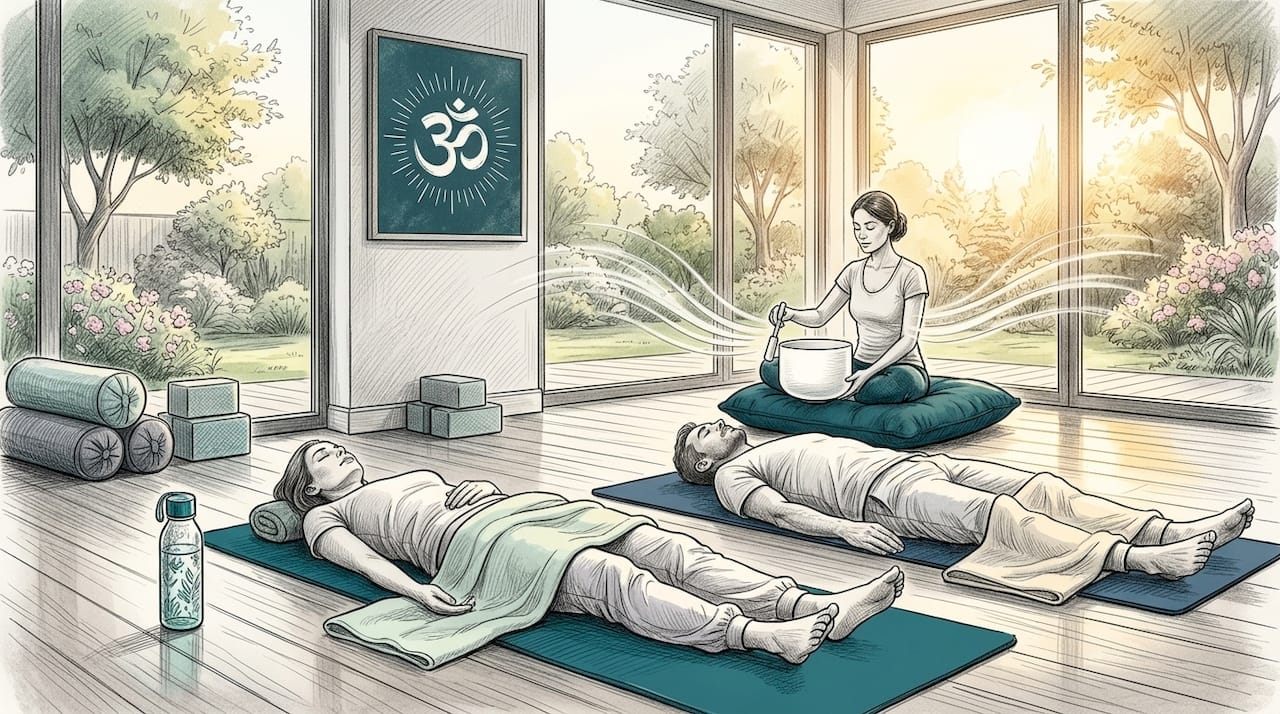
- Sound baths: You lie or sit comfortably while a practitioner plays instruments such as Tibetan singing bowls, crystal bowls, gongs, or chimes around you. The sound washes over your whole body, which is where the rather poetic name comes from.
- Vibroacoustic therapy: This one goes a step further. Sound is delivered through a specially designed chair or mat, so you actually feel the vibration travelling through your body, not just your ears. It is the difference between watching someone swim and jumping into the water yourself.
- Guided sound meditation: A facilitator weaves spoken guidance with music or tones, combining mindfulness practice with sound immersion.
Here is how these major sound therapy methods stack up in terms of delivery, setting, and what they are typically used for:
- Binaural beats work best with headphones in a quiet space and are particularly popular for home practice.
- Sound baths tend to be group or one-to-one sessions in a studio or wellness centre.
- Vibroacoustic therapy often occurs in clinical or specialist wellness settings due to the equipment required.
- Orchestral immersion can happen at home or in a concert setting and is one of the most accessible forms available.
The sheer variety is actually one of sound therapy’s strengths. Whatever your lifestyle, budget, or personal taste, there is almost certainly a form of mental health sound therapy that fits.
The science behind sound therapy for mental health
Right, so the techniques sound (pun fully intended) rather appealing. But what does the research actually say? This is where things get genuinely interesting, and also a little more nuanced than wellness marketing tends to let on.
Sound therapy affects your brain and body through several overlapping pathways. Your auditory cortex processes incoming tones, your limbic system responds emotionally, and your autonomic nervous system (the one governing your heart rate, breathing, and stress response) adjusts accordingly. When carefully chosen frequencies land in the right context, the result can be measurably physical.
“A 2025 scoping review found that many sound interventions reduce physiological stress markers like cortisol and heart rate variability, though effects depend heavily on context and individual factors.”
That last qualifier matters. Context and individual factors are doing a great deal of work in that sentence, and we will come back to them. For now, here is a summary of what the research currently supports:
| Effect | Evidence strength | Notes |
|---|---|---|
| Reduced cortisol (stress hormone) | Moderate | Most consistent in calm, guided settings |
| Improved heart rate variability | Moderate | Linked to parasympathetic activation |
| Reduced anxiety scores | Growing | Particularly with binaural beats and sound baths |
| Improved mood | Emerging | Consistent across several study types |
| Better sleep quality | Promising | Singing bowl studies show early positive results |
Sound baths may activate the parasympathetic nervous system, lowering heart rate and improving mood, though researchers are careful to note that the evidence is still building. This is not a reason for scepticism so much as an invitation to approach the field with open but informed curiosity. The science of relaxation music is genuinely growing, and what we know now already offers plenty to work with.
Exploring immersive orchestral music in sound therapy
Here is where things get particularly exciting, at least from our perspective at Orchestral Meditations. Orchestral music occupies a unique position in the landscape of sound therapy methods, because it is one of the richest, most layered sonic environments the human ear can encounter. A string section alone contains dozens of simultaneous tonal relationships. Add woodwind, brass, and percussion, and you have something that can shift emotional states in ways a simple sine wave simply cannot replicate.
Session design, including tempo, dynamics, and sound patterns, greatly influences the psychological effects of sound therapy. This is where composition and production expertise become genuinely therapeutic tools rather than mere aesthetic choices.
Composer Robert Emery approaches meditative orchestral writing with this in mind. His pieces are not background wallpaper. They are carefully constructed journeys, with gradual dynamic shifts that move a listener from an alert state towards deep relaxation without the jarring gear changes that can actually increase mental agitation. Think of a piece of music that builds too fast, or resolves too abruptly. It leaves you hanging, slightly on edge. Good therapeutic composition avoids all of that.
Producer Moritz Schneider brings an equally thoughtful technical perspective to the process. The recording quality matters more than many people realise. Distortion, compression artefacts, or poorly balanced frequencies can all introduce subtle tension into what is supposed to be a relaxing experience. Recorded at Abbey Road Studios with the National Philharmonic, the productions we offer are specifically designed to eliminate that kind of sonic friction.
Key features that make immersive orchestral music particularly suited to sound therapy include:
- Layered, continuous sound that holds listener attention without demanding it
- Dynamic arcs that guide the nervous system towards progressively deeper relaxation
- 3D surround sound and binaural integration that create spatial immersion, making the sound feel enveloping rather than flat
- Theta frequency alignment embedded within the musical texture to support meditative brainwave states
Pro Tip: Listen with good quality over-ear headphones in a dimly lit room to fully experience the binaural and spatial dimensions woven into holistic orchestral soundscapes. The difference between standard and immersive listening is as dramatic as watching a film on your phone versus a full cinema screen.
The distinction between continuous and patterned sounds is also worth noting. Continuous sound (like a sustained drone or steady orchestral texture) tends to ease mental chatter by giving the brain a consistent anchor. Patterned or rhythmically complex music can engage cognitive processing in ways that, while enjoyable, may not be ideal for deep relaxation. Knowing this helps you choose the right piece for the right moment.
Benefits and precautions of sound therapy for anxiety and sleep
Let us talk practically. If you are exploring sound therapy for mental health specifically because anxiety or sleep trouble is making your life difficult, there is good news, though it comes with some important context.
Sound healing for anxiety has accumulated a meaningful body of supporting research. Listening for 24 minutes to music with auditory beat stimulation reduced anxiety symptoms more effectively than shorter or longer durations, suggesting that this is a case where more is not automatically better. Twenty-four minutes is also, refreshingly, an entirely achievable amount of time for most people.
Here is a simple framework for using sound for relaxation and anxiety relief:
- Choose the right track: Opt for compositions with slow tempos (around 60 beats per minute), sustained textures, and minimal sudden changes in dynamics.
- Set the environment: Dim lighting, comfortable position (lying down works well), and headphones if the track includes binaural elements.
- Commit to the duration: That 24-minute window appears to be the sweet spot based on current research. Set a gentle alarm if you tend to drift off (which, incidentally, is not the worst outcome).
- Make it regular: Like most wellness practices, sound therapy compounds over time. Daily or near-daily practice yields more consistent benefits than occasional sessions.
- Pair it thoughtfully: Sound therapy works beautifully alongside mindfulness practice, journalling, breathing exercises, or whatever else supports your mental health.
“Sound therapy should complement medical treatment, not replace it, and individuals with trauma, sound sensitivity, or psychiatric conditions should consult their doctor before trying sound baths or vibroacoustic therapy.”
That is not just a legal disclaimer. It is genuinely important guidance. Most people encounter no difficulty whatsoever with sound therapy. But for someone with PTSD, for example, certain immersive auditory environments can feel overwhelming rather than soothing. Similarly, individuals with conditions like epilepsy or severe tinnitus should get professional advice before experimenting. The healing benefits and precautions of audio-based therapy deserve the same considered approach you would give any other wellness intervention.
How sound therapy differs from clinical music therapy
This is a distinction that comes up often, and it matters rather more than most casual conversations about sound therapy acknowledge. Music therapy for mental health and sound therapy are not the same thing, and conflating them can lead to either unrealistic expectations or an underestimation of what clinical music therapy actually involves.
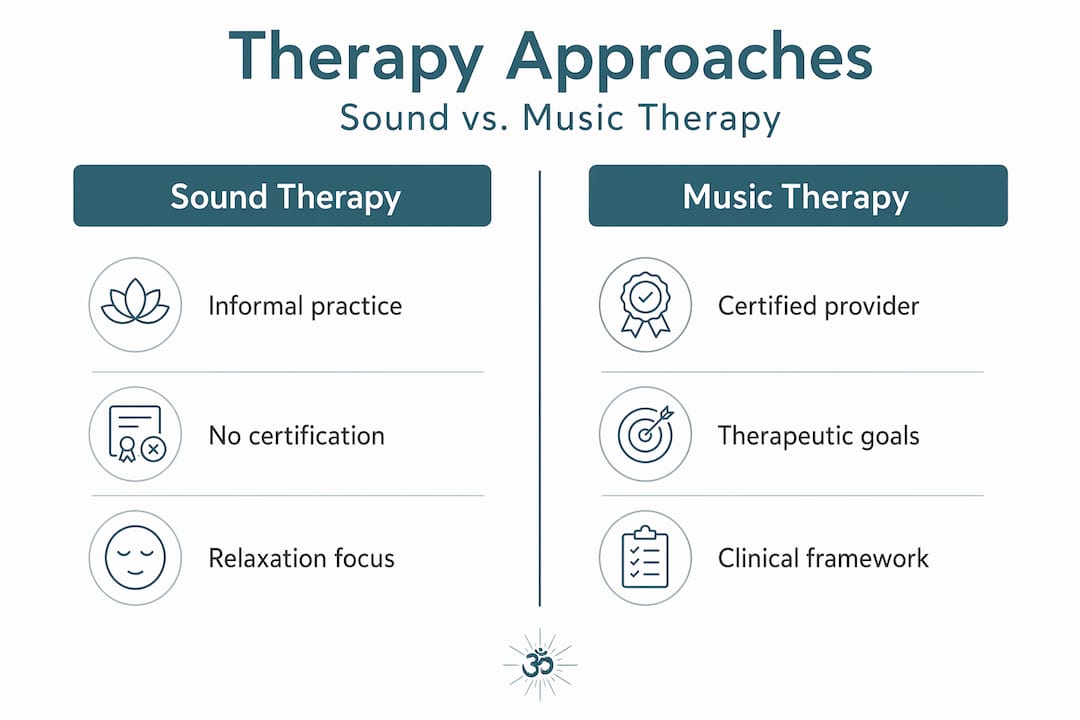
Clinical music therapy is delivered by trained therapists within a structured therapeutic framework, using both active and receptive methods, and it differs substantially from informal sound therapy events.
Here is how the two approaches compare:
| Feature | Clinical music therapy | Sound therapy (informal) |
|---|---|---|
| Practitioner qualification | Registered music therapist | No certification required |
| Patient participation | Active (playing, composing, singing) or receptive | Primarily passive listening |
| Therapeutic goals | Individually tailored | General wellbeing and relaxation |
| Oversight and accountability | Clinical governance and documentation | Self-directed or facilitator-led |
| Setting | Healthcare or clinical environment | Wellness studio, home, or festival |
| Evidence base | Extensive, well-established | Growing, promising |
Neither is superior in every situation. They serve different purposes. If you are working through a specific psychological condition with a healthcare team, clinical music therapy delivered by a qualified music therapist is the relevant option. If you are looking to manage everyday stress, improve sleep, or cultivate a regular relaxation practice, the informal end of the spectrum (including immersive orchestral listening) is both accessible and genuinely effective.
Key things to keep in mind when choosing between them:
- Sound therapy does not require any professional oversight, making it easy to integrate into daily life.
- Clinical music therapy is protected by professional standards, meaning outcomes are tracked and adjusted.
- Understanding the difference helps you set realistic expectations and choose appropriately for your needs.
It is also worth noting that clinical versus informal sound therapy are not mutually exclusive. Many people use orchestral sound sessions alongside formal therapeutic support, and the two can complement each other very naturally.
Why immersive orchestral sound therapy needs thoughtful design to deliver true benefits
Here is something the wellness world rarely admits: simply playing music in a room does not make it therapy. This might ruffle a few feathers in the sound bath community, but it is an important truth that separates genuinely impactful experiences from those that leave you thinking, “Well, that was pleasant, I suppose,” without any lasting change.
In my experience working with the music and recordings we produce, the sessions that resonate most deeply with listeners are almost never the ones where someone pressed shuffle on a vaguely ambient playlist. They are the ones where every element — tempo, dynamic arc, spatial placement, frequency content, even the silence between phrases — has been considered with therapeutic intent.
Individual variability is the other piece of this puzzle that commercial wellness marketing tends to gloss over. Two people lying side by side in a sound bath can have completely different experiences. One might feel profound stillness. The other might spend the entire session mentally composing their grocery list, frustrated that it is “not working.” The difference is not the sound. It is mood, expectation, prior experience with meditation, sensitivity to particular frequencies, and the listener’s relationship with stillness. These factors matter enormously, and any honest account of sound therapy has to acknowledge them.
This is precisely why the work of composers like Robert Emery and producers like Moritz Schneider at Orchestral Meditations is not simply artistically valuable — it is therapeutically significant. When you embed binaural beats within lush orchestral textures, layer theta frequencies beneath the swell of strings, and record with the spatial richness of Abbey Road acoustics, you are creating an environment that works with the listener’s nervous system rather than leaving everything to chance. The casual approach to sound therapy often overlooks these complexities, which is why results vary so wildly from one session to the next.
My genuine recommendation? Approach your first few sessions with curiosity rather than expectation. Notice what shifts in your body rather than waiting for a cinematic epiphany. And seek out holistic orchestral soundscapes that have been crafted with real intent, rather than generated algorithmically or assembled from royalty-free loops. The difference, when you find it, is unmistakable.
Explore immersive orchestral music for your mental well-being
You have just taken in a substantial amount of information about how sound therapy actually works and why the quality of what you listen to shapes the quality of your experience. Now here is the natural next step: hearing it for yourself.
At Orchestral Meditations, everything in our library has been composed and produced with exactly the therapeutic nuances discussed in this article in mind. Robert Emery and Moritz Schneider craft each piece with careful attention to tempo, dynamic progression, and frequency content, recorded with the National Philharmonic at Abbey Road Studios to ensure the sonic quality your nervous system actually deserves. Whether you are new to sound therapy or looking to elevate your existing practice, our collections offer a genuinely different listening experience. Explore the advantages of orchestral meditation music and discover why live orchestral recording outperforms digitally generated tracks for therapeutic depth.
Frequently asked questions
Is sound therapy a replacement for traditional mental health treatment?
No, sound therapy should not replace evidence-based medical or mental health care. It works best as a complementary practice alongside, not instead of, professional treatment.
How long should a typical sound therapy session last for anxiety relief?
Research suggests that 24 minutes of auditory beat stimulation music yields the most effective anxiety reduction, making it a practical and achievable session length for daily practice.
Are sound baths safe for everyone?
Most people find sound baths entirely safe and enjoyable, but those with trauma, sound sensitivity, or psychiatric conditions should consult a doctor first before attending.
What makes immersive orchestral music effective for sound therapy?
Careful design in tempo, dynamics, and continuous sound patterns, combined with expert composition from practitioners like Robert Emery, creates psychologically impactful soundscapes that actively support relaxation rather than simply accompanying it.
Can sound therapy improve sleep quality?
Yes, studies suggest that singing bowl therapy may alleviate anxiety and improve sleep quality, making it a worthwhile addition to an evening wind-down routine.