If you’ve ever written off sound therapy as something that belongs in a fairy circle next to crystal pendulums and incense that smells suspiciously like a garden centre, you’re not alone. But what is scientific sound therapy, really? At its core, it is the deliberate use of tones, frequencies, and vibrations to influence the body and mind in measurable ways. This guide walks you through the actual mechanisms, the evidence, the modalities, and the practical applications. No mysticism required, though a certain amount of wonder is, frankly, unavoidable.
Key takeaways
| Point | Details |
|---|---|
| Sound therapy is evidence-based | It uses measurable physical mechanisms including brainwave entrainment and vagal nerve stimulation to promote wellbeing. |
| Multiple modalities exist | Sound baths, binaural beats, and vibroacoustic therapy each work differently and suit different needs and preferences. |
| Research shows real benefits | Studies link regular sessions to reduced anxiety, improved sleep, and lower cortisol, though results vary by individual. |
| Artistry and science converge | Composers like Robert Emery and Moritz Schneider craft orchestral soundscapes that integrate therapeutic frequency design with musical depth. |
| Expectations matter | Sound therapy works best as a complement to a broader wellness routine, not a standalone cure-all. |
What is scientific sound therapy and how does it work
Sound therapy is defined as a complementary, receptive practice that uses tones, frequencies, and vibrations to support relaxation and relieve symptoms. The word “receptive” is doing a lot of work here. You are not singing, you are not strumming anything. You are simply receiving. The sound does the heavy lifting.
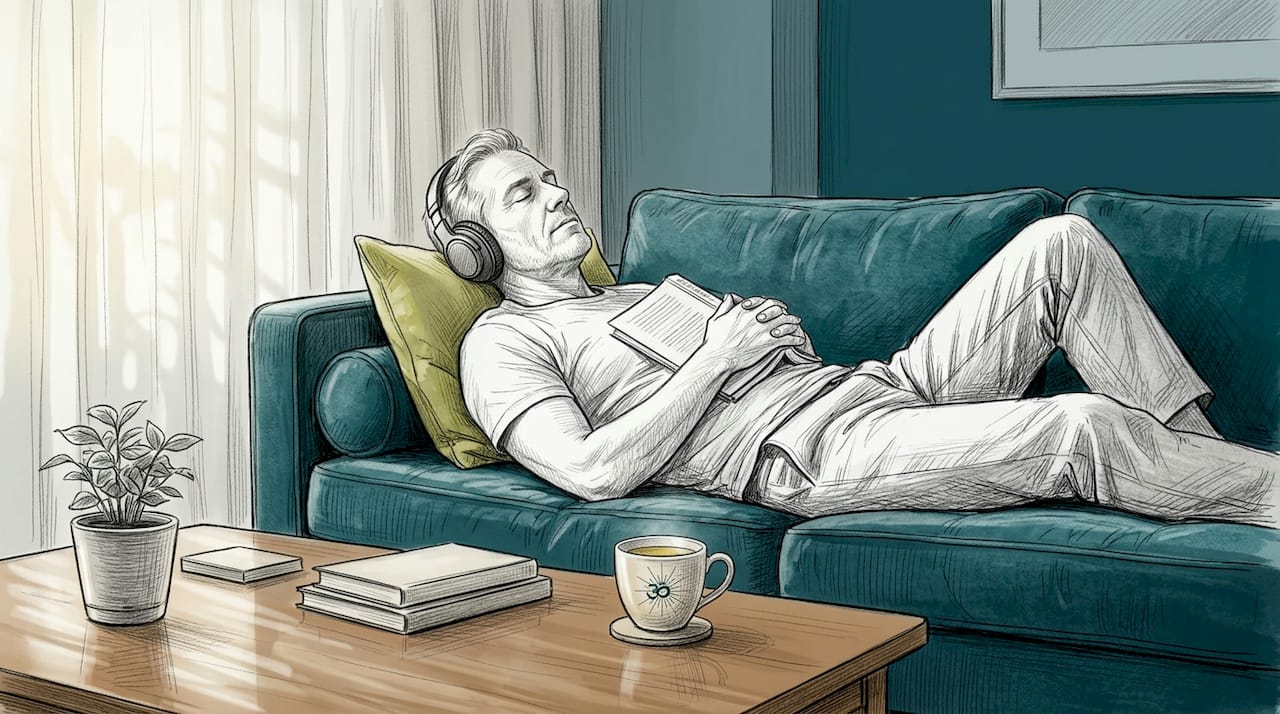
The scientific basis of sound therapy rests on a concept called entrainment: the tendency of biological rhythms to synchronise with external rhythmic stimuli. Your brain, your heart rate, even your breathing can gradually align with a dominant external frequency. It is a bit like how you unconsciously start tapping your foot to a song you did not even realise you were listening to, except the consequences here are considerably more useful than an awkward moment on the tube.
More specifically, the science describes something called the Frequency Following Response (FFR). When you are exposed to a stable, repeating sound frequency, your neural firing patterns begin to mirror it. Neural entrainment shifts the brain toward slower wave states such as Delta, Theta, and Alpha, which are associated with deep rest, emotional processing, and immune regulation. This is the territory of Non-Sleep Deep Rest (NSDR), a restorative brain state that delivers recovery without requiring full sleep.
Here is a quick reference for the main brainwave states involved:
- Delta (0.5–4 Hz): deep, dreamless sleep and physical restoration
- Theta (4–8 Hz): twilight state between waking and sleep, creativity, emotional processing
- Alpha (8–13 Hz): calm wakefulness, relaxed focus, the state many people reach after a good meditation
- Beta (13–30 Hz): active thinking, problem-solving, the state you are probably in right now
- Gamma (30+ Hz): high-level cognitive processing, heightened awareness
Sound therapy essentially invites your nervous system to shift down through those gears. The parasympathetic nervous system, the branch responsible for rest and digestion, gets a nudge in the right direction. Stress responses dial back. Heart rate and blood pressure often follow.
This is precisely where composers like Robert Emery and Moritz Schneider, whose orchestral meditation music is featured on Orchestralmeditations, bring something genuinely rare to the field. Emery, a composer with deep roots in classical orchestration, and Schneider, whose background spans music production and therapeutic sound design, blend these entrainment principles into full orchestral textures. Rather than a single drone tone playing on repeat, their orchestral meditation music layers frequency-based design into compositions with genuine emotional arc. The science is embedded, not bolted on.
Pro Tip: If you are new to sound therapy, spend your first few sessions simply noticing your breathing rate before and after. That simple observation teaches you more about your own nervous system response than any amount of reading.
The different modalities you should know
Not all sound therapy is the same, and treating it as one monolithic practice is a bit like saying “exercise” without specifying whether you mean a brisk walk or a triathlon. The modalities vary considerably in mechanism, instrument, and intention.
Sound baths are probably the most widely encountered form. You lie down, instruments are played around you, and the sound washes over your body. Gongs, Tibetan singing bowls, crystal bowls, and tuning forks are the usual suspects. The effects of sound therapy in this context include vagal nerve stimulation and brainwave entrainment, with frequencies between 40 and 150 Hz proving particularly effective for emotional regulation and anxiety reduction. A typical session runs between 45 and 90 minutes.
Binaural beats work differently and require headphones. You hear a slightly different frequency in each ear and your brain perceives a third tone that is the mathematical difference between the two. A 200 Hz tone in the left ear and a 208 Hz tone in the right creates an apparent 8 Hz beat, which falls squarely in the Theta range. The brain, essentially tricked into tracking a frequency that does not physically exist, begins to shift its activity accordingly.
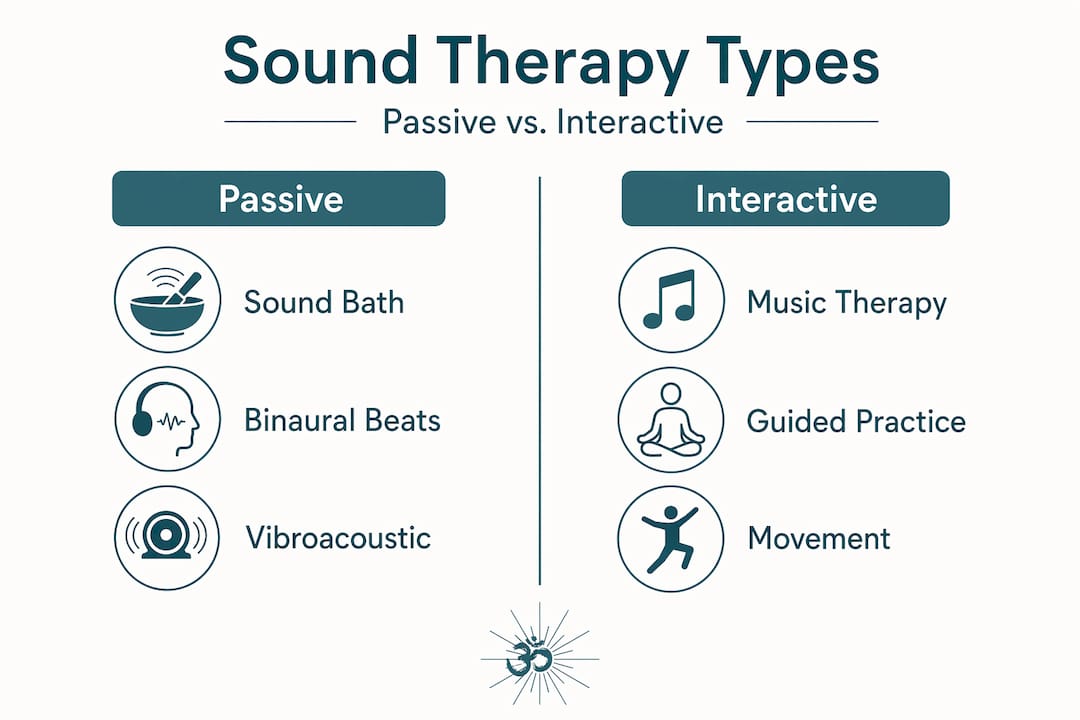
Vibroacoustic therapy takes a more physical approach. Sound frequencies are transmitted directly through a specially designed mat, chair, or bed, so the body receives the vibration rather than just the ears. It is especially used with chronic conditions where tactile stimulation carries as much weight as auditory input.
Here is a comparison of the three primary modalities:
| Modality | Primary mechanism | Common instruments | Typical duration | Best suited for |
|---|---|---|---|---|
| Sound bath | Auditory entrainment, vagal stimulation | Gongs, singing bowls, crystal bowls | 45–90 minutes | Stress, anxiety, group settings |
| Binaural beats | Frequency Following Response | Headphones, digital audio | 20–45 minutes | Sleep, focus, solo listening |
| Vibroacoustic therapy | Physical vibration transmission | Specialised mats and chairs | 30–60 minutes | Chronic pain, fibromyalgia, PTSD |
It is worth distinguishing all of these from music therapy, which is a distinct clinical discipline. Music therapy involves active participation: singing, songwriting, rhythm-based interventions, all delivered by a certified therapist within a patient care plan. Sound therapy, by contrast, is receptive. You are not asked to do anything. That low threshold for participation is, honestly, part of its appeal.
Emery and Schneider’s work occupies an interesting position in this landscape. Their orchestral soundscapes are neither clinical music therapy nor a simple drone recording. They carry enough compositional sophistication to engage the mind, while the embedded frequency work and therapeutic soundscapes provide the underlying physiological nudge. It is the difference between a beautifully crafted meal and a nutrition supplement. Both might get you to the same destination, but one is considerably more pleasurable en route.
What the research actually says
Let’s be honest: the research on sound therapy ranges from genuinely rigorous to “we had twelve participants and called it a day.” That variability does not discredit the field. It just means you need to read the studies with a calibrated eye.
The stronger end of the evidence includes a randomised clinical study examining daily 20-minute acoustic neurostimulation sessions over 21 days. Participants showed measurable reductions in stress, anxiety, and depression, along with improved sleep quality. The mechanism involved Theta, Alpha, and Beta frequencies regulating the autonomic nervous system, with measurable lowering of heart rate and blood pressure. That is not a vague claim. Those are physiological markers.
On the chronic condition side, whole-body vibration therapy has shown benefit for fibromyalgia patients, improving daily functioning and balance across 12-week programmes. Pain outcomes were more variable, which is a pattern you will notice across sound therapy research generally. The mental and physiological effects tend to be more consistent than the pain relief effects.
Clinical settings are beginning to take notice too. Research from UCLA Health found that sound baths before anaesthesia reduced patients’ need for medication while improving nervous system calm. The Tibetan singing bowls were combined with light and scent to create a grounding pre-surgical experience. That is not a wellness retreat. That is an operating theatre.
“Sound therapy is a promising tool for relaxation and stress reduction but is most effective integrated with broader wellness or clinical plans.” — UCLA Health
The physiological pathways that keep appearing in this research are worth naming directly:
- Heart rate variability (HRV): higher HRV indicates a more adaptable, resilient nervous system; sound therapy sessions consistently show improvement here
- Cortisol levels: multiple studies link regular sound exposure to lower salivary cortisol, the primary chemical marker of chronic stress
- Vagal tone: improved vagal tone after sound therapy is linked to better emotional regulation and immune function
The one caution worth repeating: the placebo effect is real, and it is not necessarily a problem. If your nervous system calms down because you believe the sound is helping, your nervous system has still calmed down. The outcome is the same. What matters for you as a practitioner is whether the benefit is consistent and repeatable.
Pro Tip: Track your sleep quality on days you practise sound therapy using a simple 1 to 10 journal rating. After three weeks, you will have your own personalised data set, which is far more relevant to your life than any group study average.
Using sound therapy in your daily wellness routine
Knowing the science is one thing. Actually fitting sound therapy into a life that includes work, family, and the occasional inability to locate your keys is another matter entirely. The good news is that it adapts well to real-world constraints.
Here is a practical framework for getting started:
- Start with 20 minutes. Research supports sessions as short as 20 minutes producing measurable changes. You do not need an hour. A lunch break will do.
- Choose your modality based on your goal. If you want better sleep, binaural beats in the Theta or Delta range played through headphones before bed are your friend. If you want group connection and full-body relaxation, a sound bath in a studio or wellness centre delivers something the headphone format simply cannot.
- Create a consistent environment. Lying down, darkened room, phone on silent. Sound therapy works best when competing stimuli are minimised. You are not multitasking your way to a parasympathetic state.
- Integrate with existing practices. Sound therapy pairs exceptionally well with breathwork, yoga nidra, and gentle stretching. The relaxation music science supports this layering of complementary practices.
- Build frequency gradually. Three sessions per week over four weeks is a reasonable starting point before you assess whether daily practice feels sustainable and beneficial.
- Use quality recordings. This matters more than people admit. Poorly mastered audio with background artefacts and sudden volume shifts actively works against entrainment. Orchestralmeditations’ recordings, produced by Emery and Schneider and captured at Abbey Road Studios with the National Philharmonic, demonstrate what properly engineered therapeutic audio actually sounds like. The 3D surround sound format is not aesthetic indulgence. It is functional.
Precautions are worth noting. Very loud or sudden sounds have the opposite effect on the nervous system, triggering arousal rather than calm. People with epilepsy, cochlear implants, or certain auditory sensitivities should consult a medical professional before using binaural beats specifically. And if a particular style of sound bath leaves you feeling agitated rather than relaxed, that is useful information. Individual nervous systems vary considerably in how they respond to specific frequencies.
Pro Tip: For deeper sound therapy benefits, listen to orchestral meditation tracks through quality over-ear headphones rather than small laptop speakers. The dynamic range and low-frequency content are critical to the therapeutic effect, and laptop speakers genuinely cannot reproduce them.
Myths, nuance, and what to actually believe
Right. Let’s address the elephant in the room, specifically the one wearing a sandwich board that says “432 Hz will cure everything.”
Scientific sound healing is a legitimate field, but it sits next to a significant amount of unfounded marketing. The most common myths deserve direct answers.
- “Specific healing frequencies have magical properties.” Experts at Cedars-Sinai caution directly against exaggerated wellness claims around specific tones. The benefit in sound therapy arises from the overall vibrational experience and neural entrainment, not from the idea that 528 Hz specifically repairs DNA while 432 Hz tunes you to the cosmos.
- “Sound therapy can replace medical treatment.” It cannot and should not. It is a complementary practice, not a replacement for clinical care. Anyone marketing it otherwise is not operating in good faith.
- “More sessions always mean more benefit.” Not necessarily. Nervous system regulation benefits from rhythm and consistency, not intensity. Cramming six sessions into a weekend after a stressful month is not how entrainment works.
- “If you do not feel anything, it is not working.” Subtle physiological changes, including HRV improvement and cortisol reduction, can occur without a dramatic subjective experience. The absence of fireworks does not mean absence of effect.
What separates the credible practitioners from the marketing noise is transparency about what the research does and does not show, combined with genuine craft in the execution. This is precisely where Emery and Schneider’s approach stands out. Their work does not promise specific healing outcomes. It offers a well-engineered, deeply musical environment in which the nervous system has the conditions to move toward rest. That is an honest, defensible claim, and the sound frequency applications they build on are grounded in the mechanisms described throughout this article.
The clinical and wellness versions of sound therapy also differ in ways worth understanding. Clinical acoustic neurostimulation is administered with specific protocols, measured outcomes, and professional oversight. A sound bath at your local wellness studio is a valuable, relaxing experience. They are not the same thing, and conflating them creates confusion about what each can reasonably deliver.
My honest take on where this all lands
I’ll be candid about something. When I first started exploring the scientific basis of sound therapy in depth, I was genuinely surprised by how much of it holds up. Not all of it, certainly. But the entrainment mechanisms, the vagal nerve research, the clinical pre-anaesthesia studies — these are not fringe claims. They are reproducible findings published in peer-reviewed journals.
What moved me most, though, was encountering the work of Robert Emery and Moritz Schneider. Emery brings a compositional intelligence to this space that most “therapeutic sound” recordings simply lack. His orchestral writing has genuine emotional architecture: tension, release, development, resolution. These are not accidents. They mirror the psychological arc of a nervous system moving from activation toward rest. Schneider’s production instincts mean the frequency work is embedded in recordings that actually sound magnificent, not like a tone generator left running in a server room.
In my view, the most underrated aspect of the effects of sound therapy is consistency. The studies that show real benefit are almost always looking at regular, repeated sessions over weeks, not a single afternoon in a gong bath (wonderful though that can be). Your nervous system does not recalibrate permanently after one session. It learns gradually, like any other form of training.
I also think there is something worth saying about the integration question. Sound therapy does not compete with therapy, medication, exercise, or sleep hygiene. It complements all of them. The people I have seen get the most from it are those who treat it as one thread in a larger wellness fabric, not the whole garment.
The future of this field is pointing somewhere genuinely interesting: personalised frequency protocols, real-time biofeedback integration, and clinical adoption that moves beyond anecdote. We are not there yet. But the direction of travel is encouraging, and the science is catching up with what the more thoughtful practitioners have known for years.
— ROBERT
Explore orchestral sound therapy with Orchestralmeditations
If this article has convinced you that scientific sound healing deserves a proper audition rather than a dismissive scroll-past, Orchestralmeditations is an excellent place to start.
The platform offers a curated library of orchestral meditation music composed and produced by Robert Emery and Moritz Schneider, recorded at the legendary Abbey Road Studios with the National Philharmonic. These are not background tracks. They are full orchestral compositions engineered with binaural beats, theta frequencies, and 3D surround sound to create the conditions for genuine therapeutic effect. If you have ever wondered what it sounds like when serious musical artistry and serious sound science occupy the same recording session, this is your answer. Browse the library, find a track matched to your current intention, and give your nervous system something genuinely worth listening to.
FAQ
What is scientific sound therapy in simple terms?
Scientific sound therapy uses tones, frequencies, and vibrations to influence the nervous system through measurable mechanisms such as brainwave entrainment and vagal nerve stimulation, supporting relaxation and mental wellness without requiring active participation from the listener.
Are the effects of sound therapy backed by research?
Yes, though with varying levels of rigour. Studies show measurable reductions in anxiety, cortisol, and blood pressure, while clinical applications such as pre-surgical sound baths have demonstrated reduced need for anaesthetic medication.
How is sound therapy different from music therapy?
Sound therapy is a receptive practice where you receive sound passively. Music therapy involves active participation including singing and songwriting, delivered by a certified therapist within a structured clinical care plan.
What is the scientific basis of sound therapy?
The core mechanisms are the Frequency Following Response, neural entrainment, and parasympathetic nervous system activation. Sound vibrations also stimulate the vagus nerve, supporting emotional regulation, immune function, and stress reduction.
How often should I practise sound therapy to notice results?
Research supports daily sessions of around 20 minutes over at least three weeks for consistent results. Regular, repeated exposure is what drives nervous system adaptation, not intensity or duration alone.