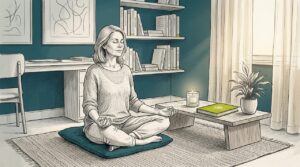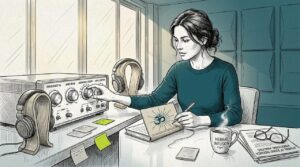
A personal wellness soundscape is an intentionally designed auditory environment crafted to evoke specific mental and physiological states, from deep calm and focused attention to restorative sleep. Think of it less like a playlist and more like an acoustic room you step into, one built from frequencies, textures, and rhythms chosen with your nervous system in mind. Composers and sound therapists such as Robert Emery and Moritz Schneider have spent years blending artistic craft with therapeutic intent, producing immersive works that go well beyond background music. Whether you are exploring meditation, managing stress, or simply trying to sleep without replaying your entire to-do list, a personal soundscape can be a surprisingly powerful tool.
What is a personal wellness soundscape and how does it work?
A personal wellness soundscape is, at its core, a curated sonic environment designed to shift your mental or physiological state in a deliberate direction. It is not random ambient noise. Every element, whether a theta-frequency drone, a recording of rain on oak leaves, or a full orchestral swell, is chosen because it produces a measurable or experiential effect on the listener.
The term “personal wellness soundscape” is the popular, descriptive phrase most people search for. The recognised industry term is therapeutic soundscape or wellness soundscape design, and practitioners working in clinical and research settings tend to use those labels. Both refer to the same underlying concept: immersive auditory environments crafted to support psychological and physiological wellbeing.
What makes a soundscape personal is the matching of sonic elements to your specific goal. A soundscape built for anxiety relief looks very different from one designed to sharpen cognitive focus before a presentation. The former might layer soft binaural beats in the delta or theta range with natural water sounds; the latter might use beta-frequency pulses beneath a clean, minimal orchestral texture. Personalisation of soundscapes is considered essential because effects on focus, relaxation, or sleep vary widely among individuals.
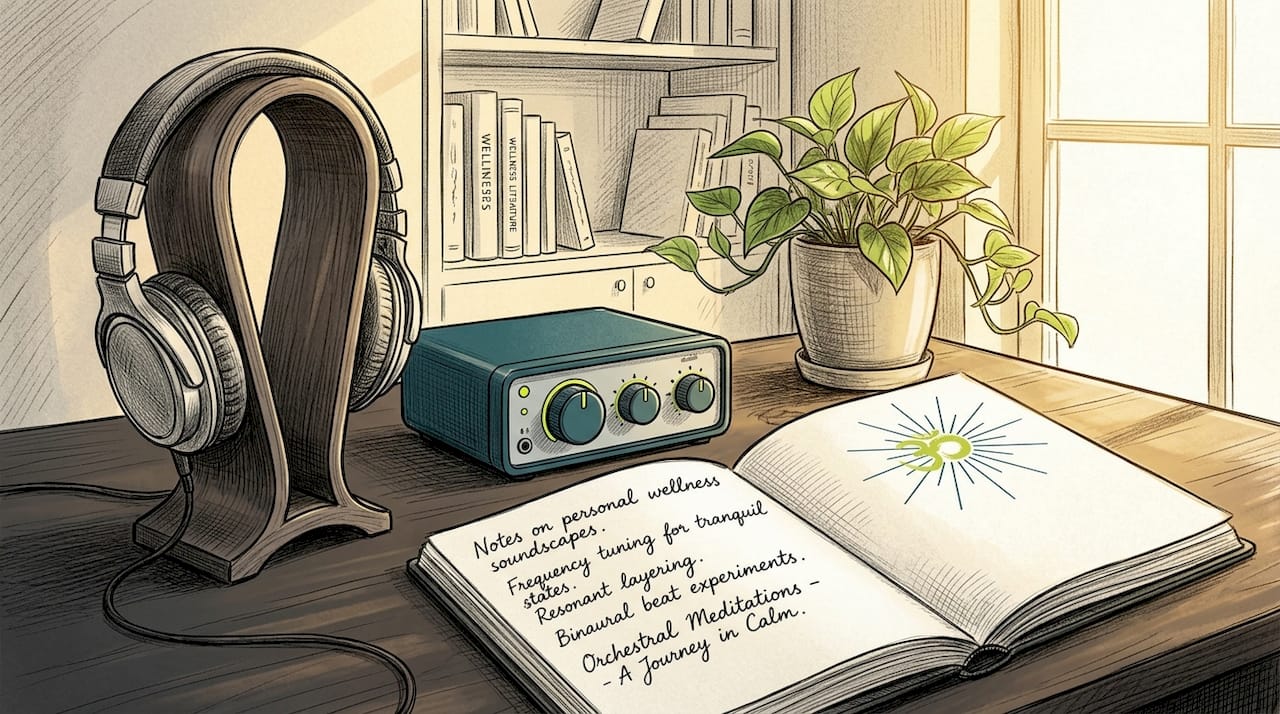
Common applications include guided and unguided meditation sessions, pre-sleep wind-down routines, focused work periods, and post-exercise recovery. Orchestralmeditations, for instance, produces recordings specifically engineered for these contexts, using Abbey Road Studios and the National Philharmonic to give the sonic architecture a richness that most digital productions simply cannot replicate.
How do wellness soundscapes relate to sound therapy techniques?
Sound therapy is the umbrella term covering any therapeutic use of specific tones, frequencies, and vibrations to promote relaxation and healing, and it includes several distinct techniques that overlap with personal soundscape practice. Understanding the differences helps you choose the right approach.
The main sound therapy techniques you will encounter are:
- Sound baths: Live or recorded sessions using instruments such as crystal singing bowls, Tibetan bowls, and gongs to create an immersive wash of resonance. Sound baths lower heart rate and blood pressure, quiet intrusive thoughts, and produce a meditative state without requiring any prior meditation experience.
- Binaural beats: An auditory illusion created by playing two slightly different frequencies, one in each ear via headphones. The brain perceives a third “beat” at the difference between the two, and this perceived frequency can nudge brainwave activity towards delta, theta, alpha, or beta states depending on the goal.
- Vibroacoustic therapy: Low-frequency vibrations delivered through chairs or mats directly to the body, bypassing the ears entirely. This somatic approach targets muscle relaxation and pain relief in ways that purely ear-based listening cannot.
- Music therapy: A clinically regulated discipline using music to address specific psychological or physical diagnoses, distinct from the broader wellness soundscape category.
A personal wellness soundscape sits across several of these categories simultaneously. It might incorporate binaural beats beneath a composed orchestral piece, layer natural soundscapes over a theta-frequency drone, or use 3D surround-sound recording techniques to replicate the spatial immersion of a live sound bath. The distinction is that a wellness soundscape is a composed or curated environment, not a single technique applied in isolation.
Pro Tip: If you are new to binaural beats, always use stereo headphones. The effect depends entirely on each ear receiving a different frequency. Speakers collapse the two channels and the binaural illusion disappears entirely.
The difference between ear-based sound therapy and vibroacoustic therapy matters practically. If your goal is deep muscular relaxation or chronic pain management, a vibroacoustic mat session may deliver results that headphone listening cannot. For meditation, focus, and emotional regulation, ear-based soundscapes and binaural compositions are generally the more accessible and effective route.
What does the science say about soundscape benefits?
The scientific picture on personal soundscape benefits is genuinely encouraging, though it comes with important caveats that most wellness content conveniently glosses over. Let us be honest about both sides.
Studies show that natural soundscapes lower stress and pain, enhance mental health, and improve focus. Soundscapes and sound therapy also reduce anxiety, improve sleep quality, support cognitive function, and aid mood regulation. These are not trivial outcomes. For people managing chronic stress or mild to moderate anxiety, a well-designed soundscape can produce measurable physiological shifts within a single session.
| Wellness goal | Evidence strength | Key mechanism |
|---|---|---|
| Stress and anxiety reduction | Strong | Lowers cortisol, reduces heart rate |
| Sleep quality improvement | Moderate to strong | Slows brainwave activity, masks disruptive noise |
| Pain relief | Moderate | Distraction, muscle relaxation via vibroacoustic methods |
| Cognitive focus | Moderate | Beta-frequency binaural beats, reduced environmental distraction |
| Mood regulation | Moderate | Emotional processing, parasympathetic nervous system activation |
The caveat is that scientific evidence about sound therapy effectiveness varies widely depending on frequency, duration, and exposure timing. A binaural beat track that produces profound relaxation for one person may do very little for another. Binaural beat effects depend on the perceived beat frequency, exposure duration, and timing relative to tasks, which means finding your optimal track often requires several iterations of experimentation.
“The goal is to intentionally match auditory elements to evoke the target mental or physiological state.” This design principle, drawn from wellness soundscape research, is what separates a therapeutic soundscape from a random Spotify playlist.
The biological mechanisms suggested by research include activation of the parasympathetic nervous system, reduction in cortisol and adrenaline, synchronisation of brainwave activity with external frequencies (a process called entrainment), and the release of dopamine in response to musically satisfying compositions. The psychological mechanisms include distraction from pain or anxious thought loops, induction of mindful present-moment awareness, and the conditioning of relaxation responses over repeated listening sessions.
One clinical caution worth stating plainly: sound therapy should complement, not replace, conventional medical care. If you are managing a serious mental health condition or chronic illness, speak with your physician before using sound therapy as part of your treatment plan. Soundscapes are powerful non-invasive tools for supporting mental health issues such as anxiety and depression, but they work best as part of a broader, considered approach to wellbeing.
How to create a personal wellness soundscape for meditation and relaxation
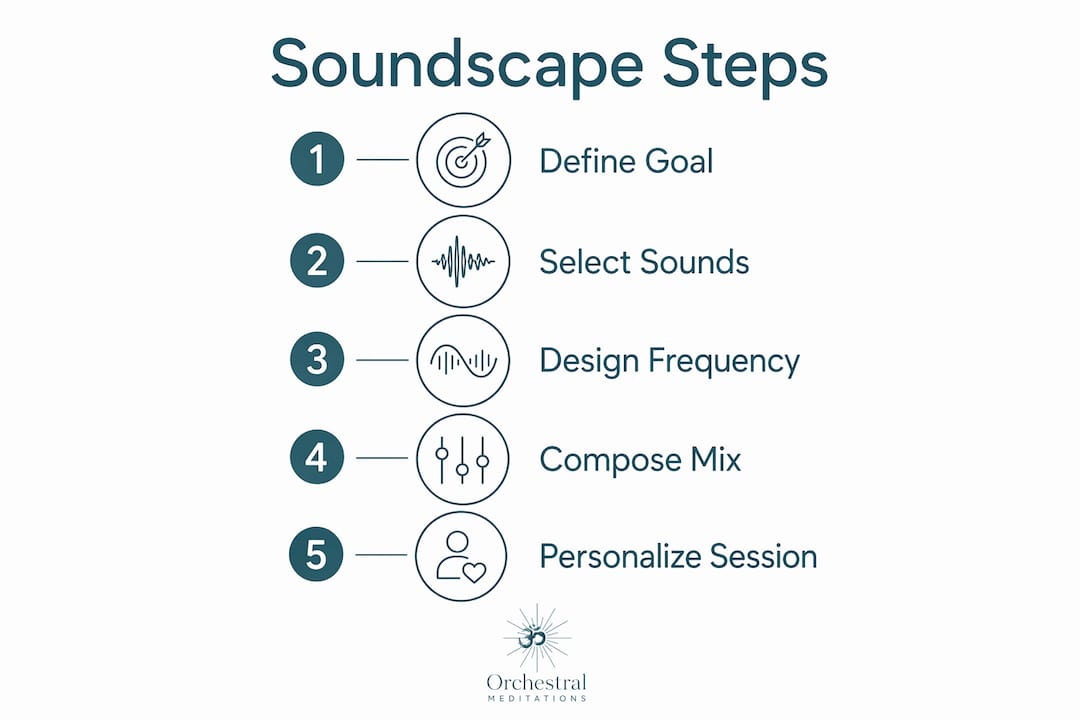
Creating a personal wellness soundscape is less about finding the perfect track and more about designing an intentional listening environment. Here is a practical process that actually works.
-
Define your target state. Before you choose a single sound, decide what you want to feel at the end of the session. Calm and sleepy? Alert and focused? Emotionally processed and grounded? Your target state determines every subsequent choice, from frequency range to instrumentation to session length.
-
Choose your soundscape type. Natural recordings (rain, forest, ocean) work well for anxiety and sleep. Music-based compositions, such as the orchestral works produced by Robert Emery and Moritz Schneider for Orchestralmeditations, add emotional depth and harmonic richness that pure nature recordings cannot provide. Binaural beat tracks are best for brainwave entrainment goals. Layered compositions combining all three are the most immersive option.
-
Set your listening environment. Treat the soundscape as an environment, not background noise. Dim the lights, remove visual distractions, and use quality stereo headphones or speakers. The acoustic quality of your playback device matters more than most people realise. A recording made at Abbey Road Studios with the National Philharmonic loses a significant portion of its spatial depth when played through a phone speaker.
-
Calibrate duration and timing. For meditation, 20 to 40 minutes is the evidence-supported sweet spot for most people. For sleep, a 45 to 60 minute session that fades naturally as you drift off tends to work better than looping tracks that play all night. For focus work, shorter 15 to 25 minute blocks with brief breaks prevent auditory habituation, where your brain simply stops registering the sound.
-
Explore adaptive soundscape technology. AI platforms now adjust soundscapes in real time based on biometric inputs such as heart rate and context, generating unique auditory experiences for individual users. If you want a truly personalised experience, this technology is worth exploring alongside curated human-composed tracks.
-
Iterate and refine. Keep a brief note of which tracks produced the strongest response and under what conditions. Time of day, your stress level going in, and even room temperature all influence how a soundscape lands. What works brilliantly on a Sunday morning may feel completely flat on a Wednesday evening after a difficult day.
Pro Tip: Keep your volume at a conversational level or slightly below. Louder is not more therapeutic. Excessive volume activates the stress response rather than suppressing it, which is precisely the opposite of what you are trying to achieve.
You can also explore immersive soundscape meditation methods for a deeper look at how to structure sessions around specific meditative goals.
Comparing the main types of personal wellness soundscapes
Not all soundscapes are built the same, and choosing the wrong type for your goal is a bit like taking a cold shower to warm up. Technically an experience, but not the one you wanted.
| Soundscape type | Best for | Key limitation | Static or adaptive |
|---|---|---|---|
| Natural soundscapes | Anxiety relief, sleep, general relaxation | Limited emotional depth, no harmonic structure | Mostly static |
| Music-based orchestral compositions | Emotional processing, deep meditation, spiritual practice | Requires quality playback for full effect | Static (curated) |
| Binaural beat tracks | Brainwave entrainment, focus, sleep induction | Requires stereo headphones, effects vary by individual | Static or adaptive |
| Vibroacoustic soundscapes | Muscle relaxation, pain relief, somatic release | Requires specialist equipment (mats, chairs) | Static |
| Adaptive AI soundscapes | Highly personalised real-time wellness | Technology still maturing, less artistic depth | Fully adaptive |
Music-based soundscapes occupy a particularly interesting position in this comparison. Robert Emery, a composer and producer whose work spans film, television, and meditation music, brings a cinematic sensibility to wellness compositions that gives them an emotional arc. Moritz Schneider, whose background similarly bridges classical composition and contemporary production, contributes harmonic sophistication that purely frequency-based tracks lack. The result, as heard in Orchestralmeditations’ catalogue, is a soundscape that functions therapeutically and artistically. That combination matters because emotional engagement with music deepens the relaxation response in ways that a monotone drone simply cannot.
For a detailed breakdown of which soundscape types suit specific relaxation goals, the guide on types of soundscapes for relaxation covers the options thoroughly.
The static versus adaptive distinction is worth dwelling on. Static soundscapes, however beautifully composed, deliver the same experience every time. Adaptive soundscapes, driven by biometric data, respond to where you actually are physiologically rather than where you hope to be. The ideal approach for most people is to use high-quality static compositions as the foundation of a regular practice, then layer in adaptive tools as supplementary support.
Key takeaways
A personal wellness soundscape works because it combines intentional frequency design, artistic composition, and personalised application to shift your mental and physiological state in a targeted direction.
| Point | Details |
|---|---|
| Definition matters | A wellness soundscape is an intentionally designed auditory environment, not random ambient noise or a casual playlist. |
| Sound therapy techniques overlap | Binaural beats, sound baths, and vibroacoustic therapy are all components that can be woven into a personal soundscape. |
| Science supports it, with nuance | Evidence for stress reduction and sleep improvement is strong; effects vary by individual, frequency, and duration. |
| Personalisation is the key variable | Matching soundscape type and frequency to your specific goal produces far better results than a one-size-fits-all approach. |
| Artistic quality amplifies therapeutic effect | Compositions by producers like Robert Emery and Moritz Schneider add emotional depth that purely functional frequency tracks cannot replicate. |
Why I think most people are using soundscapes completely wrong
Here is my honest observation after years of working with sound and watching how people actually engage with wellness audio: most people treat a soundscape like a screensaver. They press play, half-listen while scrolling their phone, and then wonder why they do not feel particularly different afterwards.
The whole point of a personal wellness soundscape is the personal part. It requires a degree of intentional surrender that feels slightly awkward at first, particularly for people who are not used to sitting quietly with nothing to do but listen. I have seen people abandon genuinely excellent recordings after two minutes because they felt “nothing was happening.” What was actually happening was that their nervous system was beginning to downregulate for the first time all day, and they mistook the unfamiliarity of stillness for the absence of effect.
The other misconception I encounter regularly is the belief that more expensive or more technically complex equals more effective. A beautifully recorded orchestral meditation from Orchestralmeditations, produced with the care and acoustic precision of Abbey Road Studios, will outperform a generically generated AI track for most people in most contexts. But a simple recording of rain on a window, listened to with genuine attention, will outperform either of them if you are fighting the experience the whole time.
What I have found actually works is treating your soundscape session the way you would treat a proper meal rather than a snack grabbed on the way out the door. Set the time aside. Create the physical environment. Arrive with a clear intention. The sound therapy and mental health research consistently points to engagement quality as a significant variable in outcomes, and that is something no composer or algorithm can manufacture for you.
The future of this field, with adaptive AI soundscapes responding to biometric data in real time, is genuinely exciting. But I would caution against waiting for the perfect personalised technology before starting a practice. The composers and producers working in this space right now, Robert Emery and Moritz Schneider among them, are already producing work of extraordinary therapeutic and artistic depth. Start there.
— ROBERT
Explore Orchestralmeditations’ curated wellness soundscapes
If you have read this far and are thinking “right, where do I actually start?”, Orchestralmeditations has done the heavy lifting for you.
The platform offers a curated library of meditation music and soundscapes crafted by composers including Robert Emery and Moritz Schneider, recorded with the National Philharmonic at Abbey Road Studios. These are not generic wellness tracks. They are full orchestral compositions built around binaural beats, theta frequencies, and 3D surround-sound techniques, designed to produce the kind of deep meditative states that most people spend years trying to reach through practice alone. You can also explore personal wellness recordings selected specifically for mental health and relaxation benefits. Browse the library, find a track matched to your current goal, and give it your full attention for twenty minutes. That is a reasonable place to begin.
FAQ
What is the difference between a soundscape and a playlist?
A personal wellness soundscape is an intentionally designed auditory environment built around specific frequencies, textures, and therapeutic goals, whereas a playlist is simply a sequence of songs chosen for personal enjoyment. The design intent and the sonic architecture are what separate the two.
Do binaural beats actually work?
Binaural beat effects depend on the perceived beat frequency, exposure duration, and timing relative to tasks, so results vary significantly between individuals. Most people find them effective for relaxation and sleep when used consistently with stereo headphones over multiple sessions.
How long should a wellness soundscape session last?
For meditation and relaxation, 20 to 40 minutes is the evidence-supported range for most adults. Sleep-focused sessions work well at 45 to 60 minutes, ideally fading out naturally rather than looping continuously through the night.
Is sound therapy safe for everyone?
Sound therapy should complement, not replace, conventional medical care, and anyone with a serious medical condition should consult their physician before using it therapeutically. For the general population, wellness soundscapes are considered safe and non-invasive.
Can I use a wellness soundscape for focus and productivity?
Yes. Beta-frequency binaural beats and minimal orchestral compositions are particularly well suited to focused work. The role of soundscapes in wellness includes cognitive benefits such as reduced distraction and improved concentration, especially in noisy environments.