Music for hypnosis is defined as sound specifically composed to guide the listener into a deeply relaxed, receptive mental state that supports hypnotic induction and heightened inner focus. Unlike background music you might throw on while cooking or commuting, hypnotic music tracks are built around precise frequencies, ambient textures, and rhythmic structures that actively shift brainwave activity. Composers such as Robert Emery and Moritz Schneider have spent years crafting this kind of sound at the highest level, blending orchestral depth with frequency science to produce something genuinely powerful. If you have ever wondered why certain music makes you feel as though the world has gone pleasantly blurry at the edges, there is a very deliberate reason for that.
What musical elements and frequencies are used in music for hypnosis?
The most effective hypnotic music tracks are built on specific frequencies that interact directly with the brain’s electrical activity. This is not mysticism dressed up in a lab coat. It is a well-documented area of sound research, and the results are consistently striking.
Solfeggio frequencies and why 852Hz matters
Solfeggio frequencies are a set of ancient tonal values that practitioners and composers use intentionally in hypnosis and meditation music. The 852Hz frequency is felt as much as heard, creating a foundational resonance for deep relaxation and inner stillness. That quality makes it particularly useful for hypnosis, where the goal is to quieten the analytical mind without switching off awareness entirely.
Solfeggio-based frequencies like 852Hz are used intentionally in hypnosis music to shift negative mental patterns toward clearer, more intuitive awareness. Think of it as tuning a radio. Most of us walk around slightly off-station, picking up static. The right frequency nudges the dial until the signal clears.
Beyond 852Hz, composers working in this space also draw on theta frequencies, which correspond to the 4–8 Hz brainwave range associated with deep meditation and light sleep. Theta frequencies are the brain’s natural gateway to the hypnotic state, which is why music designed to entrain theta activity is so effective for trance work.
Ambient textures and natural soundscapes
Ambient layers are the second major building block of hypnosis music. Natural soundscapes such as soft rain, ocean waves, or gentle rivers create a comfortable and secure environment for hypnosis and deep meditation. The brain interprets these sounds as safe, which lowers the physiological stress response and makes the listener more receptive to suggestion.
Rhythmic ocean waves combined with delicate flute phrases and atmospheric synths create expansive calm suited for deep sleep and relaxation. That combination of natural rhythm and melodic softness is not accidental. The wave pattern mimics slow, steady breathing, which gently encourages the listener’s own breath to follow suit.
Key elements you will find in well-produced hypnosis music include:
- Theta and delta frequency entrainment to guide brainwave activity into receptive states
- Solfeggio tones such as 852Hz for spiritual balance and intuitive clarity
- Binaural beats delivered through stereo headphones to create perceived frequency differences between the two ears
- Soft, sustained instrumental layers including strings, flute, and synthesised pads that avoid sharp dynamic contrasts
- Natural soundscapes woven into the background to signal safety and calm to the nervous system
Pro Tip: Use stereo headphones rather than speakers when listening to binaural beat tracks. The effect depends on each ear receiving a slightly different frequency, which simply does not work through a single speaker or in open air.
How does hypnosis music differ from meditation or sleep music?
This is a question worth answering properly, because the three categories are often lumped together as though they are interchangeable. They are not. Each serves a different neurological and psychological purpose, and confusing them is a bit like using a screwdriver when you need a scalpel.
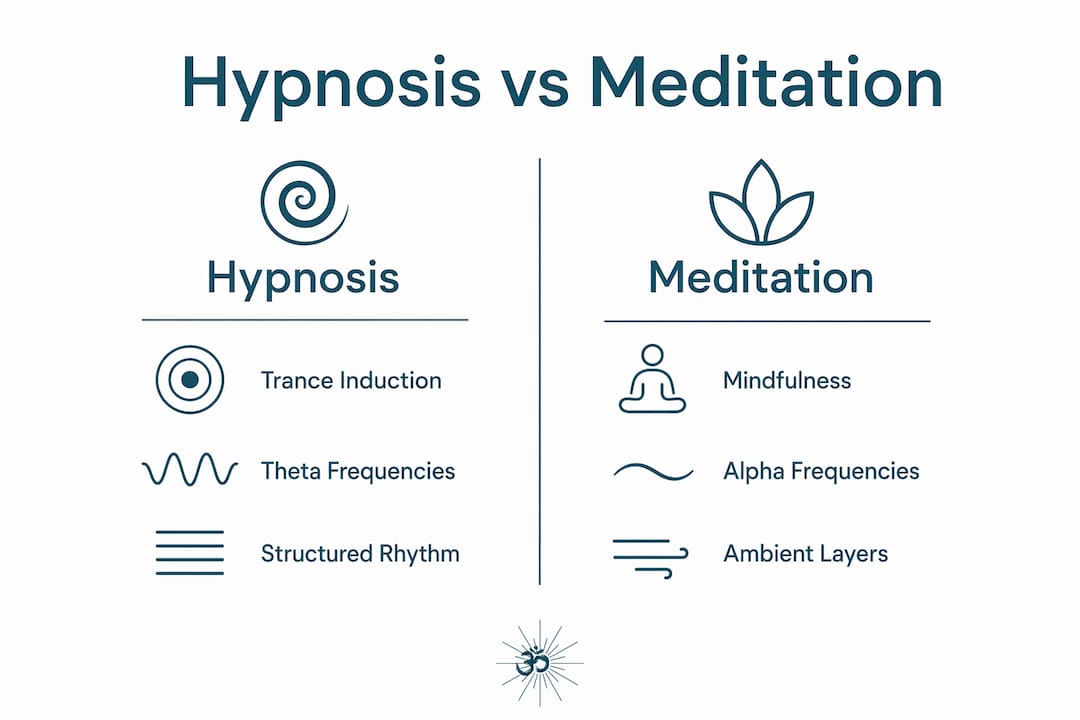
Hypnosis music is distinct from meditation or sleep music in intent and structure, often designed to guide or deepen hypnotic trance. Meditation music may focus on mindfulness and present-moment awareness, while sleep music emphasises gentle fading and reduced stimulation. Hypnosis music, by contrast, strategically supports trance induction while keeping a thread of focused awareness intact.
| Feature | Hypnosis music | Meditation music | Sleep music |
|---|---|---|---|
| Primary goal | Trance induction and receptivity | Mindfulness and present-moment focus | Sleep onset and maintenance |
| Frequency focus | Theta, 852Hz, binaural beats | Alpha and theta ranges | Delta frequencies |
| Dynamic structure | Sustained, intentional progression | Steady and non-intrusive | Gradual fade to near silence |
| Typical use | Hypnotherapy sessions, self-hypnosis | Daily mindfulness practice | Bedtime wind-down |
| Listener state | Alert but deeply relaxed | Aware and grounded | Drifting toward unconsciousness |
The practical difference shows up most clearly in how you feel during and after listening. Relaxing music for meditation tends to leave you feeling present and clear-headed. Calming sounds for sleep are designed to carry you out of consciousness altogether. Hypnosis music sits in a specific middle ground: you remain aware enough to receive and process suggestion, but relaxed enough that your critical mind stops arguing with everything.
A few other distinctions worth noting:
- Hypnosis music often has a more deliberate narrative arc, building and sustaining a particular emotional or mental state rather than simply maintaining a flat ambient texture
- Background music for hypnosis is frequently used alongside a practitioner’s voice or a recorded script, so it is mixed to sit beneath speech without competing with it
- Sleep music typically avoids any frequency content that might stimulate awareness, whereas hypnosis music uses specific tones to keep a thin thread of conscious receptivity alive
How to use hypnosis music effectively for relaxation and mental clarity
Getting the most from hypnotic music tracks requires a little more intention than simply pressing play and hoping for the best. The environment matters. The timing matters. And the way you combine music with practice matters enormously.
Setting up the right environment
Proper listening habits enhance the effectiveness of hypnosis music, including darkened rooms, headphones, and undisturbed periods. A darkened room reduces visual stimulation, which competes with the inward focus that hypnosis requires. Headphones deliver the full frequency spectrum directly to the auditory cortex without the acoustic interference of a room.
Choose a time when you are unlikely to be interrupted. Thirty minutes of uninterrupted listening produces a noticeably deeper result than an hour of listening with one eye on your phone. Early morning, before the day’s mental noise accumulates, and late evening, when the nervous system is already winding down, are both excellent windows.
Combining music with guided or self-hypnosis practice
- Set a clear intention before you begin. Decide what you want from the session: stress relief, mental clarity, a specific behavioural shift. The music creates the receptive state; your intention gives it direction.
- Start with five minutes of conscious breathing. Let the music establish itself before you attempt any deeper work. Trying to drop straight into trance is like sprinting before you have warmed up.
- Use a guided script or recorded hypnotherapy session alongside the music. The music should sit beneath the voice, not compete with it. Most well-produced hypnosis tracks are mixed specifically for this purpose.
- Allow a five-minute integration period at the end. Do not leap up and check your emails the moment the track finishes. Lie still, breathe normally, and let the session settle. This is when a lot of the real work happens.
- Track your responses over time. Some people respond most strongly to theta-frequency tracks; others find that healing frequencies in the Solfeggio range produce the clearest results. Keeping a brief journal helps you identify what works for your particular neurology.
Pro Tip: If you find your mind wandering during a session, do not fight it. Simply notice the thought, let it pass, and return your attention to the music. Resistance creates tension, which is the opposite of what you are trying to achieve.
One common pitfall is using music that is too melodically interesting. A track with memorable hooks or dramatic orchestral swells will pull your attention outward rather than inward. The best music for deep relaxation in a hypnosis context is music you stop noticing as music. It becomes the atmosphere rather than the event.
Robert Emery and Moritz Schneider: composers shaping hypnosis music
Robert Emery and Moritz Schneider are notable figures producing hypnosis and meditation music that blends orchestral and ambient styles. Their works demonstrate the effective integration of musical elements that facilitate hypnotic states and deep relaxation. Understanding who they are and how they work gives you a much clearer sense of what separates genuinely purposeful hypnosis music from the generic ambient filler that floods streaming platforms.
Robert Emery
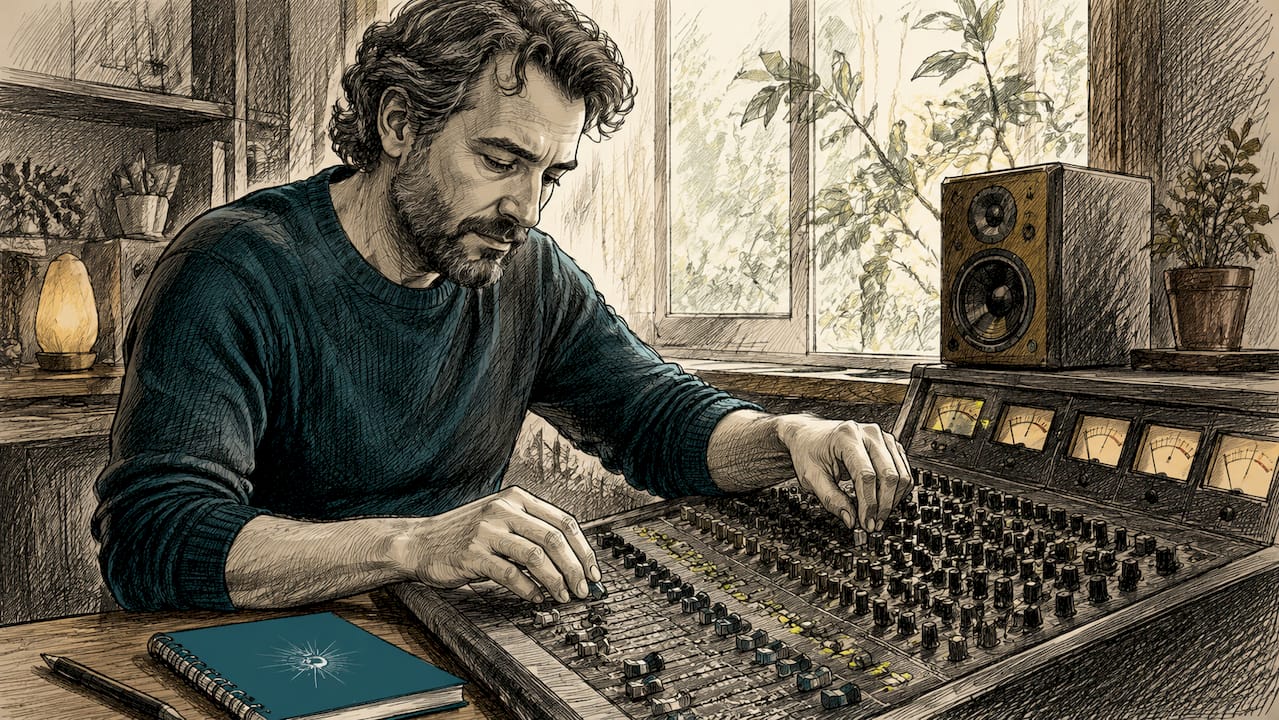
Robert Emery is a composer and producer whose work sits at the intersection of classical orchestration and therapeutic sound design. He has been involved in recording sessions at Abbey Road Studios with the National Philharmonic, which is not the sort of thing you stumble into by accident. His compositions for Orchestralmeditations draw on live orchestral textures, giving the music a warmth and spatial depth that purely electronic productions simply cannot replicate. Strings recorded in a great acoustic space carry a physical resonance that synthesised equivalents approximate but never quite match.
Emery’s approach to hypnosis music is characterised by:
- Long, sustained melodic lines that avoid rhythmic interruption and support continuous relaxation
- Orchestral layering that creates a sense of three-dimensional space around the listener
- Careful frequency selection that aligns with established therapeutic ranges without sacrificing musical beauty
- Collaboration with live musicians, which introduces the subtle human imperfections that make music feel alive rather than mechanical
Moritz Schneider
Moritz Schneider brings a complementary perspective to the work at Orchestralmeditations. His background encompasses both classical composition and the science of sound healing, which gives him an unusually precise understanding of how specific tonal choices affect the listener’s physiological and psychological state. Where Emery’s work tends toward the warmly orchestral, Schneider’s compositions often incorporate more deliberate frequency engineering, including binaural beat structures and Solfeggio-based tonal centres.
Schneider’s contributions to the field include:
- Frequency-precise compositions built around Solfeggio tones including 852Hz for spiritual balance and intuitive clarity
- Binaural and 3D sound design that uses spatial audio to create an immersive, enveloping listening experience
- Theta-frequency entrainment tracks designed to guide the listener into the specific brainwave state most conducive to hypnotic receptivity
- Collaboration with Robert Emery on recordings that combine orchestral richness with therapeutic frequency precision
Together, their work at Orchestralmeditations represents one of the more serious attempts to marry musical quality with genuine therapeutic intent. If you want to explore their output, the Orchestralmeditations catalogue is the obvious starting point. The orchestral sound approach they champion produces a qualitatively different listening experience from anything assembled on a laptop with a sample library.
Key takeaways
Music for hypnosis works because it combines specific frequencies, ambient textures, and deliberate rhythmic structures to guide the brain into a deeply relaxed yet receptive state that supports trance induction and mental clarity.
| Point | Details |
|---|---|
| Frequency selection is deliberate | Tones like 852Hz and theta-range frequencies actively shift brainwave activity toward receptive states. |
| Hypnosis music has a distinct purpose | It differs from meditation and sleep music in structure, intent, and the level of awareness it maintains. |
| Environment amplifies effectiveness | Darkened rooms, stereo headphones, and undisturbed time significantly deepen the hypnotic response. |
| Composers matter | Robert Emery and Moritz Schneider produce orchestral hypnosis music with genuine therapeutic frequency precision. |
| Intention guides the session | Music creates the receptive state; a clear personal intention gives that state direction and purpose. |
Why I think most people are using hypnosis music completely wrong
Here is something I have noticed after years of working with music designed for altered states: most people treat hypnosis music as wallpaper. They put it on, half-listen, and then wonder why they feel only mildly relaxed rather than genuinely transformed. That is a bit like buying a fine single malt and drinking it out of a paper cup while watching television. The ingredients are right. The context is entirely wrong.
The music of Robert Emery and Moritz Schneider, in particular, rewards proper attention. I have sat with their recordings in a genuinely prepared state, headphones on, room dark, intention set, and the difference compared to casual listening is not subtle. It is the difference between paddling in the shallows and actually swimming. The spiritual growth potential embedded in frequency-conscious composition only activates when you give it the conditions to do so.
I also think people underestimate how personal frequency response is. Some listeners find that 852Hz tracks produce an almost immediate sense of inner stillness. Others need to spend several sessions acclimatising before the effect becomes pronounced. Neither response is wrong. The brain is not a standardised piece of equipment, and the idea that one track will work identically for everyone is frankly a bit optimistic. Keep a journal. Notice what shifts. Adjust accordingly.
The other thing I would say, with some conviction, is that production quality genuinely matters in this context. A hypnosis track recorded with live musicians in a great acoustic space carries a physical presence that a bedroom-produced ambient loop simply does not. The benefits of healing frequencies are real, but they are amplified considerably when the music itself is beautiful enough to hold your attention without demanding it.
— ROBERT
Orchestralmeditations: where to find high-quality hypnosis music
If you have read this far and are ready to move from theory to practice, Orchestralmeditations is the natural next step.
The platform offers a curated library of meditation and hypnosis music recorded at Abbey Road Studios with the National Philharmonic. Every track is built around the frequency science and orchestral depth discussed throughout this article. Whether you are looking for Solfeggio-based compositions, theta-frequency entrainment tracks, or the best Solfeggio music for healing and hypnosis, the catalogue covers the full range. The music is royalty-free and available for individual purchase or via subscription, making it accessible whether you are a first-time listener or a practising hypnotherapist building a session library.
FAQ
What is music for hypnosis?
Music for hypnosis is sound specifically composed to guide the listener into a deeply relaxed, receptive state that supports hypnotic induction. It uses specific frequencies, ambient textures, and rhythmic structures to shift brainwave activity toward theta and delta ranges.
How does music aid hypnosis sessions?
Music creates a neurologically receptive environment by entraining brainwaves and reducing the physiological stress response. Combining it with guided hypnosis or self-hypnosis routines significantly deepens mental clarity and relaxation effects.
What frequency is best for hypnosis music?
Theta frequencies in the 4–8 Hz range are the most directly associated with hypnotic states. Solfeggio tones such as 852Hz are also widely used to support spiritual balance and intuitive awareness during deep relaxation.
Can I use hypnosis music for sleep?
Hypnosis music and sleep music serve different purposes. Hypnosis music maintains a thread of conscious receptivity, whereas calming sounds for sleep are designed to carry the listener toward unconsciousness. Using hypnosis music at bedtime can aid relaxation, but dedicated sleep music is better suited for sleep onset.
Do I need headphones to listen to hypnosis music?
Headphones are strongly recommended, particularly for tracks containing binaural beats. The binaural effect requires each ear to receive a slightly different frequency, which only works correctly through stereo headphones rather than open speakers.