Every cell in your body is, in a very real sense, an electrical machine. The term “hertz frequency human body” describes the range of vibrational frequencies that interact with human physiology, from the mechanical resonance of your organs to the brainwave rhythms that govern how calm or wired you feel. These frequencies span an enormous range: your heart beats at roughly 1 Hz, your brain hums along in alpha waves at 8–12 Hz, and popular sound therapy tones like 528 Hz sit in an entirely different category altogether. Understanding which frequencies do what, and why, is the difference between informed wellness practice and expensive wishful thinking. Composers like Robert Emery and producers like Moritz Schneider have spent years applying this knowledge to meditation music, and their work offers a practical entry point into frequency-based relaxation.
What is the human body resonant frequency, scientifically speaking?
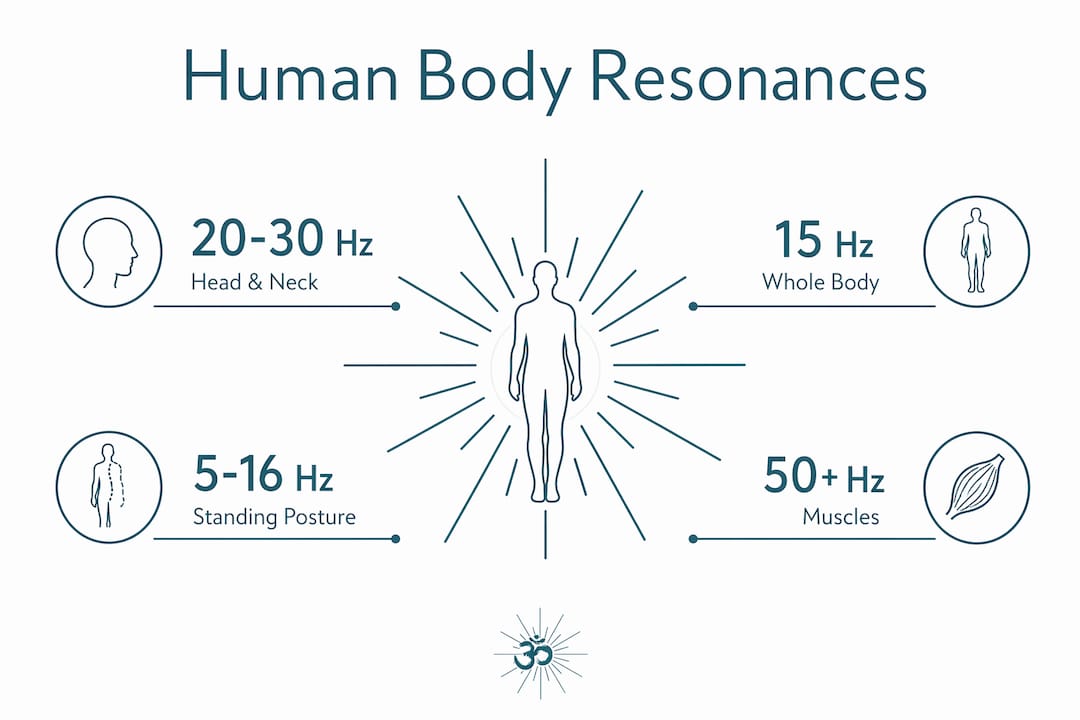
The human body resonant frequency is not a single number. It is a collection of frequencies, each tied to a specific tissue, organ, or system. Recent mechanical models estimate the adult body’s overall resonance at approximately 15.35 Hz, refined from older, cruder estimates. That figure matters most in occupational health, where whole-body vibration (WBV) from machinery, vehicles, or industrial equipment can cause real harm when it approaches this range.
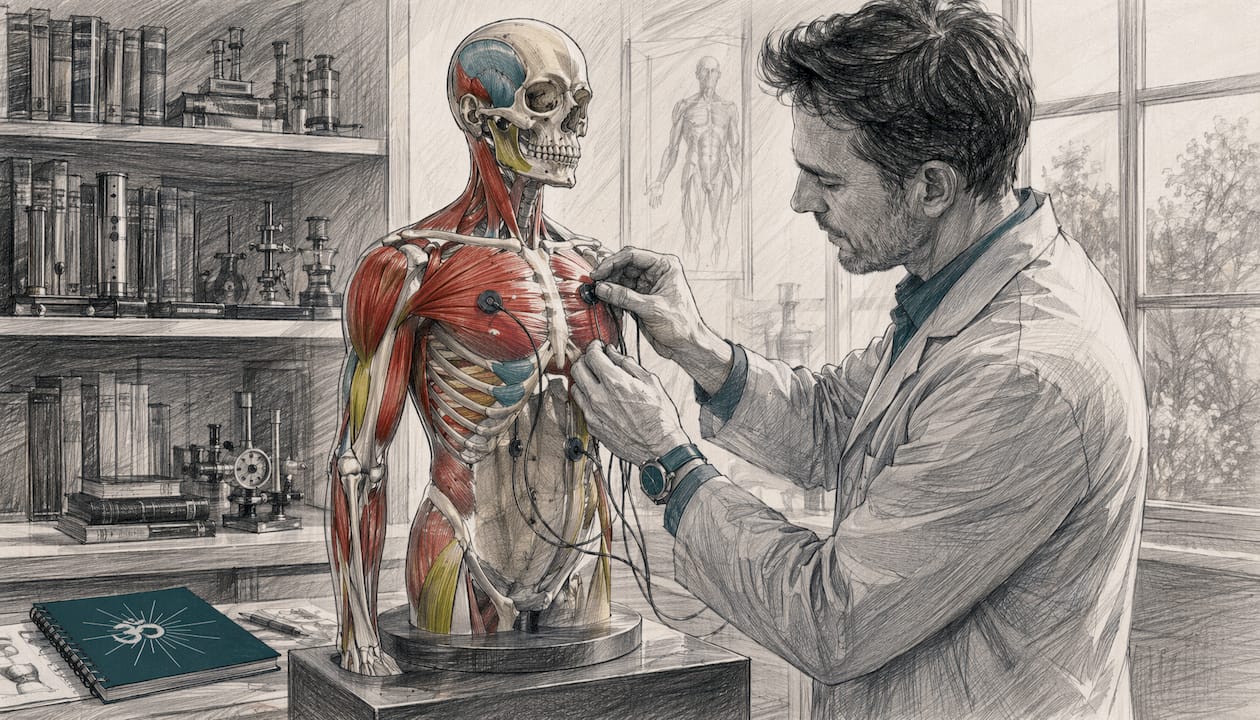
Here is where the popular narrative goes slightly off the rails. Many wellness articles describe the body as a kind of giant tuning fork, waiting to be struck at the right frequency and ring with health. The reality is considerably more interesting, and considerably more complicated. Body tissues are not tuning forks. They are soft, damped, and heterogeneous, meaning they absorb and scatter vibration rather than ringing cleanly.
How mechanical resonance actually works in the body
Soft tissues damp vibration to lower frequencies than bones do. Resonance also shifts depending on posture, muscle tension, and whether you are sitting, standing, or lying down. The body’s resonant behaviour involves complex interactions between mass, stiffness, and damping, not a simple fixed pitch.
The table below summarises approximate resonance ranges for key body structures, drawn from published biomechanical research:
| Body structure | Approximate resonance range |
|---|---|
| Whole body (standing) | 5–16 Hz |
| Head and neck | 20–30 Hz |
| Eyeballs | 12–27 Hz |
| Abdominal organs | 4–8 Hz |
| Thoracic cavity | 5–10 Hz |
These figures guide safety standards for machinery operators and vehicle drivers, not sound therapy playlists. Prolonged WBV near these ranges causes fatigue, back pain, and in extreme cases, organ damage. That is the clinical relevance of biomechanical resonance.
What this does not mean is that playing a 15 Hz tone through headphones will shake your organs. Airborne sound at low frequencies carries far too little energy to produce mechanical resonance in body tissues. The scientific consensus clearly distinguishes biomechanical resonance, which guides vibration safety, from sound frequency therapy, which targets nervous system regulation instead.
Underpinning all of this is the body’s electrical nature. Human cells maintain a voltage difference of between -40 and -90 millivolts across their membranes, driven by the flow of sodium and potassium ions. This electrical activity is what makes nerve transmission, muscle contraction, and cell communication possible. Frequency-based therapies that work, and some genuinely do, tend to interact with this electrical layer rather than the mechanical one.
Which hertz frequencies are used in sound therapy for healing?
Sound therapy draws on a different set of frequencies from biomechanical resonance. The most widely cited system is the Solfeggio scale, a set of nine tones ranging from 174 Hz to 963 Hz, each associated with specific wellness effects. The Solfeggio system includes:
- 174 Hz: Associated with pain reduction and grounding. Practitioners use it as a starting point for frequency sessions, particularly for people carrying physical tension.
- 285 Hz: Linked to tissue repair and cellular regeneration in complementary health circles.
- 396 Hz: Said to release guilt and fear, often used in emotional clearing practices.
- 417 Hz: Associated with facilitating change and clearing negative energy.
- 528 Hz: Perhaps the most famous. Frequently cited for cortisol reduction and cell health, and sometimes called the “love frequency” or “miracle tone.”
- 639 Hz: Connected to relationships and interpersonal harmony.
- 741 Hz: Associated with expression and problem-solving.
- 852 Hz: Linked to intuition and spiritual awareness.
- 963 Hz: The highest Solfeggio tone, associated with connection to higher consciousness.
The honest answer about the evidence is this: some of these claims are supported by small studies, many are not yet independently replicated, and a few are frankly speculative. The American Music Therapy Association recognises music therapy as a legitimate clinical discipline, but the specific Solfeggio frequency claims sit further along the spectrum toward complementary practice than established medicine.
What the research does support is that sound and music affect the autonomic nervous system, cortisol levels, and subjective pain perception. A deeper look at the science behind healing sounds reveals that the mechanism is likely nervous system regulation rather than direct cellular repair.
The clearest examples of frequency therapy with measurable clinical effects are not sound-based at all. TENS reduces pain via nerve pathways using electrical pulses, and transcranial magnetic stimulation shows significant effects on depression compared to placebo. Both use precisely defined frequency parameters. They work by interacting with the body’s electrical systems directly, not through airborne sound.
Pro Tip: If you are new to sound therapy, start with 174 Hz grounding tones before moving to higher Solfeggio frequencies. This mirrors the practitioner recommendation to build a stable nervous system baseline before introducing more stimulating frequencies.
How do frequencies affect the nervous system and autonomic regulation?
The autonomic nervous system is the real gatekeeper for frequency effects in the body. It governs heart rate, breathing, digestion, and the stress response, and it is exquisitely sensitive to rhythmic input. Think of it less like a radio receiver and more like a conductor who adjusts the whole orchestra in response to the tempo you set.
Frequency researcher Herbert Eder states that frequencies act as gentle stimuli that regulate body systems rather than direct cures. The effects depend heavily on individual energy levels, stress states, and biology. Two people listening to the same 528 Hz track may have entirely different experiences, one entering deep relaxation, the other feeling nothing in particular.
This individual variability is not a flaw in the therapy. It reflects the body’s complex system of interacting rhythms: heartbeat, breathing, brainwaves, and cell cycles that partially synchronise in what researchers call physiological coherence. When these rhythms align, the body tends toward calm and recovery. Frequency-based music can nudge this process along, but it cannot force it.
Practical guidelines for frequency sessions
Structuring a frequency session thoughtfully produces better results than simply pressing play on a high-frequency track. Practitioners recommend the following approach:
- Start grounded. Begin with lower frequencies such as 174 Hz or 396 Hz before progressing to higher tones like 741 Hz or 963 Hz.
- Keep sessions short initially. Twenty to thirty minutes is sufficient for most people starting out. Longer is not automatically better.
- Monitor your response. If a frequency produces agitation, headache, or discomfort, stop. The goal is regulation, not endurance.
- Combine with breath. Slow, rhythmic breathing amplifies the autonomic effect of frequency-based music by engaging the parasympathetic nervous system directly.
- Avoid overstimulation. High frequencies used for extended periods without grounding can produce the opposite of the intended effect.
Pro Tip: Matching your breathing rhythm to the pulse of the music, particularly with binaural beats or theta frequency tracks, creates a stronger coherence effect than passive listening alone.
The best Solfeggio frequencies for healing are not necessarily the highest or most talked-about ones. They are the ones that match your current physiological state and support a gradual shift toward regulation.
What is the Schumann resonance and does it affect the human body?
The Schumann resonance is the electromagnetic resonance of the cavity between the Earth’s surface and the ionosphere. Its fundamental frequency sits at approximately 7.83 Hz, with harmonics at roughly 14.3 Hz, 20.8 Hz, 26.4 Hz, and 33 Hz. These numbers overlap almost perfectly with human brainwave bands: theta (4–8 Hz), alpha (8–12 Hz), and low beta (12–30 Hz).
That overlap is genuinely interesting. Transient EEG coherence episodes with Schumann resonances have been observed in research, but the effect is modest and intermittent. It is not the dramatic brain-Earth synchronisation that wellness influencers sometimes describe.
The physics explains why. The Schumann resonance electric field measures approximately 300 microvolts per metre. A neuron’s membrane voltage runs at roughly 100,000 volts per centimetre. The gap between those two numbers is so vast that direct energy transfer from the Schumann resonance to your neurons is effectively impossible. Any biological effect must work through resonance or amplification mechanisms, not raw energy.
What this means in practice:
- The Schumann resonance probably does not “heal” you in any direct sense.
- Claims that rising Schumann frequencies are causing mass awakening or physical symptoms lack independent scientific support.
- The modest correlations observed between EEG patterns and Schumann frequencies are real but do not translate into proven clinical outcomes.
- Spending time outdoors, particularly barefoot on grass or soil, may expose you to these frequencies in a gentle, natural way. Whether that produces measurable health benefits beyond the general effects of being outside remains unproven.
The honest position is that the Schumann resonance is a fascinating piece of physics with a plausible but unproven connection to human neurological rhythms. Treat it as a curiosity worth watching, not a treatment to rely upon.
Key takeaways
The most effective approach to frequency-based wellness combines scientific understanding of the body’s electrical and rhythmic systems with structured, grounded listening practice rather than chasing any single “perfect” Hz.
| Point | Details |
|---|---|
| Body resonance is not one frequency | The whole body resonates near 15.35 Hz, but organs, tissues, and bones each have distinct ranges. |
| Sound therapy targets the nervous system | Healing frequencies like 528 Hz and 174 Hz work via autonomic regulation, not direct mechanical vibration. |
| Individual response varies significantly | The same frequency produces different effects depending on a person’s stress state and biology. |
| Schumann resonance overlaps brainwaves | The 7.83 Hz fundamental aligns with theta/alpha bands, but clinical healing effects remain unproven. |
| Structure your sessions | Start with grounding frequencies, keep sessions short, and combine with slow breathing for best results. |
Why I think most people are asking the wrong question about frequencies
Robert’s perspective
After years of working with frequency-informed music, I have noticed a pattern. People arrive asking, “Which frequency will fix me?” They want a specific number, a magic Hz, as if the body were a lock and the right tone were the key. I understand the appeal. It is a satisfying idea. It is also, I am afraid, slightly backwards.
The body is not waiting to be unlocked by a single frequency. It is already running dozens of frequencies simultaneously: your heartbeat, your breath, your brainwaves, the electrical chatter of your cells. What frequency-based music actually does, when it works well, is give all of those rhythms a gentle nudge toward coherence. It is less like finding the right key and more like helping a slightly chaotic orchestra find its tempo.
This is precisely what drew me to the work of composers like Robert Emery and producers like Moritz Schneider. Robert Emery brings a deep musicological understanding to frequency composition, crafting pieces that move through tonal ranges with intention rather than simply sustaining a single tone. Moritz Schneider’s production work ensures that the frequency content survives the recording process intact, particularly important when working with binaural beats and theta frequencies that can be easily muddied by poor engineering. The sessions recorded at Abbey Road Studios with the National Philharmonic are not just beautiful. They are built to work.
My practical advice is this: stop chasing the perfect frequency and start building a consistent practice. Twenty minutes of grounded, frequency-informed listening three or four times a week will do more for your autonomic nervous system than an occasional two-hour deep dive into 963 Hz. Realistic expectations, combined with quality music and a structured approach, produce results that actually stick.
— ROBERT
Orchestralmeditations: frequency-informed music for real relaxation
Orchestralmeditations brings together the science of frequency wellness and the craft of professional orchestral composition in a way that very few platforms manage. The meditation music library features works by composer Robert Emery and producer Moritz Schneider, recorded at Abbey Road Studios with the National Philharmonic. These are not simple tone generators dressed up with strings. They are fully composed pieces built around Solfeggio frequencies, binaural beats, and theta rhythms, engineered to support genuine autonomic regulation.
Whether you are drawn to the grounding qualities of 174 Hz or the widely discussed sound frequency treatments associated with 528 Hz, the Orchestralmeditations catalogue offers a structured, musically rich way to explore frequency-based relaxation. The 3D surround sound recording technique preserves the spatial and frequency detail that makes these tracks genuinely effective, not merely pleasant. If you are ready to move beyond reading about frequencies and into actually experiencing them, this is a sensible place to start.
FAQ
What is the resonant frequency of the human body?
The whole body resonates at approximately 15.35 Hz according to recent biomechanical models, though individual organs and tissues have their own distinct ranges spanning roughly 4–30 Hz.
Does 528 Hz actually do anything to the body?
Small studies suggest 528 Hz may reduce cortisol levels and support a sense of calm, but large-scale independent replication is limited. Its primary mechanism appears to be autonomic nervous system regulation rather than direct cellular repair.
What is the Schumann resonance and is it connected to human health?
The Schumann resonance is Earth’s electromagnetic cavity frequency, with a fundamental of approximately 7.83 Hz. It overlaps human brainwave bands, and transient EEG correlations have been observed, but direct clinical healing effects are not scientifically established.
How do hertz frequencies for healing differ from medical frequency therapies?
Medical therapies like TENS and transcranial magnetic stimulation use precisely defined electrical frequencies with measurable, replicated clinical outcomes. Sound-based healing frequencies operate through auditory and autonomic pathways and are generally considered complementary rather than primary treatments.
Why do the same frequencies affect people differently?
Frequency researcher Herbert Eder explains that biological systems react variably to identical stimuli depending on individual energy levels, stress states, and physiology. This is why a structured, graded approach to frequency therapy produces more consistent results than a one-size-fits-all protocol.