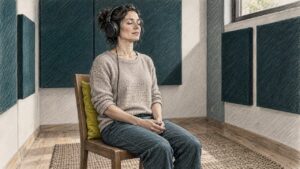
Neither option wins outright: the research says music and silence can both calm you down, and which one works for you depends on your goal, your experience, and the track itself. We dig into the trials below, but here is the short version: a handful of randomised controlled trials and one sizeable meta-analysis show mixed results, with specially engineered tracks (think binaural beats layered under orchestral sound) sometimes edging ahead for anxiety relief. If you decide music is your route in, Orchestral Meditations and composers like Robert Emery and Moritz Schneider offer a well-crafted starting point.
TL;DR:
- A 2022 systematic review and meta analysis of roughly 706 participants found no significant music advantage over silence for stress recovery, with a small pooled effect.
- Among 144 participants in a pilot study, novice meditators preferred music without a distinct melody, while experienced practitioners favored silence during meditation.
- For acute anxiety, music layered with auditory beat stimulation outperformed pink noise in one trial, and 24 to 36 minute sessions reduced anxiety more than shorter exposures.
- Test your response by alternating music and silence on consecutive days, keeping conditions steady and scoring relaxation, focus, and mood from 1 to 5.
- Choose tracks without lyrics, sudden changes, or rising tempo; self selected music may help, while nature recordings or pink noise offer a middle ground.
What the research actually says: RCTs and meta-analyses
We would love to hand you a single tidy answer, but the evidence refuses to cooperate, which is honestly more interesting. A 2022 systematic review and meta-analysis pooling roughly 14 experimental studies and around 706 participants found that music listening produced no statistically significant advantage over silence for stress recovery. The pooled effect was small and the confidence interval straddled zero, meaning some studies favoured music, some favoured silence, and most landed somewhere in the middle.
Genre mattered less than you might expect. A randomised crossover trial comparing Pop, Rock, Western Classical, Persian Traditional and silence found relaxation improved after several of these conditions, but no single genre beat silence outright. Meanwhile, a 2026 randomised clinical trial took a different tack: it paired music with auditory beat stimulation (ABS), essentially a binaural-beat layer under the melody, and compared it against plain pink noise. That combination outperformed pink noise for anxiety reduction, with longer sessions often linked to bigger drops in negative affect.
A few practical threads run through all this work:
- Letting someone pick their own track tends to boost the benefit, self-selection seems to matter more than genre.
- Engineered audio (ABS, binaural layers) can outperform generic ambient noise in some clinical samples.
- Session length influences the result, with longer exposures linked to stronger anxiety reduction in the ABS trial.
How sound (and silence) changes your body and attention
The physiology behind this is genuinely fascinating once you stop expecting a clean verdict. Several of the studies above tracked autonomic markers, heart rate, heart rate variability, sometimes skin conductance, as proxies for how relaxed someone actually is beneath the surface. Results were inconsistent: some trials found lower heart rate after music compared with silence, others found no difference at all, which tells us the body does not respond to “music” as a single category.
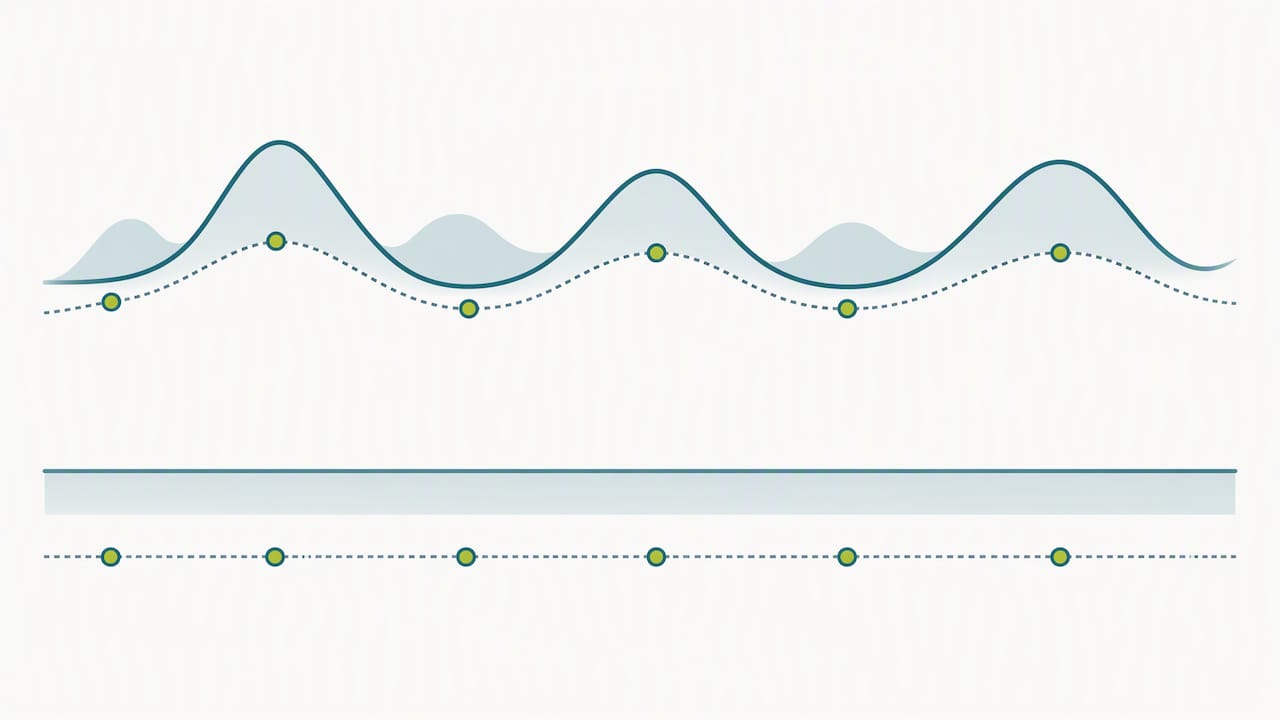
Attention works differently again. A piece with dynamic melodic shifts, a key change, a swelling crescendo, gives your brain something to notice, which is lovely for a concert hall and slightly counterproductive if your goal is sustained, undistracted focus. Silence, by contrast, offers nothing to chase, which is precisely why advanced practitioners often prefer it for attention training. Engineered stimuli like binaural beats or pink noise sit somewhere between the two: steady, low-event, and seemingly capable of nudging the nervous system without hijacking attention the way a string section crescendo can.
Who benefits more from music and who from silence
Experience level turns out to be one of the better predictors we have. A pilot study involving 144 participants used paired comparisons to ask what people actually wanted to hear during meditation, and the pattern was clear: adept meditators preferred silence, while novices gravitated toward music without a distinct melody, what the researchers called MWDM. If you are new to this, that non-melodic preference is worth taking seriously rather than fighting.
A few situational rules help too:
- Reach for music when there is background noise you cannot control, when anxiety is acute, or when you are too tired to sit with your own thoughts.
- Lean towards silence when the goal is concentration training or deeper contemplative work rather than relaxation.
- Use music to build a consistent habit first, then experiment with trimming it back.
Pro Tip: If you suspect you have become reliant on music, wean off it gradually, shorten the musical portion by a minute or two each week rather than cutting it cold.
Practical rules for choosing tracks or choosing silence
Picking the right track is less about taste and more about structure. Here is a short checklist worth running through before you press play:
- Skip anything with lyrics, words compete with your own inner narration for the same mental channel.
- Favour low “eventfulness”, fewer sudden key changes, dynamic swells or tempo shifts to chase.
- Choose a slow, steady tempo rather than anything that builds or accelerates, as explained in detail by Repbeats on why meditation music tempo matters for deep focus.
- If you want extra support for relaxation, look for tracks tuned with binaural or ABS layers pitched toward theta frequencies.
- Whenever possible, choose the track yourself rather than letting an algorithm pick, self-selection appears to strengthen the benefit.
On dosage, the 2026 ABS trial found that sessions of 24 to 36 minutes produced larger reductions in anxiety than shorter exposures, though a brief 10 to 15 minute session is still worthwhile if that is all the time you have. Nature recordings and pink noise work well as a neutral middle ground if melodic music feels distracting but pure silence feels too stark.
Pro Tip: Try splitting a session in two, a few minutes of music to settle the body, then silence for the deeper stretch, so you get the calming onset without losing the undistracted depth.
A simple two-week experiment to find what works for you
You do not need a lab to work this out for yourself. Over two weeks, alternate music and silence on consecutive days, keeping the time of day, seat, and session length identical throughout.
- After each session, score relaxation, focus, and mood on a simple 1 to 5 scale.
- Keep pre-session habits constant, same chair, same lighting, no caffeine beforehand, so you are comparing sound, not noise from other variables.
- After at least six sessions, compare your average scores for each condition and look for a consistent direction rather than a single standout day.
- If the pattern is unclear, rerun the test for another week before drawing conclusions.
Why high-quality orchestral tracks matter
If your two-week test points you toward music, the production quality of what you listen to genuinely matters, a thin, looped ambient track behaves very differently from a properly arranged orchestral piece. Orchestral Meditations builds its library around that distinction: royalty-free recordings using 3D surround techniques, binaural layering, and the kind of low-eventfulness composition that the research above favours, available through personal and professional subscriptions.
Experienced composers are often involved in these recordings, and it is worth checking composer credits generally when you are choosing music, as production clarity tends to correlate with the restraint that makes a track supportive rather than distracting. Even so, do not take any of this on faith: run your own two-week test with a specific track before assuming it works for you.
A practitioner’s view: using both approaches across a lifetime of practice
Most long-term practitioners we have come across did not choose a side and stay there. A common arc looks like this: music in the early months to make sitting down easier, then a gradual fade as silence stops feeling like an absence and starts feeling like the point. Some traditions go further still, using sound itself as the object of meditation rather than a backdrop. Both paths hold up.
— ROBERT
If you choose music: where to get high-quality orchestral meditation tracks
If your experiment points toward music, we offer two straightforward ways in: a Personal subscription at €21 per month for individual practice, or a Professional subscription at €150 per month for therapists, instructors and studios needing licensed tracks.
Content creators and app developers can also browse the royalty-free library for individually licensed tracks. Whichever route you take, run the two-week test first and let your own scores decide.
FAQ
Is it best to meditate in silence or with music?
Neither is universally best, it depends on your experience level and goal. Research suggests novices often prefer non-melodic music, while experienced meditators tend to favour silence, and a meta-analysis found no overall advantage for either across healthy adults.
Is meditation just sitting in silence?
No, meditation covers many techniques, and silence is just one possible setting rather than a requirement. Listening meditation, where sound itself becomes the focus of attention, is considered a distinct and valid practice rather than a lesser substitute for silent sitting.
Which sound is best for meditation?
There is no single best sound, the right choice depends on whether you want relaxation, anxiety relief, or focus training. Evidence points to self-selected, low-eventfulness tracks, and in some trials music paired with auditory beat stimulation outperformed pink noise for reducing anxiety.
Why is silence so healing?
Silence removes external events for your attention to chase, which supports sustained focus and is why many experienced meditators prefer it for concentration training. That said, controlled studies have not found silence to be more effective than music for stress recovery, the two approaches often produce comparable results.
Sources
- A pilot study investigating preferred background sounds during mindfulness meditation: what would you like to hear? – Baoxia Liu et al. (2019)
- Music listening and stress recovery in healthy individuals: A systematic review with meta-analysis of experimental studies | PLOS One
- The effect of different genres of music and silence on relaxation and anxiety: A randomized controlled trial (Malakoutikhah et al., 2020)