Short answer: yes, specific meditation practices and 40 Hz auditory protocols can raise gamma activity, and consistent long term practice can shift your baseline gamma even when you’re not meditating at all. The evidence splits into two camps: what happens during a session (state effects) and what sticks around afterwards (trait effects). If you want to feel the difference tonight, try a 10 to 20 minute loving kindness meditation or sit with a 20 minute gamma music track through headphones.
TL;DR:
- The strongest trait findings come from experienced meditators: a 2004 study involved practitioners with roughly 10,000 hours, while later results linked gamma amplitude with years practiced.
- Loving kindness has the clearest research link to gamma; start with 10 minutes daily, then build toward 20 minutes and add gentle audio gradually.
- Forty hertz audio may produce brief synchrony that fades after listening, so use it as an aid rather than a substitute for meditation.
- Keep audio at a comfortable volume and stop for ringing, pressure, or headaches; people with epilepsy should consult a doctor before rhythmic stimulation.
What gamma waves are and why they matter
Gamma is the fastest, most easily misunderstood band in the whole EEG spectrum. Most textbooks put it somewhere between 30 and 110 Hz, though you’ll see tighter ranges quoted depending on the lab and the kit they’re using, and entrainment researchers tend to favour 40 Hz because it sits neatly in the middle and is easy to generate cleanly with audio equipment.
Here’s the bit that gets lost in the breathless wellness headlines: gamma isn’t a single “enlightenment frequency” that switches on like a light bulb. It’s a broad, messy band that shows up whenever the brain needs to bind separate bits of information into one coherent experience, which is why it keeps turning up in research on attention, sensory integration, moments of insight, and compassion-based emotional states.
Why it matters for a meditator:
- Attention and binding: gamma activity tends to rise when the brain is pulling together scattered sensory or conceptual information into a single percept.
- Insight and “aha” moments: sudden bursts of gamma have long been associated with flashes of problem-solving clarity.
- Compassion and emotional states: some of the clearest gamma signals in meditation research come from practices built around warmth and loving kindness rather than concentration alone.
There’s a catch researchers have to watch for constantly: gamma frequency overlaps with the electrical signature of jaw clenching, scalp muscle tension, and even eye movement, so a sloppy EEG recording can easily mistake a frown for a flash of insight. Serious studies lean on independent component analysis and deliberate control conditions to strip out that muscle and eye artefact before they’ll publish a gamma finding, which is exactly why the better papers on this topic spend as much space on their cleaning methods as on their results.
What the research shows: key studies and the state vs trait distinction
The foundational paper here is still the one neuroscientists cite two decades on. In 2004, Richard Davidson’s team published a now-famous study in PNAS showing that long term Tibetan Buddhist practitioners, people with roughly 10,000 hours or more of meditation under their belt, could self-induce sustained, high-amplitude gamma synchrony during compassion meditation. What made the finding land so hard wasn’t just the amplitude, it was that the synchrony spread across brain regions in a pattern the researchers couldn’t explain away as muscle tension or eye movement, and the effect seemed to linger into the resting periods between meditation blocks.
One of the clearest findings in meditation neuroscience: practitioners in that 2004 study showed gamma synchrony and amplitude patterns during compassion meditation that weren’t explained by artefact, according to the PNAS paper, suggesting the brain can be trained to generate this activity voluntarily rather than only in response to outside stimulation.
A 2017 study pushed the question further by comparing gamma amplitude across three different meditation traditions against a control group. The result: long term meditators showed consistently higher parieto-occipital gamma amplitude in the 60 to 110 Hz range, and critically, the amplitude correlated with how many years someone had been practising. That correlation is the detail that separates a nice anecdote from a trait effect worth taking seriously, because it suggests the brain change accumulates with dose rather than appearing after one good session.
A few things worth holding in mind as you read these studies:
- The gains appear strongest in people with years, not weeks, of consistent practice.
- Gamma differences were measured against matched controls, not just before-and-after snapshots.
- Researchers specifically screened for muscle and eye artefact before attributing gamma increases to meditation itself.
On the auditory side, the evidence is younger and more cautious. Trials using 40 Hz auditory stimulation in older adults have mostly focused on whether people will tolerate it and stick with it, rather than on dramatic cognitive transformation, and the honest picture from a recent expert commentary is that passive sound stimulation and active meditative training are mechanistically different animals: one is the brain responding to an external rhythm, the other is the brain generating its own.
Meditation techniques linked to gamma (what to practise and why)
Not every meditation style produces the same brainwave signature, which is useful to know if you’re choosing a practice specifically for gamma rather than general relaxation. Four approaches show up repeatedly in the literature.
- Loving kindness (metta): this is the practice behind the original 2004 PNAS findings, and it’s probably still the most reliably linked to gamma of anything on this list. A simple script: sit comfortably, bring to mind someone you love without complication, silently repeat “may you be happy, may you be free from suffering” for several breath cycles, then widen the circle to yourself, to neutral people, and eventually to people you find difficult.
- Mantra and breath anchored repetition: a short phrase or sound repeated in time with the breath, four counts in, four counts out, tends to produce steadier gamma than wandering, unanchored attention, likely because the rhythmic repetition keeps the binding process active.
- Open monitoring and “shoonyata” style awareness: rather than focusing on one object, you let attention rest open and effortless, noticing whatever arises without grabbing onto it. This produces a different gamma topography to loving kindness, more diffuse, less localised to compassion-related regions, which is part of why researchers treat meditation styles as genuinely distinct interventions rather than one blob called “meditation”.
- Chanting: vocalised repetition adds a rhythmic, embodied layer that some practitioners find easier to sustain than silent mantra work, particularly in the first few weeks of practice.
Sessions in the research tend to run from 20 minutes for relative newcomers up to much longer blocks for experienced practitioners, often repeated daily rather than in occasional long bursts.
Pro Tip: Start with loving kindness before bed for two weeks before switching techniques. It’s the style with the clearest evidence trail, and it gives you a baseline feel for what a gamma-friendly session actually feels like before you branch out.
Auditory entrainment and ‘gamma music’: mechanisms, evidence and how it differs from meditation
Three terms get thrown around loosely here, so let’s pin them down. Binaural beats play two slightly different frequencies in each ear, and the brain perceives a third, phantom beat at the difference between them. Isochronic tones are simpler: a single tone switched on and off at a fixed rate, in this case 40 times a second. Amplitude modulated music embeds that same 40 Hz pulse inside actual musical material, so instead of a clicking tone you hear the rhythm woven into strings, pads, or orchestral texture.
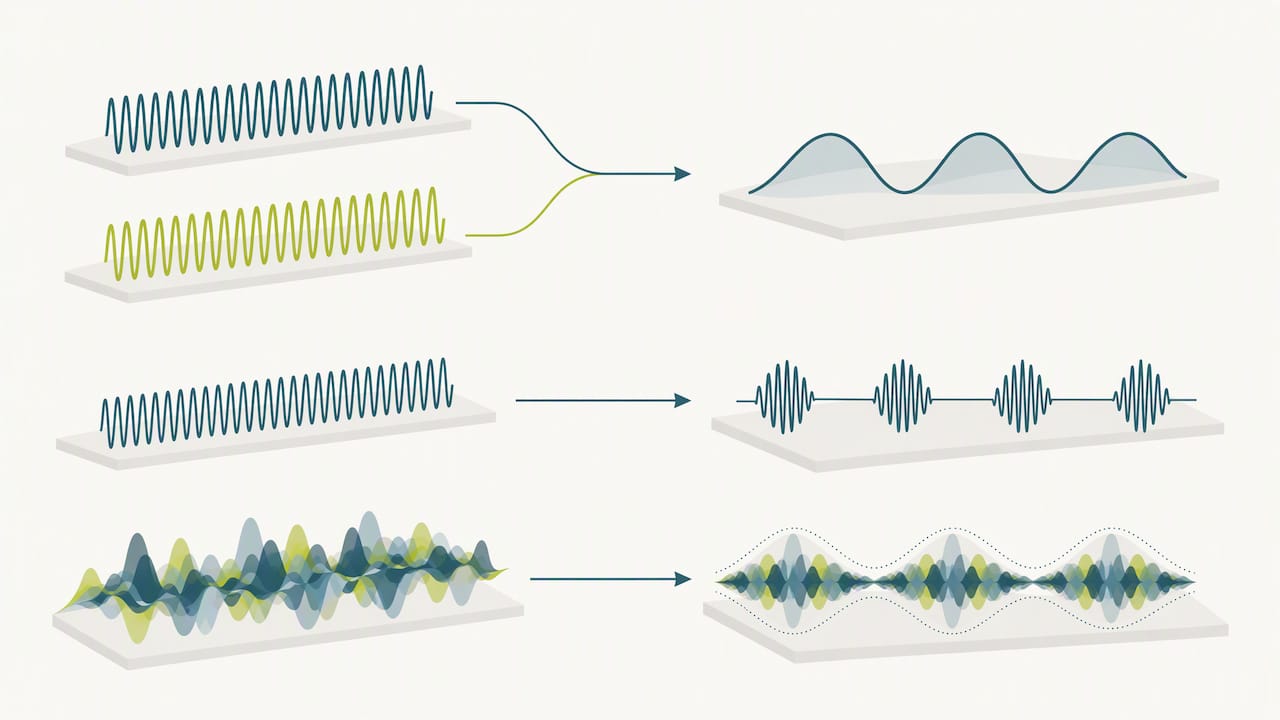
The evidence on musical embedding specifically is encouraging from a comfort standpoint. Research comparing musical approaches to gamma stimulation against raw pure tones found listeners consistently rated the musical versions as more pleasant and easier to tolerate, which matters enormously for anyone trying to build a daily habit rather than endure a lab session once.
Experts caution that passive auditory stimulation is not equivalent to the active processes of meditation, according to a 2023 commentary in Frontiers in Human Neuroscience, with quality sound design flagged as a real factor in whether people actually keep listening long enough for it to matter.
The mechanistic distinction is worth sitting with for a moment:
- Entrainment is externally driven: your neurons start firing in time with a rhythm coming from outside, and when the sound stops, the synchrony tends to fade quickly.
- Meditation-induced gamma, at least in the long term practitioners studied in 2004 and 2017, looks more like something the brain learns to generate on its own, with hints that it persists outside the session.
- The two aren’t competitors. Used together, a pleasant 40 Hz soundscape can simply make the meditation easier to settle into, rather than replacing the training itself.
How orchestral gamma music can support practice
Pure tones do their job, but they’re not exactly inviting. Anyone who has sat through ten minutes of a flat sine wave beeping at 40 times a second knows the appeal wears thin fast, and that’s precisely the problem that good musical design solves. Embedding the same frequency inside a properly composed, orchestrated piece gives your attention something worth staying with, which is the whole logic behind our approach at Orchestral Meditations: recordings made with live musicians, captured at Abbey Road Studios, layered with binaural and 3D surround sound engineering rather than built from a single clinical tone.
It’s worth saying plainly why the person behind the desk matters here. Production credits aren’t just liner-note trivia, they’re a genuine signal of how carefully a piece of sound was built. Robert Emery, a composer and producer known for his work shaping large-scale orchestral and choral recordings, and Moritz Schneider, whose production work spans immersive and spatial audio projects, both represent exactly the kind of craft that separates a track you’ll actually finish from one you switch off after ninety seconds. That matters more than it sounds: a Frontiers commentary on auditory entrainment specifically flags sound design and production quality as a factor in whether people stick with a listening practice long enough to see any benefit at all.
A few practical notes on using tracks like these:
- Choose recordings that state their embedded frequency clearly rather than vague “healing frequency” marketing language.
- Layer music underneath, not over, your meditation, let it sit quietly in the background rather than demanding attention.
- Keep volume moderate. Comfort beats intensity every time with this kind of listening.
- Use headphones for anything built around binaural separation, since speakers blur the left and right channel difference the effect depends on.
Pro Tip: If you’re new to gamma-focused listening, trial a single track at the end of your working day before bringing it into a formal sitting practice. It’s an easier way to judge whether the sound itself agrees with you before you build a routine around it.
You can read more on the broader rationale for pairing structured sound with mindfulness practice in our piece on science-backed sound and music.
A progressive 4 week plan to cultivate gamma friendly practice
Building a trait effect, something that shows up even when you’re not meditating, takes repetition over time rather than one heroic weekend retreat. Here’s a plan that respects both the evidence and real life.
- Week one: sit for 10 minutes daily with loving kindness meditation, no audio, just to learn the shape of the practice without distraction.
- Week two: extend to 15 minutes and introduce a gentle gamma music track underneath the final five minutes, so you associate the sound with the settled part of the session rather than the start.
- Week three: stretch to 20 minutes, alternate between loving kindness and mantra repetition on different days, and begin the full session with music playing quietly from the start.
- Week four: hold at 20 minutes, add a short breathwork warm up (four slow breaths before you begin), and notice whether settling into the practice feels faster than it did in week one.
You can combine modalities in either order. Some people prefer audio running throughout as a steady anchor, others prefer silence first and music only once the mind has settled, which tends to suit people who find background sound distracting during the opening minutes.
Self-monitoring doesn’t need an EEG headset. Track subjective clarity (does your thinking feel less foggy an hour after practice?), your actual adherence (did you sit today, yes or no?), and general mood. A consistent daily habit over months is far more likely to shift your baseline than occasional long sessions squeezed in once a fortnight, because trait change, by definition, is built from repetition rather than intensity.
Pro Tip: Keep a one-line note after each session rather than a long journal entry. “Calm, slightly foggy” takes ten seconds to write and gives you a genuinely useful record four weeks later.
Safety, limitations and realistic expectations
None of this is risk-free territory, even if the risks are generally mild. Trials of 40 Hz auditory stimulation have reported occasional ear discomfort, mild headaches, and a small risk of tinnitus with prolonged or loud exposure, so moderate volume and reasonable session lengths matter more than enthusiasm. Anyone with a history of epilepsy or photosensitive seizures should be particularly careful with rhythmic sensory stimulation generally and should speak to a doctor before trying it.
- Keep headphone volume at a comfortable, conversational level, never maximum.
- Stop immediately if you notice ringing, pressure, or headache during or after listening.
- Avoid flickering light-based entrainment devices entirely if you have any seizure history.
- Treat animal and preclinical findings on gamma stimulation as early signals, not confirmed human treatments.
It’s also worth being honest about the gap between promising preclinical research and what’s actually established in people. Much of the excitement around 40 Hz stimulation for conditions like Alzheimer’s disease traces back to animal studies, and that’s a meaningfully different category of evidence to the human EEG work on meditators discussed earlier. Short bursts of entrainment can produce measurable short-term neural synchrony, but durable, trait-level change appears to require the kind of sustained, effortful practice described in the four week plan above, not a single listening session.
A personal note on practice, patience and production
I’ve sat with this topic long enough to notice something that surprised me: the sessions that actually changed how my mind felt the next day were never the dramatic ones. They were the boring, repeated ones, the same loving kindness script on a Tuesday evening with nothing particularly profound happening, week after week, until one day the baseline fog just felt a notch lighter.
What I didn’t expect was how much the quality of the sound mattered to whether I kept showing up at all. A thin, clinical tone gets old fast. Work that’s been properly composed and produced, the sort of care that someone like Robert Emery or Moritz Schneider brings to a recording, gives you a reason to sit for the full twenty minutes rather than checking the clock at minute six.
None of this replaces proper medical advice. If you’re managing anxiety, epilepsy, or anything more serious, talk to a professional before building a new sensory practice around it. Treat everything here as an invitation to experiment carefully, not a prescription.
— ROBERT
Practical next steps: finding the right gamma music for your practice
Once you’ve decided to bring sound into your routine, the honest next step is finding music that’s actually built for the job rather than slapped together with a stock “binaural” label. We offer a personal subscription for individual practice, giving you ongoing access to our library of orchestral recordings made with live musicians and layered binaural and 3D surround design, rather than a single track you’ll outgrow in a fortnight.
If you’re a teacher, therapist, or developer building meditation content for other people, our professional subscription and royalty free meditation music licensing cover that use case properly, so you’re not left guessing about usage rights.
When you’re choosing a track, a few things worth checking:
- Does the description state the embedded frequency clearly, rather than vague wellness language?
- Are composer and production credits listed, the kind of detail that signals genuine craft behind the recording?
- Is binaural or 3D surround sound specified, since that tells you whether headphones are required for the effect to work?
If you’d rather browse everything in one place first, our shop is the place to start.
FAQ
Is listening to gamma waves good for you?
For most people, listening to 40 Hz auditory stimulation at a comfortable volume appears to be generally well tolerated, though it isn’t a substitute for active meditation. Experts note that passive sound and active meditative training work through different mechanisms, so treat gamma music as a comfortable aid rather than a stand-alone solution, according to Frontiers in Human Neuroscience.
How do you activate gamma brain waves?
Gamma activity rises during specific meditation styles, particularly loving kindness and compassion-based practice, as shown in long term Tibetan practitioners in the PNAS study. Auditory entrainment at 40 Hz can also produce short-term gamma synchrony, though this effect tends to fade once the sound stops.
How can I increase my gamma brain waves?
The clearest path in the research is consistent, long term practice: meditators studied across three traditions showed gamma amplitude that correlated with years of practice, not just session length, according to research published via PMC. Pairing daily practice with pleasant 40 Hz audio may support adherence, but the dose that matters most is regular, sustained sitting over months.
What are gamma waves?
Gamma waves are the fastest commonly studied brainwave band, generally placed somewhere between 30 and 110 Hz, associated with the brain binding separate pieces of information into a single coherent experience. They show up in moments of focused attention, insight, and in the elevated states researchers have recorded in experienced meditators.