You sit down to meditate, close your eyes, and within thirty seconds you’re mentally drafting a shopping list, replaying a mildly embarrassing thing you said in 2019, and wondering whether you left the oven on. Sound familiar? Genuine, distraction-free relaxation is harder to achieve than it looks on the wellness influencer’s Instagram feed, and the standard advice of “just breathe” can feel a bit thin when your mind is running at full tilt. Soundscape meditation uses immersive audio environments, think orchestral music, nature sounds, or binaural beats, to anchor your awareness and guide your brain into genuinely deeper states of relaxation and mindfulness. This guide walks you through the what, the how, and the “why is it not working yet” of the whole practice.
Key Takeaways
| Point | Details |
|---|---|
| Immersive environments matter | Carefully chosen soundscapes create deeper mindfulness than everyday background noise. |
| Preparation is essential | Success depends on the right equipment, setting, and a willingness to experiment. |
| Personalisation is key | Each person’s ideal meditation soundscape may differ, so adjust for comfort and mood. |
| Track your progress | Noticing improvements in relaxation and focus helps deepen your soundscape practice. |
| Beware of multitasking | To gain real benefit, avoid distractions and engage fully with the audio environment. |
Understanding soundscape meditation and its benefits
Let’s start with the basics, because “soundscape meditation” gets thrown around like confetti at a wellness festival, and it’s worth knowing what it actually means before we go any further.
At its core, soundscape meditation is the deliberate use of immersive audio to support and deepen a meditation session. Rather than sitting in silence and wrestling your thoughts into submission, you give your attention something genuinely beautiful and complex to rest on. The orchestral sound for meditation tradition does exactly that: layering strings, woodwinds, and percussion into sonic landscapes rich enough to absorb the restless mind without over-stimulating it.
There are broadly four categories of soundscape you might encounter:
- Nature sounds: Rain, ocean waves, birdsong, forest ambience. These are familiar, non-threatening, and have genuine physiological effects on the nervous system.
- Orchestral and classical music: Full orchestral recordings, chamber music, or specially composed meditation scores. These engage emotional and metacognitive processing in ways that nature sounds often don’t.
- Binaural beats: Audio engineering that presents slightly different frequencies to each ear, with the brain theoretically “filling in” a perceived beat at the difference frequency. Popular, but more nuanced in its effects than the marketing often suggests.
- Hybrid soundscapes: Layered combinations of the above, often including theta frequency compositions embedded within orchestral arrangements.
The research landscape here is genuinely interesting, though it’s worth being honest about its limits. Classical music meditation has been shown to increase metacognitive awareness and empathy, while natural soundscapes reduce stress biomarkers compared to urban noise. That’s meaningful. However, evidence for binaural entrainment specifically is weaker and more mixed than enthusiasts often claim. The benefits you notice from binaural beat tracks may well come from the relaxed, attentive listening context rather than the brainwave entrainment mechanism itself. Which, honestly, is fine. If it works, it works.
“The ear is the only organ that cannot be shut. Sound, then, is uniquely positioned as a gateway to the meditative state, not because it forces the mind to stop, but because it gives the mind somewhere beautiful to go.”
What tends to separate a truly immersive experience from a pleasant background noise is the quality and intention behind the recording. There’s a reason people consistently prefer orchestral and nature sounds over purely synthetic audio for deep meditative work. The types of soundscapes that work best tend to be those with enough organic texture to feel alive, and enough structure to prevent the mind from simply wandering off entirely.
| Soundscape type | Primary benefit | Best suited for |
|---|---|---|
| Orchestral music | Emotional engagement, metacognitive awareness | Emotional processing, longer sessions |
| Nature sounds | Stress reduction, nervous system calming | Beginners, short sessions, sleep |
| Binaural beats | Potential focus and relaxation cues | Concentration-based practice |
| Hybrid/layered | Immersion, multi-level engagement | Intermediate to advanced practice |
Preparing for your soundscape meditation: What you need
Right, let’s talk kit. And no, you don’t need to remortgage your house for a studio-grade sound system (though we won’t judge if you do). The beautiful thing about soundscape meditation is that its core requirements are genuinely modest.
Equipment considerations are the first place most people get stuck in their own heads. The short answer is: good headphones beat mid-range speakers for binaural content, but for orchestral and nature soundscapes, a quality Bluetooth speaker in a quiet room is perfectly fine. The science of orchestral calm works whether you’re wearing headphones or sitting in front of a speaker, provided the recording quality supports it.
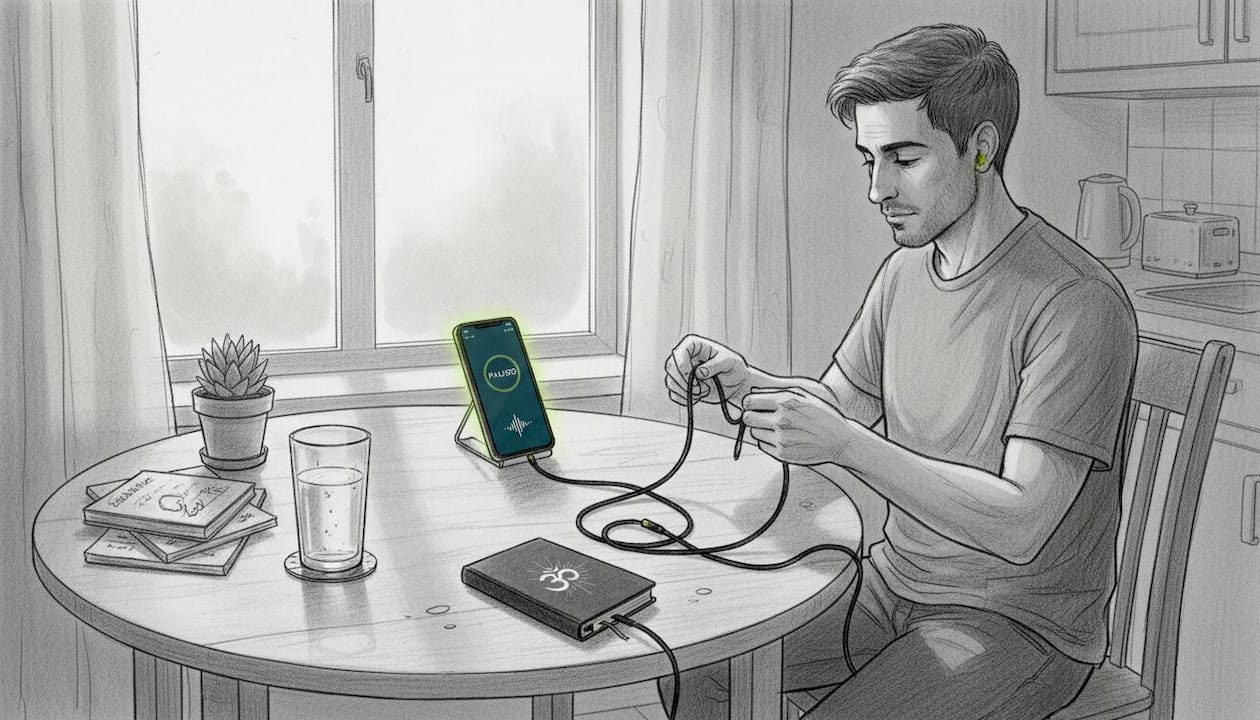
For those wanting the full spatial experience of 3D sound meditation, over-ear headphones are worth the investment. They create the sensation of being inside the sound rather than having it piped at you, which is a genuinely different and considerably more absorbing experience.
Here’s a practical checklist before you begin:
- A reasonably quiet space where you won’t be interrupted for your chosen session length
- Headphones or speakers appropriate for your soundscape type
- A comfortable seated or reclined position (without so much comfort that you fall asleep immediately, unless that’s the goal)
- A curated playlist, app, or album selected in advance, so you’re not fumbling with technology mid-session
- A rough intention for the session: relaxation, emotional processing, focus, or sleep support
Scheduling matters more than most people expect. Starting with 5 to 10 minute sessions is the sensible approach, particularly in the first week. There’s a common trap of ambitious beginners who schedule a 45-minute session on day one and then wonder why they spent most of it feeling restless and guilty. Shorter, consistent sessions build the mental habit far more effectively than occasional marathon attempts.
Pro Tip: Before committing to a soundscape for a full session, spend two or three minutes in what we’d call an active listening preview. Sit quietly, close your eyes, and let the first layer of sound settle into your awareness. Does it create a sense of ease or mild tension? Your gut instinct here is surprisingly reliable, and it’s far better to swap tracks before you begin than to spend twenty minutes subtly bracing against music that isn’t right for you today.
On the question of layering: some of the most immersive soundscape experiences combine multiple audio elements, such as an orchestral piece with underlying theta frequencies, or nature sounds woven beneath a string arrangement. Experimenting with these layers is part of the pleasure. What works on a stressed Tuesday afternoon might feel completely different on a calm Sunday morning, and that variation is completely normal.
How to practise immersive soundscape meditation: Step-by-step process
Let’s get practical. Here is a simple, repeatable process that works whether you’re three days into this or three years in.
-
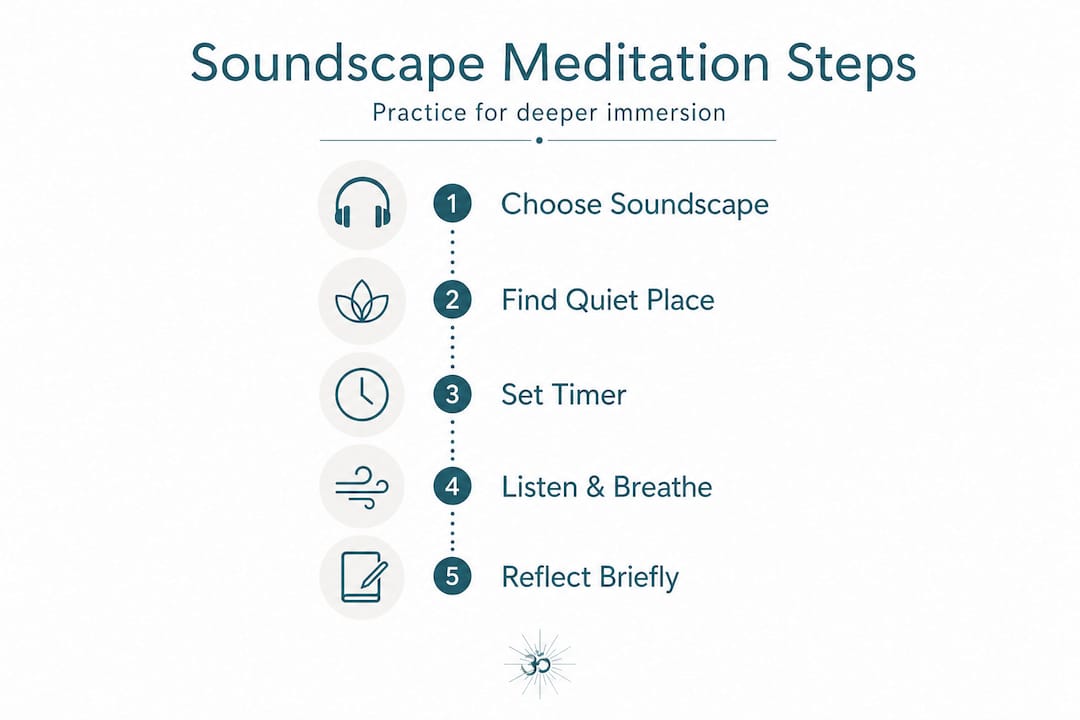
Set up your space intentionally. Dim the lights if possible. Place your device where it won’t interrupt you with notifications. If you’re using headphones, have them ready before you sit down. Small details like these send a signal to your nervous system that something different is about to happen, and that priming is genuinely useful.
-
Choose your soundscape before you sit. Browsing for the right track after you’ve settled into position breaks the transition. Think of it like choosing a film before sitting on the sofa rather than scrolling for twenty minutes after.
-
Take three slow, deliberate breaths before pressing play. This isn’t woo-woo ceremony for its own sake. It gently lowers your heart rate and shifts your nervous system toward a receptive state. You’ll notice the soundscape landing differently when you’re already slightly calmer.
-
Allow the first minute to simply wash over you. Resist the urge to evaluate or judge the experience immediately. Soundscape meditation works partly because it creates a gentle sensory container, but your mind needs a minute or two to recognise and settle into that container. Don’t rush it.
-
Use the sound layers as your anchor. When you notice your mind wandering (and you will, because you are a human being with a functioning brain), gently return your attention to a specific element of the soundscape. A particular instrument. The rhythm of rainfall. The way a phrase resolves. This is exactly equivalent to returning to the breath in traditional mindfulness, and it’s genuinely powerful.
-
Let your awareness become curiosity rather than control. The goal isn’t to force your mind into blankness. It’s to stay gently present with the evolving soundscape. Guided sound journeys describe this as active listening as an anchor, and the framing is apt.
-
Close the session with intention. When the track ends, or when you’re ready to finish, don’t immediately pick up your phone or return to tasks. Sit for thirty to sixty seconds in the quiet that follows. This transition period is often where the deepest sense of stillness lands, a kind of after-image of the sound.
“Sound is the scaffolding. Stillness is what you build inside it.”
The healing potential of meditative soundscapes is best accessed through consistent practice rather than one-off sessions. Think of this as training a particular quality of attention, not as a treatment to be administered occasionally when stress levels peak.
Pro Tip: Keep a brief voice note or written journal entry after each session. Three sentences is enough: how you felt before, what you noticed during, and how you feel afterwards. Over time, this creates a remarkably clear picture of which soundscapes work best for you in which conditions. It’s also quietly satisfying to look back at your entries after a few weeks and notice how your experience of the practice has evolved. Our symphonic stillness guide goes deeper on building this kind of intentional practice.
Troubleshooting and tailoring your soundscape meditation
Nobody talks enough about the sessions that don’t go well, and I think that’s a disservice to anyone genuinely trying to build a practice. So let’s be honest about the common hiccups.
Distraction that won’t quit. Sometimes the mind simply won’t settle, no matter how lovely the music is. Rather than treating this as failure, treat it as information. A racing mind is often a sign that you need a more structured anchor: try focusing on a single instrument and mentally tracking its melodic line rather than absorbing the soundscape as a whole.
The wrong soundscape for the moment. Emotional state genuinely affects which type of soundscape you’ll respond to. Research on adverse reactions confirms that personal preference is paramount, and that some people experience unwanted stress responses from sounds that work beautifully for others. If orchestral music feels overstimulating on a particular day, that’s not a failure of the music. It’s useful feedback. Nature sounds or even silence might serve you better.
Common issues and their fixes:
- Falling asleep: Sit upright rather than reclined; choose a slightly more dynamic soundscape with gentle rhythmic variation
- Restlessness: Shorten the session; use a more structured guided meditation alongside the soundscape
- Emotional overwhelm: Switch to simpler nature sounds; consider the holistic orchestral soundscapes guide for context on emotional processing through music
- Difficulty finding the right track: Treat it as experimentation, not failure; your preferences will crystallise over time
- External noise intrusion: Use noise-isolating headphones; consider a white noise layer beneath your chosen soundscape
On multitasking: please don’t. It seems obvious, but soundscape meditation as background noise while you answer emails is a completely different activity with considerably fewer benefits. The immersion requires a degree of genuine presence that multitasking explicitly undermines.
“Advanced practitioners sometimes find silence more effective than any soundscape. If you reach that point, congratulations. It means you’ve built the inner quiet that the music was scaffolding all along.”
Pro Tip: Keep a shortlist of three or four go-to soundscapes that you know work for you in different emotional states: one for high-stress days, one for emotional processing, one for gentle focus, and one for deeper relaxation. Having these ready means you spend less time choosing and more time actually meditating.
How to measure results and deepen your meditation experience
This is the part that feels a bit woolly to people who like data, and I get that. How do you measure an internal experience? The answer is: imperfectly, but usefully.
-
Track your pre and post session mood. Use a simple one-to-ten scale for stress, clarity, and ease. Do this for two to three weeks and patterns will emerge. This is not as rigorous as a clinical trial, but it’s genuinely informative for your own practice.
-
Notice your metacognitive awareness. One of the measurable benefits of sustained classical music meditation practice is increased metacognitive awareness, which simply means getting better at noticing your own mental states. If you begin to catch your mind wandering during daily life with more speed and less self-judgment, that’s a real and meaningful shift.
-
Observe your relationship with silence. Early practitioners often find silence uncomfortable or even anxiety-inducing. Over time, post-session quiet becomes something to savour rather than escape. This shift is one of the clearest indicators that the practice is working.
-
Experiment with longer sessions gradually. Once ten-minute sessions feel genuinely comfortable and restorative, try fifteen, then twenty. Don’t increase length until the current length feels easy rather than effortful. Rushing this is like trying to run a half-marathon before you’ve comfortably completed a 5k.
-
Introduce new sound layers mindfully. If you’ve been working with nature sounds, adding a theta frequency layer or an orchestral arrangement is a reasonable next step. Read up on binaural healing practices before adding beats to your repertoire, particularly if you have any sensitivity to audio stimulation. The scientific approach to meditation and sound can help you make sense of what you’re actually introducing and why.
-
Review your journal entries monthly. Look for changes in language, recurring themes, and which soundscapes appear most often in positive entries. Your own notes are a surprisingly rich source of insight.
Our perspective: Why context and personalisation matter more than hype
Here’s something we genuinely believe, and it’s perhaps not what you’d expect from a platform built around orchestral meditation music: the technology and the specific soundscape matter far less than your relationship with the practice itself.
The wellness world loves a dramatic claim. “This frequency will transform your brain.” “This orchestral arrangement was scientifically engineered to induce theta states.” Some of those claims are partially true. Many are substantially overstated. The evidence on binaural entrainment specifically shows that benefits are real but likely attributable to the relaxed listening context rather than the specific brainwave mechanism. Which means the most transformative technology in your meditation practice is still, quietly, your own consistent attention.
What we’ve found, both from our own experience and from the feedback of practitioners who use our recordings, is that the most profound results come from a surprisingly simple combination: a soundscape you genuinely love, a consistent schedule, and the patience to let the practice settle into you rather than demanding immediate results. Orchestral and nature sounds remain foundational not because of any single study, but because they carry an organic complexity that the human nervous system responds to as inherently trustworthy. There’s a reason that sitting by a river or in a concert hall produces a particular kind of stillness. These are familiar, biologically resonant experiences.
Experiment, yes. Try binaural beats, theta frequencies, spatial audio, and everything in between. But don’t abandon the simpler path if it’s working. The deep relaxation music for mindfulness that genuinely helps you unwind after a difficult day is worth more than the technically sophisticated track that leaves you mildly anxious and wondering if you’re doing it wrong.
Be patient with yourself. This is a practice, which means it develops over time, and the first few weeks rarely look like the polished, peaceful experience you might have imagined.
Explore curated orchestral soundscapes for your next meditation
If anything in this guide has sparked the urge to actually try rather than just read, we’d love to help you take that next step.
At Orchestral Meditations, every track in our curated meditation music library has been crafted with exactly this kind of intentional, immersive practice in mind: recorded at Abbey Road Studios with live orchestral musicians, and built around scientifically considered frequency work, including theta, binaural, and Solfeggio-based compositions. Whether you’re just beginning or looking to deepen an established practice, browsing our best orchestral meditation tracks is a genuinely good place to start. Think of it as trying on a few soundscapes until you find the one that feels like home.
Frequently asked questions
What is the ideal length for a soundscape meditation session?
Starting with 5 to 10 minutes per session is the most effective approach for beginners, with gradual increases as the practice becomes more comfortable and consistent. Longer is rarely better until shorter feels genuinely restorative.
Do I need special equipment to benefit from soundscape meditation?
Basic headphones or speakers in a reasonably quiet environment are entirely sufficient to begin. Advanced equipment like over-ear headphones or spatial audio systems can enhance immersion, but they are optional rather than essential.
Are there any risks or downsides to soundscape meditation?
A small number of people experience adverse stress responses to certain sounds, particularly highly stimulating or emotionally complex music. If a soundscape creates tension rather than ease, stop and try something simpler.
How do nature sounds compare to orchestral music for meditation?
Both reduce stress and support mindfulness, but orchestral music tends to be more effective for emotional engagement and metacognitive awareness, while nature sounds are often better for straightforward nervous system calming and sleep support.
Is soundscape meditation suitable for advanced practitioners?
Yes, though some advanced practitioners find that silence serves them better for deepest practice, using soundscapes selectively for emotional processing or grounding sessions rather than as a daily staple.