There are, at last count, approximately four thousand and seven relaxation techniques on the internet. (I may have exaggerated slightly, but only slightly.) If you’ve ever sat down to research stress relief and ended up more overwhelmed than when you started, you are absolutely not alone. The sheer volume of advice out there, from cold plunges to sound baths to apps that coach you to breathe, can make choosing a starting point feel like its own source of anxiety. This article cuts through that noise by giving you a practical framework for comparing, selecting, and actually sticking with relaxation methods that genuinely support your mental health over the long term.
Key Takeaways
| Point | Details |
|---|---|
| Consistency matters most | Practising relaxation techniques daily, even briefly, offers the greatest mental health benefit. |
| Personalise your approach | Choose relaxation methods that you genuinely enjoy and are easy to maintain. |
| Combine techniques for best results | Blending methods like breathing and music can enhance stress relief and mood. |
| Relaxation doesn’t replace therapy | Use these methods to support, not substitute, professional mental health treatment for severe conditions. |
| Short-term benefits are significant | Many relaxation practices can reduce anxiety, stress, and even blood pressure within minutes to weeks. |
Factors to consider when choosing relaxation techniques
To lay the groundwork for effective selection, it helps to know what criteria actually matter when you’re choosing a relaxation approach. Because here’s the uncomfortable truth: not every technique that works brilliantly for your yoga-enthusiast colleague is going to do anything useful for you. And that’s perfectly fine. The goal is to find your fit, not to force yourself through someone else’s regime.
Before you discover relaxation techniques that suit you, run each option through this set of practical filters:
- Personal preference. This one sounds obvious, but it gets overlooked constantly. If the sound of singing bowls makes your teeth itch rather than your shoulders drop, that method is not going to work for you regardless of how many studies back it up. Personal preference matters enormously because some sounds and music can actually induce stress in people who simply don’t enjoy them. Forcing yourself through something unpleasant is, rather ironically, the opposite of relaxation.
- Time commitment. Many people assume they need an hour of silent contemplation to see any benefit. In reality, the research suggests otherwise. Daily practice of 10 to 20 minutes is associated with meaningfully lower mental health risk, and consistency of that practice over time predicts outcomes far better than occasional marathon sessions.
- Consistency over intensity. This is where most people stumble. They go hard on a technique for a fortnight, feel brilliant, get busy, and then abandon it entirely. The evidence is clear: ongoing, regular practice outweighs sporadic use by a considerable margin. A gentle ten-minute breathing session every single day will serve you far better than a two-hour sound bath once a month.
- Accessibility and cost. Some techniques require apps, equipment, subscriptions, or studio memberships. Others require nothing but your own body and a quiet corner. When choosing, be honest with yourself about what you’ll realistically access day after day without friction.
- Safety and suitability. If you’re managing a specific mental health condition, it’s worth checking that your chosen method is appropriate. Certain techniques, such as body scans, can occasionally surface difficult emotions in people with trauma histories. When in doubt, check with a healthcare professional first.
Pro Tip: When trialling a new technique, commit to it for at least two weeks before deciding it “doesn’t work.” Your nervous system needs time to learn new patterns, much like a new instrument needs time before it stops squeaking.
Top relaxation tips and techniques for mental health
With those criteria firmly in mind, let’s explore the specific, science-backed techniques that have the strongest evidence behind them. I’ve tried most of these personally, with varying degrees of grace, and I’ll be sharing what I’ve found along the way.
-
Breathing exercises. This is your fastest tool and, genuinely, one of the most powerful. Box breathing works by inhaling for a count of four, holding for four, exhaling for four, and holding again for four. It activates the parasympathetic nervous system (that’s the “rest and digest” branch, as opposed to the “flee the charging rhinoceros” branch), slowing your heart rate and reducing stress hormones within minutes. You can do this at your desk, in a queue at the supermarket, or in the car before a difficult meeting. Nobody will notice. Nobody needs to.
-
Mindfulness meditation. This is perhaps the most researched technique of the modern era, and for good reason. Mindfulness meditation involves focused attention on the breath, a body scan moving awareness through each part of the body, and a deliberate anchoring in present-moment experience. It reduces anxiety and interrupts the looping pattern of negative thoughts that tends to characterise stress and depression. You don’t need to sit cross-legged on a mountain. A chair, a few minutes, and the willingness to gently redirect your mind will do it. The mindfulness meditation guide on our site walks you through the process step by step if you’d like somewhere to begin.
-
Progressive muscle relaxation (PMR). Few people realise just how much tension they hold in their bodies until they actually try this. PMR works by systematically tensing and releasing muscle groups from the feet upward, helping you notice and then release physical tension you’ve likely been carrying around all day without realising it. It’s particularly useful for people who find purely mental techniques difficult, as it gives the body something concrete to do.
-
Sound therapy. Here’s where things get genuinely fascinating. Sound therapy, whether through singing bowls, nature sounds, or carefully selected music, reduces tension and anxiety through both vibration and the act of attentive listening. The physical resonance of certain frequencies can shift the body’s state in ways that feel almost miraculous when you first experience them. For a deeper look at evidence on music and mental health, the research is genuinely encouraging, though as ever, personal preference matters. Not everyone responds to the same sounds.
-
Physical activity. I know, I know. You came here for relaxation, not a gym recommendation. But hear me out. Physical activity, even a gentle twenty-minute walk, releases endorphins and genuinely improves mood. Yoga, in particular, combines movement with breath awareness and has a strong evidence base for reducing cortisol (the primary stress hormone) and improving sleep. It doesn’t need to be vigorous to be effective.
-
Guided imagery. This is essentially structured daydreaming with intention. Guided imagery asks you to vividly imagine a calming scene using every sense available: the warmth of sun on your skin, the sound of waves, the smell of pine forests, the feel of soft grass underfoot. The brain, charmingly, responds to vividly imagined experiences in ways that overlap meaningfully with real ones. It’s a powerful distraction from stress and a useful bridge into deeper states of relaxation.
“The goal of relaxation practice is not perfection. It is simply the consistent, gentle act of returning to calm.” This principle, easy to state and surprisingly difficult to live, is perhaps the most important thing to carry with you into any technique you choose.
For those who’d like to try a more structured approach, a deep relaxation step-by-step guide can be an excellent starting point, walking you through combining several of these methods in sequence.
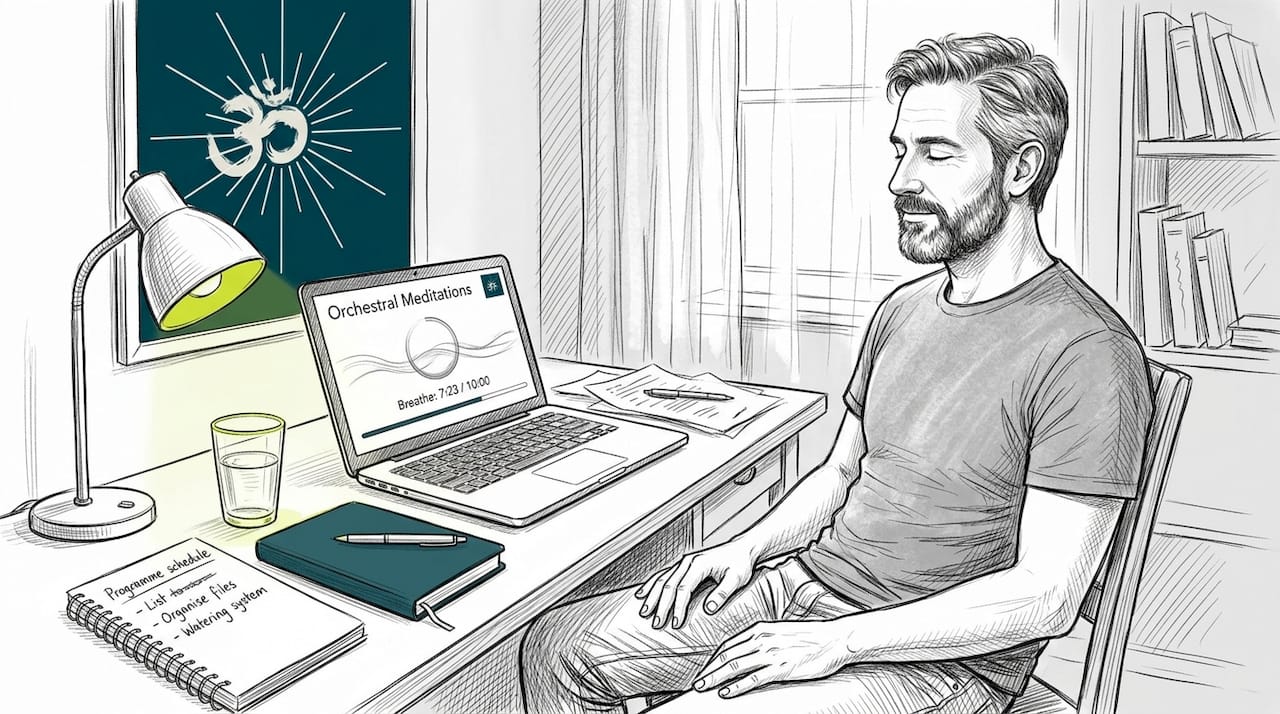
Pro Tip: Pair sound therapy with breathing exercises. Put on something genuinely soothing (think orchestral, ambient, or nature-based) and synchronise your breathing to the natural rhythm of the music. The combined effect is noticeably greater than either alone.
How popular relaxation methods compare
Now that you understand each method, it’s helpful to see them side by side. Choosing one technique over another isn’t always about which is “best” in an absolute sense. It’s about which is best for you, right now, given your circumstances. That said, some comparisons are genuinely useful.
It’s also worth noting that relaxation techniques show measurable physiological effects. Systolic blood pressure, for example, drops by six to ten millimetres of mercury in the short term for people with hypertension who practise relaxation consistently. That’s a meaningful number. However, these benefits require ongoing practice; sound therapy benefits, for instance, may not be sustained at three months if the practice is discontinued.
For detailed guidance on matching music to your mood and wellness goals, the music selection for wellness resource is worth a read.
| Technique | Key benefit | Session length | Accessibility | Evidence strength | Ideal for |
|---|---|---|---|---|---|
| Breathing exercises | Fast stress response | 5 to 10 minutes | Excellent | Strong | Anyone, beginners |
| Mindfulness meditation | Anxiety and mood | 10 to 20 minutes | Good | Very strong | Regular practitioners |
| PMR | Physical tension relief | 15 to 20 minutes | Good | Strong | Body-focused learners |
| Sound therapy | Deep calm, sleep | 20 to 60 minutes | Good with resources | Moderate to strong | Music lovers |
| Guided imagery | Stress distraction | 10 to 20 minutes | Good | Moderate | Visual thinkers |
| Physical activity | Mood and resilience | 20 to 45 minutes | Variable | Very strong | Those with restless energy |
One of the most important insights from reviewing these methods together is that they are not competitors. They work best in combination. Breathing lowers your baseline arousal before meditation begins. Music enhances the depth of guided imagery. Physical activity improves sleep quality, which makes every other technique more effective the following day. Thinking of these as isolated solutions misses the point; thinking of them as a complementary toolkit is far more productive.
Practical tips for integrating relaxation into your daily life
Understanding is only half the battle. Making relaxation routines actually stick in daily life is equally, perhaps more, important for your mental health gains. I’ll be honest with you: the number of times I’ve decided to “start meditating every morning” and then found myself frantically making coffee and rushing out the door is genuinely embarrassing. What helped wasn’t more motivation. It was better structure.
Here are the strategies that consistently make a practical difference:
- Anchor your practice to an existing habit. Immediately after your morning coffee, immediately before your shower, or right after you sit down at your desk. Linking relaxation to something you already do removes the need to remember it separately.
- Start with ten minutes, not thirty. The biggest obstacle to consistency is the sense that practice needs to be substantial to count. Grounding and breathing exercises are among the most commonly reported helpful techniques precisely because they’re quick, accessible, and combinable with other methods.
- Combine techniques for compound effect. Sound therapy paired with breathing, or gentle yoga followed by guided imagery, tends to produce deeper and more lasting states of relaxation than any single approach on its own.
- Personalise relentlessly. Adjust the sounds, the visual setting, the type of movement, the time of day. Your relaxation practice should feel like something you actually want to do, not a chore that sits reproachfully on your to-do list.
- Track what you notice. Even a brief note in a journal about your mood and stress level before and after each session can reveal patterns you’d otherwise miss. Over time, this creates evidence that your practice is working, which is one of the most powerful motivators available.
- Know when to seek professional help. Relaxation is a genuinely useful tool, but it is not a cure for severe mental health conditions. Relaxation techniques are demonstrably less effective than cognitive behavioural therapy (CBT) for generalised anxiety disorder and depression. Use them as a complement to professional care, not a replacement for it. The National Center for Complementary and Integrative Health notes that these practices are safe for most people, but they are not substitutes for professional care in serious conditions.
For a genuinely lovely and practical combination approach, the guide on mindful steps and orchestral soundscapes shows how movement and music can weave together into something that feels less like a health intervention and more like something you’d actually choose to do. And if you enjoy curating your own audio environment, there’s excellent guidance on creating relaxation playlists that genuinely support your mindfulness practice.
A note on realistic expectations: Regular practice of 10 to 20 minutes daily is associated with measurably lower mental health risk over time. That’s not a dramatic claim. It’s a steady, cumulative one. Relaxation isn’t a magic solution; it’s a maintenance practice, like cleaning your teeth, but considerably more pleasant.
Pro Tip: If you find your mind wandering wildly during a session (and you will, everyone does), don’t treat it as failure. Simply notice the wandering and return. The returning is the practice. Doing it a hundred times in one session is a hundred repetitions of a genuinely useful mental skill.
A realistic look at relaxation: What works, what doesn’t, and why
Stepping back, it’s worth taking an honest view of what really happens when we try to put these tips into practice, because the gap between the serene images on wellness websites and actual lived experience can be considerable.
Here’s what I’ve observed, both personally and through the lens of what the evidence consistently shows: not every technique works for every person. This is not a failing on your part. Human nervous systems vary widely. Responses to sound, movement, imagery, and stillness differ in ways that no single recommendation can fully account for. Someone who finds profound peace in a floating meditation session might find the same environment mildly claustrophobic. Someone who melts into an orchestral soundscape might find it too activating if the tempo is wrong for their state. These differences are real, not excuses.
What I find genuinely frustrating in much wellness content is the implicit message that if a technique isn’t working for you, you simply aren’t trying hard enough, or haven’t committed long enough, or need to buy a better app. Sometimes the honest answer is that the technique isn’t a good match for you right now. Moving on is not failure; it’s data.
The other thing I’d gently push back on is the idea that novelty equals effectiveness. The wellness industry is extraordinarily good at packaging ancient practices in shiny new formats and charging accordingly. But the evidence for box breathing, for PMR, for simple mindful walking, has been building for decades precisely because these approaches are reliable, accessible, and don’t require expensive equipment. That said, quality matters in sound, and this is where I’ll admit to a genuine passion. There is a meaningful difference between low-quality audio and music recorded with real musicians in a world-class studio. When you relax and unwind with sleep music that has been thoughtfully composed and produced, the experience is qualitatively different. Not because it’s more expensive, but because the craft behind it translates into something the nervous system responds to more readily.
The most sustainable relaxation practice I’ve ever encountered in real life is one that someone genuinely looks forward to. That’s the secret, if there is one. Not the technique with the strongest randomised trial behind it, but the one you’ll actually return to tomorrow, and the day after that, and the day after that.
Enhance your relaxation journey with orchestral meditation music
If you’ve been reading this and thinking “yes, but I genuinely don’t know where to start with sound,” you’re in good company. Choosing the right audio environment for relaxation can feel almost as overwhelming as choosing the technique itself.
At Orchestral Meditations, we’ve done a great deal of that choosing for you. Our library of orchestral meditation music was recorded at Abbey Road Studios with the National Philharmonic, which is perhaps the most committed way we know to say that we take sound quality seriously. From binaural beats tuned to theta frequencies through to lush orchestral soundscapes layered with Solfeggio frequencies, every track is crafted with your nervous system in mind. Whether you’re pairing music with breathing exercises, setting the scene for guided imagery, or simply creating a space for quiet at the end of a long day, you can explore best meditation music tailored to your personal wellness needs. Come and have a listen. Your nervous system deserves something rather lovely.
Frequently asked questions
What is the fastest relaxation technique for immediate stress relief?
Box breathing is one of the quickest options available, activating the relaxation response within minutes by slowing the heart rate and reducing stress hormones through a simple four-count inhale, hold, exhale, hold pattern.
How long should I practise relaxation techniques to notice benefits?
Even 10 to 20 minutes of daily practice is associated with noticeable improvements in mood and stress levels, with consistency over time being a stronger predictor of benefit than the length of individual sessions.
Are relaxation techniques safe if I have a mental health diagnosis?
Relaxation methods are safe for most people, but they should complement rather than replace professional care for serious conditions, so always discuss with your healthcare provider before making significant changes to your mental health management.
Which relaxation method is best for sleep problems?
Sound therapy and guided imagery are both well-suited to sleep support, though the most effective option depends on personal preference, so experimenting with both is the most practical approach.
Do relaxation techniques work as well as medication or therapy?
For severe anxiety or depression, relaxation practices are less effective than CBT and should be used alongside, not instead of, evidence-based therapies or medication when those are clinically indicated.