
Most people assume composers simply write the notes and then disappear off to a café somewhere, leaving therapists to do the actual meaningful work. It’s a reasonable assumption, but it’s also completely wrong. The role of composers in therapeutic music is far more deliberate, scientific, and frankly fascinating than that picture suggests. From crafting precise emotional arcs that guide listeners through psychological states to collaborating directly with clinical teams, composers are quietly shaping some of the most powerful healing tools available in modern mental health and wellness care. This article unpacks exactly how that works.
Key takeaways
| Point | Details |
|---|---|
| Composers craft emotional arcs | Tempo, tonality, and texture are chosen deliberately to move listeners through therapeutic psychological states. |
| Roles remain distinct but connected | Composers create the sonic material; music therapists apply it clinically within personalised treatment plans. |
| Evidence supports the impact | Clinical studies show compositions can reduce cortisol by 30% and ease anxiety in surgical and psychiatric patients. |
| Curation matters enormously | Not all music is suitable for all settings. Overstimulating compositions can cause harm in acute care. |
| Collaboration is the future | Composers like Robert Emery and Moritz Schneider are setting the standard for working alongside health professionals. |
The role of composers in therapeutic music: foundations
Here is something most wellness articles gloss over entirely: the composer is not simply pressing “make calming sounds” on some cosmic control panel. Every piece of therapeutic music is an engineering exercise as much as an artistic one.
The key compositional parameters that matter in therapy are tempo, tonality, texture, and dynamics. Tempos sitting between 60 and 100 beats per minute are particularly useful because they align with resting heart rate ranges and nudge the nervous system towards a parasympathetic state. Moderate tempos and varied tonality guide listeners through deliberate emotional narratives rather than simply wrapping them in generic white noise. That distinction matters enormously.
Tonality is equally strategic. Major keys are not automatically cheerful nor minor keys automatically mournful. Skilled composers layer tonality with textural shifts, moving from sparse, single-instrument lines to fuller orchestral passages, to create what therapists call “emotional safety.” The listener feels held and led, not dropped into an ambient puddle.
- Tempo: 60 to 100 bpm aligns with resting cardiovascular rhythms and supports nervous system regulation.
- Tonality: Modal and tonal choices shape emotional colouring, often layered to avoid emotional stagnation.
- Texture: Movement from sparse to rich instrumentation creates a sense of narrative progression.
- Dynamics: Gradual changes in volume prevent startle responses and maintain psychological safety.
- Timbre: Instrument choice (strings, woodwind, piano) affects perceived warmth and emotional resonance.
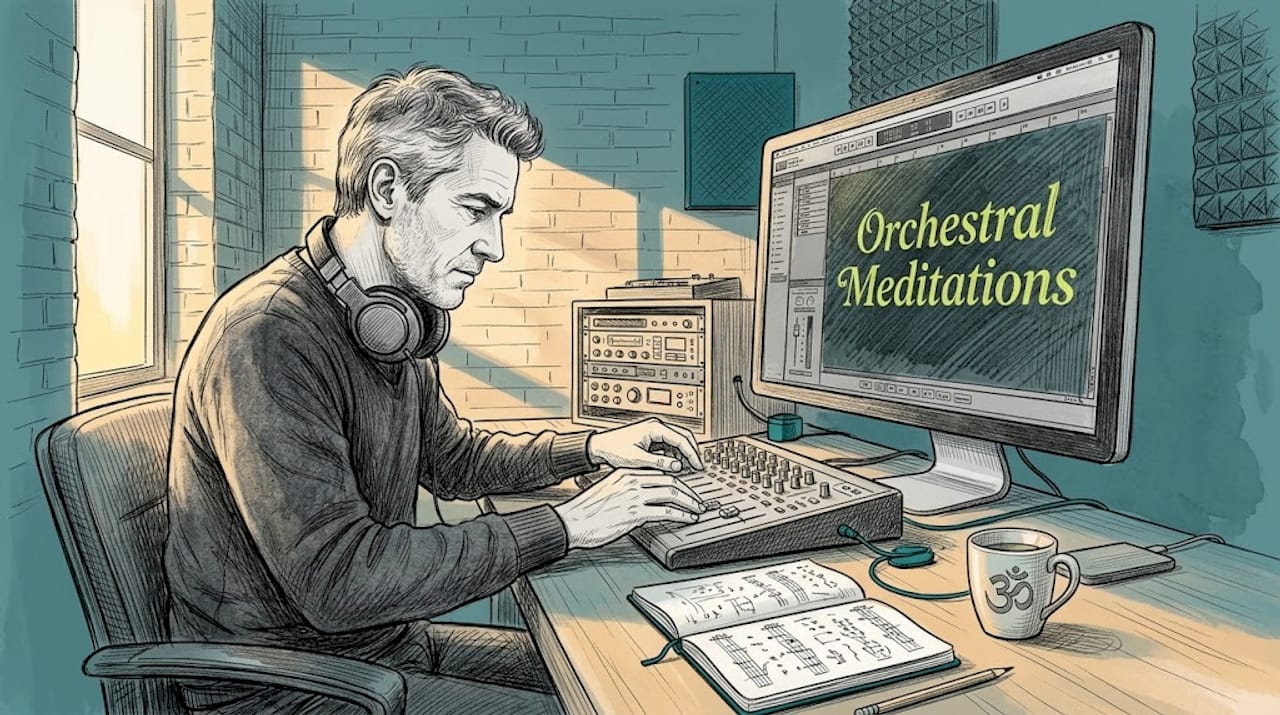
Robert Emery, whose orchestral meditation compositions are designed specifically to support meditative and emotionally balanced states, exemplifies this approach. His orchestral soundscape work demonstrates how careful arrangement of live orchestral forces can produce measurably different psychological outcomes compared to generic ambient digital tracks.
Pro Tip: If you are selecting therapeutic music for personal or clinical use, check whether the piece has a defined compositional structure or is simply looped ambient sound. Structured compositions with intentional arcs tend to produce more consistent psychological responses.
Music also engages what researchers describe as a healing neural network spanning limbic, autonomic, and socio-cognitive brain circuits simultaneously. A competent therapeutic composer does not merely trigger one emotional state. They orchestrate a sequence of states designed to move the listener towards resolution, calm, or energised clarity.
Composers versus music therapists: who does what
This is the bit where even well-informed readers sometimes get muddled, so let’s be direct about it.
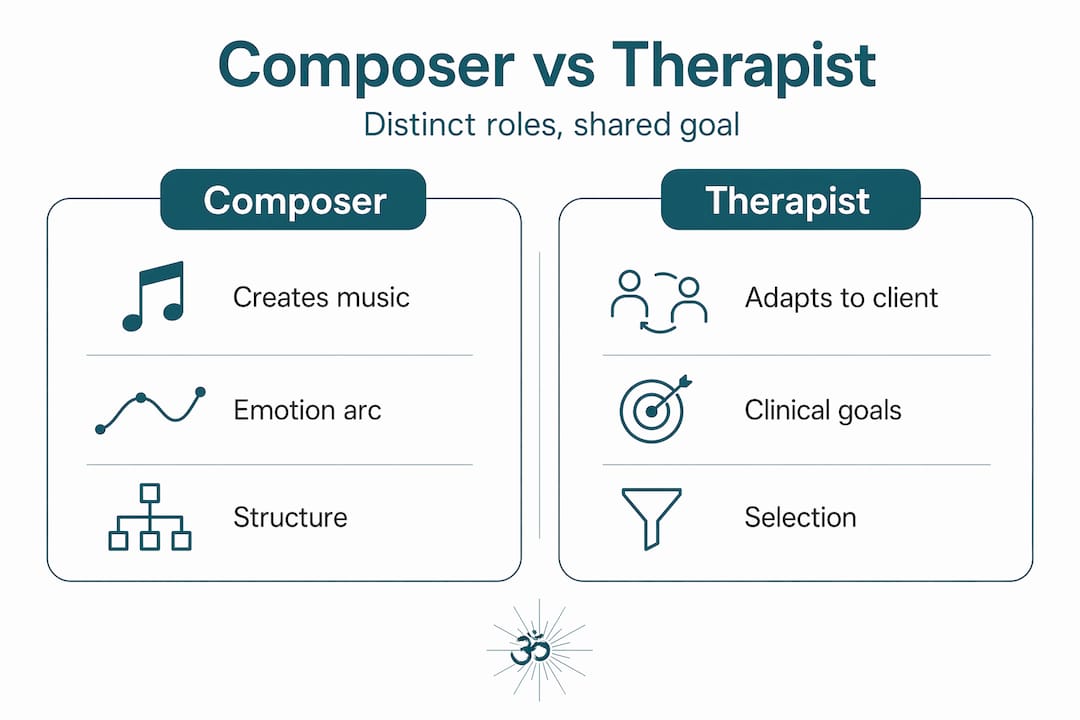
A composer creates the raw sonic material. A music therapist is a trained clinical professional who assesses a patient, develops a treatment plan, selects appropriate musical material, facilitates the session, and evaluates outcomes against clinical goals. As professional guidelines make clear, music therapy requires clinical assessment, ethical standards, and ongoing treatment evaluation. Playing a beautiful piece of music to someone, however lovingly chosen, is not the same thing as music therapy.
| Role | Composer | Music therapist |
|---|---|---|
| Primary function | Creates compositions with therapeutic potential | Delivers clinical interventions using music |
| Clinical training | Not required | Mandatory accredited qualification |
| Patient contact | Typically indirect | Direct, ongoing clinical relationship |
| Outcome responsibility | Aesthetic and structural quality of music | Patient wellbeing and therapeutic progress |
| Collaboration | Works with therapists, producers | Works with medical teams, patients |
That said, the composer’s structured sonic frameworks are genuinely what therapists embed into personalised care plans. Without quality, purposeful compositions, the therapist has inadequate material to work with. The relationship is less competitive and more symbiotic than most people realise.
Moritz Schneider represents a particularly compelling example here. His compositional approach integrates direct clinical feedback, meaning he refines his work in response to what therapists observe in patient sessions. That kind of iterative collaboration between compositional craftsmanship and clinical input is increasingly recognised as a model for the field.
Pro Tip: If you are a therapist looking to commission or select therapeutic compositions, communicate your patient population and treatment goals clearly to the composer. A brief detailing tempo range, session length, and the emotional arc required will produce dramatically better results than simply asking for “something relaxing.”
Conflating the two roles also carries genuine ethical risks. A well-meaning musician who believes their music is “therapeutic enough” to replace structured intervention may unintentionally delay a patient accessing appropriate care. Understanding where composition ends and clinical therapy begins protects both practitioners and the people they serve.
Evidence: what the research actually shows
The evidence base for the impact of composers in therapy has grown substantially over the past decade, and some of the findings are striking enough to stop you mid-scrolling.
At MD Anderson Cancer Centre, musical prescriptions using carefully selected compositions (including slow movements from Mozart sonatas) were used with neurosurgery patients. The results showed cortisol reduced by 30% and anxiety and depression symptoms fell by 32%. The key word in that protocol is “prescriptions.” The compositions were chosen the way a pharmacist chooses a drug: by matching the structure of the music to the patient’s physiological and psychological state.
A pilot study exploring structured 29-minute musical narrative cycles based on a “hero path” model produced equally compelling data. Across 86 psychiatric inpatients, a single session reduced anxiety and significantly lifted positive emotional states. The compositional structure, not random soothing noise, was the active ingredient.
Other notable findings worth keeping close:
- Live music in hospital settings reduced patient anxiety by up to 40% in the Pianos for Health initiative, with a 30% reduction in agitation and fewer requests for pain medication.
- Compositions selected to synchronise with patient neurophysiology consistently outperform general ambient playlists in clinical outcome measures.
- Music activates multiple brain circuits simultaneously, which is why its holistic healing potential extends beyond simple relaxation to genuine physiological change.
| Study / initiative | Context | Key outcome |
|---|---|---|
| MD Anderson musical prescriptions | Neurosurgery patients | 30% cortisol reduction, 32% drop in anxiety/depression |
| Hero-path narrative cycles | 86 psychiatric inpatients | Significant anxiety reduction after single session |
| Pianos for Health (Alicante Hospital) | General hospital patients | 40% anxiety reduction, 30% less agitation |
What this evidence consistently shows is that musical composition in healing contexts is not decorative. It is structural. The composer’s choices about tempo, form, and emotional arc are the mechanism by which therapeutic outcomes are achieved.
Practical integration of therapeutic compositions
So how do you actually put this into practice, whether you are a therapist, a wellness professional, or someone building a personal healing practice?
-
Define the therapeutic goal first. Are you aiming for deep relaxation, gentle energising, emotional release, or sleep support? The compositional requirements differ significantly for each. A piece designed to induce sleep will typically have a slower tempo, minimal dynamic contrast, and a texture that gradually thins out. One designed for emotional processing will need a more defined narrative arc with moments of tension and resolution.
-
Match compositional structure to physiological state. Research confirms that selecting music to suit the patient’s current physiological state, rather than simply targeting the desired end state, produces better outcomes. If someone is acutely anxious, beginning with music that matches their elevated state before gradually slowing can be more effective than immediately playing something very slow and serene.
-
Be deliberate about what you exclude. Certain composers and styles are actively avoided in clinical settings because of their potential to overstimulate. Bartók and Janáček, for all their compositional genius, are not on the playlist in acute care wards. High dissonance, unpredictable rhythmic changes, and extreme dynamic range can increase stress rather than reduce it.
-
Consider session length and arc. A therapeutic composition is not simply a track you put on and forget. Pieces with a clear beginning, development, and resolution help listeners follow an emotional journey. Robert Emery’s approach to orchestral meditation, designing soundscapes that move through phases of stillness, development, and return, is instructive here.
-
Evaluate and iterate. If you are using music therapeutically in a clinical setting, track responses over time. Adaptive playlists and biofeedback technology are beginning to allow real-time personalisation of music to patient states, but even without technology, structured observation gives you usable data.
Pro Tip: When building a personal therapeutic music practice at home, start with compositions that have a clear 20 to 30 minute arc rather than hour-long ambient loops. Shorter, structured pieces give your nervous system a complete emotional journey and are easier to integrate consistently into a daily routine.
The future of composers in therapeutic music
The field is moving fast, and what composers are being asked to do has shifted considerably even in the past five years. A few years ago, the conversation was mostly about whether music therapy was legitimate. Now, it is about how to scale it, personalise it, and integrate it into standard care pathways.
Several trends are reshaping what the role of composers in therapeutic music will look like by 2030:
- AI-assisted composition and biofeedback. Emerging tools can adjust compositions in real time based on a listener’s heart rate, skin conductance, or brainwave data. The composer’s role shifts from creating a fixed piece to designing adaptive sonic frameworks that respond to the listener’s state.
- Deepening collaboration with clinical teams. Moritz Schneider’s model of working iteratively with therapists is increasingly the standard rather than the exception. Composers who understand basic clinical frameworks will have a significant advantage.
- Growing recognition in mainstream healthcare. Music is gaining status as a standard adjunct care option in hospitals, rehabilitation centres, and mental health services. This creates both demand and ethical responsibility for composers to produce work that meets clinical standards.
- Mental health applications expanding. The intersection of composers and mental health is broadening beyond anxiety and depression into trauma recovery, dementia care, and post-surgical rehabilitation, each with distinct compositional requirements.
- Challenges of quality control. As demand grows, so does the volume of music marketed as “therapeutic” without any clinical grounding. Composers who invest in understanding the science and collaborating with professionals will be distinguishable from those who simply badge ambient tracks as healing music.
Robert Emery has spoken about his aspiration to create compositions that do not merely accompany meditation but actively facilitate a shift in consciousness. That ambition, grounded in rigorous production and clinical awareness, captures where the most serious work in this field is heading.
My honest take on all of this
I’ll be candid with you. When I first started exploring the science behind therapeutic music, I assumed it was mostly soft evidence dressed up in clinical language. I was wrong, and I am glad I kept reading.
What genuinely surprised me is how precisely the composer’s craft maps onto clinical outcomes. It is not that music is vaguely nice and therefore good for you. It is that specific compositional choices produce measurable neurological and hormonal responses. That specificity changes everything. It means composers working in this space carry genuine responsibility, and it means the ones who take that responsibility seriously, like Robert Emery with his deliberately structured orchestral meditation cycles, or Moritz Schneider with his feedback-driven compositional process, are doing something meaningfully different from someone who recorded rain sounds over a synthesiser pad.
My view is that the field needs more of this rigour, not less. Music therapy is increasingly being taken seriously by healthcare systems, and composers who understand their role within that system, as providers of clinically grounded raw material rather than standalone healers, will be the ones who make lasting contributions.
The thing I keep coming back to is the collaboration model. The most effective therapeutic music I have encountered has always had that iterative quality, a composer who listened to feedback and refined the work accordingly. If you are a composer interested in this field, that posture of informed humility is probably your most valuable asset.
— ROBERT
Discover Orchestralmeditations’ therapeutic compositions

If this article has left you wanting to actually hear what purposeful therapeutic composition sounds like rather than just reading about it, that is entirely reasonable. Orchestralmeditations offers a curated library of orchestral meditation music composed by professionals, including Robert Emery, and recorded at Abbey Road Studios with live musicians from the National Philharmonic. These are not generic ambient loops. They are structured compositions built around the same principles discussed throughout this article, intentional emotional arcs, carefully chosen tempos, and immersive orchestral textures designed to support genuine meditative and healing states. Explore the English meditation music collection or browse the personalised best-of selections to find compositions matched to your specific wellness goals. If you want to understand more about the science behind healing music before you listen, that is there too.
FAQ
What is the role of composers in therapeutic music?
Composers create the structured sonic material, including tempo, tonality, and emotional arc, that music therapists and wellness practitioners use within therapeutic frameworks. Their deliberate compositional choices directly influence neurological and physiological responses in listeners.
How do composers differ from music therapists?
Composers produce the music; music therapists are clinically trained professionals who assess patients, select appropriate compositions, and deliver structured interventions. The two roles are distinct but mutually dependent for effective therapy.
Can music composition genuinely reduce anxiety and stress?
Yes. Clinical evidence shows that carefully selected compositions can reduce cortisol by 30% and decrease anxiety and depression symptoms significantly. The compositional structure, not simply pleasant sound, drives these outcomes.
Is all calming music suitable for therapeutic use?
No. Certain compositions with high dissonance or unpredictable dynamics can overstimulate patients in acute care. Effective therapeutic music selection requires matching compositional properties to the patient’s current physiological and emotional state.
Who are Robert Emery and Moritz Schneider?
Robert Emery and Moritz Schneider are composers associated with Orchestralmeditations who specialise in creating orchestral compositions for meditation and therapeutic purposes. Emery focuses on structured soundscapes for meditative states, while Schneider integrates direct clinical feedback into his compositional process, representing a collaborative model increasingly adopted across the field.