Most of us are spectacularly bad at doing nothing. We lie down, close our eyes, and promptly start mentally drafting emails, replaying awkward conversations from 2014, or wondering whether we left the hob on. True deep relaxation — the kind where your nervous system actually exhales — feels almost mythological for many people. But it isn’t. With the right environment, the right sequence of techniques, and the right immersive soundscape woven underneath it all, you can shift your brain into theta territory and genuinely rest. This guide shows you exactly how to get there.
Key Takeaways
| Point | Details |
|---|---|
| Preparation matters | Creating a serene environment and choosing the right audio are essential for truly deep relaxation. |
| Integrate techniques | Combining muscle relaxation, guided breathing, meditation and immersive soundscapes produces optimal outcomes. |
| Personalise for best results | Tailor your methods and music to your preferences and needs for maximum relaxation. |
| Safety first | Be mindful of trauma history and monitor for adverse reactions during relaxation practice. |
| Daily consistency | Practise 20–30 minutes daily to unlock sustained improvements in relaxation and wellbeing. |
Preparing for deep relaxation: What you need
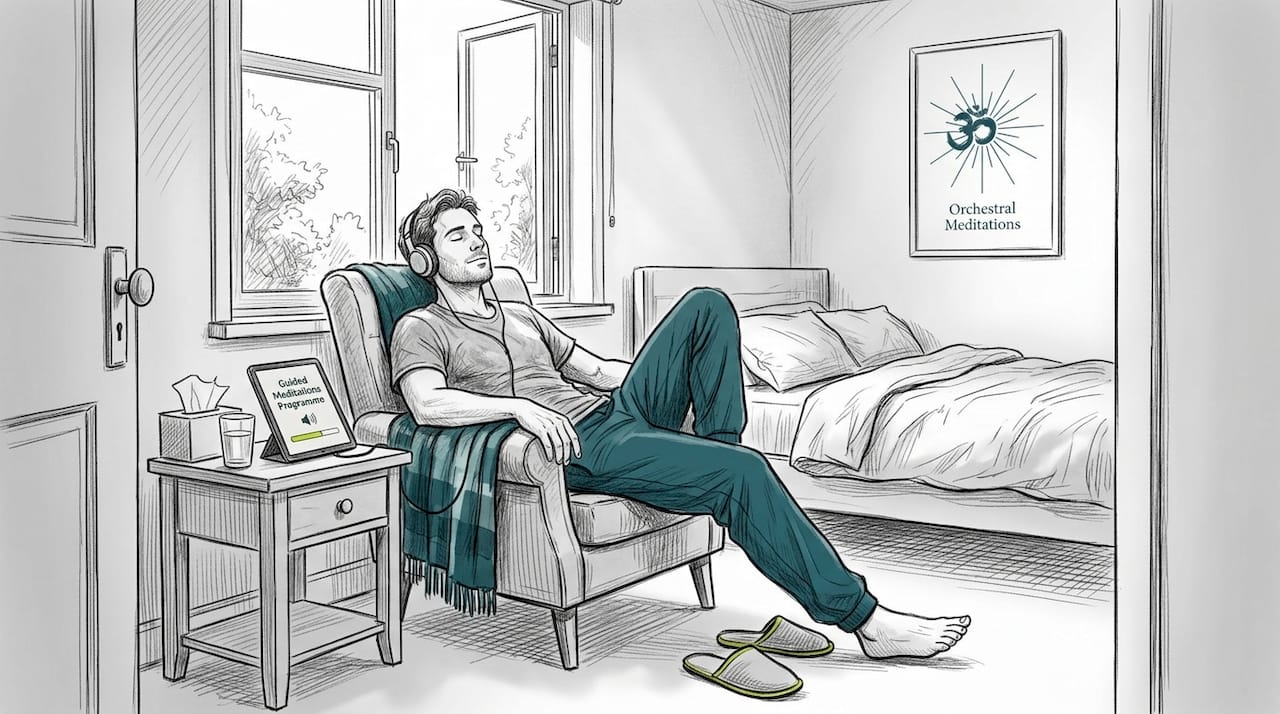
Once you’ve understood the intent, the next step is to properly prepare your environment and yourself. Think of this as setting the stage before a performance. You wouldn’t attempt a symphony in a noisy car park, and yet most people try to meditate on the sofa with the television mumbling in the corner and their phone vibrating every four minutes. Small wonder it doesn’t work.
Environment
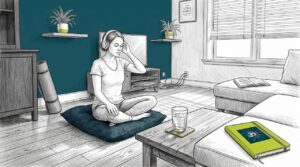
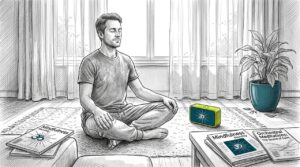
Your space doesn’t need to look like a spa catalogue. It does need to be quiet, reasonably dim, and physically comfortable. Darkness cues your brain to reduce cortisol and ease into rest, which is why even drawing the curtains makes a measurable difference. A temperature around 18 to 20 degrees Celsius tends to support relaxation without tipping you into sleep (unless sleep is precisely what you’re after, in which case, carry on).
Lie down or sit in a supportive position. Some people swear by lying flat; others find a reclined chair keeps them alert enough to stay conscious while still softening the body. Both work. The key is that physical tension doesn’t compete with the practice.
Audio equipment
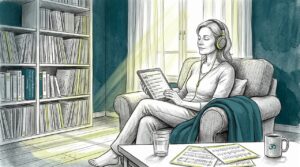
Here’s where things get genuinely exciting, and also where most guides go embarrassingly thin. Headphones are non-negotiable if you want the full benefit of binaural beats and 3D spatial audio. Binaural beats work by delivering slightly different frequencies to each ear, and your brain then generates the difference as a third frequency internally. If you play binaural content through speakers, both ears receive both signals, and the effect collapses entirely. It’s a bit like trying to watch a 3D film without the glasses: the content is there, but you’re missing the entire point.
Good over-ear headphones with a flat frequency response are ideal. You don’t need studio-grade equipment costing several hundred pounds. A decent pair in the £40 to £80 range will do the job beautifully. The goal is accurate sound reproduction, not bass-heavy consumer audio that muddies the frequency detail you’re paying attention to.
Choosing your soundscape and mindset
Research published in Frontiers in Psychology shows that immersive audio soundscapes, including ambient music, nature sounds, and 432Hz tones combined with binaural beats, support parasympathetic activation, reduce stress, and enhance meditation depth. The parasympathetic nervous system (your “rest and digest” mode) is the biological mechanism behind genuine relaxation, and brain entrainment synchronises neural activity to theta and delta frequencies that correspond to deep rest. Understanding which soundscape types suit your needs is worth spending a moment on before you begin.
Your mindset matters just as much as your kit. Approaching the session with frustration about whether it’s “working” is like trying to fall asleep by staring intensely at the ceiling and willing yourself unconscious. Openness and curiosity are your allies here. You’re not trying to achieve anything dramatic. You’re simply creating conditions.
| Tool | Basic option | Advanced option |
|---|---|---|
| Headphones | Budget over-ear (£30 to £50) | Audiophile open-back (£80 to £200) |
| Music source | YouTube ambient playlist | Curated binaural/orchestral library |
| App or player | Free meditation timer app | Full meditation platform with frequency tracks |
| Environment | Quiet room, curtains drawn | Dedicated space, blackout blinds, scent diffuser |
| Seating/lying | Sofa or bed | Ergonomic recliner or yoga mat with bolster |
Key preparation essentials, in brief:
- A quiet, low-lit room with a comfortable temperature
- Quality headphones capable of handling binaural content
- A curated soundscape matched to your session goal (sleep, focus, deep rest)
- Phone on silent or in another room entirely
- An attitude of gentle curiosity rather than striving
Step-by-step relaxation techniques: Combining methods for best results
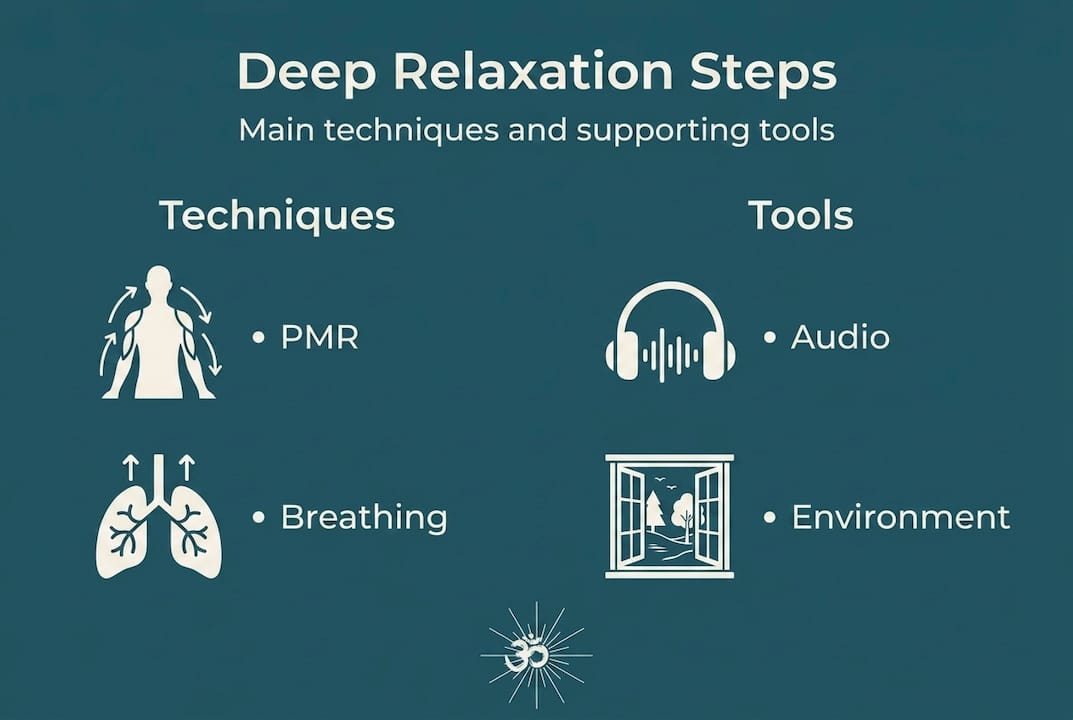
When your setting is ready and your equipment chosen, it’s time to execute the step-by-step methods for genuine deep relaxation. The sequence matters here. Think of it as layers: you release the body first, then the breath, then the mind, with immersive audio stitching everything together from the moment you press play.
Step 1: Progressive Muscle Relaxation (PMR)
PMR was developed by Edmund Jacobson and involves systematically tensing and then releasing muscle groups throughout the body to reduce physical tension and induce a state of deep relaxation. Start with your feet. Curl your toes tightly for five seconds, then release completely. Notice the contrast between tension and release — that contrast is the whole game. Work upward through your calves, thighs, abdomen, hands, arms, shoulders, and face. The face is often overlooked, and it tends to hold an extraordinary amount of tension. Clench your jaw, scrunch your eyes, furrow your brow, then let it all go. People frequently gasp slightly at how much they were holding without realising it.
Step 2: Diaphragmatic breathing
Once the body has softened, shift attention to the breath. Diaphragmatic breathing — sometimes called belly breathing — engages the parasympathetic nervous system through slow, deep inhales through the nose that allow the abdomen to rise, followed by slow, controlled exhales. Try a 4-7-8 pattern: inhale for four counts, hold for seven, exhale for eight. After two or three cycles, you’ll notice your heart rate visibly slowing. It’s quite remarkable, actually, like turning down a dial from the inside.
Step 3: Body scan meditation
With the muscles relaxed and breath regulated, move into a body scan meditation developed and studied extensively at Johns Hopkins Medicine. This technique directs attention systematically from head to toe (or toe to head, depending on your guide), noticing sensations without judging them. Tingling, warmth, heaviness — these are all welcome. Nothing needs to be “fixed.” The act of noticing is the practice. If your attention wanders, you bring it back without drama. That’s not failure; that’s literally the exercise.
Step 4: Yoga Nidra (optional, but worth knowing about)
Yoga Nidra is a guided practice that induces a state between wakefulness and sleep, promoting delta and theta brainwaves and facilitating parasympathetic activation at a very deep level. It’s sometimes described as “effortless sleep while remaining conscious,” which sounds paradoxical until you experience it. Pair it with best binaural healing beats and you have a combination that consistently astonishes first-time practitioners.
Step 5: Immersive audio integration
Your soundscape should begin before or at the same time as Step 1 and continue throughout. The music isn’t a backdrop; it’s an active participant. As you scan through the body, let the orchestral texture or nature sound wash over each region you’re attending to. This layered approach, combining mindful steps for deep relaxation with audio, accelerates the depth you can reach compared to silence alone.
Pro Tip: Commit to daily sessions of 20 to 30 minutes. Clinical research consistently shows that this duration, practised consistently, produces significant measurable improvements in relaxation depth and stress reduction within just a few weeks. Five minutes here and there is better than nothing, but it’s a bit like running to the end of the street and calling it marathon training.
Immersive audio soundscapes: Enhancing meditation depth
With foundational techniques established, optimising immersive audio will take your experience to new depths. And this is where the science starts to feel genuinely thrilling, particularly for those of us who’ve always suspected that music does something to the brain that ordinary language simply can’t.
Headphones vs. speakers
We’ve touched on this, but it bears elaborating. Headphones create a personal sonic bubble. The sound is intimate, directional, and enveloping in a way that speakers in a room can’t replicate. Speakers introduce room acoustics, reflections, and bleed from the environment. For casual ambient listening, speakers are lovely. For binaural beats and 3D sound meditation benefits you want headphones, full stop.
Understanding the different audio types
Not all relaxation music is created equal, and treating it as interchangeable is one of the more common mistakes people make. Here’s a quick breakdown:
Ambient music creates a spacious, non-intrusive sonic environment that keeps the conscious mind gently occupied without demanding attention. It’s like sonic wallpaper of the finest kind.
Nature sounds (rainfall, forest ambience, ocean waves) trigger what researchers call the “default mode network” shift, where the brain moves from task-focused processing to broader, more diffuse awareness — a state that tends to feel restorative.
432Hz tones are tuned slightly below standard concert pitch (440Hz) and many practitioners report a warmer, more grounding quality. The science on 432Hz specifically is still developing, but the broader finding that immersive soundscapes reduce stress and enhance meditation depth is well supported.
Binaural beats at theta frequencies (4 to 8Hz) are particularly fascinating. Research shows that 6Hz binaural beats entrain theta activity in the cuneus and precuneus regions of the brain — areas associated with self-referential processing and consciousness — with minimal changes to the autonomic nervous system, making them ideal for meditation rather than simple physiological relaxation. Explore the complete binaural beats Hz guide if you want to go deeper on this.
Emotionally moving orchestral music deserves special mention. A randomised controlled trial with 398 participants found that chills-inducing music augments self-transcendence, mood, and emotional breakthrough during meditation. That means a beautifully performed orchestral piece isn’t just pleasant; it may actively deepen the meditative experience in ways simpler soundscapes cannot. For theta binaural beats layered beneath orchestral compositions, the effect can be extraordinary.
| Audio type | Primary effect | Best used for |
|---|---|---|
| Theta binaural beats (4 to 8Hz) | Brain entrainment, theta wave induction | Deep meditation, creative states |
| Delta binaural beats (0.5 to 4Hz) | Sleep induction, deep rest | Sleep, recovery |
| 432Hz ambient tones | Grounding, stress reduction | General relaxation, beginners |
| Nature sounds | Default mode network shift | Restorative rest, anxiety relief |
| Orchestral meditation music | Emotional engagement, self-transcendence | Deep meditation, emotional processing |
| 3D spatial audio | Immersion, spatial awareness shift | Advanced meditation, body scan |
Pro Tip: Personalise your soundscape to your own “absorption” trait. Some people are naturally high-absorbers, meaning they become deeply immersed in sensory experiences, and these individuals tend to respond strongly to any of the above audio types. Lower-absorbers may need more structure, perhaps a guided voice combined with audio healing benefits from frequency-based tracks, to reach equivalent depth.
Troubleshooting and safety: Common mistakes and tailored solutions
Even with the best techniques, there are pitfalls and nuances to navigate to ensure both safety and genuine effectiveness. Nobody talks about this part enough, and it’s genuinely important.
Common mistakes that quietly sabotage your practice
Here are the ones we see most frequently:
- Rushing the preparation. Jumping straight into breathwork without the muscle relaxation phase is like trying to cook a roast dinner on a cold oven. The body needs its own warmup sequence.
- Skipping steps when time is short. An abbreviated version of every step is far more effective than doing one technique fully and omitting the rest. Keep all layers, just shorten each one.
- Mismatched audio. Playing high-energy orchestral music during a relaxation session because you happen to enjoy it emotionally isn’t the same as playing music calibrated for parasympathetic activation. The content of the music matters, not just that music is present.
- Practising when already highly stressed. Ironically, this is when most people try to use relaxation techniques, and also when they’re least likely to work well. Personalise your approach based on individual traits and always adjust for your current state.
- Expecting immediate results and abandoning the practice. Some people feel notable effects in the first session. Others need two or three weeks. Consistent practice is what the research points to, not isolated heroic effort.
Safety considerations
Important: For individuals with a history of trauma, deep relaxation practices — particularly body scan meditation and Yoga Nidra — can occasionally trigger anxiety or dissociation. If this occurs, gently open your eyes, ground yourself by pressing your feet firmly into the floor, and return to ordinary waking awareness. It is advisable to practise initially in calm states rather than during acute distress, gradually building tolerance before using these techniques as a real-time stress intervention.
Individual differences also play a significant role. Research confirms that personalising your approach, including customising beat frequencies or soundscape types, and monitoring for adverse reactions in vulnerable groups, leads to better outcomes than a one-size-fits-all method. For those exploring relaxation music for stress relief, starting gently with ambient or nature-based tracks before introducing binaural content is a sensible first move.
Combining techniques is where the deepest effects emerge — breathwork paired with body scan paired with music creates a synergistic effect greater than any single technique alone. Absorption trait (your natural capacity to become absorbed in experiences) predicts how well you’ll respond, so if you’ve always been the person who gets utterly lost in a piece of music or a film, expect strong results.
Personalisation strategies
- Begin with 10-minute sessions if 20 to 30 minutes feels daunting, and gradually extend.
- Experiment with different soundscape types across several sessions before deciding what resonates.
- Keep a brief journal noting your state before and after each session to track what’s working.
- If guided narration helps you stay anchored, choose sessions with a voice track. If narration distracts you, opt for purely instrumental or ambient tracks.
- Consider morning sessions for focus-oriented states and evening sessions for deep rest and sleep preparation.
Why most relaxation guides miss the mark: The science of synthesis
Here’s my honest, slightly grumpy opinion about most relaxation guides available online: they pick one technique, explain it adequately, add a few stock photos of someone serene by a window, and call it a day. And then readers try that single technique, feel mildly calmer for about eleven minutes, and conclude that meditation “doesn’t work for them.”
The truth — and the research supports this rather forcefully — is that isolated techniques rarely reach the depths that combined, personalised approaches can. Combining breathwork, body scan, and music produces deeper, more sustained relaxation than any one method in isolation, and consistent daily practice is what creates lasting neurological change. A single session is a lovely experience. Thirty consecutive days of practice is a different nervous system.
What frustrates me most about the “just breathe deeply” school of relaxation advice is that it completely ignores the biological reality of individual differences. The same technique that sends one person into a profound theta state will leave another feeling mildly bored and acutely aware of the traffic outside. Absorption — your natural trait for becoming deeply immersed in sensory and imaginative experience — predicts your responsiveness to immersive audio and guided meditation. High-absorbers often hit theta states relatively quickly with good quality audio. Lower-absorbers need more scaffolding: perhaps a spoken guide, a more rhythmically structured soundscape, or a longer PMR sequence at the start.
This is why the question of isochronic vs binaural beats isn’t merely academic. Isochronic tones don’t require headphones and may suit certain individuals whose attention is easily disrupted by the internal nature of binaural processing. Binaural beats, as we’ve seen, produce specific cortical entrainment that isochronic tones approach differently. The “best” answer depends on who you are, not just what the general research says.
The other thing that guides consistently overlook is the role of emotionally resonant music — not just technically calibrated frequency tracks. Orchestral music, performed by live musicians in an acoustically extraordinary space, carries something that a synthesised tone cannot. There’s a reason people cry at live concerts. The emotional charge in a well-performed piece is real, measurable in physiological terms, and when that emotional engagement is paired with intentional meditation practice, the combination is genuinely transformative. It isn’t mystical. It’s synthesis.
Take your relaxation to the next level with immersive meditation music
Having mastered deep relaxation techniques, you now have the framework. What you need next is music worthy of the practice you’ve built.
At Orchestral Meditations, every track is composed and recorded with this specific purpose in mind: to be an active participant in your relaxation and meditation journey, not mere background noise. Our recordings, made at Abbey Road Studios with the National Philharmonic, bring the emotional and neurological power of live orchestral performance into your headphones, paired with scientifically calibrated frequencies for deep meditative states. Browse our meditation music library to find the soundscape that fits your practice, explore best meditation music curated specifically for deep relaxation, or discover our Solfeggio music collection for frequency-based healing. Your nervous system has been waiting for this.
Frequently asked questions
What is the best audio for deep relaxation?
Research supports ambient music, nature sounds, 432Hz tones, and theta binaural beats for facilitating deep relaxation by supporting parasympathetic activation and enhancing meditation depth. Emotionally moving orchestral music also augments self-transcendence during meditation, making it a powerful addition to any practice.
How often should I practise deep relaxation techniques?
Daily sessions of 20 to 30 minutes yield significant improvements within weeks, according to clinical trial data, with structured music like Weightless by Marconi Union outperforming silence for measurable stress reduction. Consistency matters far more than occasional lengthy sessions.
Can deep relaxation trigger negative effects?
Those with a history of trauma may experience anxiety or dissociation during deep relaxation practices and should begin in calm states, adjusting techniques gradually as tolerance builds. Opening your eyes and pressing your feet firmly into the floor is a simple and effective grounding intervention if discomfort arises.
Does combining techniques work better than using one?
Combining methods like breathing, body scan, and immersive music produces deeper relaxation outcomes than any single technique alone, particularly for individuals with strong absorption traits. Consistent combined practice is what the research consistently points to as the most effective approach.