Most people picture meditation as a room so quiet you can hear your own thoughts arguing with each other. Silence, surely, is the whole point — isn’t it? Well, not exactly. Research into sound-based healing suggests that structured soundscapes shift brainwaves from the stressed, jittery beta state down into the calm, restorative alpha and theta zones, triggering a parasympathetic response that genuinely quiets the nervous system. In other words, the right kind of sound does not distract you from relaxation — it delivers you there faster. This article explores the science behind that, compares the most effective types of meditative soundscapes, looks at what the research actually proves (and what it does not), and gives you practical tools for weaving these sounds into your daily life.
Key Takeaways
| Point | Details |
|---|---|
| Sound entrains brainwaves | Rhythmic sound synchronises neural activity, promoting relaxation and healing. |
| Music reduces stress markers | Music-based soundscapes lower cortisol, blood pressure, and anxiety more effectively than silence. |
| Nature sounds boost mood | Listening to natural soundscapes significantly improves mood and cognitive restoration. |
| Consistent practice is key | Regular, daily use of soundscapes sustains and amplifies health benefits. |
How sound influences the brain and body during meditation
With this context, let’s explore exactly how meditative soundscapes interact with our brain and body.
Your brain is, at its core, an electrical organ. It hums with rhythmic pulses of activity, and those pulses change depending on what you are doing, thinking, or feeling. When you are stressed, rushing through a to-do list, or catastrophising about tomorrow’s meeting, your brain operates predominantly in beta (roughly 13 to 30 Hz). When you sink into a warm bath or daydream pleasantly, it drifts into alpha (8 to 13 Hz). Go deeper into meditation or light sleep, and you reach theta (4 to 8 Hz), the state associated with vivid imagery, emotional processing, and insight. Deeper still is delta (0.5 to 4 Hz), the territory of profound sleep and cellular restoration.
Meditative soundscapes interact with this system through a process called brainwave entrainment. Think of it like two pendulum clocks hung on the same wall — over time, they synchronise. Your brain does something similar when exposed to rhythmic or tonal sound. Rhythmic sounds synchronise neural firing, modulating mood through acoustic resonance and reducing the restless chatter of the default mode network (that inner committee that never stops debating your life choices).
This matters physiologically, not just mentally. When your brain shifts from beta to alpha or theta, your body follows. Heart rate slows. Blood pressure drops. Cortisol, the primary stress hormone, begins to reduce. The parasympathetic nervous system, often called the “rest and digest” system, takes over from the sympathetic “fight or flight” response. You are, in the most literal sense, chemically different when listening to a well-crafted soundscape versus sitting in anxious silence.
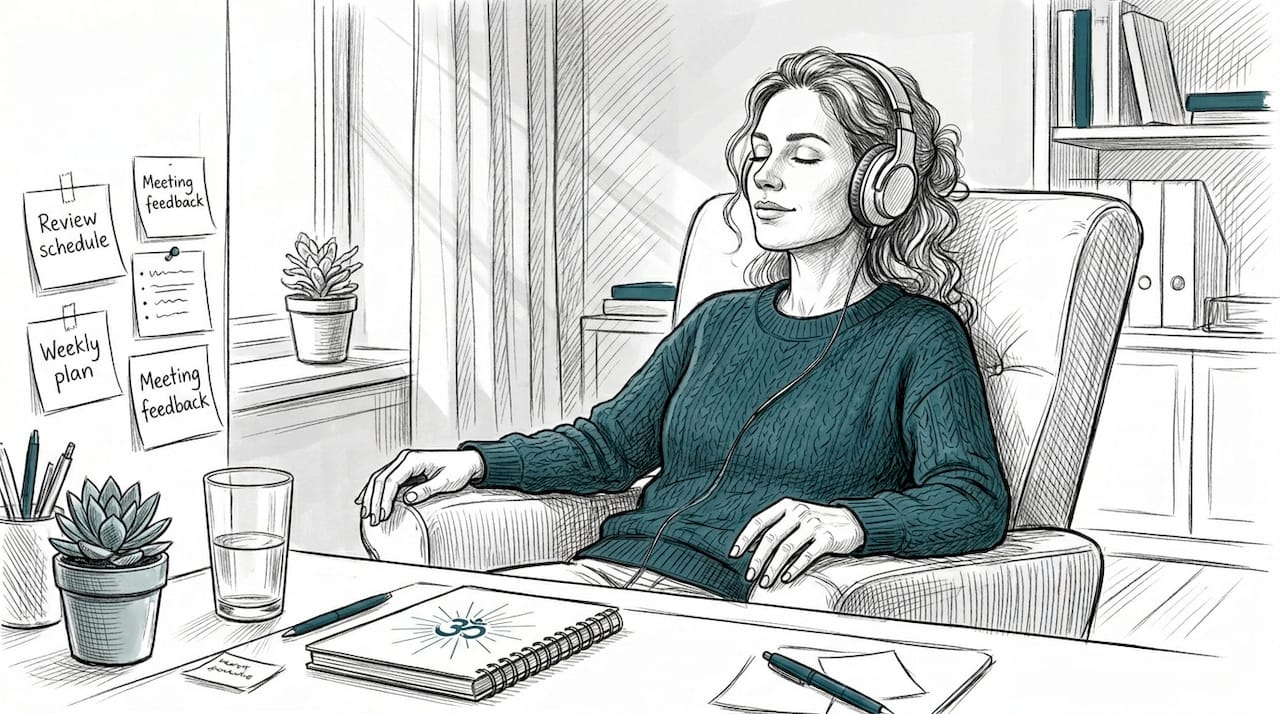
Here is a quick overview of what each brainwave state feels like in practice:
| Brainwave state | Frequency range | Associated experience |
|---|---|---|
| Beta | 13 to 30 Hz | Alert, stressed, active thinking |
| Alpha | 8 to 13 Hz | Relaxed, calm, light daydream |
| Theta | 4 to 8 Hz | Deep meditation, creativity, healing |
| Delta | 0.5 to 4 Hz | Deep sleep, restoration, repair |
Not all sound produces these shifts equally. Musical soundscapes that combine structured melody, harmonic intervals, and deliberate tempo tend to trigger the strongest emotional and physiological responses. This is because music engages multiple brain regions simultaneously: the auditory cortex, limbic system (emotion), motor cortex, and prefrontal cortex. A simple tone might nudge your brainwaves; a full orchestral passage can move your entire nervous system.
Key mechanisms at play include:
- Acoustic resonance: Certain frequencies physically vibrate bodily tissues and cavities, creating internal sensations of calm
- Emotional priming: Familiar harmonic patterns signal emotional safety, reducing threat perception in the amygdala
- Rhythmic entrainment: Steady tempos between 60 and 80 beats per minute mirror a resting heart rate, encouraging physiological synchrony
- Neural synchrony: Coordinated firing across brain regions reduces anxiety and improves focus
You can explore the scientific approach to meditation music and the effects of specific healing soundscape frequencies to appreciate just how deliberate good soundscape design is. This is not background noise by accident.
“Sound is not merely heard — it is felt, processed, and integrated across multiple neural systems, making it one of the most direct routes to physiological calm available to us.”
Pro Tip: Consistency is the secret ingredient here. A single session might feel pleasant, but the real neurological benefits accumulate with regular practice. Even ten minutes daily over two to three weeks can meaningfully shift your baseline stress response. Think of it as going to the gym, except the only equipment required is a decent pair of headphones.
Understanding how sound heals the mind and body at a deeper level helps you become a more intentional listener, rather than just someone who presses play and hopes for the best.
Types of meditative soundscapes and their effects
With an understanding of the physiology, it is helpful to see how different types of soundscapes compare in their healing influence.
Not all soundscapes are created equal, and choosing the wrong one for your needs can feel a bit like turning up to a yoga class wearing ski boots. Technically possible, but not ideal. Let’s walk through the main categories.
Musical soundscapes have the most robust evidence base. Orchestral compositions, ambient music, and structured harmonic recordings work through tempo, emotional resonance, and the sheer complexity of layered sound engaging multiple brain systems at once. A slow string passage at around 60 beats per minute is not a coincidence — it is engineering. Musical soundscapes lower stress more consistently than most other categories, making them ideal for both deep meditation and daily stress reduction.
Nature soundscapes, such as forest ambience, flowing rivers, birdsong, and rainfall, consistently improve mood, cognitive restoration, and subjective wellbeing. A well-designed study found that nature sounds improve mood and cognition significantly after just 30 minutes of exposure, with results observed across an RCT of 100 participants plus a crossover study of 30. However, the physiological effects (blood pressure, cortisol, heart rate variability) are less reliably altered by nature sound alone compared to musical soundscapes, particularly when experienced through headphones rather than in an actual natural environment.
Binaural beats are a clever acoustic trick. Play a 200 Hz tone in one ear and a 210 Hz tone in the other, and your brain manufactures a third tone at the 10 Hz difference — placing you squarely in alpha territory without you consciously doing anything. These can meaningfully reduce pre-procedure anxiety and improve sustained attention, though effects depend heavily on the specific frequency used and whether the listener is in a quiet environment. You can explore binaural healing beats and their best practices if you want to use them effectively rather than just randomly.
Digital versus acoustic sound is a distinction worth making. Digitally synthesised tones are clean and precise, but there is a growing body of thinking that acoustic instruments, particularly strings and wind instruments recorded in live acoustic spaces, engage the brain more richly. Acoustic recordings contain subtle variations in overtones, micro-timings, and harmonic complexity that digital synthesis struggles to replicate. This may be why a live orchestral recording can feel more moving and more calming than a synthesiser patch set to “ambient”.
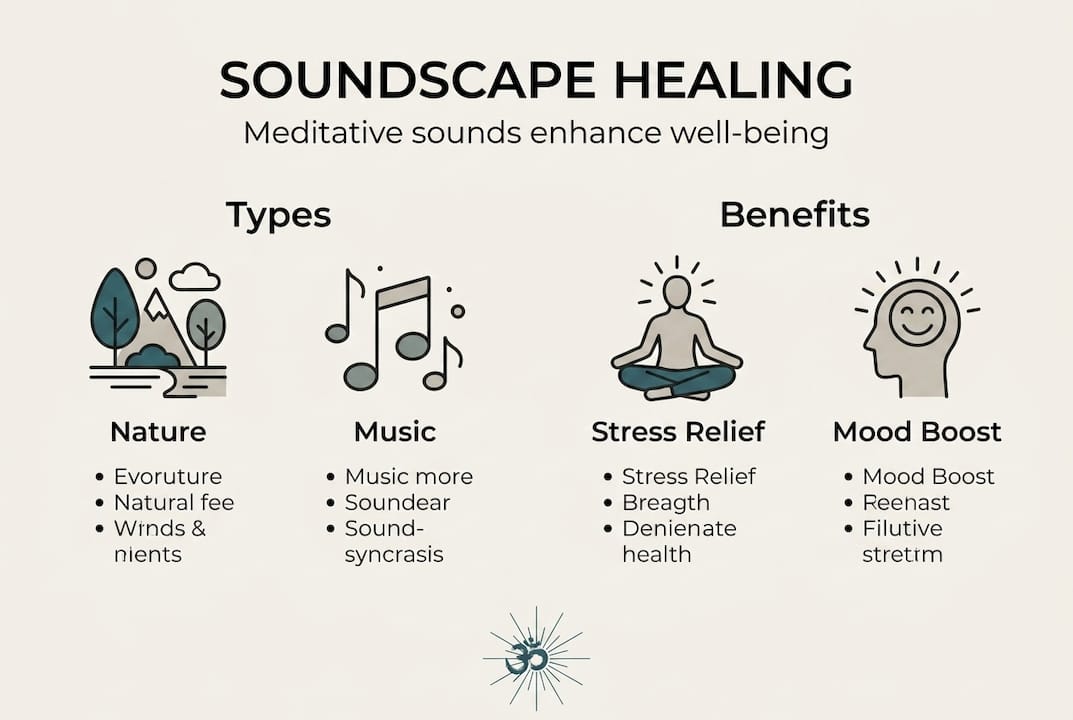
Here is a comparison of the main soundscape types:
| Soundscape type | Primary benefit | Evidence strength | Best use case |
|---|---|---|---|
| Musical (orchestral) | Stress/anxiety reduction | Strong | Deep meditation, emotional healing |
| Nature sounds | Mood and cognitive restoration | Moderate | Focus sessions, mild stress relief |
| Binaural beats | Attention and anxiety reduction | Moderate | Sleep support, pre-meditation preparation |
| Solfeggio frequencies | Physiological resonance | Emerging | Spiritual practice, relaxation |
| Guided vocal soundscapes | Emotional safety, grounding | Variable | Beginners, trauma-sensitive practice |
The key takeaway here is that different soundscapes suit different moments and different people. Exploring the full range of proven audio healing techniques is genuinely worthwhile because finding your soundscape is a bit like finding your favourite tea: what soothes one person might leave another unmoved.
A few things to bear in mind when selecting a soundscape:
- Tempo matters more than genre: Slower is usually calmer, regardless of instrumentation
- Avoid sudden dynamic shifts: Jarring changes in volume or tone interrupt the entrainment process
- Layer complexity thoughtfully: Richer acoustic textures can deepen engagement, but overwhelming complexity can trigger alertness rather than calm
- Personal associations count: If a particular style of music has strong emotional memories attached, it may pull you out of the meditative state
Evidence behind soundscapes for healing: What research shows
To anchor these principles, let’s look at what current research and evidence actually demonstrate.
Science has a wonderfully inconvenient habit of complicating simple stories, and sound healing is no exception. The evidence is genuinely encouraging, but it is also nuanced, and it is worth knowing both sides.
Here is what the stronger evidence supports:
-
Cortisol and blood pressure reduction: A rigorous RCT involving 100 participants found that four weeks of sound meditation using singing bowls, gongs, and 528 Hz frequencies produced statistically significant reductions in stress, anxiety, tension, cortisol levels, and blood pressure (p less than 0.001). The control group showed no comparable changes. That is not a minor effect. That is a measurable, replicable shift in the body’s biochemistry.
-
Anxiety relief: Multiple studies confirm that music-based soundscapes reduce self-reported anxiety across diverse populations, including pre-surgical patients, people with generalised anxiety, and healthy adults under acute stress. The emotional and tempo mechanisms appear to be the primary drivers of this effect.
-
Mood and cognitive restoration: Exposure to nature soundscapes consistently improves mood, attention restoration, and feelings of psychological recovery. The evidence for this is strongest with musical and relaxing soundscapes though non-musical nature sounds remain promising and are actively being researched.
-
Heart rate variability improvement: Higher HRV (heart rate variability) is a marker of good cardiovascular health and resilience to stress. Several studies have found that relaxing soundscapes improve HRV within a single session, suggesting immediate cardiovascular benefit.
-
Pain modulation: Patients exposed to music during medical procedures consistently report lower pain scores and require less analgesia. The mechanism involves the release of endorphins and the distraction of attentional resources away from pain signals.
“The strongest evidence supports music and relaxing soundscapes as effective tools for reducing stress and anxiety — not because they are mystical, but because they are acoustically and neurologically precise.”
However, there are important limitations to acknowledge honestly:
- Long-term physiological changes from audio alone are not well established: A single session lowers cortisol, but there is currently insufficient evidence that audio-only interventions produce lasting structural or hormonal changes without consistent, ongoing practice
- Individual variation is significant: What produces deep calm in one person may be neutral or even irritating to another, making universal prescription difficult
- Study quality varies enormously: Some studies in this field are small, unblinded, or short-term, so dramatic claims should always be read with appropriate scepticism
Exploring resources on music with healing frequencies and sound therapy benefits can help you understand where the genuine science ends and where more speculative territory begins. Knowing the difference makes you a wiser, more effective practitioner.
Practical tips for using meditative soundscapes in your routine
Knowing what works, here is how you can practically use soundscapes in your healing journey.
This is where many people fall at the first hurdle. They find a gorgeous binaural beat recording, listen to it once, feel vaguely calmer, and then forget about it for six weeks. That is a bit like taking one bite of a salad and wondering why you have not lost weight. Consistency is the mechanism; everything else is just the wrapper.
Here is a structured approach to building a meaningful soundscape practice:
-
Start small and build gradually: Begin with ten to fifteen minutes per day. This is enough time to experience genuine brainwave entrainment without feeling like you have committed to a life in a monastery. Once it feels easy, extend to twenty or thirty minutes.
-
Choose a consistent time of day: Morning soundscape sessions can set a calmer neurological tone for the entire day. Evening sessions are brilliant for transitioning from work mode into rest. Some people use short midday sessions as a “reset”. Pick one, repeat it, and let your brain start anticipating and preparing for that calm state.
-
Create a physical environment that supports the experience: Headphones (especially quality over-ear ones) dramatically enhance soundscape effectiveness, particularly for binaural content. Dim the lights. Remove obvious distractions. You are not being precious — you are being effective.
-
Experiment systematically: Spend a week with orchestral soundscapes, then a week with nature sounds, then try theta-frequency binaural content. Keep a brief note of how you feel before and after each session. Your own data will tell you more than any generalised recommendation could.
-
Combine with breathwork: Slow, deliberate breathing (around five to six breaths per minute) and a calming soundscape work together beautifully. The sound guides your nervous system down; the breath reinforces and sustains that descent.
Key things to be mindful of:
- Avoid using soundscapes as background noise while working: This dilutes the effect and trains your brain to partially ignore the signal. Reserve soundscapes for dedicated sessions so the neurological association remains strong
- Do not chase intensity: A profound meditative experience is not the same as an emotionally overwhelming one. If you feel flooded or unsettled, it is perfectly fine to return to lighter, more familiar material
- Benefits of 3D sound meditation are worth exploring when you are ready to move beyond standard stereo recordings into a genuinely immersive acoustic experience
- Healing theta frequencies offer a fascinating entry point for anyone who wants to target the specific brainwave state most associated with deep healing and creative insight
It is also worth noting that consistent soundscape practice sustains benefits for conditions like fibromyalgia, where ongoing therapy is needed for continued pain relief. Audio alone does not rewrite your biology permanently, but regular, intentional listening absolutely can maintain and deepen the stress-relieving effects over time.
Pro Tip: Treat your first two weeks as a discovery phase rather than a performance. You are not trying to reach enlightenment by Thursday. You are simply training your nervous system to recognise a new kind of signal — one that says “this is safe, you can let go now.”
Why silence is not always golden: A new view on meditative healing
Here is a perspective I find myself returning to regularly, particularly when talking with people who have tried traditional silent meditation and given up because their minds refused to cooperate. They describe the experience with a kind of sheepish guilt, as if they have failed a test. I understand completely. Silence is not neutral for everyone. For many people, especially those carrying unresolved anxiety or trauma, silence is not a blank canvas. It is a room full of uninvited guests.
That is where purposeful sound changes everything. A well-constructed soundscape provides structure without control, guidance without demands. It gives the restless mind something to do (follow the sound, feel the resonance, breathe into the tone) while simultaneously guiding the nervous system toward calm. It is not a shortcut or a cheat. It is a different, and for many people, a genuinely superior, route to the same destination.
Considering the scientific approach to meditation alongside your own experience is important. Tradition has enormous value, but it should not override your own nervous system’s honest feedback. If a particular form of silence-focused meditation consistently increases your agitation rather than reducing it, that is information worth acting on. Musical and natural soundscapes are not training wheels to be discarded once you “get good” at meditating. For many practitioners, they are the practice itself, and that is entirely legitimate.
Explore orchestral meditations for your healing journey
As you consider these perspectives, you might wish to explore how expertly crafted soundscapes can transform your practice.
Orchestral Meditations brings something genuinely rare to the world of meditation audio: full orchestral recordings made with live musicians, captured at Abbey Road Studios with the National Philharmonic. These are not generic ambient tracks assembled from a library. They are deliberately composed, scientifically informed soundscapes designed to move you into the precise brainwave states that support healing, relaxation, and mindfulness.
Whether you are drawn to binaural beats, theta frequencies, Solfeggio-based compositions, or sweeping orchestral landscapes, there is a recording here crafted for your particular needs. Exploring the best meditation music on the platform allows you to find what truly resonates with you, not just what a generic algorithm recommends. This is personalised, professional, and grounded in the science we have been exploring throughout this article.
Frequently asked questions
Do meditative soundscapes really lower stress and anxiety?
Clinical studies show that music-based soundscapes reduce cortisol, blood pressure, and self-reported anxiety more effectively than silence alone, with statistically significant results observed in controlled trials. A four-week RCT of 100 participants using singing bowls and 528 Hz frequencies found measurable improvements across all stress markers.
What type of soundscape works best for healing?
Calm, musical soundscapes and rhythmic, low-frequency tones have the strongest evidence for stress reduction, while nature sounds primarily boost mood and focus rather than producing consistent physiological change. Your best option depends on whether you are targeting emotional calm, physical stress markers, or cognitive restoration.
How long does it take to notice the effects of soundscape meditation?
Most users report stress relief after a single session, but consistent practice over several weeks yields the greatest lasting benefits, with conditions like fibromyalgia requiring ongoing therapy for sustained pain relief. Two to four weeks of daily sessions is widely considered the threshold for meaningful, durable change.
Do binaural beats have real healing effects?
Binaural beats can reduce anxiety and aid focus, and evidence shows pre-operative anxiety drops of around 26% in some studies, though effects are usually short term and vary considerably depending on the frequency used and the quality of the listening environment. They work best as part of a broader, consistent soundscape practice rather than as a standalone solution.