You’ve tried the apps, the guided tracks, the white noise playlists, and yet some sessions still feel like you’re just sitting quietly with a slightly quieter brain. Meanwhile, occasionally, something clicks. The boundary between you and the music dissolves, time loses its grip, and you surface twenty minutes later feeling as though you’ve been somewhere genuinely other. The difference, more often than not, comes down to theta frequencies. Not as a magic trick, and not as the wellness industry’s latest buzzword, but as a genuine neurological phenomenon that experienced practitioners have been nudging themselves toward for decades.
Key Takeaways
| Point | Details |
|---|---|
| Theta powers deep calm | Research shows experienced meditators possess more theta waves, enabling a more profound sense of inner peace and clarity. |
| Practice trumps technology | Consistent meditation is the most reliable way to boost theta frequencies, with audio aids offering only supplementary support. |
| Personalisation is crucial | Not everyone responds equally to theta entrainment techniques—tailor your approach for the best results. |
| Integrate, don’t substitute | Blend mindful practice with carefully chosen music or soundscapes for optimal, sustained meditative benefits. |
The science behind theta waves in meditation
Let us first clarify exactly what theta waves are, and what science reveals about their role in meditation.
Brainwaves are the rhythmic electrical pulses produced when neurons communicate across large networks. Scientists measure them in hertz (Hz), and each frequency band is associated with a different mental state. Beta waves (13 to 30 Hz) are your busy, problem-solving, slightly-stressed-about-the-meeting-tomorrow brain. Alpha waves (8 to 13 Hz) are that pleasant, relaxed-but-aware state you slip into after a warm bath. And theta? Theta sits in the 4 to 8 Hz range, right in that borderland between wakefulness and sleep, where the inner world becomes louder than the outer one.
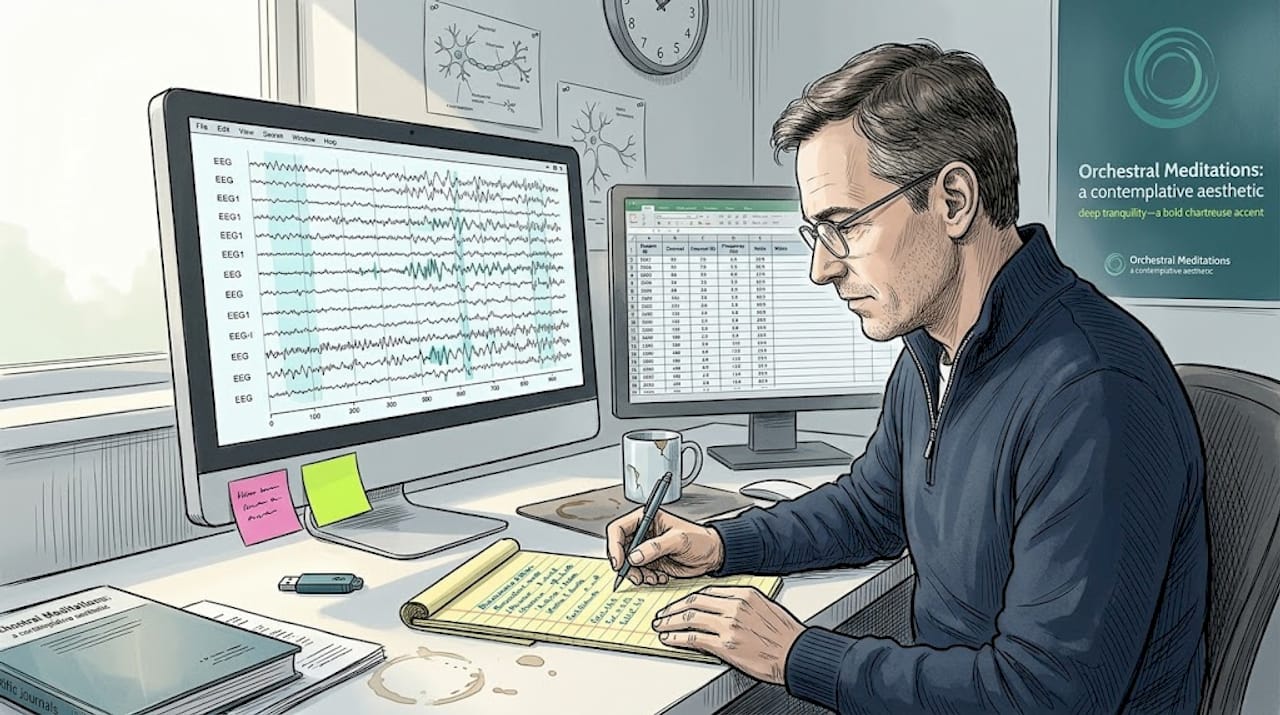
Theta is the frequency of daydreaming, hypnagogia (that vivid imagery you experience just as you drift off), and, crucially, deep meditative absorption. It is associated with reduced default-mode network chatter, greater introspective awareness, and a loosening of the rigid mental narratives we cling to in ordinary waking life. Think of it as the brain’s editing suite going offline while the raw footage plays.
| Brainwave | Frequency range | Associated state |
|---|---|---|
| Delta | 0.5 to 4 Hz | Deep sleep, unconscious processes |
| Theta | 4 to 8 Hz | Deep meditation, daydreaming, hypnagogia |
| Alpha | 8 to 13 Hz | Relaxed alertness, light meditation |
| Beta | 13 to 30 Hz | Active thinking, problem-solving |
| Gamma | 30 Hz and above | High-level cognition, heightened perception |
What makes theta particularly fascinating for practitioners is what EEG research reveals about those who have been meditating seriously for years. Studies confirm that long-term meditators show higher theta power in frontal brain regions compared to non-meditating controls, and that this increase correlates with the subjective depth of the meditative experience. This is not a small or incidental finding. It suggests that the ability to generate robust theta is a trainable skill, not a fixed neurological gift you either have or don’t.
“The frontal midline theta rhythm during meditation reflects focused internal attention and reduced mind-wandering. It’s the brain’s signal that you have genuinely gone inward.”
This frontal theta surge is closely tied to self-referential processing (thinking about the nature of your own mind) and to creative insight. Have you ever noticed that your best ideas arrive not during frantic brainstorming but in the shower, or on a long walk, or just as you’re waking? That is theta at work. Understanding theta frequencies and healing goes well beyond the meditative experience itself; these waves seem to be the brain’s natural vehicle for integration, whether emotional, creative, or cognitive.
How theta frequencies influence the meditative experience
Now that you understand theta wave basics, let us unpack why they make such a difference to the meditative journey.
The most commonly reported feature of theta-dominant meditation is the vivid, spontaneous imagery that arises without conscious effort. Some practitioners describe it as watching a film they didn’t write. Others find that long-suppressed memories or emotional patterns surface with unusual clarity. This happens because theta states are strongly linked to long-term meditators’ theta power correlating with access to subconscious material, the kind of material that is normally drowned out by the constant noise of beta-dominant thinking.
Here is what practitioners typically notice when they consistently reach theta states:
- Vivid mental imagery that arises spontaneously, often symbolic or emotionally resonant
- Deep emotional release, sometimes described as a weight lifting, without any particular triggering thought
- Creative problem-solving where solutions to longstanding challenges simply appear, fully formed
- Heightened body awareness including a dissolution of the boundary between “where you end and the chair begins”
- Profound calm that lingers well after the session ends, sometimes for several hours
- Reduced anxiety and a noticeable flattening of habitual stress responses in the days following regular practice
The relationship between theta and emotional release is worth dwelling on. In everyday beta consciousness, emotional material is managed, suppressed, or rationalised. In theta, that management relaxes. This is one reason why certain meditation experiences feel unexpectedly tender or cathartic. It’s not that anything dramatic has happened on the surface. The brain has simply shifted into a mode where what was hidden becomes visible.
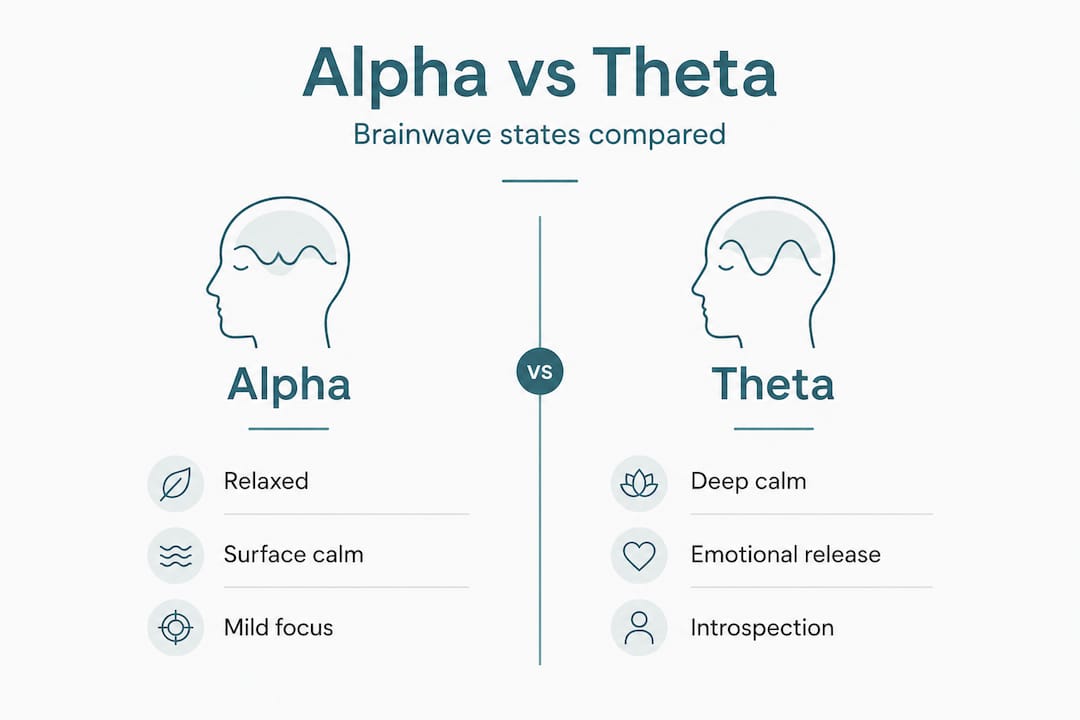
Understanding the difference between alpha vs theta waves matters practically here, because many practitioners plateau in alpha without realising it. Alpha feels good. It’s calm, gentle, and genuinely relaxing. But it rarely produces the transformative depth that theta does. Alpha is the antechamber; theta is the room where things actually change.
Pro Tip: If your sessions feel pleasantly relaxing but somewhat flat, you’re probably in alpha. To nudge yourself toward theta, try extending your exhale significantly (inhale for four counts, exhale for eight), and deliberately soften your focus on any object of meditation. Stop trying to hold anything, and start allowing. Exploring deep theta meditation music alongside these breath adjustments can provide a meaningful nudge in the right direction.
Meditation vs. entrainment: What actually increases theta power?
With the allure of technological aids, it’s important to separate fact from optimistic marketing claims regarding theta frequency boosters.
Here’s the nuanced truth: meditation reliably generates theta. That’s been demonstrated across multiple well-controlled EEG studies. The question of whether audio-based entrainment, such as binaural beats or isochronic tones, can artificially produce the same result is considerably murkier. The honest answer is: sometimes, for some people, under certain conditions.
Binaural beat entrainment shows mixed results across the literature, with some studies finding no statistically significant cognitive benefits or consistent EEG changes, and methodological variations making cross-study comparisons difficult. This doesn’t mean they’re useless. It means you should treat them as a potential support for your practice rather than a standalone shortcut to meditative depth.
| Method | Theta generation | Consistency | Best use case |
|---|---|---|---|
| Regular meditation practice | High and reliable | Very consistent with training | Core practice for any level |
| Binaural beats | Variable | Inconsistent across individuals | Supplementary relaxation aid |
| Isochronic tones | Moderate | Somewhat more consistent than binaural | Accessible without headphones |
| Orchestral soundscapes | Indirect but supportive | Depends on listener response | Setting mood and reducing distraction |
The critical distinction, as meditation-induced theta differs from entrainment research makes clear, is that the theta generated by sustained practice is structurally different in its neural correlates from theta that might be coaxed by an audio signal. Meditation-trained theta is robust, transferable, and grows with time. Entrained theta is more situational, dependent on the audio being present, and may not develop the same lasting neural architecture.
That said, here is a practical framework for getting the most from both approaches:
- Establish a daily sitting practice first. Even ten minutes of consistent, unaided meditation daily builds more reliable theta access than an hour of binaural-beat listening without a foundational practice.
- Introduce audio support strategically. Use theta binaural beats on days when your mind is particularly restless, as a gentle nudge rather than a crutch.
- Experiment with different audio formats. Some practitioners respond better to isochronic vs binaural beats, and personal neurological variability is real.
- Track your subjective experience. Keep a brief journal noting the depth of each session, whether audio-supported or not. Patterns will emerge over two to three weeks.
- Don’t neglect the role of intention. Setting a clear meditative intention before a session has been shown to influence the quality of the state reached, regardless of what’s playing in your headphones.
Pro Tip: When using binaural healing beats, quality matters enormously. A poorly mixed track with competing frequencies is more likely to create tension than theta. Look for recordings where the carrier tone is soft, the musical context is supportive, and the binaural offset is clearly stated in the product information.
Who benefits most from theta entrainment?
So, who should actually use theta entrainment, and can it fit any meditative routine? Understanding individual differences holds the key.
The research here is genuinely interesting, and perhaps a little counterintuitive. Theta entrainment is stronger in low baseline theta individuals, meaning that the people who arguably need it most (those who struggle to relax, who have difficulty dropping into meditative states, who find conventional sitting practice frustrating) are actually the ones most likely to see a meaningful response.
Experienced meditators who already generate robust frontal theta during practice show less of a pronounced shift from entrainment audio, because their brains are already doing what the audio is nudging toward. For a beginner who sits down and immediately encounters ten minutes of itchy impatience and grocery-list recitation, a well-crafted theta soundscape can provide what a kindly experienced teacher friend might call “a hand on the shoulder.”
Who tends to benefit most:
- Beginners and irregular practitioners who struggle to settle their nervous system in standard meditation
- People with high-anxiety baselines, where beta dominance is the persistent default
- Those recovering from burnout or sleep disruption, where the brain’s ability to self-regulate into lower frequencies is temporarily compromised
- Practitioners exploring body-scan or visualisation techniques, where theta-supportive audio enhances the vividness of imagery
Who should approach with caution:
- Anyone needing sustained focus or alertness during or immediately after a session, since deep theta is not the state you want while driving or making complex decisions
- Those with a history of seizure disorders (always consult a medical professional before using any frequency-based audio)
- Practitioners who find that audio backgrounds create distraction rather than support, which is more common than often acknowledged
One particularly rich application is using theta audio as part of a structured wellness meditation checklist, where it sits alongside breathwork, body awareness exercises, and journaling rather than being treated as a single-item solution. And for those drawn to frequency-specific healing work, powerful healing theta meditation at 528Hz combines theta entrainment with Solfeggio frequencies for a layered approach that many practitioners find particularly resonant.
Integrating theta frequencies into your meditation practice
With the foundations in place, the real challenge is to integrate these insights practically. Let’s see how you can start today.
The most common mistake people make is treating theta as a destination rather than a direction. You don’t arrive in theta and then camp there with a flag planted. You move toward it, fluctuate around it, occasionally plunge past it into delta and startle yourself awake, and gradually, with practice, spend more time in that sweet 4 to 8 Hz territory. The whole thing is considerably more organic than the frequency charts suggest.
Here is a practical, graded approach to building a theta-optimised practice:
- Create consistency before complexity. Meditate at the same time each day, in the same physical space if possible. Neurological consistency lowers the activation energy required to shift states.
- Begin with body relaxation. Spend the first five minutes systematically releasing physical tension from feet to scalp. A tense body keeps the nervous system in sympathetic (beta) mode.
- Use breath as the primary tool. Extended exhale breathing (mentioned earlier) is one of the most reliable non-audio methods for inducing theta-supportive parasympathetic states.
- Introduce supportive soundscapes after the body is relaxed. Starting audio when already partially settled means you need far less nudging. Try deep theta meditation music once you’ve already established some internal quiet.
- Practise non-effort. This sounds paradoxical, but actively trying to reach theta tends to produce beta. The goal is to notice and release, not pursue and grip.
- End sessions gradually. A sharp return to full alertness can erase much of the integration benefit. Spend two to three minutes in a soft return, perhaps with eyes still closed, before resuming ordinary activity.
Research reinforces that meditation-induced theta is more reliable than audio entrainment, which is why the above steps place practice as the foundation and audio as the support. That said, a finely crafted orchestral soundscape, particularly one using live instruments with genuine dynamic range, tends to engage the nervous system differently than synthetic tones alone. The warmth, complexity, and unpredictability of real strings and wind instruments seems to hold the brain’s attention without demanding it, which is precisely the quality you want when inviting theta.
Pro Tip: When selecting any meditation audio, whether orchestral, binaural, or ambient, listen to thirty seconds with eyes closed before your session begins. If you notice your jaw clenching, your attention snagging, or a vague sense of resistance, that track is probably not the right fit for that day. Your nervous system tells you immediately. Trust it.
A practitioner’s truth: Why genuine progress depends on more than frequencies
I want to offer something that you won’t always find in the glossy corners of the wellness industry’s reading room: a gentle but firm reality check.
Theta frequencies are real. The neuroscience is compelling. The subjective experiences reported by practitioners who consistently access these states are genuinely transformative. And yet, in my experience, the people who make the most meaningful progress in their meditative lives are almost never the ones who have optimised their audio stack. They are the ones who sit down, day after day, including the uninspiring days when nothing much seems to happen, and do the work anyway.
The uncomfortable truth about transformation is that it tends to arrive quietly, after a long and somewhat boring accumulation of ordinary practice moments. The session where you finally get something is not usually the one where you’re using the fanciest binaural mix. It’s Tuesday morning at 7am when you’ve been practising for eight months and you suddenly realise, mid-breath, that the thing you’ve been anxious about for years has quietly, without announcement, lost its teeth.
Both neuroscientists and long-experienced practitioners agree on this fundamental point. The architecture of theta science in healing and meditation is built through repetition, through the gradual training of the brain to shift states more readily, not through any single tool or technique, however sophisticated.
Audio support, including beautifully crafted orchestral soundscapes, has genuine value in this process. It creates an environment that is conducive to depth. Think of it as preparing excellent soil. But the seed must be planted by the practitioner, and watered with something that no frequency can replace: consistent, patient attention. The fireworks do come, eventually. They just tend to arrive much more quietly than you expected.
Elevate your sessions with expertly crafted meditation music
For those ready to take their practice forward, having the right acoustic environment genuinely matters, and not all meditation soundscapes are created equal.
At Orchestral Meditations, every recording is crafted with this in mind. Tracked with the National Philharmonic at Abbey Road Studios, these are not synthesised approximations of what an orchestra might sound like. They are the real thing: live strings, live winds, the natural spatial richness of one of the world’s great recording spaces. Browse expertly curated meditation music to find recordings tuned to theta frequencies and designed specifically to complement deep meditative practice. If you are looking for something personal to your own practice, explore bespoke meditation tracks tailored to specific meditative intentions. Consider it the best possible soil preparation for wherever your practice is heading next.
Frequently asked questions
What exactly are theta frequencies and why are they linked to deep relaxation?
Theta frequencies are brainwaves oscillating in the 4 to 8 Hz range, and they naturally emerge during states of deep relaxation, hypnagogia, and meditation. Theta is associated with deep relaxation because this range corresponds with reduced external processing and heightened access to subconscious and introspective material.
Can listening to theta binaural beats guarantee a deeper meditative state?
Not reliably. Binaural beat entrainment shows mixed results in the research literature, and while some listeners respond well, consistent meditative depth comes from regular sitting practice rather than audio alone.
Are theta frequencies suitable for everyone, including beginners?
Theta entrainment tends to be most useful for beginners or those with naturally low baseline theta, as theta entrainment is stronger in low baseline theta individuals. It is less suited to situations requiring sustained alertness or focused cognitive effort.
Is there a difference between naturally generated and entrained theta waves?
Yes, meaningfully so. Meditation-induced theta differs from entrainment in its neural architecture and reliability; naturally cultivated theta through practice builds consistent, transferable access, while entrained theta is more situational and variable across individuals.