Most people stumble into sound therapy expecting something like a relaxing playlist, maybe a bit of whale song and a scented candle nearby. What they actually encounter, when done properly, is something far more precise and far more powerful. The therapeutic soundscape process is not ambient background noise dressed up in wellness clothing. It is a structured, science-backed approach to using sound frequencies to shift your nervous system, reduce stress hormones, and support genuine mental and emotional recovery. This guide breaks down exactly how it works, what you need, and what you can realistically expect from it.
Key takeaways
| Point | Details |
|---|---|
| Know your method | Vibroacoustic therapy and sound baths produce different physiological effects and suit different therapeutic goals. |
| Session structure matters | Sessions of 20 to 45 minutes with gradual frequency transitions produce better results than unstructured listening. |
| Safety first | Consult a clinician before using vibroacoustic equipment if you have a pacemaker, are pregnant, or have epilepsy. |
| Track your progress | Journalling and biometric tools like HRV monitors help verify whether your sessions are producing real change. |
| Artistry and science combine | The best therapeutic soundscapes, including those by composers Robert Emery and Moritz Schneider, blend clinical principles with genuine musical craft. |
Getting started with the therapeutic soundscape process
Before you lie down on a sound table and hope for the best, it helps to understand what you are actually choosing between. The term “sound therapy” covers an astonishing range of approaches, from singing bowls waved vaguely in your direction to precision-engineered vibroacoustic therapy that delivers low-frequency vibrations (typically 20 to 120 Hz) through transducers directly into your body. These are not the same thing, and treating them as interchangeable is a bit like calling a paracetamol and a cortisol injection equivalent because both technically help with pain.
Choosing your delivery method
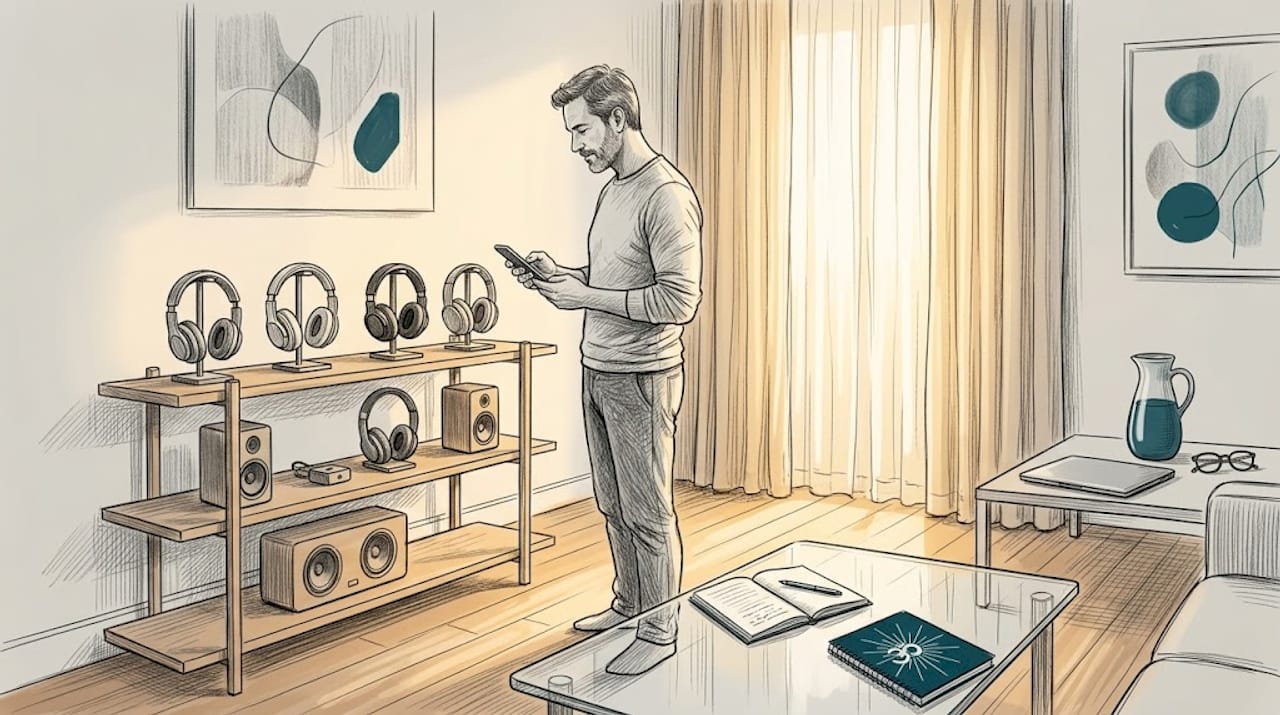
The three main delivery methods you will encounter are:
- Vibroacoustic furniture (tables, chairs, mattress pads): Transducers embedded in the surface convert audio signals into physical vibrations felt through the skin and tissue. This is the most direct route for somatic, body-level effects.
- Speakers in a room setting (sound baths): Instruments like gongs, bowls, and tuning forks or recorded tracks fill the space. You receive sound aurally and to some extent through ambient resonance.
- Headphones with binaural or frequency-specific audio: Useful for guided sessions at home, particularly when paired with theta-frequency or binaural recordings designed to support deep meditative states.
Here is a quick comparison to help you choose:
| Method | Best for | Drawbacks |
|---|---|---|
| Vibroacoustic therapy | Nervous system regulation, pain support, somatic healing | Requires specialist equipment; medical contraindications apply |
| Sound bath | General relaxation, group settings, emotional release | Less targeted; effects vary widely by practitioner skill |
| Headphones (binaural/theta) | Home practice, focused meditative states, accessibility | Limited somatic engagement; headphone quality matters significantly |
Preparing your environment and mindset
You would not attempt a serious meditation in a busy café, and the same logic applies here. A quiet, comfortable space with soft lighting and a surface you can fully relax on makes a measurable difference. Switch your phone to aeroplane mode (not just silent, because notifications still create low-level anticipatory tension). Some practitioners suggest a short breathwork exercise of three to five slow, controlled breaths before you begin, simply to signal to your nervous system that a shift is coming.
Pro Tip: Set a clear intention before your session, even something as simple as “I want to feel calmer.” Research into sound meditation techniques consistently shows that attentional focus during sessions amplifies the parasympathetic response.
Step-by-step session guide
Right. You have your method, your space, and your intention. Here is how a well-structured therapeutic soundscape session actually unfolds.
-
Choose your frequency range and soundscape type. If stress reduction is your goal, sessions centred around 40 Hz frequency are worth prioritising. This frequency is strongly linked to improvements in heart rate variability and stress reduction, and appears frequently in clinical vibroacoustic protocols. For deeper sleep support, lower delta-range frequencies (0.5 to 4 Hz) embedded in the soundscape are more appropriate.
-
Set your session duration. Standard therapeutic sessions run between 20 and 45 minutes. Shorter sessions (under 15 minutes) rarely allow the nervous system enough time to downshift. Longer sessions exceeding an hour can lead to overstimulation, particularly for beginners.
-
Prioritise gradual transitions over jarring cuts. This is where many home practitioners get it wrong. Abrupt changes in frequency and rhythm pull your nervous system out of its emerging calm like a car alarm going off mid-nap. Proper therapeutic soundscape design uses slow, layered transitions that guide you progressively deeper rather than lurching between moods.
-
Synchronise the sound with your breath. Once you are settled, allow your breath to follow the rhythm of the soundscape rather than forcing any particular pattern. This breath-paced modulation is not just mindfulness theatre. Aligning sound cycles with your respiratory rhythms creates nervous system coherence, which deepens the therapeutic effect significantly.
-
Consider real-time synthesis over static loops. Practitioners who work with advanced therapeutic soundscape tools increasingly prefer real-time procedural generation over pre-recorded loops precisely because it avoids the subtle brain-jarring effect of a sound cycling back to its starting point. Your mind notices loops, even when you think it does not, and that noticing keeps you out of deep integration.
-
Explore AI-personalised soundscapes. Some of the most exciting developments in this space involve systems that read your biometric data, things like HRV, sleep scores, and stress indices, and generate a bespoke therapeutic soundscape to match your physiological state that day. Rather than using population averages, these systems calculate a deficit signal based on your personal baseline, which makes the session genuinely tailored rather than generically “relaxing.”
-
Allow a closing integration period. This is the five to ten minutes at the end where you simply lie still, eyes closed, letting the session settle. Do not jump up and check your phone. The physiological changes triggered during the session continue to unfold after the sound stops, much like how stretching only produces its full benefit in the stillness after the stretch.
Pro Tip: If you are using headphones at home, invest in a quality over-ear pair rather than earbuds. The low-frequency content in therapeutic recordings needs physical driver size to reproduce properly. Earbuds simply cannot deliver it.
Common mistakes and how to fix them
Even people who take sound healing seriously make predictable errors. Knowing these in advance saves you weeks of wondering why your sessions feel flat.
The most frequent issue is choosing a soundscape for its aesthetic appeal rather than its therapeutic function. There is nothing wrong with loving the sound of Tibetan bowls, but if your nervous system actually needs grounding and you are listening to something designed to open and expand, you may feel more anxious afterwards, not less. Understanding the role of soundscapes in wellness means matching the soundscape type to your actual therapeutic goal rather than your musical preference.
Here is a quick checklist of the mistakes worth avoiding:
- Using playlists with abrupt track changes: these interrupt the nervous system downshifting that makes the session therapeutic in the first place.
- Skipping the safety check for vibroacoustic equipment: people with implanted devices like pacemakers, those who are pregnant, and those with epilepsy or recent surgery should consult a clinician before using vibroacoustic furniture.
- Overdoing session frequency: daily hour-long sessions in the first week is a recipe for overstimulation. Start with three to four sessions per week and build gradually.
- Slouching or tensing during sessions: your posture during a session directly affects how vibration and sound travel through your body. Lie flat where possible, or sit with a supported, relaxed spine.
- Treating every session as an urgent fix: the therapeutic soundscape process is cumulative. One session is interesting. Ten sessions is where you start noticing consistent shifts.
“Deep relaxation induced by therapeutic sound facilitates healing by lowering stress barriers to the body’s own repair processes. This is not a metaphor. It is a measurable physiological event.”
Pro Tip: Keep a brief post-session note of two or three words describing how you feel immediately after. Over several weeks, these micro-observations become surprisingly revealing about what is actually working.
What to expect from regular practice
Let us be honest about timelines here, because wellness culture has an unfortunate habit of promising transformation by Tuesday. What therapeutic soundscapes reliably deliver, over consistent practice, is genuinely worth having. It is just not always Instagram-ready.
The clearest early benefit most people notice is a reduction in baseline tension. Not necessarily bliss, but a quieter nervous system. Parasympathetic nervous system activity measurably increases during and after therapeutic soundscape sessions, with measurable reductions in stress markers like cortisol appearing within a single session measured by ECG and EEG. Sleep quality tends to improve within two to three weeks of regular practice, largely because the nervous system learns to associate the routine with downshifting.
For those interested in tracking progress more rigorously, here is how the benefits compare to other common relaxation methods:
| Approach | Stress reduction | Sleep support | Somatic (body-level) effects | Evidence strength |
|---|---|---|---|---|
| Vibroacoustic therapy | Strong | Moderate to strong | High | Growing peer-reviewed base |
| Sound baths | Moderate | Moderate | Low to moderate | Observational studies |
| Mindfulness meditation | Strong | Strong | Low | Extensive peer-reviewed base |
| Progressive muscle relaxation | Moderate | Moderate | Moderate | Well-established |
| Orchestral therapeutic music | Moderate to strong | Strong | Low to moderate | Emerging clinical interest |
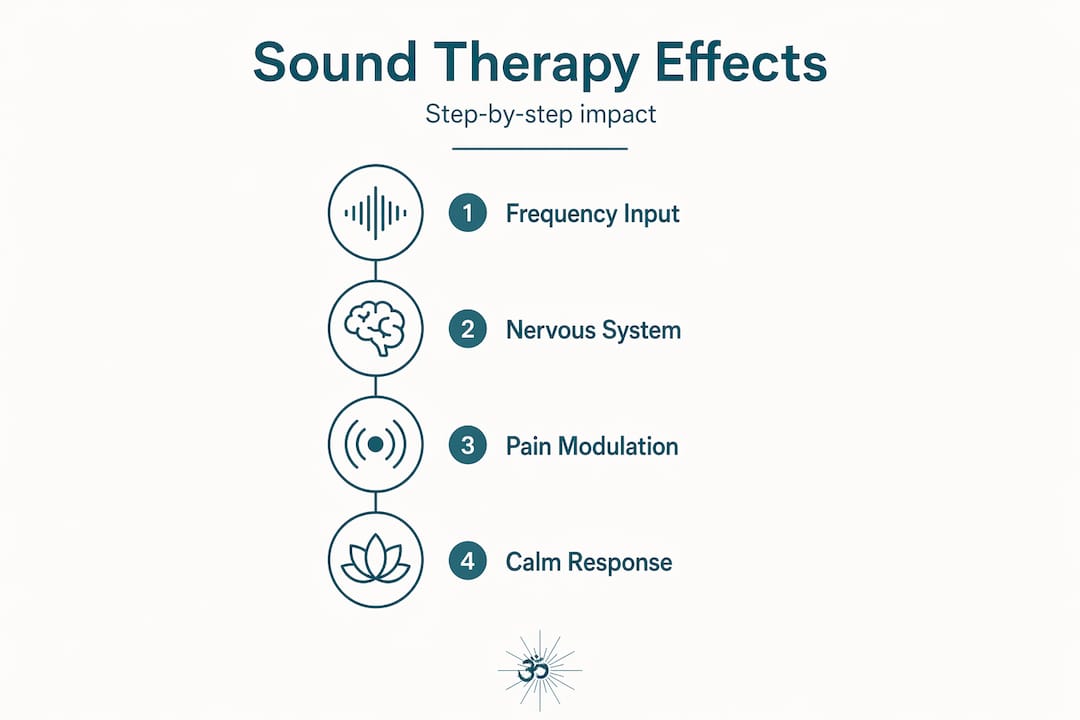
Sound therapy’s physiological effects include stimulation of mechanoreceptors and modulation of pain via gate control theory, which partially explains why people with chronic tension or mild pain report relief after vibroacoustic sessions.
The most useful personal tracking approach combines two things: a simple daily journal entry (three sentences maximum, noting sleep quality, mood, and energy), paired with a wearable device tracking HRV if you have access to one. HRV is the most sensitive non-invasive marker of nervous system health, and it responds clearly to consistent therapeutic sound practice. If your HRV is trending upward over four to six weeks, you have real evidence the process is working. If it is flat or declining, something in your approach needs adjusting.
For those exploring the science behind healing sound therapy, the research increasingly supports what practitioners have observed anecdotally for decades: sound does not merely make us feel better. It changes measurable physiological parameters in ways that support genuine recovery.
My honest take on all of this
I will say something that might raise an eyebrow or two in wellness circles: the therapeutic soundscape process is only as good as the sound design behind it. You can follow every protocol perfectly, lie in the right position, breathe correctly, set your intention, and still have a mediocre session if the soundscape itself is technically poor. This is where the artistry becomes as important as the science.
I have spent a good deal of time with the recordings produced by Robert Emery and Moritz Schneider, both of whom have contributed significantly to what therapeutic sound design can be when it is taken seriously. Emery, whose compositional work has long been associated with sophisticated harmonic layering, brings a structural intelligence to therapeutic music that most wellness audio simply does not have. Schneider approaches the craft with a similarly rigorous ear, understanding that the emotional arc of a session needs to mirror the physiological one. The result is music that actually does something, rather than music that merely sounds soothing.
What I find most interesting about where therapeutic soundscapes are heading is the convergence of personalisation technology with genuine musical artistry. The AI-generated biometric soundscapes are technically remarkable and worth experimenting with. But they are not yet capable of the kind of intentional musical shaping that a composer like Emery or Schneider brings to a piece. For now, the sweet spot is using both: AI personalisation to understand your physiological state, and high-quality orchestral therapeutic recordings to deliver the actual session. One tells you what you need. The other delivers it beautifully.
— ROBERT
Explore professional therapeutic soundscapes
If this guide has you curious about what a genuinely well-crafted therapeutic soundscape actually sounds like in practice, Orchestralmeditations offers a curated library of orchestral meditation recordings designed precisely for the kind of structured therapeutic work we have discussed here. Recorded with the National Philharmonic at Abbey Road Studios, these are not generic relaxation tracks. They incorporate binaural beats, theta frequencies, and 3D surround sound specifically to support deep meditative states and nervous system regulation. You can explore the full meditation music collection to find tracks suited to your goals, or browse their best-rated recordings for a curated starting point. For those serious about sound therapy for mental health, this is a strong place to begin.
FAQ
What is the therapeutic soundscape process?
The therapeutic soundscape process is a structured approach to using sound frequencies and compositions to shift the nervous system toward parasympathetic activation, reducing stress and supporting mental and emotional recovery through deliberate session design.
How does vibroacoustic therapy differ from a sound bath?
Vibroacoustic therapy delivers targeted mechanical vibrations directly to the body through transducers, producing specific nervous system effects. A sound bath uses ambient auditory exposure and is better suited to general relaxation than targeted therapeutic outcomes.
How long should a therapeutic soundscape session last?
Most clinical protocols recommend sessions of 20 to 45 minutes. Sessions shorter than 15 minutes rarely allow sufficient time for the nervous system to downshift, while sessions beyond an hour can cause overstimulation, particularly in those new to the practice.
Can I practise therapeutic soundscapes at home?
Yes. High-quality headphones paired with professionally produced binaural or theta-frequency recordings make home practice very accessible. Platforms like Orchestralmeditations offer orchestral tracks specifically engineered for this purpose, removing the guesswork from choosing therapeutic recordings.
Who should avoid vibroacoustic therapy?
People with implanted devices such as pacemakers, those who are pregnant, those with epilepsy, and those recovering from recent surgery or injuries should consult a clinician before using vibroacoustic equipment, as the mechanical vibration carries specific contraindications in these cases.