
Music wisdom is the capacity to engage deeply with music as a conscious practice for emotional healing, personal growth, and enhanced mindfulness. It is not passive listening. It is an active, embodied relationship with sound that reshapes how you think, feel, and recover from life’s harder moments. Composers like Robert Emery and Moritz Schneider have built entire bodies of work around this principle, using intentional orchestral composition to guide listeners toward genuine inner transformation. The science behind it, particularly Neural Resonance Theory, confirms what musicians have always sensed: sound does not just reach your ears. It reaches your nervous system.
What is music wisdom and why does it matter?
Music wisdom is the intentional, embodied use of music as a tool for healing, self-awareness, and personal development. The term is informal, but the concept it describes maps directly onto what researchers call music-based therapeutic practice, a recognised field within integrative health. The distinction matters because it separates purposeful listening from background noise.

Most people treat music as wallpaper. You put it on while cooking, commute with it, and forget it the moment the track ends. Music wisdom flips that entirely. You bring your full attention to the sound, notice what it stirs in you, and use that awareness as a mirror for your inner life. Think of it less like watching television and more like having a conversation with someone who knows you rather well.
Robert Emery and Moritz Schneider, the composers behind Orchestralmeditations, represent this philosophy in practice. Their recordings, made at Abbey Road Studios with the National Philharmonic, are not simply pleasant orchestral pieces. They are architecturally designed to guide the nervous system through specific emotional states, using binaural beats, theta frequencies, and Solfeggio-based tuning. That level of intention is precisely what separates music wisdom from casual listening.
Integrating music with meditation fosters brain synchrony by balancing left and right brain activity, easing cognitive load for high-stress individuals. That is not a small claim. It means the right music, listened to with the right attention, actively reorganises how your brain processes stress.
How does neural resonance theory explain music’s emotional power?
Neural Resonance Theory (NRT) is the scientific framework that explains why music moves you so deeply. NRT describes how auditory pathways transform sound vibrations into neurochemical signals that activate emotional centres in the limbic system. In plain terms: a chord does not just sound sad. It makes you sad, at a biological level.
What makes NRT particularly compelling is the concept of doubly embodied resonance. This means the response to music involves both brain resonance and a full-body emotional feeling. You are not just processing sound intellectually. Your body is physically resonating with it, the way a wine glass hums when you run a wet finger around its rim.
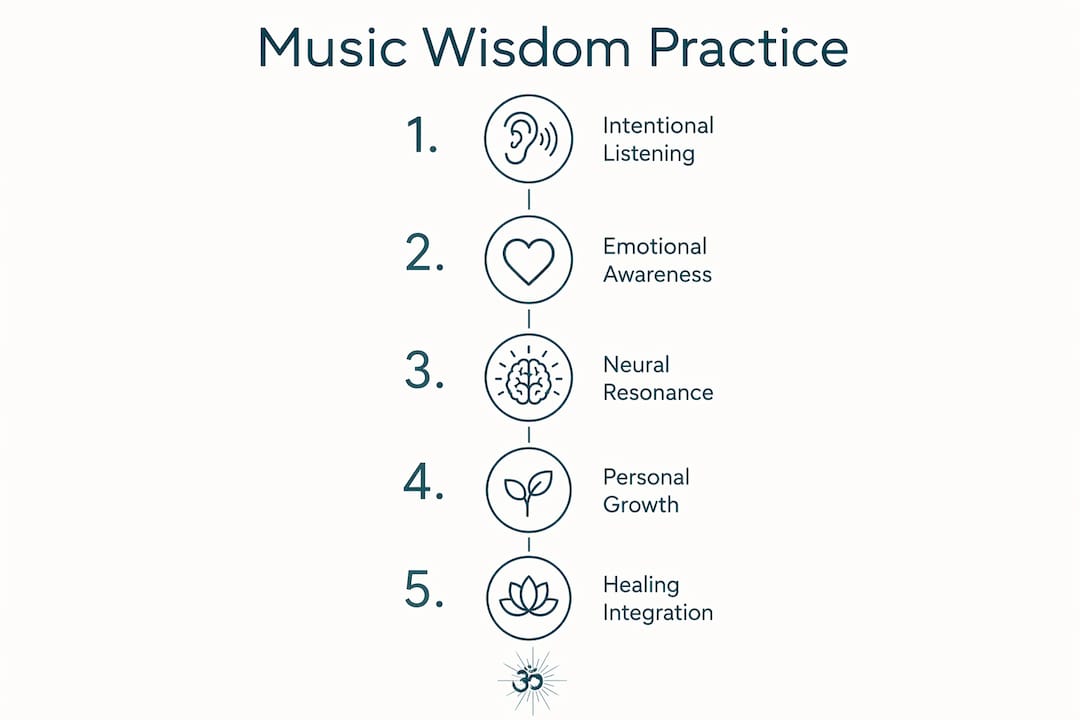
The limbic system is the brain’s emotional processing centre. When music activates it, you experience real emotions, not simulated ones. This is why a particular piece of music can reduce you to tears in a supermarket, which is both mortifying and, frankly, rather wonderful. It also explains why meditation music composed with neural resonance principles bypasses logic entirely to evoke embodied feelings of peace and focus.
The practical implication is significant. If you want to use music for healing, the composition itself must be intentional. Not all meditation music is equal. A track assembled from generic synth pads will not produce the same neurological response as one built around specific frequencies and live orchestral performance.
Key effects of neural resonance on the body and mind
- Limbic activation: Music triggers genuine emotional responses, not intellectual ones, making it a direct route to emotional processing.
- Neurochemical release: Sound vibrations converted through auditory pathways stimulate the release of dopamine, cortisol reduction, and oxytocin.
- Bilateral brain synchrony: Intentional music, particularly binaural compositions, encourages left and right brain hemispheres to work in concert.
- Nervous system regulation: Frequency-specific tracks can shift the nervous system from a sympathetic (fight or flight) state to a parasympathetic (rest and digest) state.
- Embodied feeling: The response is physical as well as mental, meaning healing through music is genuinely somatic, not merely psychological.
How does musical structure mirror life’s challenges?
Music is a precise architectural tool for manipulating emotional states. It uses tension and resolution cycles to guide internal experiences, rather than simply providing relaxing background noise. Understanding this structure is one of the most underrated forms of self-knowledge available to you.
Every piece of music is built from phrases: short musical sentences that create expectation, build tension, and then resolve. That resolution, when it arrives, produces a measurable sense of relief. You have felt it thousands of times without naming it. The moment a chord finally lands where you expected it to, something in you exhales.
Musical intervals carry distinct emotional flavours: a minor second creates acute suspense, while a perfect fifth provides grounding stability. These are not arbitrary associations. They reflect how the human nervous system responds to specific frequency relationships. A minor second is the sound of something unresolved, something that needs to move. A fifth is the sound of arrival.
The parallel to personal growth is not metaphorical. It is structural. Life presents tension: a difficult relationship, a career setback, a period of grief. Music models the process of moving through that tension toward resolution. Listening actively to how a composer builds and releases tension teaches you, at a felt level, that resolution always follows difficulty. That is a lesson worth absorbing.
Pro Tip: When listening intentionally, pause after a moment of musical resolution and notice what you feel in your body. That physical sensation of release is the same nervous system response you are training yourself to access during real-life stress.
Emotional intervals at a glance
| Interval | Emotional quality | Life parallel |
|---|---|---|
| Minor second | Acute suspense, unease | Unresolved conflict or anxiety |
| Major third | Brightness, optimism | Moments of clarity or hope |
| Perfect fifth | Stability, grounding | Periods of rest and consolidation |
| Minor seventh | Longing, incompleteness | Grief or unfulfilled desire |
| Octave | Resolution, wholeness | Acceptance and integration |
Developing what musicians call embodied hearing takes practise. It means moving beyond “I like this” or “I don’t like this” toward “what is this doing to me, and why?” Start with short pieces. Beethoven’s Moonlight Sonata is a masterclass in sustained tension. Debussy’s Clair de Lune demonstrates how resolution can feel like stepping into cool water. You do not need to read music to feel these things. You just need to pay attention.
How does psychological safety shape wisdom in music practice?
Musical wisdom develops as a ‘patina’ that accumulates with experience, shifting focus from performance to presence and intentionality. Experienced musicians produce sound that reflects lived experience, not just technical skill. The same principle applies to anyone using music as a tool for personal growth.
The obstacle most people encounter is performance anxiety, or its quieter cousin, self-judgement. You listen to a piece and immediately evaluate whether you are responding “correctly.” You wonder if you are meditating properly, feeling the right things, getting enough out of it. That anxious self-monitoring is the enemy of genuine musical engagement.
True musical wisdom involves process orientation, accepting vulnerability, and allowing music to mirror real emotional journeys rather than seeking immediate results. The shift from outcome to process is not just good advice. It is the neurological condition under which genuine healing through music becomes possible.
Separating self-worth from musical outcomes fosters psychological safety and promotes personal growth rather than fear-driven perfectionism. This insight, drawn from music education research, applies equally to listeners as to performers. When you stop needing the music to fix you immediately, it starts doing its actual work.
Robert Emery and Moritz Schneider’s compositional approach reflects this philosophy directly. Their works are designed to meet the listener where they are, not to demand a particular emotional response. The orchestral textures they create at Abbey Road Studios provide a container for whatever arises, which is precisely the kind of psychological safety that allows genuine healing to occur.
Practical ways to build this safety in your own listening practice:
- Release the expectation that you must feel calm. Music wisdom includes sitting with discomfort.
- Resist the urge to skip tracks that feel challenging. Tension in music is information.
- Treat each listening session as an experiment, not a performance. Curiosity beats judgement every time.
- Notice physical sensations without labelling them as good or bad. Your body is giving you data.
Pro Tip: Before a listening session, set a single intention: “I am here to notice, not to achieve.” That one shift in framing can dissolve performance anxiety and open the door to genuine presence.
Practical ways to build music wisdom into daily life
Daily listening routines with curated orchestral soundscapes can alleviate cognitive overload and foster mental balance among high-stress professionals. The key word is curated. Random playlists do not produce the same results as intentionally selected, frequency-specific compositions.
Here is a practical framework for integrating musical insights into your daily routine:
-
Morning grounding (10–15 minutes). Begin with a piece built around perfect fifths or major intervals. This primes the nervous system for stability before the day’s demands arrive. Orchestralmeditations’ theta frequency tracks work particularly well here, as theta brainwaves are associated with the relaxed alertness of early waking.
-
Midday reset (5–10 minutes). Choose a short orchestral piece with clear tension-resolution cycles. Listen with eyes closed. Notice where your body holds tension and observe whether the music’s resolution produces any physical release. This is embodied listening in its most practical form.
-
Evening integration (20–30 minutes). Use longer, slower compositions for processing the emotional residue of the day. Binaural beat tracks in the delta or theta range support this transition. Robert Emery’s orchestral meditation works are composed specifically for this kind of deep evening listening.
-
Weekly deep session (45–60 minutes). Dedicate one longer session per week to a single, extended piece. Sit with it fully. Journal afterwards about what arose. This is where the deeper layers of music and life lessons begin to surface.
-
Sound-supported meditation (variable). Combine intentional music with a formal meditation practice. The music provides an anchor for attention and a container for emotional material that pure silence sometimes cannot hold. Moritz Schneider’s 3D surround sound compositions are particularly suited to this, as the spatial audio creates an immersive environment that deepens meditative states.
Recommended listening formats by intention
| Intention | Recommended format | Frequency range |
|---|---|---|
| Stress reduction | Binaural beats with orchestral overlay | Alpha (8–12 Hz) |
| Deep meditation | Theta frequency orchestral compositions | Theta (4–8 Hz) |
| Emotional processing | Minor-to-major resolution pieces | No specific Hz |
| Sleep preparation | Delta frequency soundscapes | Delta (0.5–4 Hz) |
| Morning focus | Bright interval compositions | Beta (12–30 Hz) |
Understanding sound therapy as a whole-person practice helps contextualise where music wisdom sits within the broader wellness picture. Music is one tool among several, but it is arguably the most accessible, the most portable, and the most immediately effective for emotional regulation.
The works of Robert Emery and Moritz Schneider are particularly relevant here because they were composed with these specific therapeutic intentions in mind. Emery’s background in orchestral composition and Schneider’s expertise in sound design and frequency-based audio combine to produce recordings that function as genuine therapeutic tools, not merely pleasant background music. Their collaboration at Abbey Road Studios with the National Philharmonic gives the recordings a sonic depth that cheaper productions simply cannot replicate.
Pro Tip: Keep a brief listening journal. After each session, write three words describing what you felt physically, emotionally, and mentally. Over weeks, patterns emerge that reveal which types of music serve you best at different times.
Key takeaways
Music wisdom is the active, embodied practice of using intentional music to regulate the nervous system, process emotion, and cultivate genuine personal growth.
| Point | Details |
|---|---|
| Neural resonance is the mechanism | Sound vibrations activate the limbic system directly, producing real emotional and physical responses. |
| Musical structure teaches patience | Tension-resolution cycles in music mirror life’s challenges, training the nervous system to trust resolution. |
| Psychological safety enables growth | Releasing outcome-focused listening and embracing process allows genuine healing to occur. |
| Intentional composition matters | Frequency-specific, architecturally designed music produces measurably different results than random playlists. |
| Daily routine builds lasting change | Short, consistent listening sessions with curated orchestral soundscapes produce cumulative neurological benefits. |
Why I think most people are using music backwards
I have spent years watching people treat music as a mood accessory. They reach for it when they already feel good and want to feel better, or they use it to numb out when things get difficult. Neither approach is wrong, exactly. But both miss the deeper point.
The most transformative moments I have had with music came when I sat with something uncomfortable. A piece that felt too slow, too melancholy, too unresolved. The instinct is always to skip it. But staying with that discomfort, following the music through its tension rather than away from it, is where the real learning happens. It is not unlike therapy in that respect. The useful stuff rarely feels pleasant in the moment.
What Robert Emery and Moritz Schneider do with their Orchestralmeditations recordings is create a space where that kind of listening feels safe. The production quality, the live orchestral performance, the deliberate use of frequency and space: all of it signals to your nervous system that you are held. That matters more than most people realise. You cannot do vulnerable, open listening in an environment that feels cheap or careless. The quality of the container shapes the quality of the experience.
My honest advice: stop using music as a reward and start using it as a practice. Treat it the way you would treat meditation or exercise. Show up consistently, bring your attention, and trust that the results will accumulate. They will. The holistic approach to whole-person wellness that music wisdom represents is not a quick fix. It is a long game. And it is absolutely worth playing.
— ROBERT
Orchestralmeditations: music crafted for genuine healing
Orchestralmeditations produces meditation music that takes the science of neural resonance seriously. Every track in their library is composed with specific therapeutic intentions, recorded at Abbey Road Studios with the National Philharmonic, and engineered using binaural beats, theta frequencies, and 3D surround sound.

If you are ready to move from passive listening to genuine music wisdom practice, the Orchestralmeditations library is a strong place to begin. Their curated meditation music spans deep sleep, morning focus, emotional processing, and extended meditation sessions. You can also explore their personal meditation blends for a more tailored experience. The recordings are royalty-free and available for individual purchase or subscription, making them practical for both personal and professional therapeutic use.
FAQ
What is music wisdom?
Music wisdom is the intentional, embodied practice of using music as a tool for emotional healing, self-awareness, and personal growth. It differs from passive listening by requiring active attention and reflective engagement with the music.
How does music teach wisdom and emotional resilience?
Music’s tension-resolution cycles mirror life’s emotional patterns, training the nervous system to move through difficulty toward resolution. Regular intentional listening builds the capacity to tolerate discomfort and trust the process of change.
What is Neural Resonance Theory?
Neural Resonance Theory explains how auditory pathways convert sound vibrations into neurochemical signals that activate the limbic system, producing genuine emotional and physical responses rather than purely intellectual ones.
How do I start a music wisdom practice?
Begin with 10–15 minutes of intentional daily listening using frequency-specific orchestral compositions. Set a single intention before each session, notice physical sensations without judgement, and keep a brief journal of what arises.
Why does the quality of meditation music matter?
Intentionally composed, frequency-specific music produces measurably different neurological effects than generic background tracks. Compositions built around binaural beats, theta frequencies, and live orchestral performance engage the nervous system at a deeper level, making the therapeutic effect more consistent and reliable.