
Mantra meditation is the practice of silently or audibly repeating a chosen word or phrase to anchor the mind and reduce mental noise. Known formally as japa in Sanskrit tradition, it is one of the oldest and most studied mindfulness techniques available. Where breath meditation asks you to observe, mantra meditation actively occupies the verbal mind, crowding out rumination and worry with a single, steady sound. The result is a calmer, more focused state of mind that builds with consistent daily practice. Composers like Robert Emery and Moritz Schneider, whose orchestral work underpins the Orchestralmeditations library, understand this principle deeply. Their music is built around the same idea: give the mind something beautiful and steady to rest against, and it will settle.
What do you need to start mantra meditation?
The good news is that you need almost nothing to begin. A quiet corner, a comfortable seat, and a chosen mantra are genuinely sufficient. That said, a few simple tools and environmental choices make a real difference, especially when you are new to the practice.
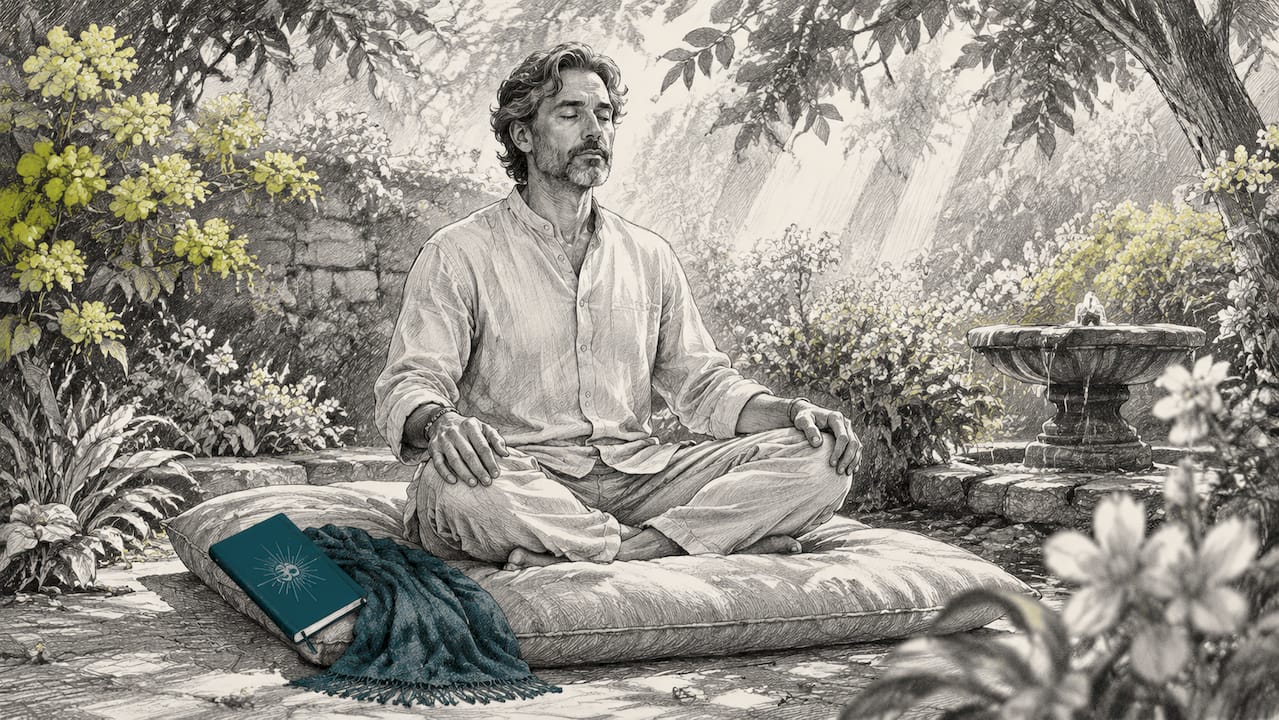
Physical setting and posture
Sit in a position that is steady and comfortable. You do not need to sit cross-legged on the floor if that is uncomfortable. A straight-backed chair works perfectly well. The key is keeping your spine upright without tension, so the body does not become a distraction. Place your hands loosely in your lap or on your knees.
Mala beads and counting repetitions
Many practitioners use a mala, a string of 108 beads used to count mantra repetitions. The 108-bead mala is the traditional tool for japa meditation, and it adds a tactile, grounding quality to the practice. You move one bead per repetition, working around the string with your thumb and middle finger. One important point of etiquette: the larger guru bead at the top of the mala is never crossed. When you complete a full circuit of 108 repetitions, you reverse direction rather than passing over it. This rule is not arbitrary. It reflects a long-standing tradition of respect for the practice itself.
Background sound
The question of background sound is worth thinking about carefully. Neutral sounds like nature recordings support mantra focus far better than music with lyrics or strong emotional associations. Lyrical music competes directly with your mantra for the verbal channel in your mind. Orchestral soundscapes without lyrics, particularly those built around theta frequencies or binaural beats, sit underneath the mantra rather than fighting it.
Here is a quick comparison of common background sound choices:
| Sound type | Effect on mantra focus |
|---|---|
| Silence | Strong focus, can feel stark for beginners |
| Nature sounds (rain, birdsong) | Neutral and grounding, widely recommended |
| Orchestral music without lyrics | Calming and immersive, supports deep states |
| Music with lyrics | Competes with the verbal channel, not recommended |
| Binaural beats or theta frequencies | Actively supports meditative brainwave states |
Pro Tip: If you find silence too stark at first, try a short piece of orchestral meditation music to ease yourself in. Once the mantra takes hold, the music becomes background rather than foreground.
How do you choose an effective mantra?
Choosing a mantra is simpler than most beginners expect, and far less consequential than the anxiety around it suggests. The mantra is a vehicle, not a destination. Its job is to give your mind something neutral and repetitive to hold onto.
What makes a good beginner mantra?
A good beginner mantra has three qualities:
- Neutral in meaning. Avoid words with strong personal or emotional associations. A mantra that reminds you of a difficult relationship or a stressful goal will pull your mind toward those thoughts rather than away from them.
- Simple to repeat. One or two syllables work best. The mantra needs to fit naturally into a slow, steady rhythm without requiring mental effort to pronounce.
- Resonant in sound. The vibrational quality of the mantra matters more than its literal meaning. This is why ancient Sanskrit sounds like Om remain so widely used. The resonance itself is the point.
Recommended mantras for beginners
Three mantras stand out for beginners:
- So Hum. Sanskrit for “I am that.” It pairs naturally with the breath: So on the inhale, Hum on the exhale. It is gentle, neutral, and widely taught.
- Om. The most universally recognised meditation sound. Single syllable, deeply resonant, and free of distracting associations for most people.
- Peace. A simple English option for those who find Sanskrit unfamiliar. It is calm, neutral, and easy to repeat without effort.
The mistake most beginners make
The most common error is choosing a mantra that carries too much personal weight. Mantras with emotional charge trigger distracting thoughts rather than quieting them. If you find your mind spinning stories every time you repeat a word, that word is not your mantra. Swap it for something quieter. There is no failure in that. It is just good practice management.
Pro Tip: Do not overthink the mantra selection. Pick one from the list above, use it for a week, and notice how it feels. You can always refine later. The worst mantra is the one you never start with.
Step-by-step guide to practising mantra meditation
This is where the rubber meets the road. The steps below are straightforward, but the details matter. Follow them consistently and you will build a genuine practice within two weeks.
-
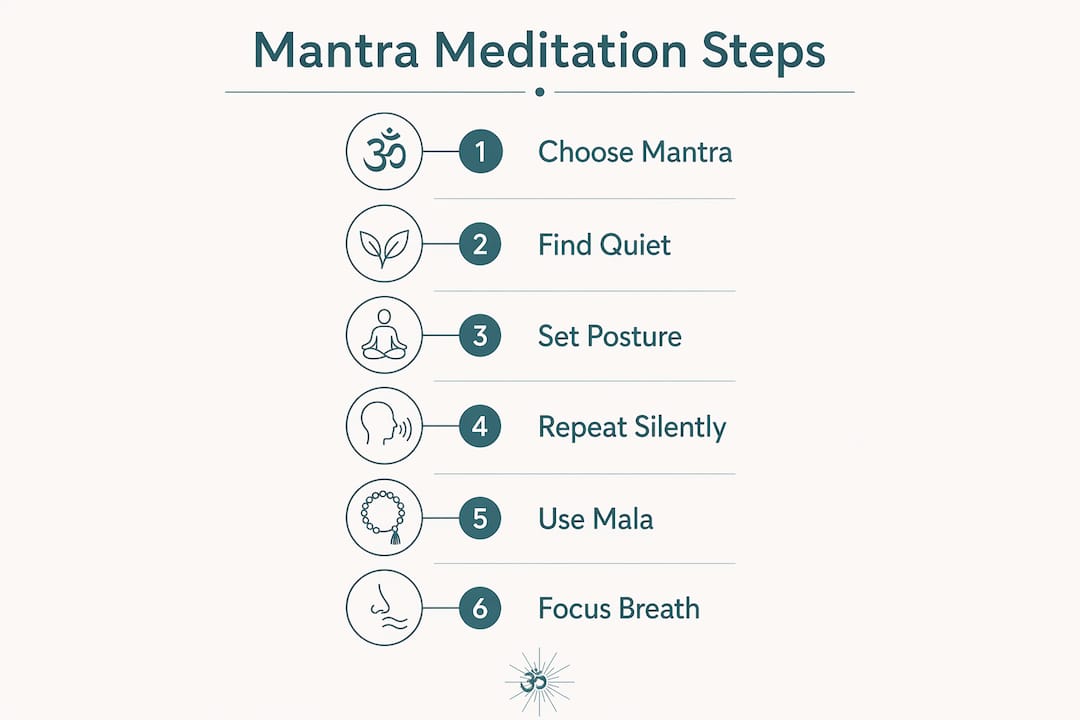
Choose your time and place. Meditate at the same time each day. Morning works well for most people because the mind is quieter before the day’s demands accumulate. Consistency of timing builds the habit more reliably than any other single factor.
-
Set a timer. Beginners should start with 5–10 minutes and extend gradually to 20 minutes as comfort grows. A timer removes the temptation to check the clock, which is its own form of distraction.
-
Settle into your posture. Sit upright, close your eyes, and take three slow breaths. Let the body arrive before the mind does.
-
Begin repeating your mantra. You can repeat it silently or aloud. Silent repetition is more common and generally easier to sustain. Sync the mantra loosely with your breath if that feels natural, but do not force it. The mantra leads; the breath follows.
-
Hold your mala if using one. Begin at the bead next to the guru bead and move one bead per repetition. Work around the string with your thumb and middle finger. When you reach the guru bead, reverse direction.
-
Notice when your mind wanders. It will wander. Frequently. That is not a problem. The act of noticing and returning to the mantra is the core meditative skill. Each return is a mental repetition, like a bicep curl for your attention.
-
Close the session mindfully. When the timer sounds, do not leap up immediately. Sit quietly for 30–60 seconds. Let the mantra fade naturally. Notice how you feel before re-engaging with the world.
Here is a quick comparison of silent versus aloud repetition to help you decide:
| Method | Best for | Consideration |
|---|---|---|
| Silent repetition | Most settings, daily practice | Easier to sustain; mind may wander more |
| Aloud repetition | Early learning, group practice | Stronger sensory anchor; less practical in public |
| Whispered repetition | Transition between the two | Good middle ground for beginners |
Pro Tip: If you lose count on your mala, do not stress about it. Simply return to the bead you think you were on and continue. The point is the repetition, not the arithmetic.
You can also explore how this approach compares with other techniques in this guide to mantra vs breath meditation, which is helpful if you are still deciding which method suits you best.
What are the most common challenges in mantra meditation?
Every beginner hits the same walls. The good news is that the walls are not as solid as they look.
Mind wandering
Mind wandering is not a sign that you are meditating badly. It is the practice. The essential meditative skill is noticing that the mind has wandered and returning to the mantra without drama. Think of it like training a puppy. You do not shout at the puppy for running off. You calmly bring it back. Every single time.
Self-criticism and frustration
Many beginners abandon mantra meditation within the first week because they decide they are “not doing it right.” This is almost always unfounded. There is no perfectly quiet mind waiting to be unlocked. The practice is the returning, not the staying.
“Beginners often feel a wandering mind means failure, but the real practice is noticing and returning without judgement.” — MindBodyGreen
Choosing the wrong mantra
If your mantra is consistently triggering long chains of thought, it is carrying too much emotional weight. Swap it for something more neutral. Om or So Hum are reliable defaults precisely because they carry minimal personal baggage for most people.
Maintaining motivation
Here are the most effective ways to keep your practice going when enthusiasm dips:
- Anchor your session to an existing habit (morning tea, before a shower).
- Keep sessions short rather than skipping them entirely. Five minutes beats zero minutes every time.
- Track your streak on a simple calendar. The visual record creates its own momentum.
- Use a wellness checklist for meditation to build supporting habits around your practice.
- Pair your session with music that genuinely helps you settle. The right sound environment removes one layer of friction before you even begin.
Key takeaways
Mantra meditation works because it gives the verbal mind a single, neutral point of focus, which reduces rumination and builds sustained attention over time.
| Point | Details |
|---|---|
| Start short and build gradually | Begin with 5–10 minutes daily and extend to 20 minutes as your concentration grows. |
| Choose a neutral mantra | Use simple sounds like Om or So Hum to avoid triggering distracting thoughts. |
| Mind wandering is the practice | Each time you notice and return to the mantra, you strengthen your mindfulness skill. |
| Respect mala etiquette | Never cross the guru bead; reverse direction after completing 108 repetitions. |
| Sound environment matters | Neutral background sound, such as orchestral music without lyrics, supports mantra focus. |
Why I think most people overcomplicate mantra meditation
I have watched people spend three weeks researching the perfect mantra and never actually sit down to use it. I have done it myself, if I am honest. There is something seductive about the preparation phase. It feels productive without requiring you to confront the slightly uncomfortable reality of sitting quietly with your own mind.
Here is what I have found after years of working with meditation music and observing how people actually practise: the mantra matters far less than the consistency. A mediocre mantra repeated daily for a month will do more for your mental clarity than the perfect mantra used twice. The vibrational quality of the sound is doing real work, but only if you show up.
What genuinely surprised me was how much the sound environment shapes the quality of a session. When I first heard Robert Emery’s orchestral compositions, I noticed immediately how they create a kind of acoustic container for the mind. Emery, who has composed and produced for Orchestralmeditations, builds his pieces around frequencies that sit underneath conscious thought rather than competing with it. Moritz Schneider, the other key composer behind the Orchestralmeditations catalogue, brings a similar architectural sensibility. His arrangements feel like a room you want to stay in. That quality is not accidental. It is the result of deliberate compositional choices made specifically to support meditative states.
My honest advice: pick Om, set a timer for ten minutes, and sit down tomorrow morning. Review the philosophy later. The practice rewards the doing, not the planning.
— ROBERT
Orchestralmeditations: music built for your practice
Mantra meditation deepens when the sound environment supports it. Orchestralmeditations offers a curated library of orchestral meditation music composed specifically for meditative states, including works by Robert Emery and Moritz Schneider recorded at Abbey Road Studios with the National Philharmonic.

Their compositions use binaural beats, theta frequencies, and 3D surround sound to create an acoustic space that works with your mantra rather than against it. Whether you are five minutes into your first session or twenty minutes into a well-established daily practice, the right music removes friction and deepens focus. Browse the full collection at Orchestralmeditations and find the sound that helps your mind settle.
FAQ
What is mantra meditation?
Mantra meditation is the practice of silently or audibly repeating a chosen word or phrase to focus the mind and reduce mental chatter. It is formally known as japa in Sanskrit tradition and is one of the oldest documented mindfulness techniques.
How long should a beginner meditate with a mantra?
Beginners should start with 5–10 minutes per session and gradually extend to 20 minutes as concentration improves. Consistency of timing each day matters more than session length.
What is the best mantra for anxiety?
Neutral, simple mantras like So Hum or Om are most effective for mantra meditation for anxiety because they carry minimal emotional associations and actively occupy the verbal mind channel that drives rumination.
Do I need mala beads to practise mantra meditation?
Mala beads are optional but useful. A traditional mala has 108 beads and helps you count repetitions without breaking focus. If you use one, remember never to cross the guru bead; reverse direction after a full circuit instead.
Can I use music during mantra meditation?
Yes, provided the music has no lyrics. Orchestral soundscapes, nature sounds, or frequency-based recordings support mantra focus. You can find guidance on choosing the right sound in this article on meditation music choices.