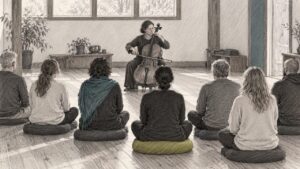
Frequency healing sounds are specific sound frequencies designed to influence the body’s natural rhythms and promote physical and mental well-being. The term sits under the broader clinical umbrella of sound therapy, which includes vibroacoustic therapy, binaural beats, and solfeggio frequencies such as 528 Hz. Research into these modalities has moved well beyond the realm of new age curiosity. 40 Hz vibroacoustic stimulation has demonstrated an 81% reduction in fibromyalgia pain scores, while theta-range binaural beats produce measurable anxiety relief in 30-minute sessions. Composers like Robert Emery and Moritz Schneider have spent careers translating this science into music that people can actually sit down and listen to, which is where platforms like Orchestralmeditations come in.
What does the science say about frequency healing sounds?
The clinical evidence for sound therapy is more specific than most people realise. Different frequencies produce different physiological effects, and the research is granular enough to name exact Hz values.

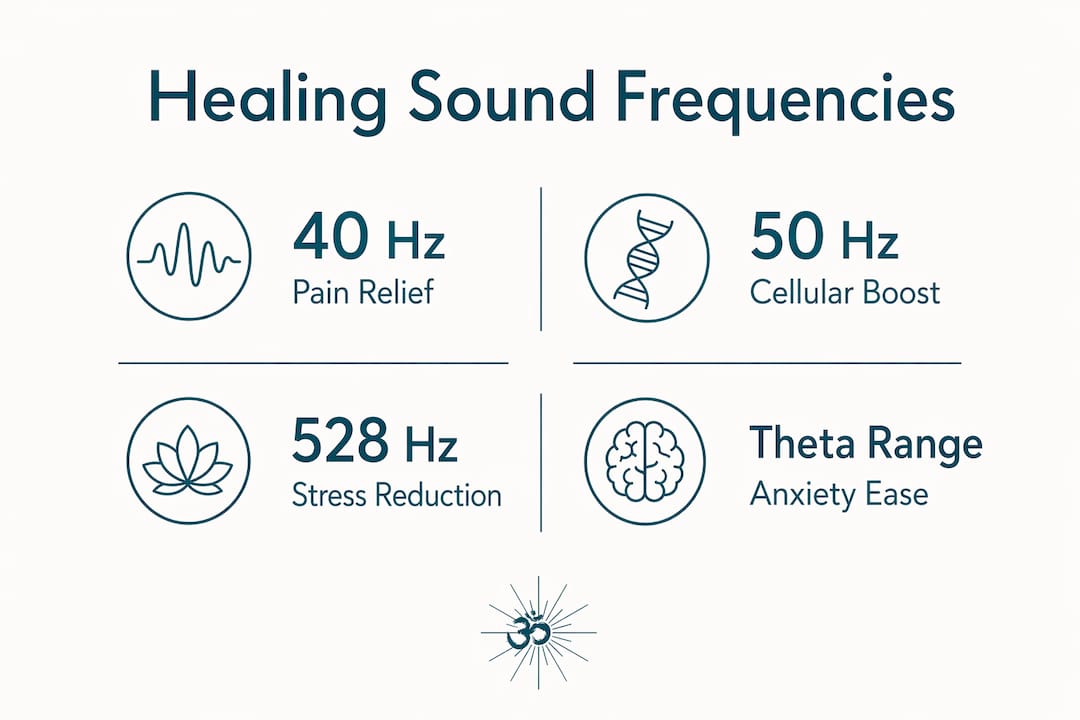
40 Hz vibroacoustic therapy is the most studied frequency for pain and neurological conditions. Sessions typically run 20–45 minutes, and the results in fibromyalgia trials are striking. An 81% reduction in pain scores is not a minor footnote. That figure puts 40 Hz in the same conversation as pharmaceutical interventions, which is why neurologists are paying attention.
The 50 Hz range tells a different story at the cellular level. 50 Hz stimulation can trigger a 374% increase in nitric oxide production in endothelial cells. Nitric oxide is a signalling molecule that dilates blood vessels and supports tissue repair, so that number has real physiological weight behind it.
Solfeggio frequencies occupy a different corner of the research. 528 Hz is linked to cortisol reduction and increased oxytocin production, based on the Akimoto 2018 study. Cortisol is the body’s primary stress hormone, so a frequency that measurably lowers it has a legitimate claim to the word “healing.”
Key frequencies and their documented effects
| Frequency | Primary effect | Typical session length |
|---|---|---|
| 40 Hz | Pain reduction, neurological support | 20–45 minutes |
| 50 Hz | Nitric oxide production, cellular repair | 20–30 minutes |
| 528 Hz | Cortisol reduction, oxytocin increase | 20–30 minutes |
| 4–8 Hz (theta) | Anxiety relief, parasympathetic activation | 30 minutes |
Pro Tip: If you are new to sound therapy, start with 40 Hz or theta-range binaural beats. Both have the strongest clinical evidence base and the clearest session guidelines.
How do binaural beats, solfeggio frequencies, and vibroacoustic therapy actually work?
These three modalities are often lumped together, but they work through entirely different mechanisms. Knowing the difference helps you choose the right tool for what you actually need.
Music therapy and sound therapy differ in a fundamental way. Music therapy addresses emotional and social goals through structured musical engagement. Sound therapy, particularly vibroacoustic therapy, targets physiological responses at the cellular level using precise sine wave frequencies. One is about how music makes you feel. The other is about what specific frequencies do to your body’s tissues and nervous system.
Binaural beats
Binaural beats work through a perceptual trick that is genuinely clever. You play a tone of, say, 200 Hz in your left ear and 204 Hz in your right. Your brain perceives a third tone at the difference frequency, which is 4 Hz in this case, sitting squarely in the theta range. That perceived tone drives brainwave activity towards the target frequency, a process called entrainment.
Stereo headphones are non-negotiable for this to work. Speakers blend the two frequencies before they reach your ears, which destroys the effect entirely. This is one of those cases where the equipment genuinely matters, not as a marketing point but as a basic acoustic requirement.
30-minute theta-range sessions produce meaningful anxiety reduction and activate the parasympathetic nervous system, the branch responsible for rest and recovery. Think of it as the biological opposite of the fight-or-flight response. For a deeper look at the technology behind this, the binaural sound research at Orchestralmeditations is worth reading.
Solfeggio frequencies
The solfeggio scale is an ancient system of musical tones that resurfaced in modern wellness culture during the 1990s. The frequencies range from 174 Hz up to 963 Hz, each associated with a specific healing intention. The 528 Hz tone, sometimes called the “love frequency,” has the strongest research backing of the group. The cortisol and oxytocin data from the Akimoto study gives it a measurable physiological basis rather than just a traditional claim.
Vibroacoustic therapy
Vibroacoustic therapy is the most physically direct of the three. Speakers or transducers are embedded in a mat, chair, or bed, and the vibrations pass directly into the body’s tissues. The 40 Hz and 50 Hz frequencies used in clinical settings are delivered as pure sine waves, not musical compositions. The experience feels less like listening to music and more like being gently vibrated from the inside, which sounds odd until you try it.
Pro Tip: Binaural beats suit people who want a portable, low-cost entry point. Vibroacoustic therapy suits those with chronic pain or neurological conditions and access to a clinical setting. Solfeggio frequencies work well layered into meditation music for daily practice.
How to use healing sound frequencies in your daily routine
Getting results from sound therapy is less about finding the perfect frequency and more about building a consistent practice. Here is a practical framework for doing that.
1. Start short and build gradually
Beginners should start with 15–20 minute sessions to monitor their response and avoid sensory fatigue. This is not excessive caution. Some people find intense frequencies disorienting at first, particularly in the theta and delta ranges. Short sessions let you gauge your reaction before committing to longer ones.
2. Experiment to find your frequency
Individual response to frequency healing is highly subjective. What produces deep relaxation for one person may feel irritating or neutral to another. Try 528 Hz for stress, theta binaural beats for anxiety, and 40 Hz for physical tension. Keep a simple note of what you notice after each session. Over two weeks, a pattern usually emerges.
3. Use the right equipment
For binaural beats, stereo headphones are the minimum requirement. Over-ear headphones with good low-frequency response work better than earbuds for most people. For solfeggio and orchestral meditation music, quality speakers in a quiet room produce a more immersive experience. The sound frequency treatment guide at Orchestralmeditations covers equipment considerations in more detail.
4. Choose quality recordings
This is where the source of your audio matters enormously. Robert Emery is a composer and producer whose work spans orchestral film scoring and meditation music. His collaborations with Orchestralmeditations bring a level of musical craft to frequency-based audio that most generic apps simply cannot match. Moritz Schneider, another composer associated with the platform, brings a similarly rigorous approach to the production of theta and solfeggio-based compositions. Both composers understand that a 528 Hz tone embedded in a poorly produced track is far less effective than one woven into a carefully arranged orchestral piece recorded at Abbey Road Studios.
5. Create a consistent environment
Lie down or sit in a supported position. Dim the lights. Set a timer so you are not clock-watching. Treat the session as you would a short nap: non-negotiable, protected time. Consistency over weeks matters more than any single perfect session.
What are the real limitations of sound therapy healing?
Sound therapy works. It also has limits. Being clear about both is what separates a useful wellness tool from an overhyped one.
Scientific evidence is mixed, and Cedars-Sinai researchers are explicit that sound therapy is best considered an adjunct to standard mental health treatments, not a replacement. That word “adjunct” is doing a lot of work. It means sound therapy can support recovery, reduce symptoms, and improve quality of life alongside established treatments. It does not mean it can substitute for therapy, medication, or medical care where those are indicated.
The brainwave entrainment evidence is particularly contested. Some studies show clear effects. Others show minimal or inconsistent results. The variability likely reflects differences in individual neurology, recording quality, listening conditions, and session length. A poorly produced binaural beat track played through laptop speakers in a noisy room will not produce the same results as a high-quality recording through good headphones in a quiet space.
“Binaural beats and frequency sounds can be useful as low-risk add-ons but should not replace evidence-based mental health treatments.” — Verywell Mind
The naturopathic and integrative medicine perspective is more optimistic, and usefully so. The evidence for pain reduction and neurorehabilitation shows genuine promise. When sound therapy is combined with mindfulness practice, breathwork, or conventional physiotherapy, the combined effect tends to be greater than any single approach alone. The science behind healing frequencies is evolving quickly, and the picture in 2026 is considerably clearer than it was a decade ago.
The honest bottom line: frequency healing sounds are a low-risk, evidence-supported tool with real physiological effects. They are not a cure. They are not magic. Used consistently and intelligently, they are genuinely useful.
Key takeaways
Frequency healing sounds produce measurable physiological effects at specific Hz values, and consistent use within a structured practice produces the most reliable results.
| Point | Details |
|---|---|
| Frequency specificity matters | 40 Hz, 50 Hz, and 528 Hz each produce distinct, documented physiological effects. |
| Binaural beats need headphones | Stereo headphones are required for brainwave entrainment; speakers do not work. |
| Start with short sessions | Beginners should use 15–20 minute sessions to avoid sensory fatigue and gauge response. |
| Sound therapy is an adjunct | It supports but does not replace established medical or mental health treatments. |
| Recording quality affects results | Professionally produced tracks, like those from Orchestralmeditations, deliver more consistent outcomes. |
Why I think we are finally asking the right questions about sound healing
I have spent a long time around musicians and composers, and I will admit that “healing frequencies” used to make me roll my eyes slightly. It sounded like the kind of thing printed on a crystal shop receipt. Then I started paying attention to the actual research, and my scepticism shifted into something more like cautious enthusiasm.
What changed my thinking was not the 528 Hz cortisol data, impressive as it is. It was watching composers like Robert Emery and Moritz Schneider approach this material with the same rigour they bring to orchestral film scoring. Emery’s background in large-scale orchestral composition means he understands how frequency, timbre, and arrangement interact at a level most wellness audio producers simply do not. Schneider brings a similarly disciplined ear to the production side. When people with that level of craft embed theta frequencies or solfeggio tones into a full orchestral arrangement recorded at Abbey Road Studios, the result is categorically different from a sine wave looped over ambient noise.
The mistake most people make with sound therapy is treating it like a passive experience. You put on a track, lie there, and wait to feel better. That is not how it works. The research on theta binaural beats, for instance, shows the best results come from deliberate, consistent sessions with proper equipment and a quiet environment. It is closer to a meditation practice than a pill. The frequency of healing is not something that happens to you. It is something you participate in.
My honest advice: treat the science with respect, treat the limitations with equal respect, and find recordings made by people who understand both. The difference between a thoughtfully produced orchestral meditation and a generic app track is not subtle once you have heard both.
— ROBERT
Orchestralmeditations: professionally crafted meditation music with healing frequencies
Orchestralmeditations produces meditation music that takes frequency healing seriously, without the new age vagueness that usually surrounds the topic.
Every track in the Orchestralmeditations library is recorded at Abbey Road Studios with the National Philharmonic, and composers Robert Emery and Moritz Schneider embed therapeutic frequencies, including theta binaural beats and solfeggio tones, directly into full orchestral arrangements. The result is meditation music that works as both a listening experience and a sound therapy tool. Whether you are exploring 528 Hz for stress relief or theta frequencies for deeper meditation, the best meditation music at Orchestralmeditations gives you a genuinely high-quality starting point.
FAQ
What are frequency healing sounds?
Frequency healing sounds are specific audio frequencies used to influence the body’s physiological and neurological processes. Common examples include 40 Hz vibroacoustic therapy, theta-range binaural beats, and solfeggio frequencies such as 528 Hz.
Do binaural beats actually work for healing?
Theta-range binaural beats produce measurable anxiety reduction and parasympathetic activation in 30-minute sessions. They require stereo headphones to work correctly.
What is the 432 Hz healing frequency?
432 Hz is a tuning standard sometimes used in meditation music as an alternative to the conventional 440 Hz concert pitch. Proponents report it feels warmer and more resonant, though clinical research on 432 Hz specifically is less developed than the evidence for 40 Hz or 528 Hz.
How long should a sound therapy session last?
Beginners should start with 15–20 minute sessions to avoid sensory fatigue. Clinical vibroacoustic therapy sessions for pain typically run 20–45 minutes.
Can sound therapy replace medical treatment?
Sound therapy is an adjunct, not a replacement. Cedars-Sinai researchers recommend it as a supportive tool alongside, not instead of, established medical or mental health treatments.