Binaural beats for the 3rd eye are specially tuned audio frequencies designed to entrain your brainwaves into states linked to intuition, inner vision, and expanded awareness. The technique works by playing two slightly different tones, one in each ear, and letting your brain perceive a third rhythmic pulse at the difference frequency. That perceived pulse is the binaural beat. When that beat falls within the theta frequency range of 4–8 Hz, it nudges your brain towards the meditative states most associated with the ajna chakra, the third eye centre sitting between your eyebrows. Composers Robert Emery and Moritz Schneider have built entire orchestral meditation catalogues around this principle, blending classical arrangements with scientifically informed binaural techniques to support exactly this kind of brainwave entrainment.
How do binaural beats influence brainwaves for 3rd eye meditation?
The brain’s frequency following response is the engine behind binaural beats. When your left ear hears a tone at 200 Hz and your right ear hears one at 206 Hz, your brain does not simply register two tones. It synchronises its neural activity to the 6 Hz difference, producing a theta brainwave state almost by accident. That is rather clever of your brain, really.
Theta brainwaves, sitting in the 4–8 Hz band, are the frequencies most associated with deep relaxation, vivid mental imagery, and the kind of intuitive flashes that feel like they come from nowhere. They are the brainwaves you naturally produce in the drowsy moments just before sleep, or during deep meditation. Targeting this range is why binaural beats have become a popular tool for those exploring third eye awakening.
Standard theta-range meditation sessions last 15–30 minutes, which gives the brain enough time to settle into the entrained state. Shorter sessions can still be useful, but the synchronisation effect tends to deepen with sustained listening. Think of it like warming up an orchestra before a performance. The first few minutes are tuning; the real music comes after.
The scientific evidence is promising but not absolute. Binaural beats work best as complementary tools within a broader meditation or relaxation routine, rather than as standalone treatments. Individual responses vary considerably, and no two nervous systems are identical.
Robert Emery and Moritz Schneider address this variability through careful sound design. Their orchestral compositions layer binaural frequencies beneath rich harmonic textures, giving the brain multiple points of engagement rather than a bare electronic tone. The result is a listening experience that feels supportive rather than clinical.
Key brainwave bands to know:
- Delta (0.5–4 Hz): Deep sleep and physical restoration.
- Theta (4–8 Hz): Meditation, imagery, intuition, and third eye states.
- Alpha (8–12 Hz): Relaxed wakefulness and light meditation.
- Beta (12–30 Hz): Active thinking and problem solving.
- Gamma (30+ Hz): High-level cognitive processing and peak focus.
Pro Tip: Use stereo headphones rather than speakers. Binaural beats require each ear to receive a separate tone; speakers blend the audio before it reaches you, which defeats the mechanism entirely.
What is the third eye chakra and how do you know it is opening?
The ajna chakra is defined as the sixth energy centre in the traditional yogic system, located at the brow point between the eyebrows. Its name translates from Sanskrit as “command” or “perceive,” which tells you something about its function. This is the seat of inner vision, intuition, and the capacity to perceive beyond ordinary sensory experience.
The pineal gland sits at the physical centre of the brain and is anatomically associated with the ajna chakra in many spiritual traditions. The pineal gland regulates melatonin production and the sleep cycle, and meditation practices targeting the brow point are thought to stimulate it. Whether you approach this from a purely physiological angle or a spiritual one, the connection between deep meditative states and the pineal gland is genuinely interesting.
Spiritually, the third eye is associated with indigo light, the seed mantra OM (or AUM), and the capacity for clairvoyance and heightened perception. Practitioners describe it as the inner screen on which intuitive information appears, sometimes as images, sometimes as a felt sense of knowing.
Third eye activation tends to be a cluster of indicators developing over weeks or months, not a single dramatic event. Common signs include:
- A tingling or gentle pressure between the eyebrows during or after meditation.
- More vivid and memorable dreams, sometimes with symbolic or precognitive qualities.
- Heightened intuition, including a stronger sense of when something feels right or wrong.
- Increased sensitivity to light, colour, or the emotional states of others.
- Meaningful coincidences, sometimes called synchronicities, appearing more frequently.
- A deepening sense of inner stillness and clarity during meditation.
The gradual nature of this process is worth emphasising. Many people expect a sudden awakening, something cinematic and unmistakable. The reality is quieter and more interesting. A subtle pressure here, a dream that stays with you for days, a moment of knowing that you cannot quite explain. Awareness of these small signals is itself part of the practice.
Complementary techniques for safe and effective third eye activation
Binaural beats work best when they are part of a wider practice. Consistent meditation combined with grounding is the foundation of safe third eye activation. Rushing the process, or relying on audio alone, tends to produce frustration rather than insight.
Meditation and visualisation practices
Focused attention on the brow point is the most direct technique. Sit comfortably, close your eyes, and gently direct your inner gaze to the space between your eyebrows. You do not need to strain or squint. Simply rest your awareness there, as you would rest your hand on a warm surface.

Indigo light visualisation pairs naturally with this. Imagine a deep violet or indigo glow at the brow point, expanding slowly with each breath. This is not about forcing an experience. It is about creating a receptive inner environment. AUM chanting and trataka (candle gazing) are two further techniques with long traditions behind them. Trataka involves fixing your gaze on a candle flame for several minutes, then closing your eyes and holding the after-image at the brow point.
Grounding: the step most people skip
Forcing third eye activation without first grounding the lower chakras can cause anxiety, headaches, and sensory overload. This is the part of the instruction manual that most enthusiastic beginners skip, and they tend to regret it. Grounding keeps the energy moving through the whole system rather than pooling uncomfortably at the head.
Practical grounding methods include:
- Walking barefoot on grass or soil for 10–20 minutes daily.
- Eating root vegetables such as carrots, beetroot, and sweet potatoes.
- Carrying or meditating with grounding stones such as black tourmaline or hematite.
- Spending time in nature, particularly near trees or running water.
- Practising root chakra meditations before moving to third eye work.
For stable third eye activation, practitioners advise balancing the lower chakras first. The root, sacral, and solar plexus centres need to feel settled before you direct sustained attention upward. Think of it as building a house from the foundations rather than starting with the roof.
Pro Tip: If you notice persistent headaches or a feeling of pressure that does not ease after meditation, step back from third eye practices for a few days and focus exclusively on grounding. The discomfort is a signal, not a failure.
How to integrate binaural beats into your meditation routine
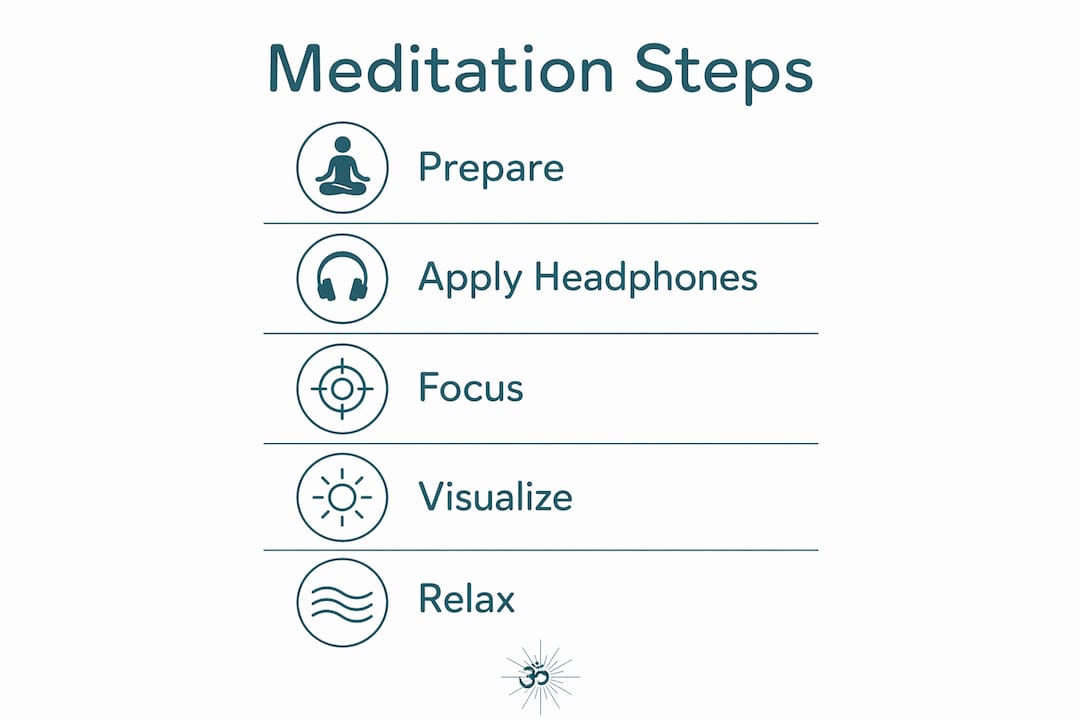
Building a consistent practice is where most people either succeed quietly or give up loudly. The good news is that the practical requirements are modest. You need headphones, a quiet space, and 15–30 minutes. That is genuinely it.
Binaural beats are most effective when integrated with other mindfulness techniques rather than used in isolation. A session that combines theta-range audio with breath focus and brow-point visualisation gives your nervous system multiple reinforcing signals. The audio entrains the brainwave state; the breath anchors your attention; the visualisation directs awareness to the ajna chakra. Each element supports the others.
Here is a practical session structure that works well:
- Minutes 1–5: Settle into your seated position. Take slow, deep breaths and let your body relax. Do not start the audio yet. Just arrive.
- Minutes 5–10: Begin your binaural beat track. Keep your attention on the breath and allow the audio to work in the background.
- Minutes 10–25: Shift gentle awareness to the brow point. Introduce indigo light visualisation if it feels natural. Let thoughts pass without engaging them.
- Minutes 25–30: Gradually bring your awareness back to the room. Sit quietly for a moment before opening your eyes.
Selecting the right track matters. Look for compositions built around theta frequencies (4–8 Hz) rather than generic “meditation music” with no stated frequency. Robert Emery and Moritz Schneider, whose orchestral meditation music blends classical arrangements with binaural techniques, produce tracks specifically designed for this kind of entrainment. Their work at Abbey Road Studios with the National Philharmonic gives the audio a warmth and depth that purely electronic binaural tracks rarely achieve.
Consistency produces results that occasional sessions do not. A daily 20-minute practice over four weeks will teach you more about your own meditative capacity than a single two-hour session. Pay attention to what you notice in the hours after each session, not just during it. Vivid dreams, unexpected moments of clarity, or a subtle shift in how you process emotion are all worth noting.
Key takeaways
Binaural beats for the third eye work by entraining brainwaves into the theta range, which supports the meditative states most associated with intuition, inner vision, and ajna chakra activation.
| Point | Details |
|---|---|
| Theta range is the target | Sessions using 4–8 Hz binaural beats support the deep meditative states linked to third eye awareness. |
| Sessions need time to work | Standard theta meditation sessions run 15–30 minutes; shorter sessions reduce the entrainment effect. |
| Grounding comes first | Balancing lower chakras before third eye work prevents anxiety, headaches, and sensory overload. |
| Headphones are non-negotiable | Binaural beats require separate tones in each ear; speakers blend the signal and remove the effect. |
| Consistency beats intensity | A daily 20-minute practice produces deeper results than occasional long sessions. |
What I have actually learned from working with binaural beats and the third eye
There is a particular kind of disappointment that comes from expecting a spiritual fireworks display and receiving instead a mild tingling and an unusually vivid dream about your secondary school. I have been there. Most people who work seriously with third eye practices have been there.
The honest truth is that third eye awakening rarely manifests as a single dramatic event. It is a slow accumulation of subtle signals, pressure at the brow, dreams that feel significant, moments of knowing that arrive before the thinking mind catches up. Learning to value those small signals, rather than dismissing them while waiting for something bigger, is the actual practice.
Binaural beats are genuinely useful in this context, but they are a tool, not a shortcut. I have found that the sessions which produce the most noticeable shifts are the ones where the audio is paired with breath work and brow-point awareness, not the ones where I simply put on headphones and hope for the best. The effectiveness of binaural beats depends heavily on consistent practice and integration with other techniques. That finding matches my experience precisely.
The music produced by Robert Emery and Moritz Schneider deserves a specific mention here. There is a meaningful difference between a bare electronic tone and an orchestral composition that wraps binaural frequencies inside strings and woodwind. The latter creates an environment in which relaxation happens almost involuntarily, which makes the entrainment far more accessible for people who struggle to quieten a busy mind. It is the difference between meditating in a sterile room and meditating in a cathedral. Same intention, very different experience.
My practical advice is this: ground yourself first, be patient with the process, and choose your audio carefully. The third eye does not respond well to being bullied open. It responds to consistent, gentle attention, good music, and the occasional root vegetable.
— ROBERT
Orchestralmeditations: music built for third eye meditation
Orchestralmeditations offers a curated library of binaural beat meditation music composed by Robert Emery and Moritz Schneider, recorded at Abbey Road Studios with the National Philharmonic. Every track is built around specific frequency targets, including theta-range compositions designed for third eye meditation and ajna chakra focus. The recordings use 3D surround sound techniques that deepen the immersive quality of each session, making it easier to sustain the relaxed attention that binaural entrainment requires.
If you are looking for top-ranked meditation music to support your practice, the Orchestralmeditations library gives you professionally produced tracks you can use immediately within the session structure described in this article. No guesswork about frequencies, no tinny electronic tones. Just orchestral sound, built for the work.
FAQ
What frequency is best for third eye binaural beats?
Theta frequencies in the 4–8 Hz range are best suited for third eye meditation, as they support the deep relaxation and mental imagery associated with ajna chakra activation.
How long should a binaural beats session last for the third eye?
Standard theta-range sessions last 15–30 minutes. This gives the brain sufficient time to synchronise with the beat frequency and settle into a meditative state.
Do I need headphones for binaural beats to work?
Yes. Binaural beats require each ear to receive a separate tone. Speakers blend both tones before they reach your ears, which removes the binaural effect entirely.
Can binaural beats open the third eye on their own?
Binaural beats work best as part of a broader practice that includes breath focus, visualisation, and grounding. Used in isolation, their effect on third eye activation is limited.
Is it safe to use binaural beats for third eye meditation every day?
Daily sessions of 15–30 minutes are generally considered safe for most adults. Practitioners advise balancing lower chakras through grounding practices alongside any sustained third eye work, to avoid discomfort such as headaches or anxiety.