285 Hz is traditionally linked to tissue repair and cellular renewal in Solfeggio sound practice, though direct clinical proof for this exact tone is thin on the ground. Think of it less as medicine and more as a companion to rest: a background hum that can support recovery rituals, body awareness and the kind of stillness that healing (of any sort) seems to appreciate. It won’t replace a physiotherapist. It might make your Sunday recovery day feel a bit more intentional.
TL;DR:
- Clinical evidence specifically linking 285 Hz to tissue repair or cellular renewal remains limited, with most research focusing on low-frequency infrasound or higher audible ranges.
- Listening at moderate volumes for 10 to 30 minutes, paired with physical activity or stillness, is the safest way to incorporate 285 Hz into recovery routines.
- The quality of recordings significantly affects the listening experience; high-fidelity, live orchestral tracks avoid digital artifacts common in pitch-shifted files.
- Subjective reports of benefits like muscle relaxation and stress relief vary greatly between individuals, so tracking personal responses over time is essential.
- As a practical tool, 285 Hz can support relaxation and recovery but should not replace medical treatment or physiotherapy when necessary.
What 285 Hz is and how practitioners use it
285 Hz sits within the Solfeggio scale, a set of tones that sound healing circles have adopted as a kind of musical folk medicine, each frequency assigned its own job. 285 Hz drew the “tissue and cellular renewal” ticket, the way 528 Hz got labelled the “love frequency” (more on that comparison shortly). It’s an audible tone, well within normal human hearing range, which matters because it means you can actually experience it rather than just theorise about it.
Practitioners deliver it in a few different ways, and the delivery method changes the experience more than you’d expect:
- Pure tone files: a single sine wave at 285 Hz, clean but clinical, a bit like listening to a very polite mosquito.
- Retuned music: full compositions shifted so their fundamental pitch sits at 285 Hz, which is where quality production actually starts to matter (a sloppy pitch-shift introduces warble and artefacts that rather defeat the point).
- Vibroacoustic applications: the tone delivered through a speaker you sit or lie on, so you feel it as much as hear it.
- Weighted tuning forks: struck and placed near the body, popular in some bodywork and massage settings.
Reported benefits and common use cases from practitioners and listeners
The claims around 285 Hz tend to cluster into a handful of consistent themes, even if the language is more poetic than clinical. Listeners and practitioners describe the following, usually in the context of recovery rather than performance:
- Easing muscular tension, often reported after a session paired with stretching or gentle movement.
- Supporting restful recovery, with some describing it as background noise for naps or wind-down periods after exercise.
- A sense of “cellular renewal”, which is metaphorical language borrowed from the frequency’s Solfeggio branding rather than a measured biological outcome.
- Aiding body-scan meditation, where the tone gives the mind something steady to anchor to while attention moves through the body.
You’ll find it used most often as a post-exercise cool-down track, in restorative yoga classes, on deliberate recovery days, or layered under a guided body-scan meditation. Worth saying plainly: these reports vary hugely from person to person. What settles one listener into a nap leaves another entirely unmoved, and that subjectivity is part of the honest picture here, not a flaw in the frequency.
What the best research says about sound frequencies and tissue repair
Here’s where we put the tea down and look at the actual evidence, because there is some, just not quite the evidence the internet often implies. A 2025 systematic review of infrasound and audible sound on wound healing found that certain low-frequency exposures altered cell migration and improved markers of tissue repair in preclinical (animal and cell-culture) studies. The same review is careful to note that clinical validation in humans is still needed before any of this becomes a treatment claim.
A 2025 review found that frequencies around 100 Hz boosted fibroblast migration and that 10 to 20 kHz audible sound aided epidermal wound recovery in mice, according to the systematic review on infrasound and wound healing. These frequency bands do not include 285 Hz, leaving it an unsolved question in terms of direct clinical effects
A few things worth holding in your head at once:
- The positive preclinical findings mostly involve infrasound (1 to 20 Hz) or higher audible ranges, not the specific 285 Hz tone sold in meditation tracks.
- A separate review of sound vibration mechanisms mapped how low-frequency sound (up to 250 Hz) might influence circulation, nerve activity and musculoskeletal tissue, while explicitly calling for more comparative research on frequency-specific effects.
- Even a 2026 meta-analysis on music and brain injury rehabilitation found meaningful benefits for motor and cognitive recovery from music generally, not from any single isolated frequency.
So the gap is real: laboratory modalities (mechanical vibration, infrasound rigs, cell cultures) are not the same as sitting in your living room with headphones on. Nobody has run a randomised controlled trial on 285 Hz specifically, and until someone does, “supportive listening practice” is the honest label, not “treatment.”
How to use 285 Hz safely and effectively
Whatever you believe about the frequency itself, the volume knob deserves respect. WHO safe-listening guidance recommends keeping personal listening at moderate volumes and limiting cumulative daily exposure, advice that applies just as much to a soothing 285 Hz drone as it does to a gig.
A sensible approach looks like this:
- Keep the volume at a level where you could comfortably hold a conversation over it, not louder.
- Use noise-cancelling headphones so you can listen quietly rather than cranking the volume to drown out background noise.
- Limit sessions to somewhere between 10 and 30 minutes, particularly if you’re using it as a background field tone during rest or stretching.
- If you’re using shared speakers for a vibroacoustic setup (a studio, a clinic, a group class), keep an eye on cumulative exposure across the room, not just your own session.
Pro Tip: Pair the tone with something physical, gentle stretching, a slow walk, or simply lying still, rather than using it as your only focus. The body seems to respond better to sound alongside stillness than to sound alone.
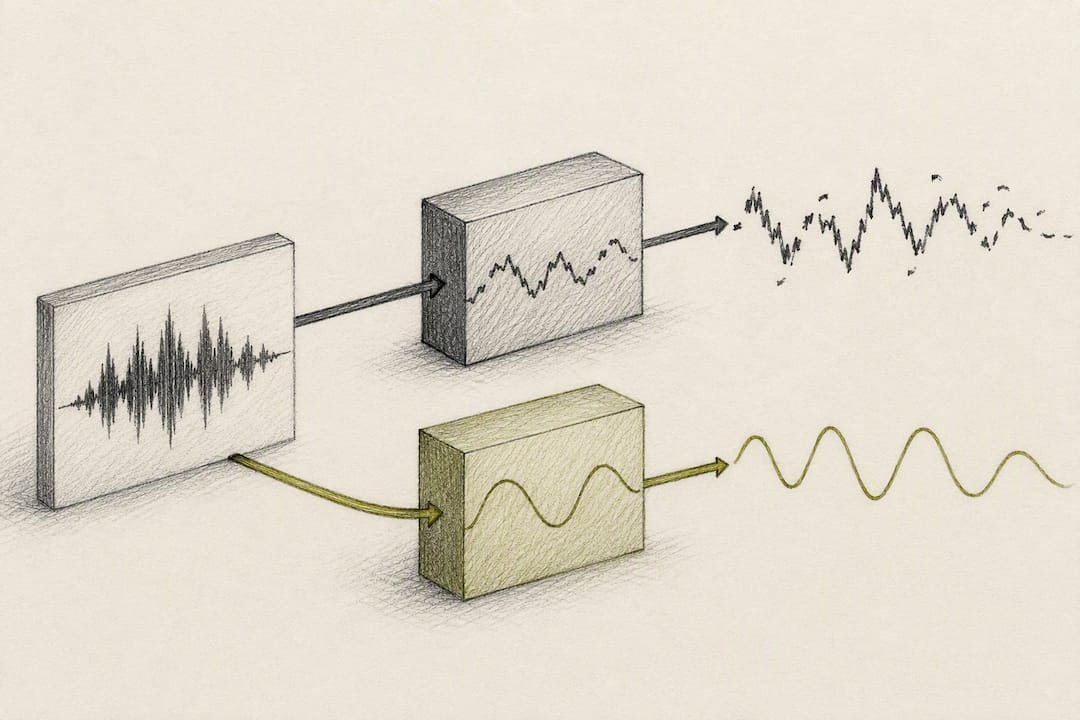
On the technical side, quality matters more than people expect. A poorly pitch-shifted track introduces digital artefacts, tiny glitches and warbles that can mask whatever subtle effect you’re hoping to notice. Favour lossless files or cleanly retuned recordings over cheap pitch-shift apps.
How to judge whether it is helping you
Because the clinical evidence for 285 Hz specifically doesn’t exist yet, your own log is the best data you’ve got. Track a few simple things over two to four weeks of consistent listening:
- Sleep quality: are you falling asleep faster or waking less during the night?
- Soreness ratings: rate muscle tension or recovery discomfort out of ten before and after sessions.
- Mobility: notice whether stretching or movement feels easier on days you listen.
- Stress and anxiety: a simple daily self-rating catches trends that memory alone will miss.
A meaningful change is a consistent shift across most of these markers, not one good night that you’re desperate to credit to a sine wave. And if anything moves the wrong way, worsening pain, delayed healing, or new symptoms, that’s a signal to stop attributing things to sound and see a healthcare professional without delay. No frequency, however well produced, should ever be the reason you postpone proper medical care.
Why production quality matters: Orchestral Meditations and named producers
This is where the recording itself starts to earn its keep. A frequency delivered through a tinny phone speaker or a badly pitch-shifted MP3 carries far more digital noise than signal, and that noise is exactly what can drown out whatever subtle effect a listener is hoping to notice.
Orchestral Meditations builds its 285 Hz and other frequency-based tracks from recordings made at Abbey Road Studios with the National Philharmonic, using 3D surround techniques designed to keep the tone clean rather than buried under compression artefacts. The composer and producer Robert Emery has worked across major orchestral recording projects, and producer Moritz Schneider brings a similarly meticulous ear to how these frequencies are captured and mixed.
- Live orchestral recording avoids the phasing and warble that plague cheap digital pitch-shifting.
- 3D surround production is designed to make the tone feel enveloping rather than flat.
- Careful mixing preserves the fundamental frequency rather than masking it under layers of reverb.
A measured view on giving 285 Hz an honest try
I think 285 Hz deserves a fair hearing, quite literally, but not the halo it sometimes gets online. The tradition is old and the listener reports are consistent enough to take seriously as a subjective experience. The clinical proof, for this exact tone, simply isn’t there yet, and pretending otherwise does the whole field a disservice.
My honest recommendation: treat it as a recovery ritual, not a remedy. Play it quietly, alongside stretching or rest, log how you feel over a few weeks, and keep your physiotherapist or GP in the loop for anything that actually needs treating. Choose a well-produced recording over a rough pitch-shifted file, since the difference in listening experience is not subtle. Curiosity paired with caution tends to serve people better here than either blind faith or blanket dismissal.
— ROBERT
Try high-fidelity 285 Hz tracks from Orchestral Meditations
If you’d rather not gamble on a badly pitch-shifted file from a random corner of the internet, Orchestral Meditations offers a cleaner route into 285 Hz listening, recorded live with the National Philharmonic and produced with the same care Robert Emery and Moritz Schneider bring to their orchestral work.
- The Personal subscription gives individual listeners ongoing access to frequency-based tracks for a monthly fee; current prices are on the pricing page.
- The Professional subscription suits therapists and instructors who want licensed tracks for client sessions, at a listed rate of €150 per month.
- The Royalty Free Meditation Music library suits creators who want to build 285 Hz material into their own commercial offerings, with pricing available on request.
Start with a single session and see how it sits with your own recovery routine.
This article is general information, not a substitute for advice from a qualified doctor. Consult a qualified healthcare professional about your own circumstances before acting on anything here.
Sources
- The role of infrasound and audible acoustic sound in modulating wound healing: a systematic review
- Possible mechanisms for the effects of sound vibration on human health
- Systematic review and meta-analysis reveal positive therapeutic effects of music in brain damage rehabilitation
- Make listening safe: WHO-ITU standard and guidance
FAQ
What is the healthiest Hz to listen to?
There isn’t one officially recognised “healthiest” frequency. What matters more, according to WHO safe-listening guidance, is keeping volume moderate and limiting exposure time, whichever frequency or track you choose.
What does 256 Hz do to the human body?
Certain tones are sometimes used as reference pitches in sound therapy and tuning fork work, similar to how 285 Hz is used in Solfeggio practice. Direct clinical evidence for specific tones’ effects on the body is limited, so treat reports of physical effects as anecdotal rather than proven.
What is God’s healing frequency?
This phrase usually refers to 528 Hz within Solfeggio tradition, sometimes called the “love” or “miracle” frequency by practitioners. Definitions vary across sound healing communities, and none of these labels are backed by clinical consensus.
Is it true that frequencies can heal your body?
Preclinical research suggests certain low-frequency sound exposures can influence cell migration and tissue markers in animal studies, as shown in a systematic review on sound and wound healing. Human clinical evidence for specific healing claims, including for 285 Hz, remains limited, so it is best treated as a supportive practice rather than a proven treatment.