You need two permissions, not one: a sync licence for the composition and a master use licence for the actual recording, and pre-cleared production libraries or a one-stop commissioned track are the two safest ways to get both at once. Whatever route you choose, check the licence wording for the words “podcast” or “digital media” explicitly, and file the certificate alongside that episode’s other assets before you publish.
TL;DR:
- Even if a podcast license covers “podcast use,” it typically does not include rights for video uploads, social clips, or paid promotions without separate clearance.
- A proper license certificate must list the licensee, exact asset ID, permitted uses, territory, and term for verification ahead of an advertiser inquiry or platform dispute resolution.
- Pre-cleared production libraries and commissioned tracks with clear licence certificates provide the safest, most straightforward ways to avoid rights issues across multiple media platforms.
- Creative Commons licenses vary widely: some require attribution, prohibit commercial use, or restrict editing, making careful selection essential for podcast licensing.
- Regularly running a detailed licensing checklist ensures proper clearance, protects against Content ID claims, and preserves sound quality by prioritizing professionally recorded tracks.
What rights does podcast meditation music licensing actually require?
Every piece of recorded music carries two separate copyrights, and podcasters routinely clear only one of them by accident. The first is the composition: the melody, chord structure and lyrics, usually controlled by a publisher or the songwriter directly. The second is the master, which is the specific-recorded performance of that composition, typically owned by a label or the artist who paid for the session.
A performing rights organisation (PRO) licence, the kind broadcasters and venues buy, does not clear either of these for a downloadable podcast episode. PROs cover public performance of the composition in specific contexts. They say nothing about the master recording, and nothing about on-demand digital distribution. Podcasts need both a sync licence and a master use licence, and missing either one leaves you exposed.
Three everyday examples show how this plays out:
- An intro theme used every episode needs ongoing sync and master permission, since it repeats across your entire archive.
- A meditation bed running under narration needs per-episode clearance for both rights unless your licence explicitly covers unlimited use.
- A trailer or paid advert may need separate marketing or advertising rights on top of your standard podcast licence.
Which licence type suits a meditation podcast?
Three broad routes exist, and each carries different traps.
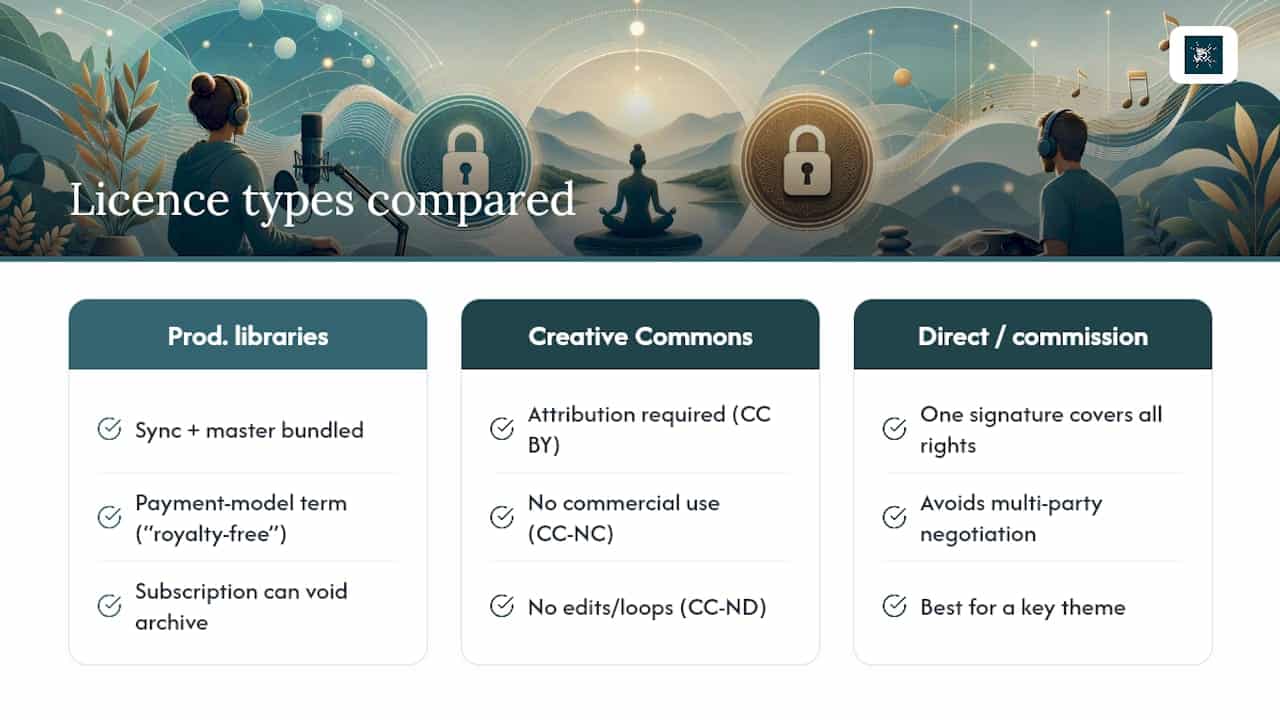
Production libraries are the practical default for most shows. Pre-cleared libraries bundle the sync and master rights into a single purchase, which is why they dominate podcast credits. But “royalty-free” describes a payment model, not a licence type. It just means you are not paying per-play. Some libraries run on subscriptions, and cancelling can strip your right to keep using tracks in episodes still live in your archive, which is a genuinely nasty surprise eighteen months in.
Creative Commons licences vary enormously. CC BY needs attribution somewhere in your show notes. CC-NC bans any monetised use, which rules out most podcasts running ads. CC-ND stops you editing or looping the track, which is awkward for a ten-minute meditation bed. Treat every CC variant as a different licence, not a single “free music” category.
Direct licences and commissions work best when a track matters enough to justify the effort. An independent composer who controls both the composition and the master can issue one signature covering everything, which sidesteps the multi-party negotiation that label-owned masters usually involve.
Pro Tip: If your show airs weekly, favour a library with an explicit archive guarantee, or commission a one-stop theme once. Re-licensing a recurring track every renewal cycle wastes more time than most podcasters realise.
What’s the licensing checklist before you publish an episode?
Run through this before any meditation track goes live, in order:
- Map every intended use. List the episode feed, any video version, social clips, paid promotion, and how long the episode stays in your archive.
- Capture exact metadata. Note the file name, composer, producer, download date, and save the licence document itself, not just an email confirming purchase.
- Confirm the scope in writing. Look for explicit “podcast” or “digital media” wording, ad and monetisation permissions, edit and loop rights, and the licence’s term and territory.
- Escalate anything ambiguous. If a clause is unclear, ask the rights holder for written confirmation, swap the track, or send it to legal counsel for high-value or long-running uses.
A structured clearance checklist that maps exact use, territory and term before publishing is the single habit that separates podcasters who sail through a Content ID flag from those who spend a weekend panicking. Keep a central folder with an asset sheet per episode, tagged for quick retrieval. When a claim lands, and one eventually will, you want the answer in thirty seconds, not thirty emails.
Does one podcast licence cover clips, socials and ads too?
Usually not, and this catches out more shows than any other clause. A licence written for “podcast use” often stops short of covering an audiovisual upload of the same episode to a video platform, because that is technically a different medium with different exploitation value. Repurposing audio into video or paid promotion frequently requires separate sync clearance, even when the underlying podcast use was properly licensed.
Subscription libraries add another wrinkle: some explicitly exclude short promotional clips from the main licence terms, treating them as a distinct use case. Cancelling a subscription can also void permission for previously published episodes, depending on the small print.
Mitigate this by requesting a licence addendum that names every platform up front, buying a separate clip licence when you know a segment will run as a teaser, or commissioning a cue specifically cleared for multi-platform reuse from day one.
How do you verify a licence before an advertiser asks?
A proper licence certificate should list the licensee’s name, the exact asset ID, permitted uses, the term, the territory, and some form of signature or account trace back to the purchase. Keeping licence evidence ready for platform disputes matters because platforms including Spotify can flag episodes containing unlicensed material, and the fastest resolution is producing proof, not arguing after the fact.
Practical verification steps worth building into your workflow:
- Contact the library’s support team directly if a certificate looks incomplete.
- Save screenshots of the original purchase page and the EULA text as it stood on the day you bought the licence, since terms do change.
- Keep confirmation emails as a backup, even when a formal certificate exists.
Pro Tip: Flag anything involving a major label master, a sampled element, or an exclusive sync bid for legal review before you publish. Those three scenarios generate a disproportionate share of real disputes.
Why composer and producer credits matter for provenance
Orchestralmeditations supplies studio-grade orchestral meditation tracks recorded with the National Philharmonic, including sessions at Abbey Road Studios, delivered as downloadable WAV files with full composer and producer metadata and a licence certificate issued at purchase.
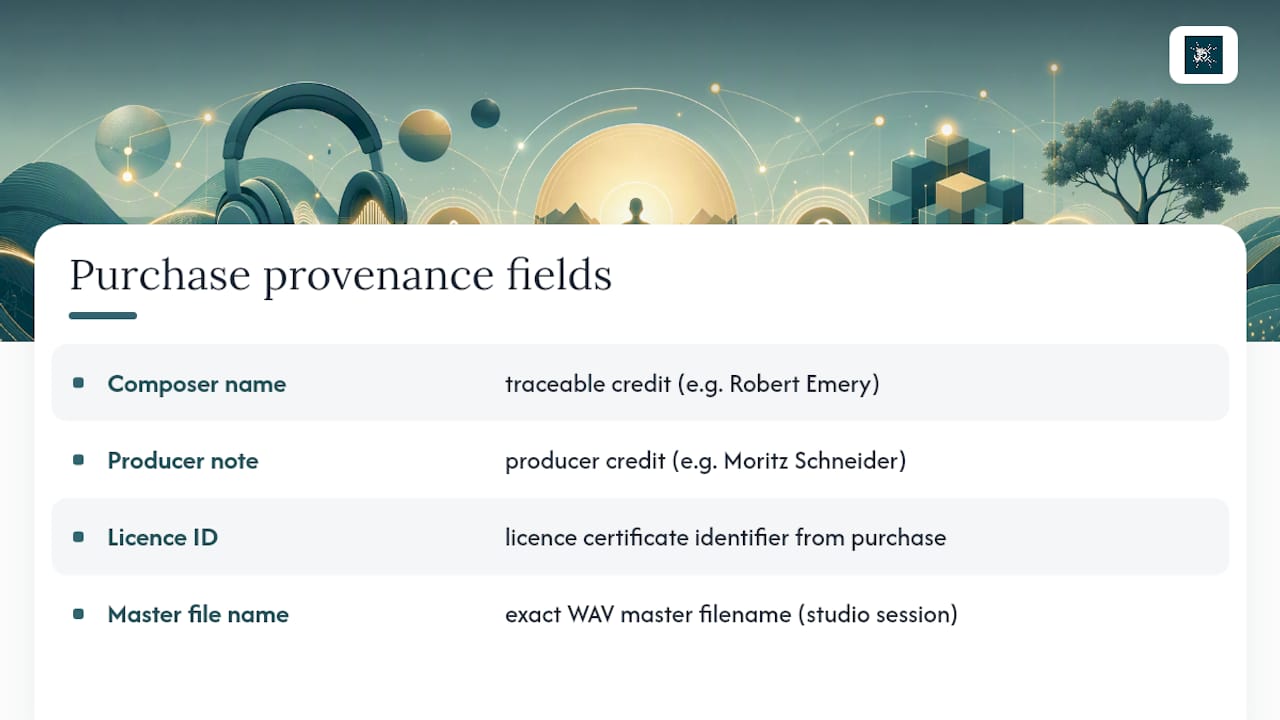
Named provenance carries real weight when a claim needs resolving fast. Composer Robert Emery, known for conducting large-scale orchestral recordings and producing meditation and wellness soundtracks, and producer Moritz Schneider both attach identifiable credits to each track, which gives you a traceable paper trail if a platform or advertiser ever questions attribution. Studio-quality soundscapes support genuinely therapeutic listening, which is a reasonable argument for prioritising a professionally recorded master over a generic loop in the first place.
From each purchase, save the composer name, any producer note, the licence ID, and the exact master file name. That handful of details resolves most verification queries before they escalate into anything more serious.
Balancing legal safety with sound quality
The checklist above only works if you actually run it every single week, not just when a show launches. Treat it as a habit, not a one-off task, because that’s what prevents the late-stage clearance crisis nobody wants two days before a launch.
Sound quality matters here too. A well-recorded master with clear composer credits creates fewer Content ID headaches than an anonymous loop ever will.
— ROBERT
Get pre-cleared orchestral tracks with licence certificates included
Some services offer a shortcut past the multi-party rights chase this guide has just walked through: buy a track once, or subscribe, and the composition and master rights arrive cleared together, with a licence certificate issued the moment you download.
Every track carries composer and producer credits, including work from Robert Emery and Moritz Schneider, so if a platform ever questions attribution you have a named, traceable source rather than an anonymous file. If your show needs explicit multi-platform wording, whether that’s video reuploads, social clips or paid promotion, request that confirmation from the licensing team before you build a campaign around a track.
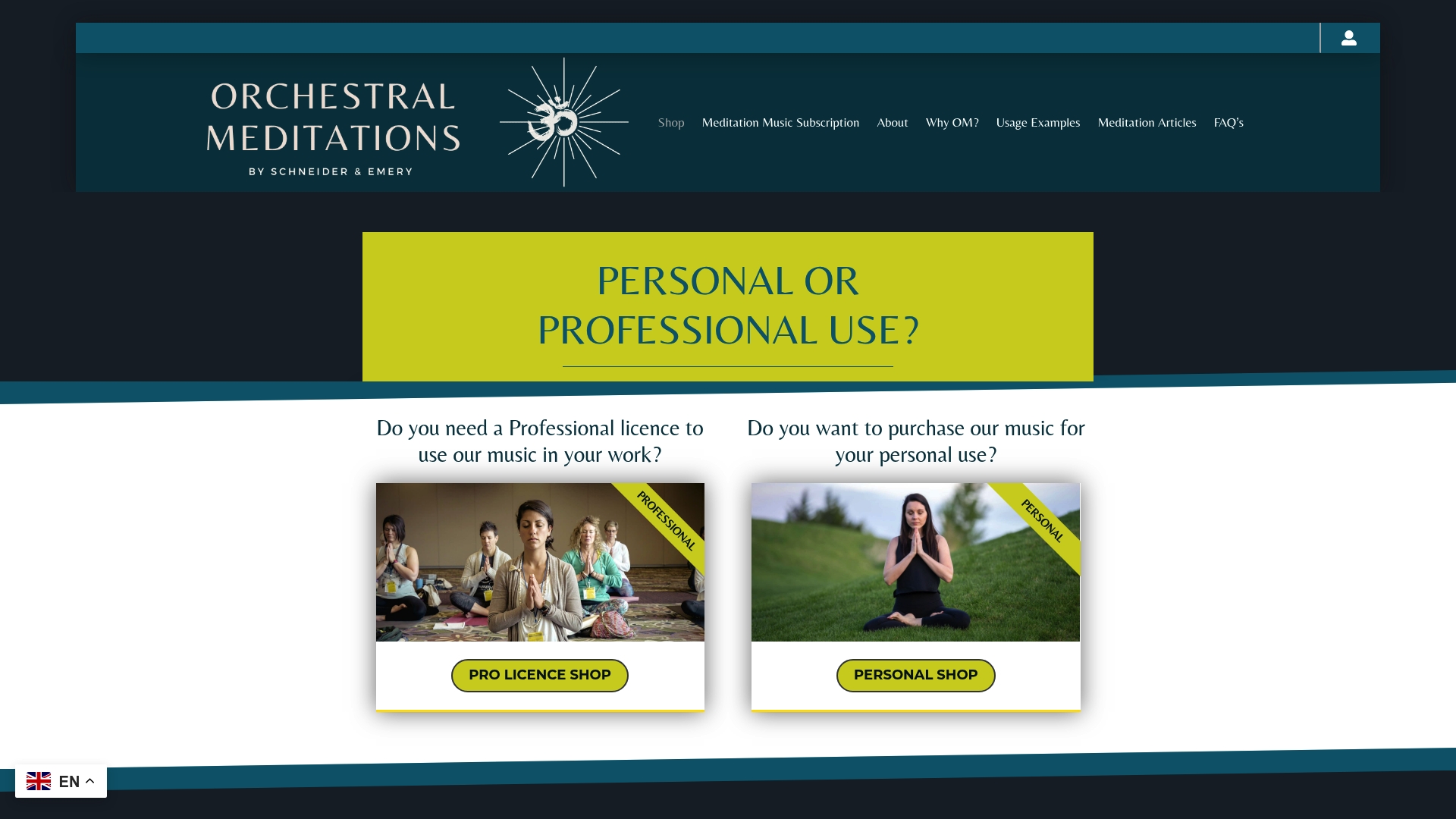
Browse the current library and licence terms at the Orchestral Meditations shop and check the exact certificate wording against the checklist above before your next episode goes live.
Sources
- Music Clearance Checklist for Video, Apps, Podcasts, and Branded Content – Montague Law
- Music Licensing for Podcasts (2026 Guide) | SyncPlacement
- Spotify creator resources — copyright creator education
FAQ
Can I legally use music in my podcast?
Yes, but only with the correct permissions cleared. You need both a sync licence for the composition and a master use licence for the recording, not just a PRO membership or a casual “royalty-free” download.
What free music can I actually use in a podcast?
Creative Commons tracks can work, but check the exact variant: CC-NC blocks monetised shows, CC-ND blocks editing or looping, and CC BY requires attribution in your show notes. Genuinely free-and-clear tracks are rarer than most “free music” lists suggest.
Does listening to meditation music count as meditation itself?
Research on meditation practice generally treats music as a support for the practice rather than a substitute for it, and high-quality soundscapes support genuinely therapeutic listening, which is a reasonable argument for prioritising a professionally recorded master over a generic loop.
Does a podcast licence automatically cover video clips or social posts?
Not usually. Repurposing an episode into video or paid promotion often needs separate clearance, even when the original podcast licence was properly secured, so check the wording before you cross-post.
Where can I find reputable meditation music with a proper licence certificate?
Look for libraries that name their composers and issue a licence certificate at purchase, with credited work on every track, which makes provenance easy to verify if a platform ever raises a question.