Sound bath music is a stretch of sustained, non-rhythmic tones and orchestral soundscapes built for deep, undirected listening rather than active attention. Start simply: stream a curated long-form playlist tonight, or sample a high-fidelity orchestral track to hear the difference production quality makes.
Whether you reach for a free streaming playlist or a paid orchestral library depends on how much your low frequencies matter to you.
TL;DR:
- High-fidelity recordings with detailed low-frequency content are essential, especially for professional or therapeutic use, as compressed streaming files can flatten harmonics.
- Effective sound bath music lacks a steady rhythm or vocals, encouraging the brain to surrender and focus on vibrations rather than analyzing musical structure.
- Use headphones for binaural or entrainment tracks to ensure proper channel separation and safety, and start with shorter sessions if new or anxious.
- Licensed, lossless, or high-quality orchestral recordings from reputable studios like Abbey Road deliver the immersive low-frequency detail that streaming cannot provide.
- For group or client sessions, choose unedited, continuous tracks of 30 to 60 minutes and adhere to structured preparation, positioning, and aftercare practices.
Where to find sound bath music
Streaming platforms are the fastest entry point. Apple Music’s “Sound Bath” playlist features a large number of tracks and many hours of music, which is plenty for a week of sessions without repeating a single tone. Spotify carries its own community and editorial sound bath playlists, and Amazon Music hosts similar community collections if you already pay for that ecosystem.
For something more considered, artist pages and Bandcamp reward the search. Independent composers such as Javier Ramon Brito publish long-form, single-session recordings tuned to specific reference frequencies, often at better fidelity than a compressed streaming file allows.
If you teach, practise therapeutically, or build content for clients, streaming licences will not cover you. That is where specialist libraries earn their keep:
- Streaming playlists — fast, free, fine for personal listening, but licensing terms bar commercial use
- Artist and label pages (Bandcamp) — long-form, often higher fidelity, direct support for the composer
- Royalty-free libraries (Orchestral Meditations’ shop is one such source) — built for practitioners who need clear personal or professional licensing
- Lossless formats matter — a gong’s harmonic tail or a singing bowl’s overtone lives in frequencies that compressed streaming audio can flatten out
The sample rate question is not pedantry. Sound bath music leans on low, slow-decaying tones, and a poorly encoded file will simply lose the part of the sound your body actually feels.
What makes sound bath music actually work?
Effective sound bath music is defined largely by what it leaves out. No steady pulse, no vocal line, no chorus you can hum along to. Experts interviewed by Medical News Today note that this absence of musical structure is precisely what helps listeners stop analysing the music and surrender to the vibration instead. Your brain cannot anticipate what comes next, so it stops trying.
The instrumentation reinforces that effect:
- Singing bowls and gongs, prized for long, complex overtone decay rather than a clean attack
- Low flutes and harp, which add melodic colour without forcing rhythm
- Orchestral pads, sustained string or brass textures that behave more like a held breath than a tune
Pro Tip: If a track still has a recognisable beat you could tap your foot to, it is background music, not sound bath music. The test is whether you can lose the thread of it within thirty seconds.
Frequency-based approaches add another layer. Binaural beats play a slightly different tone in each ear so the brain perceives a third, phantom frequency, often pitched to nudge listeners towards theta or delta brainwave ranges associated with light meditative or sleep states. Solfeggio-tuned tracks work from a different set of reference frequencies entirely. Some commercial recordings now stack orchestral textures with binaural, monaural, or isochronic layers inside a single 70-minute session aimed squarely at delta entrainment.
Production quality decides whether any of this survives contact with your ears. A 3D or binaural recording technique captures spatial depth that a flat stereo mix cannot, which is exactly why low-frequency fidelity separates a genuinely immersive session from something that just sounds vaguely ambient in the background.
How do you use sound bath music in a session?
A sound bath rewards a bit of structure even though the music itself has none. Here is a workable sequence for a solo session:
- Set the room. Quiet space, phone off or on airplane mode, low or no light.
- Choose your position. Lying flat works for full immersion; seated with a straight spine suits shorter or workday sessions.
- Pick your playback. Headphones are essential for binaural content, since the left/right separation only works when each ear gets its own channel cleanly. Good speakers work fine for straightforward orchestral or ambient listening.
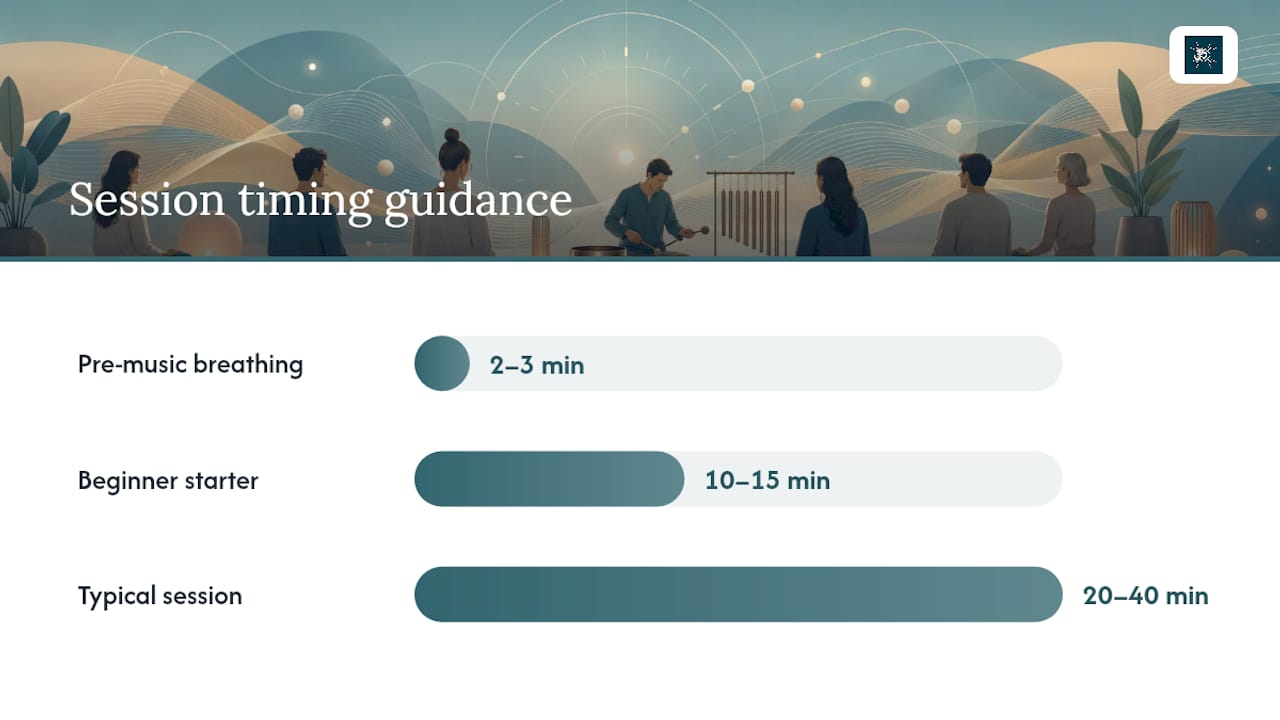
- Settle and breathe. Give yourself two or three minutes of slow breathing before the music properly starts.
- Receive. Let attention drift rather than tracking the music. Twenty to forty minutes is a realistic range for most listeners.
- Return gradually. Wiggle fingers and toes, open your eyes slowly, sit for a moment before standing.
- Aftercare. Drink water, move gently, jot down anything that surfaced. Sound baths can loosen more than muscle tension.
Keep volume at a conversational level or below, particularly through headphones. A sound bath should feel like immersion, not exposure.
Pro Tip: New to this, or prone to anxiety? Start with ten to fifteen minutes rather than the full 40. You can always extend once you know how your body responds.
Who should avoid sound baths or take extra care?
Sound bath music is generally low-risk, but it is not risk-free for everyone. A handful of situations call for a conversation with a clinician before you press play:
- Epilepsy or a history of seizures — rhythmic or entrainment-style audio has occasionally been linked to triggering effects in sensitive individuals; check with a specialist first
- Recent head injury or serious cardiovascular conditions — get clearance from a doctor before extended or high-intensity sessions
- Pregnancy — a chat with your midwife or GP is sensible before long sessions or heavy entrainment layers, particularly in the first trimester
- A history of trauma or psychosis — deep, undirected states can surface difficult material; a practitioner-led setting is often safer than going it alone
On headphone and entrainment safety specifically: avoid sudden volume jumps, keep binaural tones at a moderate level, and stop immediately if you feel dizzy, nauseous, or distressed. None of this is common, but sound bath music works precisely because it lowers your guard, and that is worth respecting.
How do you choose or build your own playlist?
A good session comes down to four checks: track length, absence of vocals or pulse, the instruments used, and whether the frequency content matches what you actually want from the sitting.
Match the choice to the goal. A quick reset between meetings wants something short and orchestral, no entrainment layers required. A full immersive practice benefits from 30 to 60 minutes of continuous, unedited material, since Medical News Today’s sound-healing coverage notes that abrupt cuts or short looping tracks interrupt the very surrender the music is meant to encourage.
Licensing decides your source, not just your taste. Streaming is entirely fine for personal listening. The moment you play music in a class, a therapy room, an app, or client-facing content, you need royalty-free or explicitly licensed tracks, which is where a library built for that purpose (Orchestral Meditations, for instance) does a job streaming platforms were never built to do.
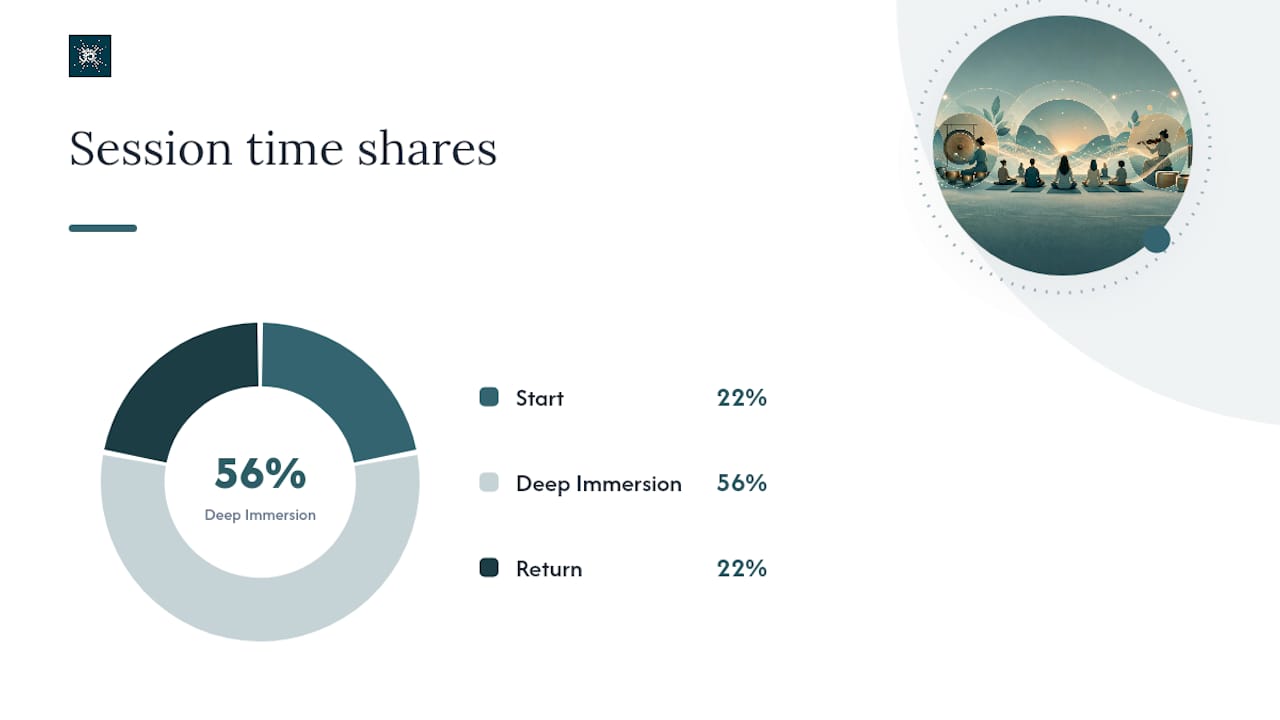
A simple 45-minute blueprint:
- 0 to 10 minutes — gentle orchestral pad, no percussion, easing the nervous system down
- 10 to 35 minutes — deeper immersion track, singing bowl or gong-led, theta-range frequency content if you use it
- 35 to 45 minutes — a slow return piece, lighter texture, gradually more melodic to cue re-emergence
Why the recording matters as much as the music
There is a lazy assumption that sound bath music is easy to make because it “doesn’t do much.” The opposite is true. Sustained tones and low harmonics are unforgiving of poor recording, and this is where production separates a genuinely immersive track from wallpaper.
Orchestral Meditations records with the National Philharmonic at Abbey Road Studios, using 3D surround techniques that capture the kind of low-frequency detail a compressed streaming file simply cannot hold onto, particularly in bowl and gong harmonics. Composer and producer credits behind this catalogue include Robert Emery and Moritz Schneider, both known for large-scale orchestral and cinematic work, which shows in how these tracks are structured: long, patient, built around real instrumental decay rather than a synthesised loop.
For teachers, therapists, and content creators, that distinction is not academic. It decides whether you can legally play the track for a paying client and whether the low end actually reaches the listener’s body the way it is supposed to.
— ROBERT
Sample and licence tracks through Orchestral Meditations
Orchestral Meditations offers licensed, high-fidelity orchestral tracks recorded at Abbey Road Studios, aiming to provide superior low-frequency detail compared to typical streaming files.
The shop offers individual downloads, a subscription for ongoing access, composer notes for each recording (including work from Robert Emery and Moritz Schneider), and both personal and professional licensing. If you are listening purely for yourself on a Sunday evening, a streaming playlist will do the job. If you are building a class, an app, a therapy practice, or client content, a licensed library is the only route that keeps you covered and gives you the fidelity those low tones need.
Sample a track, compare the low-end detail against your usual streaming playlist, and decide from there whether a subscription or a one-off licence fits how you actually plan to use the music.
Sources
FAQ
Who should not do a sound bath?
People with epilepsy, recent head injuries, serious cardiovascular conditions, or a history of trauma or psychosis should check with a clinician or work with a practitioner before a session. Pregnant listeners should consult a midwife or GP first, particularly for longer or entrainment-heavy tracks.
Is sound bath music good for anxiety?
Practitioners and sound healers cited by Medical News Today suggest the lack of structure in sound bath music helps quiet analytical thinking, which many listeners experience as calming. It is not a substitute for clinical anxiety treatment, and anyone with a significant anxiety disorder should treat it as a complement, not a replacement.
Where can I find sound bath music?
Streaming platforms like Apple Music and Spotify offer free curated playlists, while artist pages, Bandcamp, and licensed libraries such as Orchestral Meditations suit listeners who need higher fidelity or commercial licensing.
What are you supposed to do during a sound bath?
Settle into a comfortable lying or seated position, breathe slowly for a few minutes, then let your attention drift rather than actively tracking the music for a realistic range of time. Come back gradually, hydrate, and move gently before returning to normal activity.