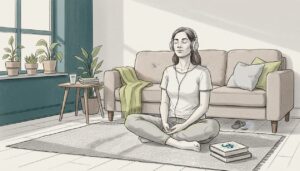
Most of us have, at some point, pressed play on what we thought was the perfect meditation track, only to find ourselves more distracted than when we started. Maybe it was a playlist someone recommended, or a “relaxation” album that turned out to feature a surprisingly enthusiastic drum solo halfway through. Choosing effective relaxation music is genuinely trickier than it looks, and the sheer volume of options on streaming platforms makes it worse, not better. The good news is that optimal tempo for relaxation sits at 60 to 80 bpm, matching your resting heart rate to activate the parasympathetic nervous system, and that is just one of several measurable criteria that separate genuinely effective music from the stuff that merely sounds calming. This checklist will walk you through every key criterion, genre comparison, session structure, and personalisation tip you need to make confident, science-informed choices.
Key Takeaways
| Point | Details |
|---|---|
| Evidence-based checklist | Following clear criteria like tempo, instrumental format, and familiarity leads to more effective relaxation outcomes. |
| Genre and format matter | Classical, ambient, and orchestral genres work best; avoid high-arousal music and lyrics for meditation. |
| Ideal session length | Aim for 20–60 minutes in a quiet environment to maximise relaxation and sleep quality. |
| Personalisation boosts results | Select music that is familiar and enjoyable for you, and monitor your physiological response. |
Checklist criteria for relaxation music selection
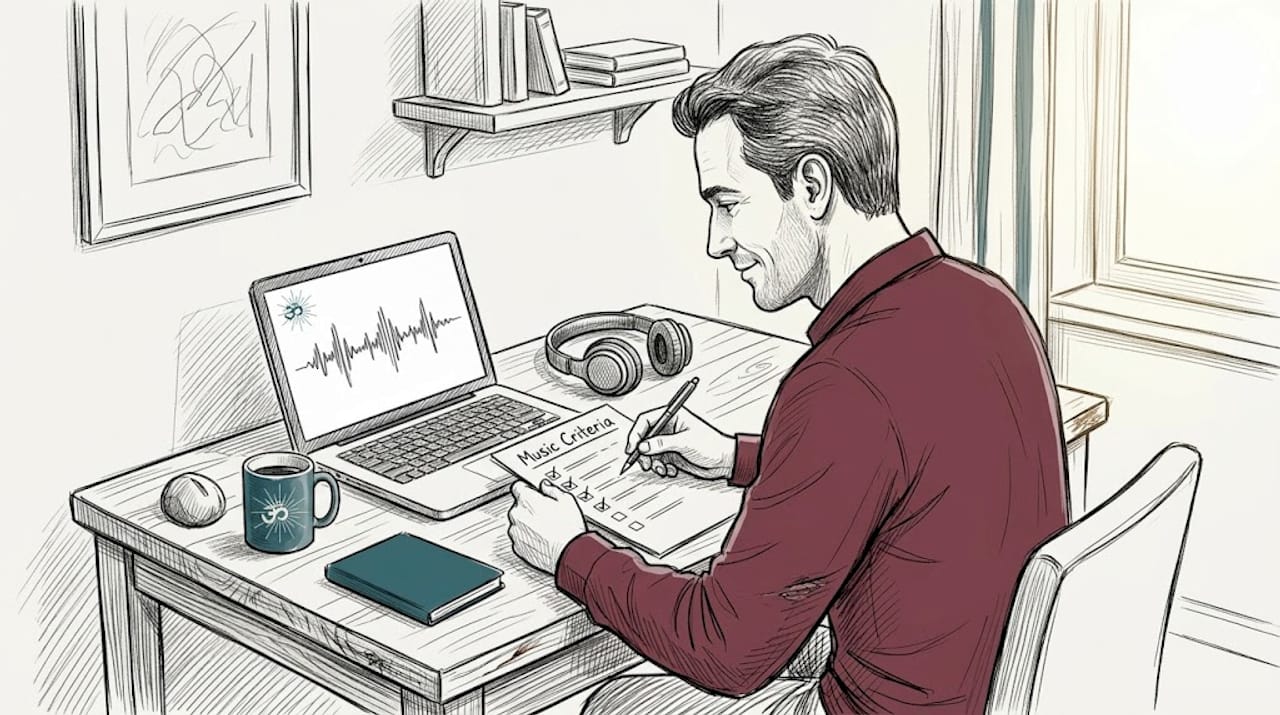
With the challenge introduced, let us break down the selection checklist itself. Think of this as your personal quality-control filter before you press play on anything.
Tempo: The 60 to 80 bpm rule
This is the big one. Research confirms that music at 60 to 80 bpm aligns with the average adult resting heart rate, encouraging a process called entrainment, where your cardiovascular rhythm begins to synchronise with the musical pulse. The practical upshot is that slower music is not just pleasant; it is physiologically persuasive. If you are unsure about a track’s tempo, most music apps display bpm, or you can simply count the beats for fifteen seconds and multiply by four.
Instrumental preference
Lyrics are the enemy of a quiet mind. Even familiar words in a song you love will nudge your brain’s language-processing centres into activity, which is precisely the opposite of what you want during meditation. Instrumental music without lyrics keeps the auditory cortex gently engaged without triggering that internal monologue. This is why orchestral and ambient tracks consistently outperform vocal pop in relaxation studies.
Smooth, predictable melodies
Surprise is stimulating. Your nervous system is wired to respond to the unexpected, which is wonderful at a concert but counterproductive during a wind-down session. Tracks with gradual melodic movement, minimal dynamic contrast, and no sudden percussive hits allow your nervous system to stop bracing for the next event and actually settle. Explore best soundscape options if you want a broader sense of what smooth, predictable audio landscapes look like in practice.
Personalisation
Not every calm-sounding track will work for every person. Your history with a piece of music matters enormously. A track that carries a stressful memory, even a vaguely uncomfortable association, can quietly undermine the relaxation response. We will cover this in more depth in the personalisation section, but for now, flag it as a checklist item: does this music feel safe and pleasant to you, specifically?
Session length compatibility
A two-minute ambient loop is not going to carry you through a forty-five-minute meditation. Check that your chosen track or playlist matches your intended session length without jarring transitions or abrupt endings. Music for peaceful moments works best when it flows continuously, without you needing to reach for your phone to skip a track.
Here is a quick reference checklist:
- Tempo between 60 and 80 bpm
- Instrumental only, no lyrics
- Smooth, gradual melodic movement
- Personally familiar and emotionally neutral or positive
- Long enough to cover your full session
- Low dynamic range (no sudden loud moments)
- Consistent timbre throughout
Pro Tip: Use headphones rather than speakers when possible. Breath-sync listening through headphones enhances the immersive quality of relaxation music and allows you to notice your own physiological response more clearly. If your shoulders drop and your jaw unclenches within the first two minutes, you have chosen well.
Genres and formats: What works best for relaxation?
Having reviewed the checklist, let us look at which genres and formats best match these criteria. Not all calm-adjacent music is created equal, and a few popular choices are surprisingly ineffective.
The top performers
Classical, ambient, and orchestral genres consistently top the research rankings for relaxation effectiveness. Classical music, particularly slow movements from Baroque and Romantic composers, tends to sit naturally within the 60 to 80 bpm range and features the kind of predictable harmonic resolution that the nervous system finds genuinely soothing. Ambient music, by design, avoids melodic drama in favour of texture and atmosphere. Orchestral soundscapes, especially those recorded with live musicians, carry a warmth and organic variation that synthesised tracks often lack.
Nature soundscapes, whether standalone or layered beneath orchestral music, also perform well. The sound of rain, flowing water, or birdsong has a long evolutionary association with safety and calm. Your brain does not need to learn to relax to these sounds; it already knows.
A genre comparison
| Genre | Typical bpm range | Lyrics? | Relaxation rating | Best use case |
|---|---|---|---|---|
| Classical (slow movements) | 50 to 80 | No | Excellent | Deep meditation, sleep |
| Ambient/new age | 50 to 70 | Rarely | Excellent | Background, focus, sleep |
| Orchestral soundscapes | 55 to 80 | No | Excellent | Immersive meditation |
| Jazz (slow) | 60 to 90 | Sometimes | Good | Light relaxation |
| Acoustic folk | 70 to 110 | Often | Moderate | Background only |
| Rock/electronic (fast) | 120 to 160 | Often | Poor | Avoid for relaxation |
| Pop | 100 to 130 | Usually | Poor | Avoid for meditation |
Formats to consider
Beyond genre, the format of the recording matters. Binaural beats, which require headphones to work properly, use slightly different frequencies in each ear to encourage specific brainwave states. Theta frequency tracks (4 to 8 Hz) are particularly associated with the deeply relaxed, borderline-drowsy state ideal for meditation. Solfeggio frequency compositions add another layer of intentionality, with specific tones traditionally linked to healing and emotional release.
What to avoid
Beyond the obvious offenders (anything with a drop, a key change designed for drama, or a surprise key change at the climax), be cautious about:
- Music with strong lyrical content, even if the tempo is slow
- Tracks with sudden dynamic shifts or percussive accents
- Genres you associate strongly with exercise or high-energy activity
- Music that carries a specific emotional memory, positive or otherwise
Pro Tip: If you are unsure whether a genre suits you, try peaceful music options from a curated library rather than building a playlist from scratch. Someone has already done the tempo-checking for you.
Session length, timing and environment
Knowing what music to select, let us consider how to structure your listening session for maximum impact. Even the most perfectly chosen track will underperform if you are listening in the wrong context.
How long should you actually listen?
Research suggests that sessions of 20 to 60 minutes are ideal for achieving deep relaxation, with 30 to 45 minutes before bed representing the sweet spot for sleep improvement. Shorter sessions of 10 to 15 minutes are genuinely useful for acute stress relief during the day, but they are unlikely to produce the deeper physiological shifts associated with longer listening.
Here is a practical session-length guide:
- Quick reset (10 to 15 minutes): Ideal for a midday stress break or pre-meeting calm. Choose a single, continuous track rather than a playlist to avoid interruptions.
- Standard relaxation (20 to 30 minutes): Suitable for daily meditation practice. Enough time for the body to move through initial restlessness and settle into genuine calm.
- Deep relaxation (45 to 60 minutes): Best for immersive meditation, sound healing, or preparing for sleep. Music for better sleep at this length has been shown to reduce sleep onset latency and improve overall sleep efficiency.
- Extended sessions (60 minutes or more): Useful for longer meditation retreats or therapeutic listening. Ensure your playlist is continuous and does not require active management.
Timing your session
The hour before bed is prime territory. Meta-analyses confirm that music reduces sleep onset latency, improves sleep efficiency, and increases total sleep time when listened to consistently in the pre-sleep window. Explore bedtime tracks for deep rest if sleep improvement is your primary goal.
Morning sessions work well too, particularly for setting an intentional, calm tone before the day accelerates. Early afternoon, when cortisol naturally dips, is another productive window.
“The environment in which you listen is almost as important as the music itself. A quiet, comfortable space with minimal visual stimulation allows the music to do its work without competition.”
Optimising your environment
Here is a numbered checklist for your listening environment:
- Dim or switch off overhead lighting. Soft, warm light or darkness reduces visual stimulation.
- Choose a comfortable seated or reclined position. Physical comfort prevents distraction.
- Switch your phone to silent and place it face down, or use a dedicated audio device.
- Use headphones for immersive listening, particularly with binaural or 3D sound recordings.
- Consider pairing your session with calm exercises such as slow diaphragmatic breathing to deepen the relaxation response.
Pro Tip: A consistent pre-session ritual, such as making a cup of herbal tea, dimming the lights, and putting on your headphones, trains your nervous system to associate these cues with relaxation. Over time, the ritual itself begins to trigger the response before the music even starts.
Personalisation, monitoring, and pitfalls
Effective relaxation depends on tailoring choices to your own needs and avoiding pitfalls that trip up even experienced meditators. This is where the checklist moves from general principles to genuinely personal territory.
Why familiarity matters more than you think
Familiar music activates the brain’s reward system more efficiently than unfamiliar tracks, releasing dopamine in anticipation of musical moments you already know and love. This is not just pleasant; it is physiologically useful. A track you have heard before carries no cognitive load. You are not processing it; you are simply receiving it. That distinction matters enormously during meditation.
This does not mean you should listen to the same three tracks forever. It means you should introduce new music gradually, perhaps during lighter relaxation sessions, before relying on it for deep meditation.
Major versus minor keys
Personal preference maximises impact, and for most people, music in a major key produces a more reliably positive relaxation response than minor key compositions. Minor keys can be deeply beautiful, but they carry an emotional weight that sometimes pulls the mind into reflection rather than stillness. This is not a rule, it is a tendency. Monitor your own response and adjust accordingly.
How to monitor your physiological response
You do not need a heart rate monitor to track whether your music is working, though it helps. Here are simple self-monitoring steps:
- Note your shoulder position when you press play. Are they raised? Do they drop within five minutes?
- Check your jaw. Tension here is a reliable stress indicator. Relaxation music should soften it.
- Notice your breathing rate. Is it slowing and deepening, or staying shallow and quick?
- After the session, rate your perceived relaxation on a simple 1 to 10 scale. Track this over time.
For sleep-focused listening, explore soothing music for sleep and music for sleeping adults to find formats that have already been curated with these physiological goals in mind.
Common pitfalls to avoid
“Emotionally loaded music, even a track you adore, can quietly pull you out of the present moment and into memory. That is the opposite of meditation.”
Here are the most common mistakes we see:
- Choosing music based on genre reputation rather than personal response. “Classical is relaxing” is a generalisation. A dramatic Beethoven symphony is not.
- Relying on unfamiliar music for deep sessions. Save new discoveries for lighter listening.
- Ignoring emotional associations. A song from a difficult period of your life carries that weight, regardless of its tempo.
- Using music as background noise rather than an intentional practice. Half-listening rarely produces the physiological benefits of focused, engaged listening.
- Sticking rigidly to one format. Your needs shift. A theta binaural track might be perfect on a stressed Tuesday and feel too heavy on a calm Sunday morning.
Our perspective: Why checklists outperform intuition in relaxation music
Here is something we have noticed over years of working in this space: most people choose relaxation music the way they choose a restaurant, by gut feel, by what a friend recommended, or by what appeared first in a search result. And most of the time, it works out fine. But “fine” is not the same as “effective.”
Intuition is shaped by familiarity, and familiarity is shaped by marketing. The tracks that dominate relaxation playlists are often there because of algorithmic momentum, not because they have been evaluated against any meaningful criteria. A checklist cuts through that noise. It gives you a framework that is independent of what is trending.
We are also honest about the limitations of relaxation music research. Publication bias exists. Studies tend to report positive findings. Heterogeneity across research populations means that what works for one group may not work for another. Music that is emotionally loaded or genuinely unfamiliar can actively interfere with relaxation, which is a finding that rarely makes it onto a streaming platform’s promotional material.
The science of relaxation music is real and growing, but it is not a guarantee. The checklist is a starting point, not a formula. Your own tracked response, over time, is the most reliable data you have. Trust it.
Find your perfect relaxation music with Orchestral Meditations
If you have worked through this checklist and you are ready to put it into practice, we have done a great deal of the groundwork for you.
At Orchestral Meditations, every track in our library has been produced with these exact criteria in mind. Tempos are calibrated for relaxation, arrangements are instrumental, and our recordings, made with live musicians at Abbey Road Studios, carry the organic warmth that synthesised tracks simply cannot replicate. Whether you are looking for personalised meditation music matched to your specific wellness goals, or you want to explore our solfeggio music collection for frequency-based sound healing, you will find formats that meet every point on the checklist. Browse the library, find what resonates, and start your next session with music that has been genuinely designed to help you relax.
Frequently asked questions
What tempo is best for relaxation music?
Music at 60 to 80 bpm matches your resting heart rate and promotes effective relaxation through cardiovascular entrainment. Tracks outside this range, particularly faster ones, tend to maintain or increase arousal rather than reduce it.
Should I choose instrumental or lyrical music for meditation?
Instrumental music without lyrics is strongly preferred for meditation, as lyrics engage the brain’s language centres and interrupt the quieting of internal dialogue. Even familiar, beloved songs with words can subtly keep your mind active when you want it to settle.
How long should relaxation music sessions last?
Sessions of 20 to 60 minutes are ideal for deep relaxation, with 30 to 45 minutes before bed producing the strongest sleep benefits. Shorter sessions of 10 to 15 minutes are still useful for acute stress relief during the day.
Can familiar music improve relaxation effects?
Yes. Familiar music activates the brain’s reward system more efficiently, releasing dopamine in anticipation of known musical moments and reducing the cognitive load of processing something new. This makes it a more reliable tool for deep relaxation than unfamiliar tracks.
Recommended
- Why Relaxation Music Matters For Stress Relief: Science
- The Best Relaxation Music For Stress Relief And Peaceful Moments
- The Best Relaxation Music For Stress Relief And Peaceful Moments
- The Best Meditation Music Only For Deep Relaxation And Mindfulness
- 7 Effective Ways to Relax Your Mind Naturally – Mastering Conflict