Starting a meditation practice sounds simple until you actually try to build one. You read ten different articles, each recommending a different technique, a different duration, a different time of day, and suddenly your quest for inner calm has turned into a research project with no end in sight. It’s a bit like trying to order at a restaurant where every dish comes with a twelve-page backstory. The good news is that a well-structured wellness checklist cuts straight through the noise. This article walks you through the essential building blocks, from choosing your style and music to personalising timing and handling the inevitable off days, so you can stop overthinking and start actually meditating.
Key Takeaways
| Point | Details |
|---|---|
| Checklist clarity matters | A focused checklist built on research helps you avoid confusion and form lasting habits. |
| Personalisation boosts results | Tailor timing, music, and techniques to your goals, personality, and daily routine for maximum impact. |
| Consistency beats intensity | Regular meditation, even in small amounts, matters more for wellness than occasional long sessions. |
| Adaptation is key | Tweak your checklist for sleep, energy, and mood changes rather than sticking rigidly to one formula. |
Essential elements of a meditation wellness checklist
Think of a meditation checklist less like a rigid rulebook and more like a friendly nudge in the right direction. Its job is to remove guesswork so that sitting down to meditate feels as natural as making your morning cup of tea. Without some structure, even the most motivated person tends to drift, skip days, and eventually abandon the whole thing. So what goes on the list?
The most important element is anchoring your practice to an existing daily routine. This is sometimes called habit stacking, and it works because your brain already has a groove worn into it for certain activities. Attaching meditation to something you already do, like brushing your teeth or sitting down after lunch, dramatically increases the chance you’ll actually do it. Research on daily meditation habit building confirms that starting tiny, at just three to five minutes, combined with a friction-free setup and an enjoyable method, is the formula that sticks.
Here are the core items your checklist should cover:
- Anchor point: Identify the daily routine you’ll attach your meditation to
- Session length: Start with three to five minutes; adjust as you progress
- Method choice: Pick a style that genuinely appeals to you, not one that sounds impressive at dinner parties
- Environment setup: Reduce friction by keeping your cushion, headphones, or app ready in advance
- Progress tracking: Note mood, focus, or energy levels before and after sessions
- Obstacle planning: Write down your top two distractions and decide in advance how you’ll handle them
Checking in on your progress is often the item people skip, yet it’s one of the most motivating. Signs of correct meditation include a noticeable shift in awareness, a calmer mood, and slower, more natural breathing. If you’re ticking those boxes after most sessions, you’re doing it right. If not, that’s useful data rather than a reason to panic.
For method choice, it’s worth understanding the difference between concentration and mindfulness meditation early on, as the two feel quite different and suit different temperaments and goals.
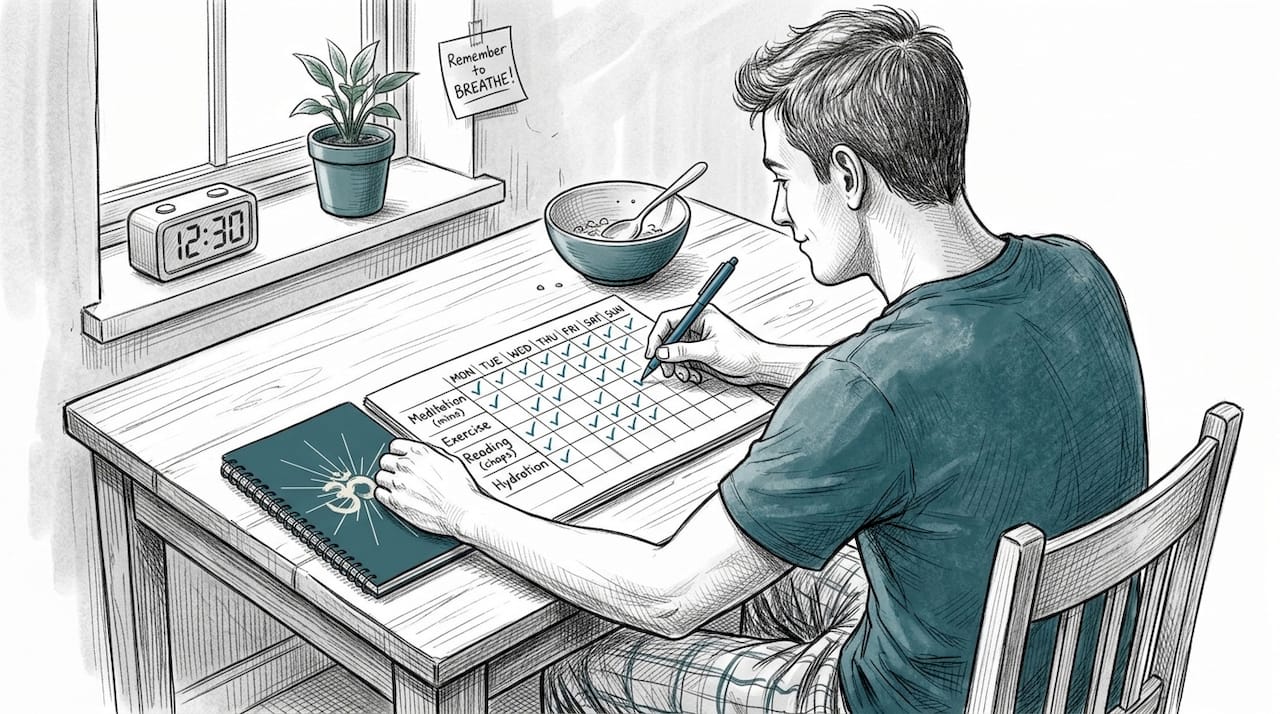
Pro Tip: Use a simple habit tracker, even a paper one with a pen, to mark off each day you meditate. The visual streak becomes surprisingly motivating, and breaking it starts to feel genuinely uncomfortable. That mild discomfort is your friend.
Building your meditation habit: duration, frequency, and obstacles
Once your checklist has its skeleton, the next question is: how much, how often, and what do you do when life gets in the way? These are the questions that separate a meditation practice that lasts three weeks from one that lasts three years.
Here’s a practical sequence for building up:
- Week one to two: Meditate for three to five minutes daily, same time, same spot
- Week three to four: Extend to ten minutes if the shorter sessions feel comfortable
- Month two onwards: Experiment with twenty-minute sessions and notice any qualitative shifts
- Ongoing: Adjust based on how you feel, not based on what you think you should be doing
- Obstacle review: Every two weeks, revisit your obstacle list and update your strategies
Research is genuinely encouraging here. Five and twenty-minute mindfulness sessions both increase state mindfulness, with longer sessions enhancing a quality called decentering, which is the ability to observe your thoughts without getting swept up in them. So even a short session is doing real work.
The dose-response picture becomes even more interesting when you look at longer-term data. Thirty-five to sixty-five minutes daily is linked to measurable well-being improvements, while fifty to eighty minutes correlates with mental health benefits. Crucially, the same research found that frequency matters more than session duration for most people. Meditating for ten minutes every day beats a single two-hour session on Sunday by a considerable margin.
Obstacles are not a sign of failure; they’re a sign that you’re human. The most common ones are motivational dips after the initial novelty wears off, external distractions like noise or interruptions, and the sneaky inner critic who whispers that you’re not doing it properly. Planning for these in advance, rather than hoping they won’t appear, is what separates consistent practitioners from occasional ones.
Music can be a surprisingly effective obstacle-buster. The scientific approach to music in meditation shows that the right soundscape reduces the mental effort required to settle into a session, essentially lowering the barrier to entry. Similarly, having curated relaxation playlists ready removes one more decision from your pre-session routine.
Pro Tip: Write down your top three obstacles before you start your first week. Then write one specific, tiny solution for each. “If I feel unmotivated, I will put on my meditation music and sit for just two minutes.” Two minutes is nearly always enough to get you started.
Choosing your meditation style and music: techniques compared
Now we get to the part that trips most people up: picking a method. There are dozens of meditation styles out there, and they are not interchangeable. Choosing the wrong one is a bit like buying walking boots for a swimming lesson. Technically footwear, but not quite right.
Here’s a comparison of four widely practised styles to help you find your fit:
| Technique | Core approach | Best for | Music pairing |
|---|---|---|---|
| Heartfulness | Heart-centred relaxation and transmission | Emotional well-being, beginners | Soft orchestral, theta frequencies |
| Vipassana | Body scanning, breath observation | Deep insight, experienced practitioners | Minimal ambient or silence |
| Transcendental Meditation ™ | Silent mantra repetition | Stress reduction, busy minds | Gentle instrumental |
| Osho | Active, expressive movement phases | Creative types, releasing tension | Rhythmic, dynamic soundscapes |
Research comparing these approaches found that Heartfulness and Vipassana consistently produced greater psychological well-being improvements than TM and Osho, though all four showed positive effects. That said, the best technique is always the one you’ll actually practise regularly.
“Heartfulness and Vipassana users consistently report higher well-being scores, yet the most powerful predictor of benefit remains consistent, sustained practice regardless of method.”
Once you’ve narrowed down your style, the question of guided versus self-directed meditation becomes relevant. Guided sessions suit beginners and anyone who finds silence uncomfortable; self-directed practice suits those who want to go deeper without external prompts. It’s also worth comparing transcendental and mindfulness meditation if you’re torn between the two most popular modern approaches.
Signs you’ve found a technique that genuinely fits you:
- Sessions feel rewarding rather than like a chore
- You notice a positive mood shift that lasts beyond the session itself
- You find yourself looking forward to your next sit
- The method feels natural rather than forced or performative
- You experience a growing sense of ease with the practice over weeks
Personalising your checklist: mindfulness, timing, and adapting for sleep
Here’s where the checklist gets genuinely interesting, because the evidence suggests that when you meditate and how you adapt for your personality can meaningfully change the results you get.
Let’s start with timing. Morning versus evening is not just a lifestyle preference; it has measurable effects.
| Timing | Key benefit | Especially useful for |
|---|---|---|
| Morning | Boosts vitality, sets positive tone | Poor sleepers, high-stress lifestyles |
| Midday | Resets focus and reduces afternoon fatigue | Office workers, students |
| Evening | Promotes relaxation, prepares for sleep | Anxiety, insomnia, winding down |
Morning meditation has been shown to boost vitality and mental health outcomes, with particularly strong effects for people who sleep poorly. If you’re someone who wakes up feeling groggy and scattered, a short morning sit might be the single most impactful addition to your checklist.
Evening practice, on the other hand, is ideal for sleep-related challenges. Pairing it with music designed for better sleep creates a powerful wind-down ritual. If you want to go further, exploring bedtime meditation music specifically composed for deep rest can make a noticeable difference to sleep onset.
Personality matters too. Personalising by trait mindfulness and personality is important because there is no universally correct way to meditate. Someone high in neuroticism, for instance, may find open-awareness practices initially overwhelming and benefit more from focused breath work.
Useful tweaks for beginners and high-neuroticism practitioners:
- Begin with short, focused sessions rather than open-ended awareness practices
- Use a gentle audio anchor, such as orchestral music or a soft drone, to reduce mental wandering
- Practise self-compassion on days when the mind refuses to settle (this is normal, not failure)
- Avoid comparing your inner experience to descriptions in books or apps
- Gradually increase session length only when shorter sessions feel genuinely comfortable
The self-compassion point deserves emphasis. Missing a day is not a catastrophe. Treating it as one, however, often leads to abandoning the practice entirely. Build a “restart gently” instruction into your checklist from day one.
Why over-complicating your checklist hurts progress
I’ll be honest with you: I’ve seen people spend more time designing their perfect meditation checklist than they’ve spent actually meditating. It’s a very human trap, and I’ve fallen into it myself. There’s something deeply satisfying about the idea of a beautifully optimised routine, complete with colour-coded habit trackers, six different apps, and a carefully curated playlist for every conceivable mood. And then you sit down to meditate and spend the first ten minutes wondering whether you should switch from theta waves to binaural beats.
The research is fairly unambiguous on this: consistency and enjoyment are the two variables that predict long-term benefit, not the sophistication of your setup. One practitioner I know spent months tweaking her checklist, adding layers of complexity each time she read a new article. When she finally stripped it back to three items, a time, a cushion, and a piece of music she loved, her practice became daily almost immediately.
The music piece is worth noting. Rather than agonising over frequency types and brainwave states, choosing evidence-based soundscapes that are professionally crafted to support meditation removes the decision fatigue entirely. You don’t need to understand the science to benefit from it. You just need to press play.
A good checklist has five items, not fifteen. It evolves slowly, based on your actual experience, not on the latest wellness trend. Simplicity isn’t laziness; it’s strategy.
Take your meditation further with curated music and tools
Building a meditation practice that genuinely sticks is so much easier when the music does some of the heavy lifting for you. At Orchestral Meditations, every track is recorded at Abbey Road Studios with the National Philharmonic, and crafted using binaural beats, theta frequencies, and 3D surround sound to support exactly the kind of deep, consistent practice this checklist is designed to build.
Whether you’re a beginner looking for a gentle anchor for your morning sessions, or an experienced meditator wanting to deepen your evening practice, you’ll find something that fits. You can explore our full meditation music library to browse by mood, duration, or frequency type. If you’d like a more personal starting point, our guide to the best meditation music helps you match tracks to your specific goals and temperament. Consider it the musical equivalent of your checklist: simple, purposeful, and genuinely enjoyable.
Frequently asked questions
How long should I meditate each day for wellness?
Even five to twenty minutes daily brings real benefits, but well-being improvements become more pronounced when practice accumulates to thirty-five to sixty-five minutes a day. Frequency across the week matters more than any single long session.
Is there a best time of day to meditate for results?
Morning meditation has been shown to boost positive affect and vitality, and is particularly effective for people whose sleep quality is poor or irregular. Evening practice is a strong choice for those managing anxiety or sleep difficulties.
How can I tell if my meditation technique is right for me?
You’ve found a good fit when sessions feel rewarding rather than effortful, and when a shift in awareness and calmer mood extend beyond the session itself. If it consistently feels like a chore, it’s worth trying a different approach.
What should I do if I miss a day or lose motivation?
Resume gently without self-criticism, and return to the smallest possible version of your practice. Planning for obstacles in advance, including what you’ll do after a missed day, is one of the most reliable strategies for long-term consistency.
Recommended
- The Best Meditation Music Only For Deep Relaxation And Mindfulness
- Curated Meditation Playlists For Deep Relaxation: 2026
- Harnessing Positive Frequencies For Enhanced Well-Being And Energy
- Relax And Unwind With Meditation And Sleep Music
- How to Calm Racing Thoughts — The Caia Journal
- Ochtendroutine die je dag productiever maken – Informatiegidsen Nederland