Let me be honest with you: when I first started exploring frequency-based meditation music, I half-expected some cosmic shortcut. Tune into 528 Hz, wait five minutes, and arrive at enlightenment. Spoiler alert: that is not quite how it works. But here is the genuinely exciting part. The science behind how specific musical frequencies influence our brainwaves, stress hormones, and states of consciousness is far more fascinating and far more usable than any mystical shortcut ever could be. This article unpacks the real mechanisms, compares the most talked-about frequencies, and gives you practical steps to actually deepen your meditation practice through sound.
Key Takeaways
| Point | Details |
|---|---|
| Brainwave entrainment matters | Synchronising brain activity with music frequencies facilitates deeper meditation and self-awareness. |
| Evidence over hype | Empirical studies confirm benefits for stress reduction, but claims of ‘miracle frequencies’ lack solid scientific backing. |
| Practical methods | Using sound baths or binaural beats supports relaxation and spiritual growth when applied mindfully. |
| Personal experience counts | Individual responses to frequency music depend on baseline mindset and spiritual openness. |
| Explore responsibly | Integrate frequency music with credible, evidence-informed practices to maximise genuine spiritual benefit. |
How music frequencies influence the mind and body
Right, let’s get into the good stuff. When we talk about music frequencies affecting the mind, we are not speaking in vague, hand-wavy terms. There are clear, measurable mechanisms at play. The most significant is brainwave entrainment, which is essentially your brain’s rather endearing habit of syncing up its own electrical rhythms to match rhythmic external stimuli, such as binaural beats or pulsed tones. Think of it like how you unconsciously tap your foot to a beat. Your brain does something similar, only internally and with far more interesting consequences for your inner life.
Brainwave entrainment via binaural beats can synchronise neural oscillations to promote relaxation, reduce stress, and enhance meditative states. That is not a spiritual claim, that is a measurable neurological event. And the connection between music and mental health is becoming one of the more robustly studied areas in contemporary wellness research.
So which brainwave states actually matter here?
- Delta waves (0.5 to 4 Hz): Deep dreamless sleep; not generally a target for meditation
- Theta waves (4 to 8 Hz): The gold zone for deep meditation, creativity, and spiritual insight; associated with hypnagogic imagery and emotional processing
- Alpha waves (8 to 12 Hz): Relaxed, open awareness; the bridge between active thinking and deeper meditative states
- Beta waves (12 to 30 Hz): Ordinary waking consciousness, analytical thinking, sometimes anxiety
- Gamma waves (30+ Hz): Associated with high-level information processing and certain advanced meditative states
The alpha and theta ranges deserve particular attention. Neurofeedback targeting alpha and theta waves enhances mindful awareness and emotional well-being, with effects that persist even after training ends. That last bit matters enormously. It suggests these practices are not just producing a temporary pleasant fog but actually rewiring something more durable in the listener.
The relaxation response is another crucial mechanism. When you listen to rhythmically consistent, low-frequency meditative music, your nervous system shifts from sympathetic (fight or flight) to parasympathetic (rest and digest) mode. Cortisol drops. Heart rate slows. Muscle tension dissolves. All of this creates the neurological conditions in which genuine self-awareness and spiritual insight can emerge. The music is not causing the spiritual experience. It is removing the static so you can hear what was already there.
“The music doesn’t take you anywhere. It clears the road so you can walk yourself.”
That is a crucial distinction and one worth tattooing on your memory (metaphorically, obviously). The common misconception is that a specific Hz number contains some inherent magical property. The reality is more interesting: certain frequencies create optimal neurological conditions, and you do the rest.
Pro Tip: If you are new to frequency-based meditation, start with binaural beats in the theta range (around 4 to 7 Hz) using good quality headphones. The stereo separation is what creates the entrainment effect, so you genuinely cannot skip the headphones here.
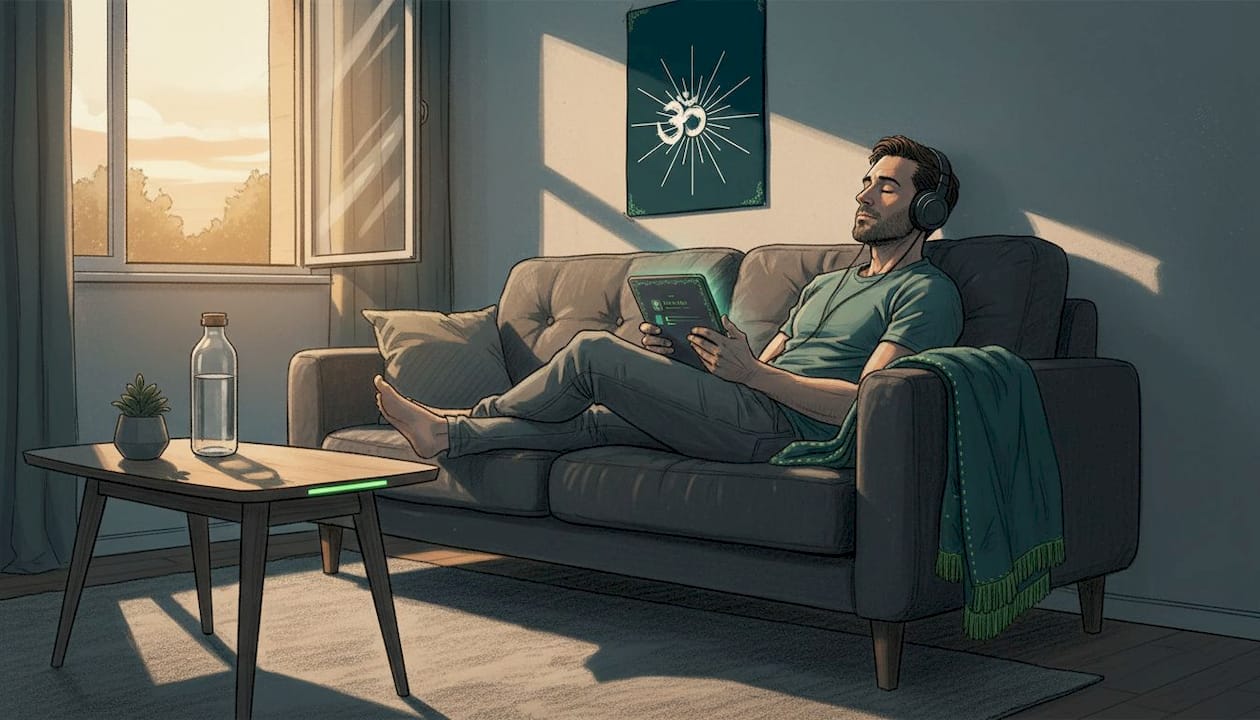
Exploring healing frequency music can give you a broader sense of the therapeutic territory, but the core principle remains consistent: the mechanism is neurological, and the outcome is yours to shape.
Comparing claimed spiritual frequencies and their effects
Now here is where it gets both exciting and slightly murky, like staring into a very beautiful fog. You have almost certainly encountered numbers like 528 Hz, 432 Hz, or 396 Hz attached to grand claims about DNA repair, chakra alignment, and spiritual awakening. Some of these claims deserve respect. Others deserve a raised eyebrow and a gentle, knowing smile.
Let’s break down the most commonly discussed frequencies honestly.
528 Hz is perhaps the most famous, sometimes called the “love frequency.” Proponents argue it repairs DNA and raises spiritual vibration. What the actual research shows is more modest but still genuinely useful. Solfeggio frequencies including 528 Hz, when used in sound-based meditation with singing bowls and gongs, significantly reduce stress, anxiety, cortisol levels, and blood pressure in randomised controlled trials. That is real. That is measurable. The DNA repair narrative, though? That lacks peer-reviewed support.
432 Hz music is tuned slightly lower than the standard 440 Hz concert pitch, and its advocates argue it feels more natural and harmonically aligned with the universe (their words, not mine). The evidence is more nuanced. 432 Hz tuning may slightly reduce heart rate and anxiety compared to 440 Hz in some studies, but the differences are subtle. Artists like Ed O’Brien and Ziggy Marley are enthusiastic proponents, which at minimum tells us these frequencies can feel emotionally distinctive, even if they are not producing quantum leaps in consciousness.
396 Hz is associated in Solfeggio tradition with releasing fear and guilt, often connected to the root chakra. That sounds wonderful. The honest reality, however, is that specific Solfeggio claims like 396 Hz liberating fear lack peer-reviewed empirical support and are often based on modern reinterpretations rather than ancient documented science.
That said, the broader Solfeggio frequency guide is worth exploring because even if the specific Hz claims are exaggerated, the meditative context in which these frequencies are used is consistently shown to produce relaxation and stress relief. The frequency may be the marketing, but the meditation is the product.
| Frequency | Popular claim | What research supports | Evidence quality |
|---|---|---|---|
| 528 Hz | DNA repair, love frequency | Stress and cortisol reduction | Moderate (RCT evidence) |
| 432 Hz | Natural universal tuning | Mild anxiety reduction vs 440 Hz | Emerging, subtle |
| 396 Hz | Liberates fear, root chakra | General relaxation | Anecdotal primarily |
| Theta (4 to 8 Hz) | Deep meditation states | Alpha/theta entrainment, mindfulness | Strong (neurofeedback studies) |
| Binaural beats | Altered consciousness | Brainwave synchronisation | Strong (multiple RCTs) |
The Solfeggio frequency benefits most reliably documented centre on stress reduction and relaxation rather than specific spiritual transformations. Meanwhile, frequency meditation using theta-range binaural beats has some of the strongest mechanistic support in the literature. Worth knowing before you invest significant belief in a particular Hz number.
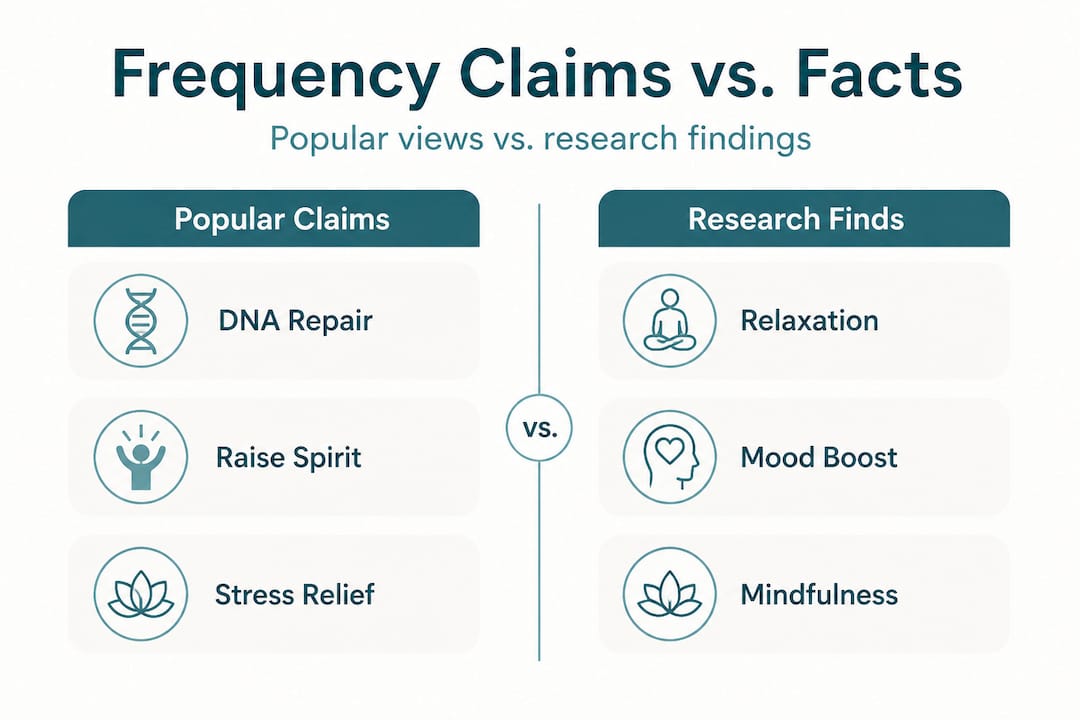
Healing frequencies like 432 Hz and 528 Hz may promote relaxation as adjuncts to music therapy, though direct empirical evidence for specific spiritual effects is still emerging. That is actually a perfectly respectable position: useful adjuncts to a deliberate practice, not standalone miracles.
Applying music frequencies to meditation and spiritual practice
Here is where we move from fascinating theory to what you actually do on a Tuesday evening when you want to go deeper in your practice. The good news is that the practical steps are surprisingly accessible, and the research gives us some useful benchmarks to work with.
The key methodologies supported by evidence include:
- Binaural beat sessions: Use headphones and play tracks where the left and right ear receive slightly different frequencies (e.g., 200 Hz and 206 Hz to create a perceived 6 Hz theta beat). Aim for sessions of at least 20 minutes to allow entrainment to take effect.
- Sound baths with singing bowls or gongs: Daily 60-minute sessions have shown significant cortisol reduction (statistically significant at p<0.001) in research settings, using Solfeggio-tuned instruments. Even 30-minute home sessions can meaningfully shift your baseline stress level.
- Rhythmic auditory stimulation (RAS): This involves using consistent, repetitive rhythmic patterns in music to guide the nervous system into a lower arousal state. Orchestral compositions with slow, regular pulse work particularly well here.
- Guided frequency meditation: Combining voice-guided meditation with background frequency music addresses both the cognitive and neurological dimensions of awareness simultaneously.
- Progressive deepening: Start with alpha-range music (8 to 12 Hz) for the first 10 minutes of a session, then shift to theta-range (4 to 8 Hz) to gently escort your consciousness into deeper states without jarring the transition.
One important nuance: effects vary by individual baseline. People who naturally produce less alpha activity tend to benefit more noticeably from entrainment practices, which explains why the same track can produce a life-changing session for one person and mild relaxation for another. This is not a failure of the frequency. It is just biology being its wonderfully idiosyncratic self.
| Practice | Session length | Evidence-backed benefit | Best for |
|---|---|---|---|
| Binaural beats (theta) | 20 to 40 minutes | Brainwave entrainment, mindfulness | Deep meditation, self-awareness |
| Sound bath (528 Hz) | 45 to 60 minutes | Cortisol reduction, anxiety relief | Stress and tension release |
| Orchestral RAS | 20 to 30 minutes | Parasympathetic activation | Relaxation, sleep preparation |
| Alpha music listening | 15 to 30 minutes | Mood improvement, focus | Pre-meditation warm-up |
Cultural and spiritual context also amplifies benefits. If you approach a session with genuine intention, even a modest frequency stimulus can feel profoundly meaningful. That is not the placebo effect being a nuisance. That is the placebo effect demonstrating what intentionality actually does to the brain.
Exploring relaxing frequency techniques can help you build a personalised approach, or you might explore download Solfeggio tones to experiment with specific frequencies in your own sessions.
Pro Tip: Keep a brief meditation journal noting your session length, the frequency or style of music used, and your subjective experience on a simple 1 to 10 scale. Within two to three weeks, patterns will emerge that are genuinely illuminating about which approaches resonate with your particular nervous system.
Key nuances, limitations, and responsible practices
In applying these methods, it is also critical to recognise the limitations and address common misunderstandings responsibly. The frequency wellness space is, if we are being affectionate but honest, a little bit wild. Magnificent claims bloom like enthusiastic weeds alongside genuinely useful science, and it can be hard to tell them apart without a clear compass.
Let’s name the honest limitations:
- The placebo factor is real and not shameful: Much of what people experience with specific frequencies is shaped by expectation, intention, and the relaxation response itself. This does not make the experience less valuable. It does mean attributing the benefit to the specific Hz number may be missing the actual cause.
- Anecdotal evidence dominates: Proponents cite ancient origins and chakra alignments such as 396 Hz for the root chakra, but sceptics rightly emphasise that benefits most likely stem from the relaxation response rather than frequency-specific magic.
- Not all claims have scientific footing: The assertion that 528 Hz repairs DNA, for instance, lacks peer-reviewed empirical support and belongs in the category of inspired metaphor rather than clinical fact.
- Spiritual context genuinely matters: Someone approaching a sound bath with open curiosity and clear intention will likely have a richer experience than someone lying there sceptically scrolling through their to-do list mentally.
- White noise can interfere: Interestingly, background white noise may help attention in some contexts but can actually weaken brainwave entrainment effects, so the sonic environment around your practice matters.
How do you practise responsibly?
“Use frequency music as a beautiful tool in a thoughtful toolbox, not as the whole shed.”
Read the Solfeggio frequency overview for a grounded introduction to the field, and explore frequency healing evidence to understand what the research genuinely supports. Be curious about what works for you personally, and be pleasantly sceptical of any source promising transformation through a single number.
The genuinely exciting reality is that you do not need to believe in frequency mysticism to benefit enormously from intentional, frequency-informed meditation music. The neurological and physiological mechanisms are robust enough to work regardless of your metaphysical convictions.
Our perspective: what actually enriches spiritual growth through music
Let me share something that took me an embarrassingly long time to learn. Early in my engagement with this material, I spent a disproportionate amount of energy trying to identify the perfect frequency. Was it 432 Hz? 528 Hz? Some obscure gamma band binaural beat discovered by a monk in a Himalayan cave? (I may be embellishing slightly.) The result was a kind of spiritual consumer anxiety that rather defeated the purpose.
What actually shifted things was a simpler, far less glamorous insight: the quality of my presence during meditation mattered infinitely more than the Hz number playing in my headphones. Solfeggio music wellbeing research consistently points to this. The music creates conditions. You create the meaning.
Consistent practice, full stop, produces more measurable spiritual growth than chasing the latest frequency trend. Showing up for twenty minutes daily with good quality meditative music, regardless of its specific tuning, will do more for your self-awareness over six months than an occasional three-hour deep dive into whatever Hz is trending on wellness forums this week.
There is also something worth saying about the quality of the musical experience itself. An orchestral composition recorded with live musicians in a world-class acoustic space carries a different emotional and neurological weight than a digital sine wave loop. The richness of the timbre, the dynamic range, the human imperfection in the playing: all of these create a more fully immersive sonic environment, which in turn creates richer conditions for genuine inner exploration. This is not snobbery. It is physics meeting psychology in a rather beautiful way.
The practical wisdom here is this: choose music that genuinely moves you, use it consistently, approach your sessions with clear intention, and track what actually works for your particular nervous system. That combination will outperform any frequency shortcut, every single time.
Explore evidence-based meditation music for your practice
If reading this has made you want to actually experience what thoughtfully crafted frequency-based music feels like, rather than just theorise about it, we understand that impulse completely.
At Orchestral Meditations, our recordings are built around exactly the mechanisms we have discussed here: brainwave entrainment, theta and alpha frequency targeting, and deep parasympathetic activation, realised through live orchestral performances recorded at Abbey Road Studios. You can explore our full meditation music library or find a personalised meditation music selection tailored to your specific practice goals. Curious why live orchestral recordings produce a qualitatively different experience from digital synthesis? The answer, in both acoustic and neurological terms, might surprise you. Read more about orchestral vs digital music and see whether it changes how you listen.
Frequently asked questions
Can listening to specific frequencies guarantee spiritual growth?
No, research shows relaxation and mindful intention matter far more than any particular frequency, though music can meaningfully support the conditions for growth. Specific Solfeggio claims such as DNA repair or chakra alignment lack peer-reviewed empirical support.
What is the most scientifically supported frequency for meditation?
Rather than a single Hz value, it is frequency ranges that matter: alpha and theta brainwave entrainment is backed by multiple studies for enhancing meditation, with effects persisting post-training in neurofeedback research.
Are Solfeggio frequencies effective for reducing stress?
Yes, genuinely. Solfeggio frequencies like 528 Hz used in sound-based meditation with singing bowls and gongs have shown significant reductions in cortisol, anxiety, and blood pressure in randomised controlled trials.
Do individual differences affect the impact of frequency-based meditation?
Absolutely, and more than most practitioners realise. Effects vary by individual baseline, with low alpha responders often benefiting most, while cultural context and personal openness also meaningfully shape outcomes.