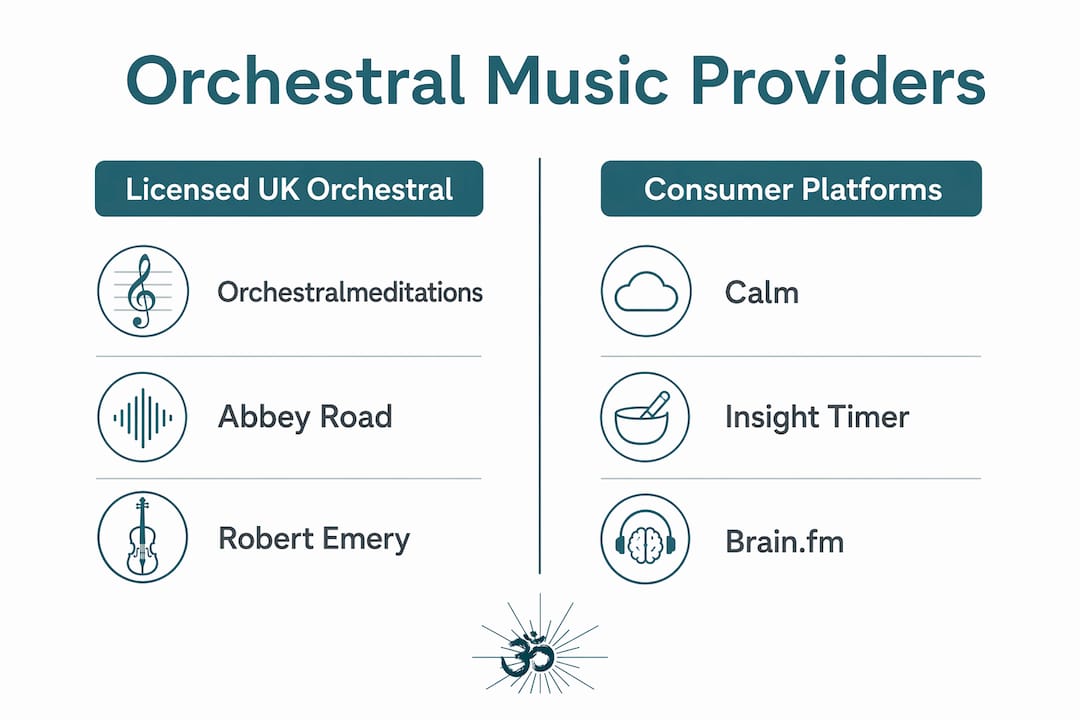
If you need a genuine replacement for theta-music.com, the short answer is this: Orchestralmeditations is the strongest orchestral, studio-grade alternative, recorded at Abbey Road Studios with the National Philharmonic and offering clear personal and professional licences for UK use. Beyond that, a handful of other platforms serve specific needs rather well.
Here is the shortlist at a glance:
- Orchestralmeditations — best for studio-grade orchestral theta, binaural and Solfeggio tracks with named composer credits and professional UK licensing (personal and commercial)
- Calm — best for casual personal listening; subscription-based, limited commercial licensing
- Insight Timer — best for free personal meditation audio; large library, but commercial licensing is restricted
- Brain.fm — best for generative, AI-driven focus and theta soundscapes; subscription only, personal use
- Epidemic Sound — best for app developers and content creators needing broad commercial clearance; stock library, synthesised audio
- MyNoise — best for free, customisable ambient and binaural generators; no commercial licensing
How do these theta-music.com alternatives compare for UK use?
The table below covers the dimensions that matter most when you are choosing a provider for therapy, yoga, or a commercial app in the UK.
| Provider | Best for | Price model | Commercial licensing | Audio type | Binaural / theta / Solfeggio | Audio quality | Sample / demo | UK licensing |
|---|---|---|---|---|---|---|---|---|
| Orchestralmeditations | Orchestral theta, therapy, commercial | One-off purchase or subscription | Yes — personal and professional licences | Live orchestral, 3D surround, binaural | All three | Studio-grade, Abbey Road, WAV/FLAC available | Yes | Clear UK commercial terms |
| Calm | Casual personal listening | Subscription (£/month) | No commercial licence | Ambient, synthesised, guided | Limited binaural | High-quality MP3/AAC | Free trial | Personal only |
| Insight Timer | Free personal meditation | Free / optional subscription | No commercial licence | Mixed: ambient, voice, music | Some binaural | Variable (MP3) | Yes, free | Personal only |
| Brain.fm | Generative focus / theta | Subscription | No commercial licence | AI-generated, synthesised | Theta-optimised | Good MP3 | Short trial | Personal only |
| Epidemic Sound | App / creator commercial use | Subscription (tiered) | Yes — broad commercial | Stock, synthesised, ambient | Limited | Good MP3/WAV | Yes | UK commercial terms |
| MyNoise | Free ambient / binaural | Free / one-off donation | No commercial licence | Generative, field recording | Binaural generators | Good (browser-based) | Yes, free | Personal only |
A few things worth noting. Calm, Insight Timer, and Brain.fm are excellent for personal practice, but none of them will clear a UK app store submission or a therapy-centre licence without significant additional negotiation. Epidemic Sound handles commercial clearance well, but its meditation catalogue is synthesised stock audio rather than live orchestral recordings. If the warmth of a real string section matters to your clients or your listeners, that distinction is not a small one.
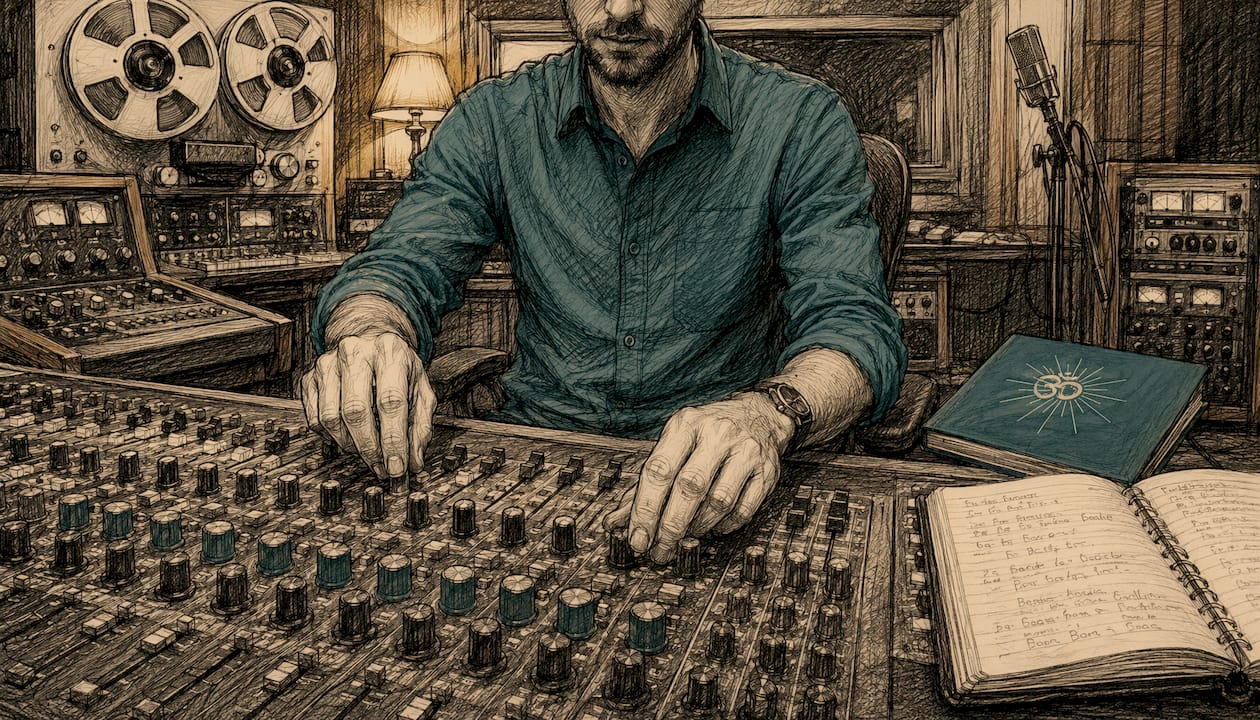
The single most overlooked factor when choosing a meditation music provider is composer credit. For clinical and commercial projects, knowing who composed the music, under what recording conditions, and with what licence scope is the difference between a clean audit trail and a legal headache. Named credits are not a vanity feature — they are a professional necessity.
Orchestralmeditations credits Robert Emery as composer and Moritz Schneider as producer. Robert Emery is a composer whose work spans orchestral and cinematic scoring, bringing a structural sophistication to meditation music that generic stock libraries simply cannot replicate. Moritz Schneider’s production work ensures that the frequency engineering — binaural layering, theta entrainment, Solfeggio tuning — is applied with precision rather than guesswork. Named credits like these give therapists and commercial buyers a verifiable chain of provenance, which matters when a client or regulator asks where the music came from.
How do you pick the right provider for your situation?
The decision is simpler than it looks once you match your use-case to three or four hard criteria.
Key criteria to check before committing:
- Licence scope: does it explicitly cover your intended use (personal, therapy, yoga class, UK app store)?
- Audio format: is WAV or FLAC available, or are you limited to compressed MP3?
- Recording pedigree: live musicians or synthesised? Does that matter for your audience?
- Named composer and producer credits: essential for clinical and commercial audit trails
- Delivery timeline: how quickly can you access files and licence documentation after purchase?
- Support for commercial clearances: is there a real person to contact for bespoke licence queries?
Questions to ask any provider before purchasing:
- Does this licence explicitly cover UK app store distribution?
- Are stems or isolated tracks available for custom session design?
- What is the sample rate and bit depth of the delivered files?
- Is the licence perpetual or does it expire with a subscription?
- Who is the named composer, and can I cite that credit in clinical documentation?
- What is your refund or replacement policy if the delivered files are technically defective?
Pricing shapes to expect:
Free platforms (MyNoise, Insight Timer’s free tier) give you personal-use audio at no cost, but commercial use is off the table. Subscription platforms like Calm, Brain.fm, and Epidemic Sound charge monthly fees for personal tiers, with commercial tiers priced higher. One-off purchase models, like Orchestralmeditations, let you pay once per track or album and retain the licence without ongoing fees.
Red flags to watch for:
- No named composer or producer credit anywhere on the site
- Licensing terms that use vague phrases like “personal enjoyment” without defining commercial exclusions
- No WAV or lossless format option for professional use
- Ambiguous refund terms or no support contact for licence queries
Pro Tip: Before purchasing any track for a therapy or commercial project, download the relaxation music checklist and run each provider through it. It takes five minutes and saves considerably more in licensing disputes.
Why Orchestralmeditations stands out for orchestral theta music
The recording pedigree here is not marketing copy. Tracks recorded at Abbey Road Studios with the National Philharmonic carry a level of acoustic fidelity that browser-based generators and stock libraries cannot approach. The room acoustics, the microphone placement, the live ensemble interaction — these are audible, and for therapeutic use they translate into a richer, more physiologically engaging listening experience.
Robert Emery’s compositional approach draws on cinematic orchestral writing, which means the music has genuine arc and emotional movement rather than the static loops common in ambient stock audio. Moritz Schneider’s production work integrates theta frequency entrainment and 3D surround techniques at the recording stage, not as a post-production afterthought. The result is binaural and Solfeggio content that sits inside a fully realised orchestral texture rather than floating awkwardly over a synthesised bed.
For UK practitioners and commercial buyers, Orchestralmeditations offers both personal and professional licences with clear terms, named composer and producer credits, and studio-grade WAV files. Licence documentation is available at the point of purchase, which means your audit trail starts the moment you check out.
The evidence on music and mental health consistently points to production quality and emotional coherence as factors in therapeutic outcomes. A track that sounds like it was assembled from royalty-free loops does not produce the same physiological response as a live orchestral recording with intentional frequency design.
Pro Tip: When purchasing for clinical use, request WAV files at 24-bit depth and save the licence confirmation email alongside the composer credit (Robert Emery / Moritz Schneider, produced by Moritz Schneider at Abbey Road Studios). That single document covers most clinical audit requirements.
How to use theta and binaural tracks safely and effectively
A few practical points before you press play in a professional context.
Safety first: keep playback volume below 85 dB for extended sessions. Binaural beats require headphones to work as intended — they lose their effect entirely through speakers. Avoid theta entrainment tracks with clients who have epilepsy or are in acute psychotic states without clinical supervision.
Session templates:
- Personal meditation (20–30 minutes): one continuous theta track (4–7 Hz range), fade in over 2 minutes, hold, fade out over 3 minutes. No stems needed.
- Therapy session (45–60 minutes): open with a neutral ambient track (5 minutes), transition to a theta binaural piece (30–40 minutes), close with a Solfeggio or orchestral piece at a slightly higher frequency (10 minutes). Request stems if you need to adjust the binaural layer independently.
- Yoga class (20–30 minutes background): loop-friendly ambient or orchestral track at low volume; confirm the licence covers live class performance.
- App background loop: request WAV stems at 24-bit/48 kHz minimum; confirm the licence explicitly covers UK app store distribution and in-app streaming.
For healing with meditation music in a structured therapeutic context, the format and frequency design of the track matter as much as the content.
Key takeaways
For orchestral theta music with professional UK licensing, Orchestralmeditations — recorded at Abbey Road Studios with the National Philharmonic, composed by Robert Emery and produced by Moritz Schneider — is the clearest like-for-like alternative to theta-music.com.
| Point | Details |
|---|---|
| Shortlist by use-case | Match your use-case first: personal (Calm, Insight Timer), commercial/app (Epidemic Sound), orchestral/therapy (Orchestralmeditations). |
| Licensing is non-negotiable | Confirm licence scope covers UK commercial use before purchasing; vague “personal enjoyment” terms will not clear an app store. |
| Named composer credits matter | Robert Emery (composer) and Moritz Schneider (producer) provide the audit trail clinical and commercial buyers need. |
| Format and quality | Request WAV at 24-bit/48 kHz minimum for professional use; MP3 is acceptable for personal listening only. |
| Orchestralmeditations | Studio-grade orchestral theta, binaural and Solfeggio tracks with clear personal and professional licences for UK buyers. |
Why production pedigree matters more than people admit
Here is something the average “best meditation music” listicle will not tell you: the difference between a track recorded with a live orchestra in a world-class studio and one assembled from synthesised loops is not just aesthetic. It is physiological.
Live orchestral recordings contain micro-variations in timing, intonation, and timbre that synthesised audio cannot replicate. These variations are part of what makes music feel alive to the nervous system. For therapeutic use, that aliveness is not a luxury — it is part of the mechanism. A therapist using a flat, looped ambient track is working with a blunter instrument than one using a fully realised orchestral piece with intentional frequency design.
Named composer and producer credits — Robert Emery and Moritz Schneider in the case of Orchestralmeditations — also serve a practical function that goes beyond attribution. They create reproducibility. If a therapy protocol specifies a particular track, the named credit allows another practitioner to source the same piece, verify its production conditions, and replicate the session. Anonymous stock audio cannot do that.
For commercial buyers, the same logic applies to licensing. A track with a named composer, a documented recording venue (Abbey Road Studios), and a clear licence document is defensible in a way that a “royalty-free” download from an aggregator is not. The science behind music frequencies supports intentional frequency design — but only if you can verify that the design was actually applied.
Orchestralmeditations: studio-grade theta music with clear UK licences
If you have been searching for theta-music.com alternatives and you need orchestral quality with professional licensing, Orchestralmeditations is the direct answer. Tracks composed by Robert Emery and produced by Moritz Schneider at Abbey Road Studios with the National Philharmonic are available for both personal listening and professional commercial use, with licence documentation delivered at the point of purchase.
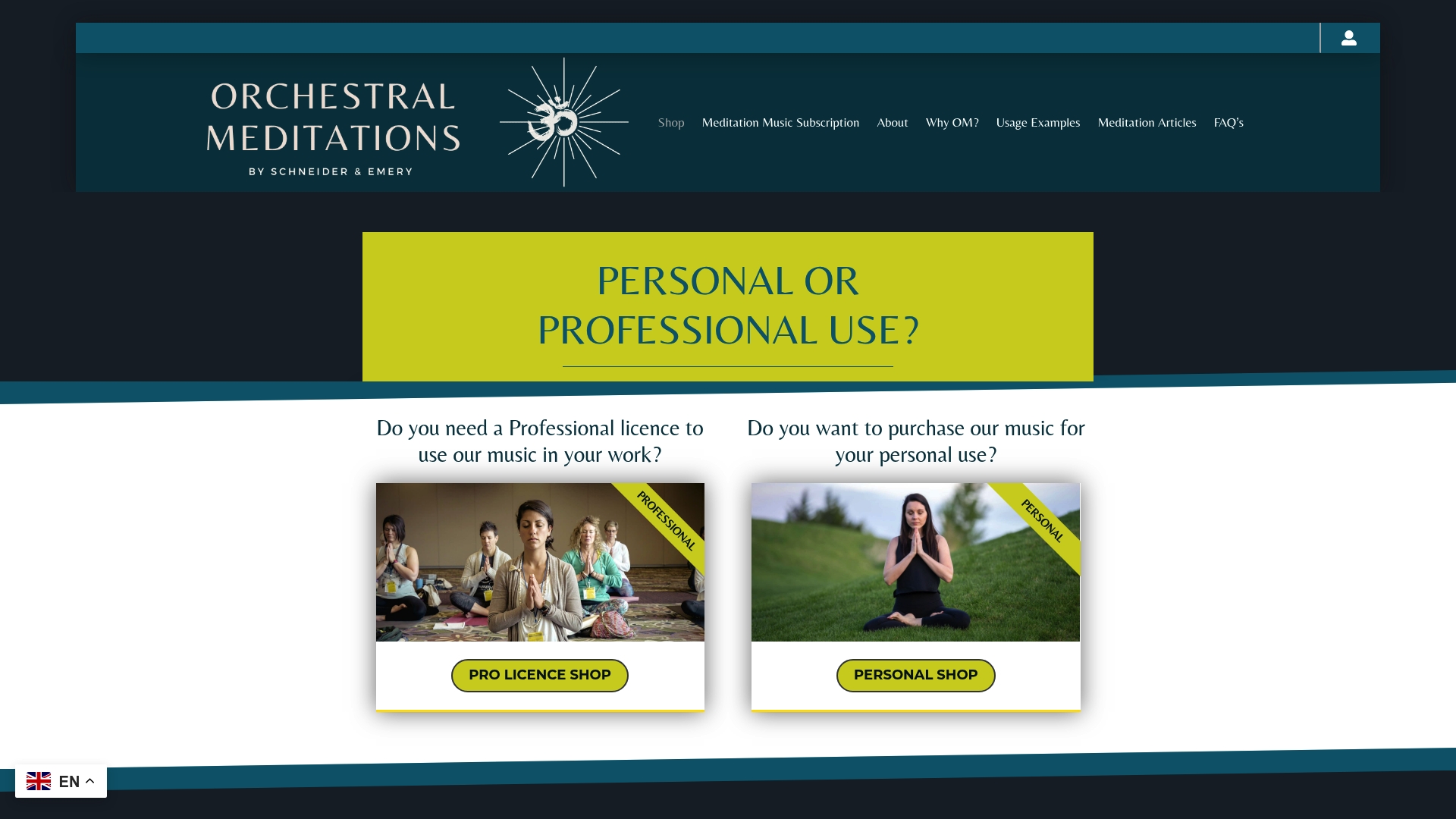
You can listen to samples and browse licences on the English shop page, or go straight to the best meditation music curated for personal buyers. Both pages include sample audio so you can hear the orchestral quality before committing. For commercial licence queries — UK app store distribution, therapy-centre use, yoga class performance — there is a support contact on the site. Licence documentation is available immediately after purchase, so there is no waiting period between payment and clearance.
Useful sources
A short list of the most useful pages to verify licence terms, composer credits, and technical specifications:
- Orchestralmeditations home — composer credits (Robert Emery, Moritz Schneider), recording pedigree (Abbey Road Studios, National Philharmonic), and licence overview
- Music frequencies for healing — evidence-based background on theta, binaural and Solfeggio frequency claims
- Therapeutic music: orchestral soundscapes — production notes and format guidance for orchestral meditation audio
- Theta Music Trainer — note: this is an ear-training platform, not a meditation music library; useful context for understanding the broader “theta music” search landscape
- Relaxation music checklist — practical selection criteria for wellness and therapy use
| Source | What to verify there |
|---|---|
| Orchestralmeditations home | Composer credits, licence types, recording venue |
| Music frequencies for healing | Theta / binaural / Solfeggio evidence base |
| Therapeutic music guide | Format specs, production technique, session design |
| Relaxation music checklist | Selection criteria for therapy and wellness use |
FAQ
What is the best orchestral alternative to theta-music.com for UK use?
Orchestralmeditations is the strongest orchestral alternative, offering live recordings from Abbey Road Studios with the National Philharmonic, named composer credits (Robert Emery), and clear personal and professional licences for UK buyers.
Can I use theta or binaural tracks commercially in a UK app?
Most consumer platforms (Calm, Insight Timer, Brain.fm) do not offer commercial app licences. Orchestralmeditations and Epidemic Sound both provide commercial licensing; confirm that the licence explicitly covers UK app store distribution before purchasing.
Do I need headphones for binaural theta tracks to work?
Yes. Binaural beats require headphones because the effect depends on delivering slightly different frequencies to each ear separately. Played through speakers, the two channels mix in the air and the entrainment effect is lost.
What audio format should I request for professional therapy use?
Request WAV files at 24-bit depth and 48 kHz sample rate as a minimum. MP3 is adequate for personal listening but introduces compression artefacts that can affect the precision of frequency-engineered content in a clinical setting.
Why do named composer credits matter for meditation music?
Named credits (such as Robert Emery as composer and Moritz Schneider as producer) create a verifiable chain of provenance, which supports reproducibility in therapy protocols and provides a defensible audit trail for commercial licence compliance.