If your app plays a guided meditation with a voiceover, you almost certainly need a commercial background licence covering sync and master use, not a download right. If your app streams music on demand as the main event, you need a dedicated streaming licence with explicit app distribution terms. Royalty-free never means unrestricted, and studios like Orchestral Meditations, with production credits from composer and producer Robert Emery, offer licence-ready orchestral tracks built for exactly this distinction.
TL;DR:
- Guided meditation apps using voiceover music typically need a commercial license covering synchronization and master use, not just download rights.
- Apps with on-demand streaming features require a dedicated streaming license with explicit distribution terms, especially for playlists or user-selected tracks.
- Stock royalty-free music often has strict limitations on exports, redistribution, or re-licensing, so confirm specific license scope before integration.
- Personalized or bespoke music compositions and catalogues from specialist producers like Orchestral Meditations offer clearer licensing suited for app use.
- Developers must verify rights ownership, request sample licenses, and enforce licensing terms through technical controls like export blocks and usage logging.
What licence does your app actually need?
Here’s the bit nobody tells you until you’re three months into development and a licensor’s legal team is asking pointed questions: not all “meditation music” licences are the same product wearing different labels. They’re genuinely different rights, and mixing them up is how apps end up with takedown notices instead of five-star reviews.
Scenario A: guided sessions with voiceover. The music sits underneath narration, playing at low volume, never the main attraction. This is background use, and it usually calls for a business or commercial licence with sync and master clearance bundled together. Feed.fm’s guidance on meditation app licensing treats this as the standard, low-friction path, provided you’re not exporting the mix.
Scenario B: music-first, ondemand streaming. If users select tracks to stream, skip, loop, or build playlists, the music is the product, not the wallpaper. That needs a proper streaming licence or a catalogue agreement with app distribution rights spelled out. TunePocket draws this exact line between a business membership for background use and a streaming licence for ondemand play, and treats them as separate products with separate terms.
Then there are the edge cases that trip up even careful developers:
- Hybrid apps mixing guided sessions with a standalone music player often need both licence types, not one stretched to cover everything.
- Offline downloads or export-to-device features almost always require a bespoke agreement layered on top of a standard catalogue licence.
- User-generated mixes or custom playlists built from your library raise redistribution questions most standard licences simply don’t answer.
- When in doubt, ask the question in writing: territory, platform (iOS, Android, web), and expected user scale all affect which licence tier applies.
Where to source music legally for your app
Three broad routes exist, and each one trades speed against control.
Royalty-free libraries and subscription catalogues are the fastest way to get cleared tracks into your build. Vendors like Soundstripe market subscription access specifically to simplify licensing for commercial creators. The catch: “unlimited” usually means unlimited within the licence terms, not unlimited full stop. Downloads, exports, and redistribution to end users are frequently excluded, so read the fine print before you build a feature around a track.
Bespoke composition and commissioning costs more and takes longer, but you own clarity. A commissioned piece can be scored to your app’s exact pacing, given exclusivity clauses competitors can’t touch, and built around specific therapeutic aims like binaural or theta frequency work.
Direct deals with publishers or labels become necessary when you want a recognisable classical recording or a major artist’s work. These require separate master and publishing clearance, and they’re rarely quick.
Whichever route you choose, vet the supplier properly:
- Request sample licence wording before you commit, not after.
- Ask about P.R.O. (Performing Rights Organisation) registrations for the composition.
- Demand a licence certificate you can produce if a platform or legal team asks.
- Confirm the composer and producer credit line, since that’s often your first clue about who actually controls the rights.
Contract checklist: what to confirm before you launch
A licence agreement is only as good as the clauses inside it. Before signing anything, work through this list with whoever supplies your music.
- Scope of use. Get explicit permission for app playback, streaming, named territories, named platforms, and device types. Vague scope language is where disputes start.
- Restrictions. Nail down downloads, exports, remixing, user redistribution, and AI re-use in writing. Silence on any of these usually means “no,” but don’t assume it.
- Commercial terms. Understand whether you’re paying a flat fee, a per-stream rate, or a revenue share, and confirm reporting cadence, audit rights, and what triggers termination.
- Warranties and indemnities. The licensor should warrant they actually control the rights they’re selling you, and agree to indemnify you against third-party claims if that warranty turns out to be false.
- Documentation on delivery. Insist on a licence certificate, metadata with composer and producer credits, P.R.O. registration details, and a usage reporting format you can actually plug into your analytics.
Pro Tip: Keep every licence certificate and email confirmation in one shared folder your legal and product teams can both access. When an app store reviewer or a rights-holder’s lawyer asks for proof, “give me a week to find it” is not an answer anyone wants to give.
The rights pitfalls that catch developers out
The single biggest mistake is assuming one clearance covers everything. Master rights (the actual recording) and composition rights (the underlying melody and lyrics) are legally separate, and a licence for one does not automatically cover the other.

Performance rights organisations matter more than developers expect, because app plays can be treated similarly to broadcast plays for reporting and payout purposes, depending on the territory and platform.
Here’s the trap that catches solo founders and lean teams especially often:
- A track you bought for personal listening, or downloaded for free from a consumer platform, almost never clears you for commercial app use.
- “I paid for it once” is not the same as “I hold a commercial licence.”
- Always ask for chain-of-rights documentation, meaning proof the supplier controls both the master and the composition before you pay.
- If a supplier can’t produce that paperwork quickly, treat it as a warning sign, not an oversight.
Building licence compliance into your app
Getting the paperwork right is only half the job. The technical build has to enforce what the contract promises.
- Block downloads and exports at the code level if your licence forbids them, rather than relying on users to behave.
- Use stream tokens and session expiry so audio access matches your licensed usage window.
- Log play counts, session identifiers, and timestamps if your reporting clause requires usage data.
- Keep signed licences and composer credit lines somewhere accessible, not buried in an old email thread, so you can respond fast to a takedown or infringement query.
- Prepare licence evidence in advance in case an app store reviewer asks for proof of clearance during submission.
Pro Tip: Build your licence expiry dates into your product roadmap calendar, not just your legal file. A licence that quietly lapses six months after launch is a far more common failure than outright infringement.
Why Orchestral Meditations is built for app licensing
Some specialist producers record their catalogues with advanced techniques such as 3D surround sound alongside binaural and Solfeggio frequency work, offering a production quality that’s hard to source through a generic stock library.
- Studio-grade orchestral recordings, not synthesised approximations.
- Composer and producer credit lines are typically provided to clarify rights ownership and production background.
- Licence certificates are usually issued on request, so developers have paperwork to confirm the licence rather than relying on verbal assurance.
- Catalogues are often tailored for meditation, sleep, and relaxation use cases, rather than adapted from unrelated stock music.
Developers licensing tracks should still ask directly what warranties accompany each certificate, and confirm scope of use in writing before integrating any track into a live build.
Bespoke scores or cleared catalogues: what actually works

Early-stage apps should reach for clear, commercial licences from specialist catalogues first. Speed to market and legal certainty matter more than exclusivity when you’re still proving your product works.
Bespoke composition earns its cost once you need brand differentiation or specific therapeutic frequency design that a stock catalogue can’t replicate. Two habits worth stealing from any working studio: confirm licence scope in writing before a single track goes into your build, and never assume a “royalty-free” tag means unrestricted, because the exceptions are always in the small print.
— ROBERT
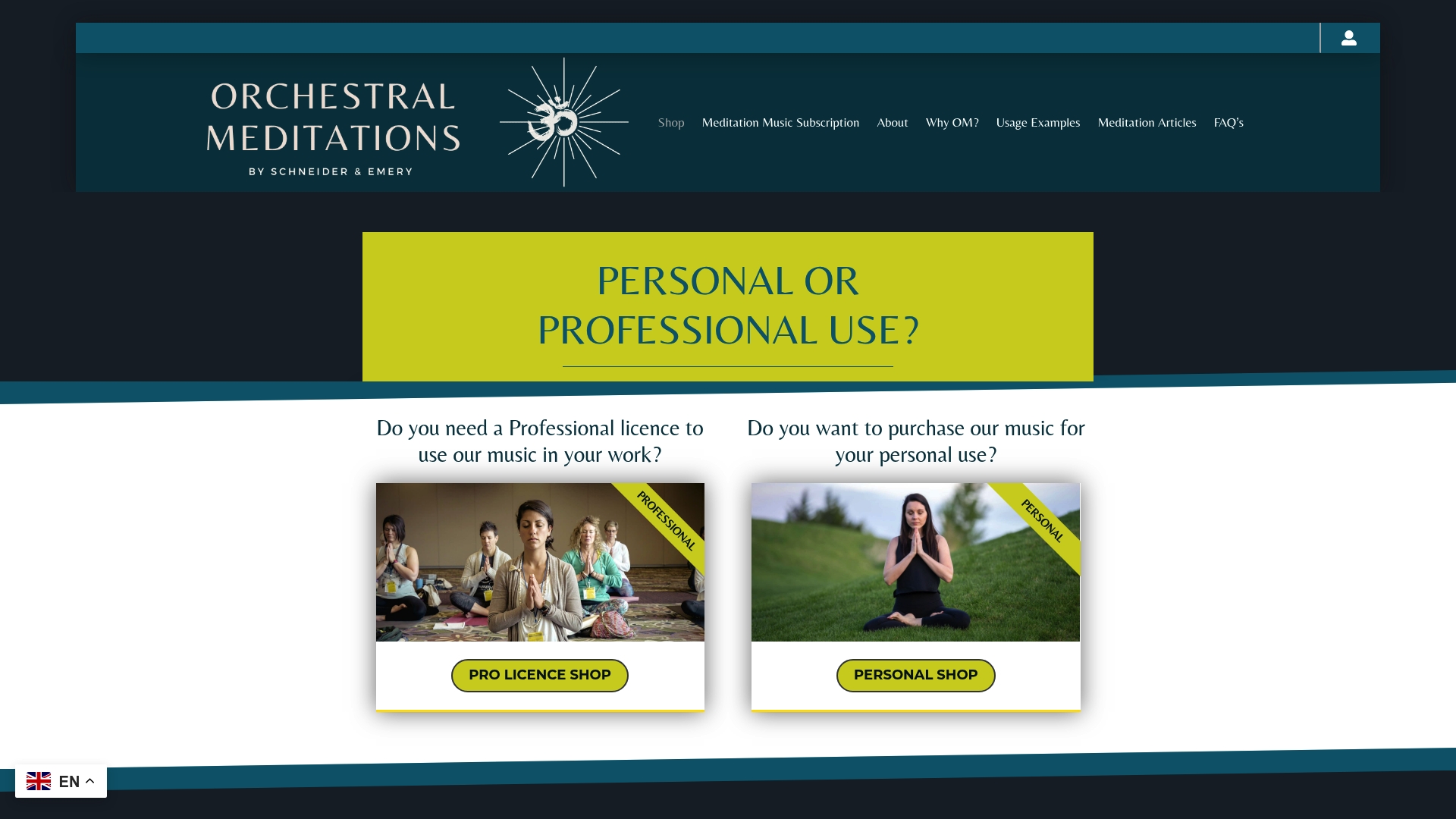
Licence-ready tracks for your app, direct from Orchestral Meditations
Specialist producers offer an alternative to piecing together stock tracks from generic libraries, providing catalogues recorded specifically for meditation, sleep, and relaxation contexts, with licensing built in from the start rather than added later.
What you get as a developer:
- Royalty-free orchestral tracks recorded at professional studios with orchestral ensembles.
- Licences scoped for app use, which may cover background and streaming scenarios.
- Composer and producer credit documentation accompanying the tracks.
- Studio production quality, including 3D surround and frequency-based recordings, typically available without the delay of bespoke commissioning.
If you’re building a guided meditation feature or a standalone relaxation player, request licence terms and a sample certificate through the Orchestral Meditations shop before you lock your audio pipeline. It’s a faster way to confirm exactly what your app is cleared to do, without waiting weeks for a bespoke commission to land.
Sources
For licence structures and terminology, see Feed.fm, TunePocket, and Soundstripe. For the wellness case behind investing in quality audio, see UC Davis Health.
- Licensing Meditation Music for Meditation Apps | Feed.fm
- How To Properly License Music For Your Meditation, Relaxation Or Sleep App
- Royalty Free Meditation Music | License Quality Songs with Soundstripe
FAQ
Where can I find copyright-free meditation music?
Royalty-free libraries and subscription catalogues, such as Soundstripe, and specialist producers like Orchestral Meditations both offer cleared tracks, but always check whether the licence covers app distribution specifically, not just personal listening.
Can listening to music count as meditation?
Music alone isn’t meditation, but it can support the same physiological state that meditation research links to reduced stress and improved focus, which is why so many apps pair guided narration with carefully scored music rather than silence.
What is the best free meditation app with music?
Free apps vary widely in audio quality and licensing transparency; developers evaluating their own app’s music should prioritise clear commercial licensing over free stock tracks, since free sources rarely carry documented rights clearance.
What is the most famous meditation app?
Several large consumer meditation apps dominate app store charts, but fame doesn’t indicate licensing practice; developers building their own app should focus on securing a properly scoped licence rather than benchmarking against a competitor’s brand recognition.