Live orchestra meditation refers to royalty-free meditation recordings made with real orchestral musicians, layered with binaural or 3D audio techniques and theta or Solfeggio frequency design. For therapists, teachers and app developers, the practical takeaway is simple: licensed, studio-produced tracks are the safer route for any public or commercial use. The sections below cover the evidence, the production details worth checking, and how to licence properly, focusing on scientifically supported methods and high-quality production.
TL;DR:
- Short sessions of 5 to 15 minutes using 6 Hz theta binaural beats can reliably improve calmness and focus for many individuals.
- Professional licenses are required for public use, recordings must be properly licensed, and terms vary depending on the specific application.
- True binaural effects only work with headphones, so environments must be free of external noise and distractions for optimal results.
- High production quality, including real musicians and appropriate frequency embedding, significantly influences the track’s effectiveness and listener response.
- Evidence supports mood shifts with short-term binaural protocols, but individual variation and session conditions play crucial roles in outcomes.
What does ‘live orchestra meditation’ actually mean?
This is not a recording of a concert. A live orchestra meditation is purpose-built for stillness rather than applause. It excludes classical performance albums, film scores, and anything recorded primarily for entertainment listening. The phrase, as used here, describes a specific production category with three defining ingredients.
- Real musicians playing an arrangement designed for slow, sustained listening rather than dynamic performance
- Binaural or 3D recording techniques that create spatial depth through headphones
- Frequency elements such as theta ranges or Solfeggio tones layered beneath the orchestration
Composer and producer credits matter here too. Names like Robert Emery or Moritz Schneider appear on tracks precisely because the arrangement and the sound science have to work together, not just sound pleasant in isolation. A meditation composer is solving a different problem than a film composer: sustained emotional stability rather than narrative tension.
What does the evidence say about binaural beats and frequency-based audio?
The research is more encouraging than sceptics assume, but it comes with real caveats. Two large-scale studies found that brief, self-administered 6 Hz theta binaural beats reliably increased calmness and focus, and participants often preferred the beats embedded in pink noise over the beats alone.
Key figures from the trials: effective sessions ran from 5 to 15 minutes for acute mood shifts, while a month-long protocol using daily 10-minute exposure to 6 Hz binaural beats produced measurable changes in auditory P300 brain responses, including increased amplitude and reduced latency.
That is a genuine physiological signal, not just a subjective mood report. But a broader systematic review complicates the picture: it found inconsistent entrainment results across studies, with some trials showing frequency-specific EEG changes and many showing none at all.
What this means practically:
- Treat theta protocols as a promising tool, not a guaranteed mechanism
- Expect individual variation. What settles one client may do nothing for another
- Track subjective response (calmness, focus, sleep quality) rather than promising a specific neurological outcome
- Start with short sessions and headphones before committing to longer formats
Nobody should be telling clients this cures anything. The honest pitch is “this reliably shifts mood for many people, for a short window, with headphones on.”
What production features actually determine immersion?
Live musicians bring microdynamics and timbral variation that synthesised orchestration cannot replicate. That subtle imperfection (a bow catching slightly, a breath before a phrase) is part of why the brain reads it as organic rather than looped. Beyond the performance itself, several technical choices decide whether a track actually works in a real session.
- Binaural or ambisonic capture. Confirm whether the mix uses true binaural microphone techniques or a simulated stereo-binaural conversion.
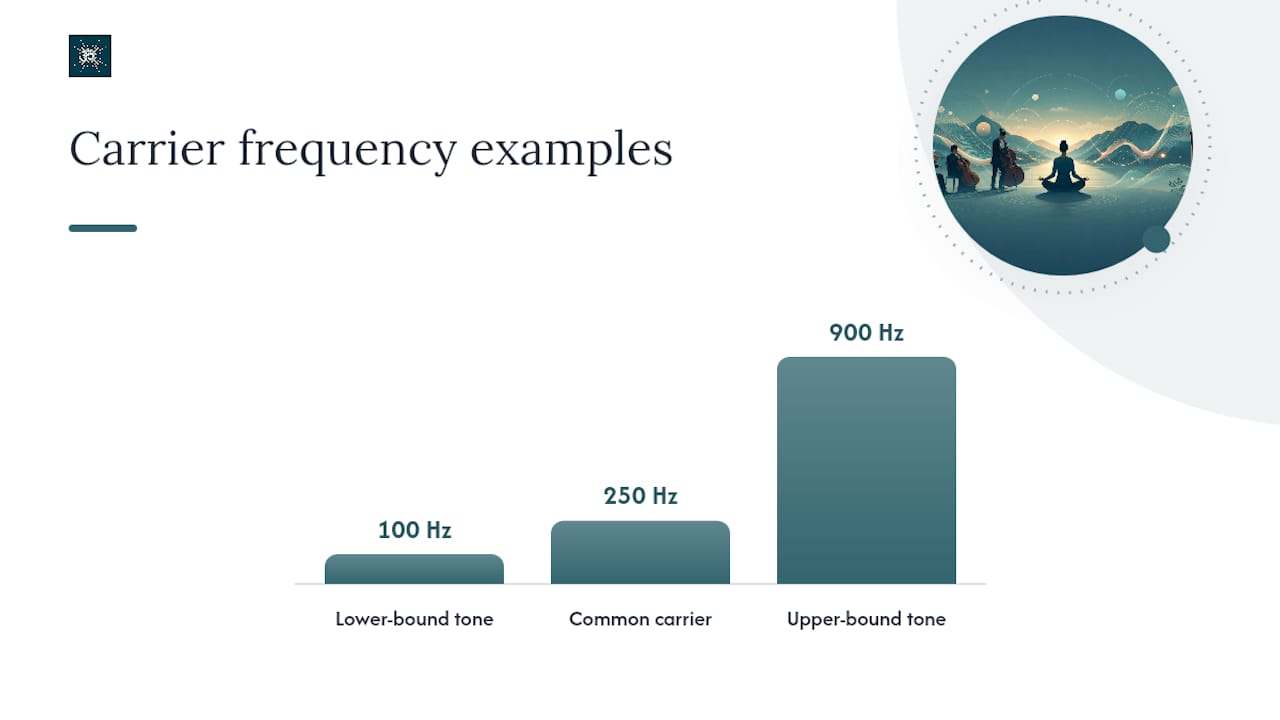
- Carrier frequency transparency. Reputable producers disclose their carrier tone range. Many protocols use tones between 100 and 900 Hz, with a 250 Hz carrier and 6 Hz interaural difference being a common combination for theta stimulation.
- Pink noise embedding options. Since embedding beats in pink noise increases listener preference, ask whether both embedded and dry mixes are available.
- Delivery formats. Stems, app-ready file formats, and headphone-tested masters all matter for integration work.
Pro Tip: Always request a short headphone test clip before licensing a full catalogue. If the binaural effect collapses on a laptop speaker or a cheap earbud, your clients will hear nothing but ambient strings, and the frequency work is wasted money.
Studio and composer credits are not vanity details. Abbey Road’s own research on the neuro-physiological effects of music makes the point that production quality genuinely shapes listener response, which is exactly why session credits belong on your procurement checklist.
How should practitioners licence orchestral meditation tracks?
Before you play a track in a class, embed it in an app, or sell it as part of a therapy session, map out exactly how it will be used. A recording licensed for personal listening is not automatically cleared for public performance, broadcast, or app store distribution.
Run through this before any commercial use:
- Confirm the licence covers your specific use: class playback, therapy sessions, app embedding, or public performance
- Check whether sync rights are included if you are pairing the track with video or narration
- Ask about territory restrictions and exclusivity clauses
- Check the required attribution wording, if any
“Royalty-free” is often misunderstood. It generally means you pay once rather than paying per play, but the scope of what is covered varies enormously between publishers. As Universal Music for Creators puts it, royalty-free licensing terms differ widely and public performance or sync rights are not always included by default.
For ongoing content needs, a subscription model usually works out cheaper than repeated one-off purchases. For a single project, a standalone purchase with clear stems and a device-friendly mix is often simpler. Treat vague licence wording, missing production credits, or no named composer as a red flag. Legitimate producers are proud to tell you who made the track and where.
Practical session templates for live orchestra meditation
Duration and frequency choice should match the setting, not the other way round.
- The 5 to 10 minute settle. A short theta-led piece around 6 Hz works well as a class opener or a quick reset between therapy clients.
- The 20 to 30 minute guided practice. Layered orchestral beds with gentle theta underneath suit standard meditation classes or app-based guided sessions, with room for narration over the top.
- The 45 to 60 minute deep immersion. Longer sound healing sessions need careful volume ramping at the start and end so nobody is jolted awake by a sudden orchestral swell.
Headphones are essential for the binaural effect to register at all. Over speakers, in a group setting, you are delivering an orchestral bed with ambient frequency texture rather than a true binaural experience, which is still valuable but works differently.
Pro Tip: If you are recording your own narration over a binaural track, keep your voice in a different frequency band to the underlying tones and mix it slightly forward. Otherwise your narration and the theta layer compete for the same sonic space, and both lose clarity.
A few safety notes deserve equal weight regardless of session length: check for photosensitive epilepsy risk before using any strongly pulsing audio, ask about sensory sensitivities in advance, and always keep a non-binaural alternative mix on hand for clients who find headphones uncomfortable or unsuitable.
Why Orchestral Meditations is a direct source for licensed tracks
Orchestralmeditations records its catalogue live at Abbey Road Studios with the National Philharmonic, integrating orchestration and sound science. Notably, composers and producers Robert Emery and Moritz Schneider contribute their expertise focused on creating arrangements designed for sustained, meditative listening rather than dramatic scoring.
For buyers weighing options, the choice usually comes down to three routes: a personal subscription for individual practice, a professional subscription for therapists and teachers needing broader licensing, and single royalty-free purchases for a specific project. Which one fits depends on whether you need an evolving library or a one-off track for a defined use.
What does research say about the psychological and physiological effects specifically?
Most of the controlled research on binaural and theta audio does not isolate orchestral arrangements from other sound beds. The physiological findings, increased calmness, improved focus, and the P300 changes seen in the month-long trial, come from binaural beat protocols generally, not from orchestral recordings tested in isolation.
What orchestral arrangement plausibly adds sits closer to a coherent hypothesis than a proven mechanism: live instrumentation introduces emotional and textural variation that a pure tone or drone lacks, which may support engagement over longer sessions. Abbey Road’s own editorial work on the neuro-physiological effects of music points toward production quality and musicality shaping listener response, though this is not a randomised clinical trial.
Preliminary work on closed-loop systems adds another layer. A small crossover trial testing an EEG-guided binaural beat algorithm found rapid shifts in dominant EEG frequency, suggesting real-time adaptive audio might eventually outperform static tracks. That technology remains experimental and is not yet standard in commercial meditation libraries.
The honest summary for practitioners: theta binaural protocols have a reasonably consistent evidence base for short-term mood effects, orchestral arrangement adds a plausible but not separately tested layer of engagement, and closed-loop adaptive systems are worth watching rather than relying on today.
How do you choose the right track for your goals?
Match the track to the outcome you actually want, not the genre you assume sounds most “meditative.” A client seeking focus before a work task needs something different to a client winding down for sleep.
For calm and stress reduction, look for slower tempo orchestration with a 6 Hz theta layer, since that combination shows the most consistent mood benefits in trials. For focus work, shorter sessions in the 5 to 15 minute range tend to fit better than long-form pieces, since attention drifts over extended listening regardless of the audio quality.
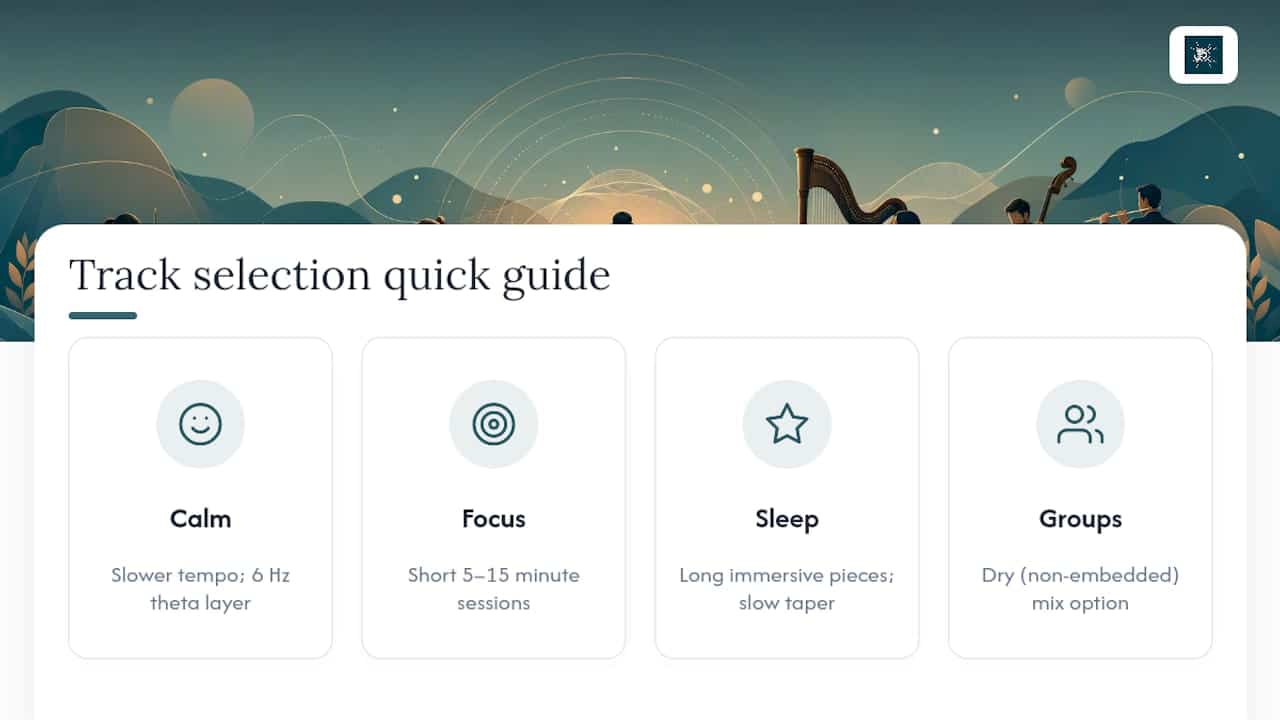
For sleep or deep relaxation, longer immersive pieces with minimal dynamic swings and a slow volume taper work best; avoid tracks with sudden orchestral crescendos partway through. For group classes, a track with a dry (non-embedded) mix option gives you flexibility over speakers, where the binaural layer will not register anyway.
Test before you commit. A short trial session on headphones tells you more in ten minutes than any product description. Notice whether the frequency layer is audible or buried, whether the orchestration feels calming or oddly cinematic, and whether narration space has been left in the mix if you plan to speak over it. Sound design choices shape outcomes as much as the underlying science does.
What commonly goes wrong during sessions?
Environment sabotages more sessions than bad audio ever does. A theta-layered orchestral track played over a laptop speaker in a room with traffic noise outside is not doing what the studio designed it to do.
The most frequent troubleshooting issues:
- No headphones available. The binaural effect simply will not translate over open-air speakers, so manage expectations or switch to a dry mix for group settings.
- Inconsistent volume across a group. Everyone hears differently through shared speakers. Calibrate to the quietest listener’s comfort, not the loudest.
- External distractions. Notification sounds, hallway noise, or a poorly soundproofed room undercut even the best-produced track. Address the room before blaming the recording.
- Narration masking the frequency layer. If a facilitator talks over a binaural track without checking the mix, the theta layer often gets buried under vocal frequencies.
- Overpromising outcomes. Setting expectations around guaranteed states (deep trance, instant sleep) sets clients up to feel the session “failed” when response is naturally variable.
Most of these are fixable with preparation rather than a different track. Test the room acoustics once, confirm headphone availability where the format demands it, and brief clients honestly that response varies person to person.
When professionally produced orchestral meditation makes the most sense
Studio-produced, properly licensed tracks earn their keep whenever reliability and legal safety matter more than novelty. Therapists building repeat protocols, teachers running paid classes, and app teams shipping to thousands of users all need audio they will not have to defend later on a licensing technicality.
My advice is straightforward: trial a short 6 Hz theta binaural track on headphones with a handful of real clients or users before committing to a subscription or deep app integration. Watch how they respond, not how the marketing copy reads. The right track proves itself in ten minutes or it does not.
— ROBERT
Ready to trial or licence a track?
Orchestralmeditations gives you what a generic stock library cannot: recordings made live at Abbey Road Studios with the National Philharmonic, composed by names like Robert Emery and Moritz Schneider, rather than synthesised beds with a frequency layer bolted on afterwards.
If you are exploring the catalogue for your own practice, the personal subscription at €21 per month gives you room to test different tracks without committing to a large purchase upfront. If you are a therapist, teacher, or app developer needing broader commercial rights, the professional subscription at €150 per month is built for exactly that use case. For a single project with defined scope, the royalty-free meditation music catalogue offers standalone purchases with licence terms worth reading closely before any public use.
Whichever route fits, check the licence scope against your actual use case first: class playback, therapy sessions, or app distribution each carry different requirements. For bespoke or enterprise licensing needs beyond the standard plans, contact the Orchestralmeditations team directly to discuss terms.
Sources
- Effects of self-administered binaural beats on meditative and introspective states | PLOS One
- Effects of daily listening to 6 Hz binaural beats over one month: an event-related potentials study
- What “Royalty-Free” music really means | Universal Music for Creators
FAQ
What is live orchestra meditation?
It refers to royalty-free meditation recordings made with live orchestral musicians, combined with binaural or 3D recording techniques and theta or Solfeggio frequency design, built specifically for meditative and therapeutic listening rather than performance.
Do binaural beats actually work for meditation?
Evidence is mixed but genuinely encouraging for short sessions: studies found 6 Hz theta binaural beats reliably increased calmness and focus, though a broader review found inconsistent entrainment results across different protocols.
How long should a binaural meditation session last?
Trials show benefits from sessions as short as 5 to 15 minutes for acute mood shifts, while a month-long protocol using 10 minutes daily produced measurable neural changes over time.
Does Orchestralmeditations offer licences for commercial use?
Yes. Orchestralmeditations offers a professional subscription for therapists, teachers and app developers, alongside standalone royalty-free purchases, with licence scope worth confirming for your specific use before public distribution.
What does royalty-free actually mean for licensing?
It generally means paying once rather than per play, but coverage varies. Always check public performance, sync and territory rights before using a track commercially.