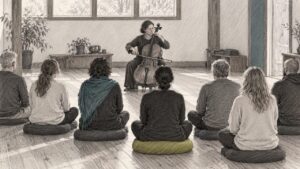
528 Hz is a specific sound frequency, sitting just above middle C on a piano, that has become one of the most widely used tones in sound healing and spiritual practice. If you want to know how to use 528 Hz for healing rituals, the short answer is this: play high-quality 528 Hz audio in a quiet, intentional space, settle into a comfortable position, set a clear intention, and listen for at least 20–30 minutes while breathing slowly and deliberately. That is the bare bones of it. But, as with most things worth doing, the details make all the difference between a genuinely transformative experience and simply sitting in a room with a YouTube video playing in the background.
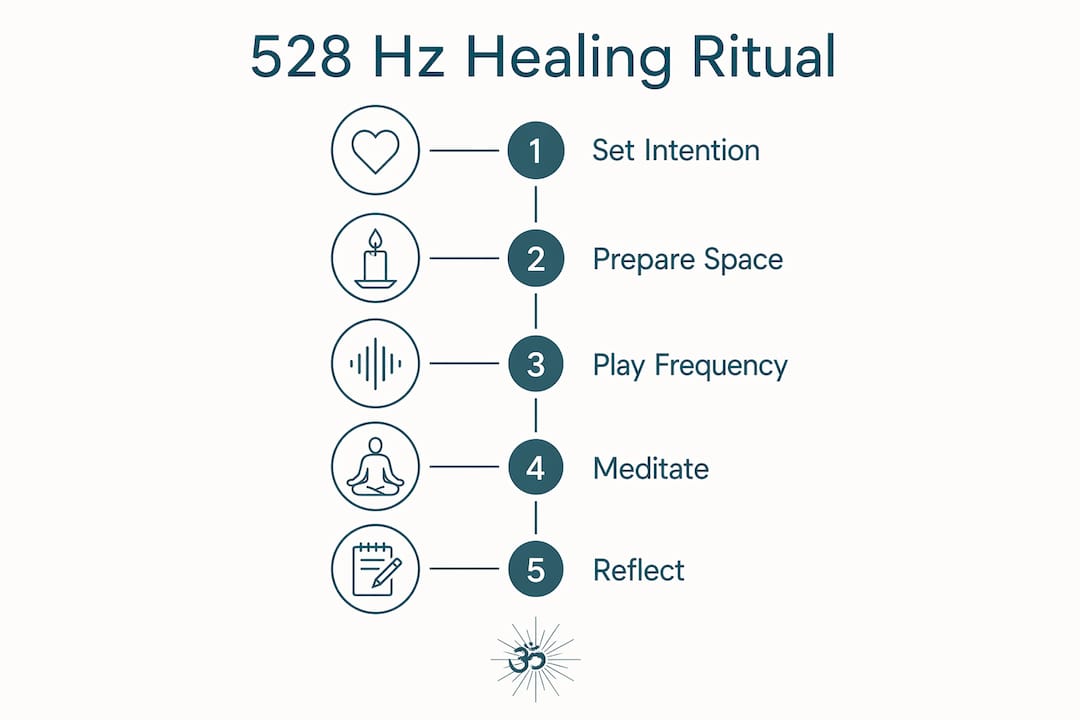
The most effective approach combines quality audio, a prepared environment, and a focused mindset. Here is what that looks like in practice:
- Choose professionally produced 528 Hz recordings rather than simple sine-wave loops. The difference in therapeutic depth is considerable.
- Set the scene: dim lighting, a comfortable seated or lying position, and ideally headphones for full immersion.
- State your intention before pressing play. Whether that is emotional release, stress relief, or spiritual connection, naming it matters.
- Breathe slowly and let the sound guide your attention inward rather than analysing it.
- Aim for sessions of 20–30 minutes, though even short periods of focused listening produce measurable physiological changes.
Pro Tip: For the richest healing experience, seek out orchestral 528 Hz recordings rather than electronic tones. Composers like Robert Emery, whose work with Orchestralmeditations is recorded with the National Philharmonic at Abbey Road Studios, layer binaural beats and theta frequencies into full orchestral arrangements. The result is something that works on you rather than simply playing at you.

What are the spiritual and healing benefits of 528 Hz?
The nickname “love frequency” did not come from nowhere. 528 Hz carries a cultural weight that has made it the go-to tone for practitioners working with emotional healing, spiritual connection, and energetic renewal. Whether you approach this from a purely spiritual angle or with a more sceptical eye, the reported benefits are worth understanding.

The modern cultural significance of 528 Hz as the “miracle tone” was popularised by Joseph Puleo and Leonard Horowitz in the late 20th century, drawing on numerological interpretations of ancient texts. It sits within the Solfeggio scale, a set of frequencies that many practitioners associate with specific emotional and energetic qualities.
Reported benefits that practitioners and researchers have associated with regular 528 Hz listening include:
- Stress and anxiety reduction: Controlled studies show measurable decreases in tension-anxiety scores after focused listening sessions.
- Emotional healing: Many practitioners use 528 Hz specifically during grief work, trauma processing, or periods of emotional turbulence.
- Increased sense of connection: The “love frequency” label reflects its use in rituals aimed at opening the heart and fostering compassion.
- Deeper meditative states: The frequency is commonly paired with breathwork and visualisation to deepen inward focus.
- Improved mood: Subjective mood assessments consistently show improvement after 528 Hz listening sessions.
- Spiritual attunement: Within New Age and holistic traditions, 528 Hz is used to align personal energy with broader spiritual intentions.
One thing worth saying plainly: the Solfeggio frequencies, including 528 Hz, have modern rather than ancient origins. Scholarly review confirms they emerged from a 1990s numerological reconstruction rather than documented Gregorian chant history. That does not diminish their practical value for relaxation and ritual. It simply means approaching the mythology with clear eyes while enjoying the genuine benefits.
What does the science actually say about 528 Hz?
Here is where things get genuinely interesting, and where a bit of honest nuance goes a long way.
A controlled study published in the Health journal measured salivary biomarkers and mood states in healthy adults before and after listening to 528 Hz music. The results showed that 528 Hz reduces cortisol and increases oxytocin more effectively than 440 Hz music after only five minutes of listening. The same study found significant reductions in tension-anxiety scores using the POMS 2 questionnaire. Those are real, measurable physiological changes from a relatively short listening session.
What the science does not support is the more dramatic claim that 528 Hz directly repairs DNA or resonates with chlorophyll at a molecular level. Physics is fairly unambiguous on this: sound at 528 Hz has a wavelength millions of times too large to interact with molecular structures in any meaningful way. The DNA repair narrative, while poetic, conflates acoustic frequency with molecular vibration across entirely different scales of physics.
The more grounded and still genuinely compelling picture looks like this:
- Sound frequency affects the autonomic nervous system through acoustic entrainment and emotional resonance.
- Rhythmic, tonal music at 528 Hz creates conditions conducive to parasympathetic nervous system activation, the “rest and digest” state.
- Listener expectation and ritual context significantly amplify the effect. The tone is a tool; the intention is the craftsperson.
- Biological response to sound relates more to rhythm, tone quality, and immersive production than to any single frequency value in isolation.
The takeaway is not “528 Hz is fake.” The takeaway is that it works, but probably not through the mechanisms its most enthusiastic advocates claim. Relaxation, mood improvement, and stress reduction are real outcomes. Molecular DNA repair via audio playback is not. Knowing the difference makes you a more effective practitioner, not a less spiritual one.
How to incorporate 528 Hz into your healing rituals and spiritual practices
Right, so you are sold on giving this a proper go. Here is how to build a ritual that actually holds together rather than feeling like you are just pressing play and hoping for the best.
Choose your method
Different contexts call for different approaches. The main options:
- Guided meditation with 528 Hz backing: Ideal for beginners. A narrator guides your attention while the frequency works in the background. Orchestralmeditations produces guided healing soundscapes that layer 528 Hz within full orchestral arrangements for exactly this purpose.
- Unguided listening or sound bath: Sit or lie in silence with the music playing. No agenda beyond presence. Works beautifully for experienced meditators.
- Background during yoga or breathwork: 528 Hz as ambient sound during physical practice deepens the mind-body connection without demanding focused attention.
- Sleep preparation ritual: A 20–30 minute session before bed, combined with progressive relaxation, can ease the transition into deep sleep.
Set the environment
The ritual context shapes the outcome at least as much as the frequency itself. Dim the lights, remove digital distractions, and if possible, use quality headphones or a good speaker system. A simple, intentional space matters more than an elaborate one.
- Light a candle or use soft lamp lighting.
- Introduce aromatherapy if it resonates with you: lavender, frankincense, and sandalwood pair naturally with meditative sound work.
- Place crystals in your space if that is part of your practice. Rose quartz and amethyst are commonly used alongside 528 Hz work for their associations with love and calm.
Duration and frequency of practice
For stress reduction and mood improvement, five minutes of focused listening produces measurable changes. For deeper meditative or spiritual work, 20–30 minutes is the sweet spot most practitioners recommend. Daily practice builds cumulative benefit; even three sessions per week produces noticeable shifts over time.
Some practitioners time their rituals around the lunar cycle, using the full moon as a natural anchor for deeper emotional release work and the new moon for intention-setting sessions. There is no scientific basis for lunar timing specifically, but the ritual structure it provides is genuinely useful for consistency.
Combining 528 Hz with other modalities
Sound healing works beautifully alongside other practices rather than in isolation:
- Crystals: Hold or place them on the body during listening.
- Aromatherapy: Diffuse essential oils before and during the session.
- Breathwork: Slow, diaphragmatic breathing synchronises naturally with the frequency’s calming effect.
- Journalling: Write immediately after a session while the reflective state is fresh.
Pro Tip: The therapeutic power of music is significantly amplified when the listener is fully present rather than passively hearing. Before each session, take three slow breaths and consciously decide to listen rather than simply hear. That small shift in attention changes everything.
Robert Emery and Moritz Schneider: the composers behind the soundscapes
Not all 528 Hz recordings are created equal. A sine wave looping for an hour and a full orchestral composition tuned to 528 Hz are both technically “528 Hz music,” in the same way that a kazoo and a Stradivarius are both technically “string instruments.” The difference in therapeutic depth is not subtle.
This is where Robert Emery and Moritz Schneider become genuinely relevant to anyone serious about healing rituals with music.
Robert Emery is a classically trained pianist and composer whose work spans concert performance, film scoring, and therapeutic music production. His approach to meditative music) is rooted in the conviction that live orchestral performance, recorded with proper acoustic space, creates an immersive quality that electronic production simply cannot replicate. He has produced educational guides on frequency healing and has been recognised within the sound healing community for bringing rigorous musicianship to a field that sometimes settles for less. His sessions with the National Philharmonic at Abbey Road Studios, produced under the Orchestralmeditations banner, represent some of the most technically accomplished healing music available in the UK.
Moritz Schneider brings advanced sound design expertise to the collaboration, specialising in 3D audio techniques and the integration of binaural beats and theta frequencies into orchestral arrangements. Where Emery provides the compositional architecture, Schneider shapes the spatial and neurological dimensions of the listening experience. His work creates what practitioners describe as an immersive healing environment rather than simply a pleasant piece of music.
Together, their contributions to Orchestralmeditations reflect a broader truth about orchestral soundscapes for mental wellness: sophisticated healing music integrates binaural beats, theta frequencies, and live performance in ways that simple tone loops cannot. The result is a listening experience that works on multiple neurological levels simultaneously.
Key features of their approach:
- Live orchestral recording with the National Philharmonic at Abbey Road Studios.
- Integration of binaural beats and theta frequencies within orchestral arrangements.
- 3D surround sound techniques that create spatial immersion.
- Compositions tuned to Solfeggio frequencies, including 528 Hz, with full harmonic context.
- Published educational guides on frequency healing and sound therapy methodology.
Orchestralmeditations: professionally produced 528 Hz for your practice
If you have spent time hunting for quality 528 Hz recordings and found yourself wading through hours of identical sine-wave loops on streaming platforms, you will understand why production quality matters so much in this space. Orchestralmeditations offers something genuinely different: full orchestral compositions, recorded at Abbey Road Studios with the National Philharmonic, tuned to healing frequencies including 528 Hz.
The library includes both guided and unguided meditations, with tracks designed specifically for healing rituals, deep relaxation, and spiritual practice. Binaural beats and theta frequencies are woven into the orchestral fabric rather than layered on top as an afterthought. The 3D audio production means the music surrounds you rather than simply playing in front of you, which makes a tangible difference during extended ritual sessions.
For practitioners in the UK looking to build a consistent, high-quality sound healing practice, Orchestralmeditations provides a curated library you can trust. Browse the 528 Hz meditation collection or explore the full range of professional meditation music to find the recordings that fit your ritual.
FAQ
How do you use 528 Hz effectively?
Play high-quality 528 Hz audio in a quiet space, set a clear intention, and listen for 20–30 minutes with slow, deliberate breathing. Professional orchestral recordings produce deeper results than simple electronic tones.
Five minutes of focused listening produces measurable reductions in cortisol and anxiety scores. For deeper meditative or spiritual work, 20–30 minutes per session is the range most practitioners recommend.
What does 528 Hz mean spiritually?
528 Hz is widely known as the “love frequency” or “miracle tone” within New Age and holistic traditions, associated with emotional healing, heart-opening, and spiritual connection. Its modern cultural significance was popularised in the 1990s by researchers drawing on numerological interpretations of ancient texts.
Can you use frequencies to heal the body?
Sound frequencies like 528 Hz can support healing by activating the parasympathetic nervous system, reducing cortisol, and improving mood. These are genuine physiological effects, though claims about direct DNA repair are not supported by current physics or molecular biology.
Does Orchestralmeditations offer 528 Hz recordings?
Yes. Orchestralmeditations produces professionally recorded 528 Hz compositions with the National Philharmonic at Abbey Road Studios, integrating binaural beats and theta frequencies for deep meditative and healing use.
Key takeaways
528 Hz frequency supports genuine stress reduction and mood improvement through sound, and its effectiveness depends far more on audio quality, intentional listening, and ritual context than on the frequency value alone.
| Point | Details |
|---|---|
| Start with intention | State your purpose before each session; listener expectation significantly shapes the outcome. |
| Duration matters | Five minutes produces measurable cortisol reduction; 20–30 minutes suits deeper ritual work. |
| Quality over simplicity | Orchestral recordings with binaural beats outperform simple sine-wave loops for therapeutic depth. |
| Science is real, myths are not | 528 Hz measurably reduces cortisol and anxiety; DNA repair claims have no basis in physics. |
| Orchestralmeditations | Offers Abbey Road-recorded 528 Hz compositions by Robert Emery and Moritz Schneider for healing rituals. |