Sound frequencies are specific vibrations measured in hertz (Hz) that directly influence the brain, body, and emotions through a process called neural entrainment. When your brain encounters a rhythmic sound at a particular frequency, it tends to synchronise its own electrical activity to match. That is not poetry. That is measurable neuroscience. Understanding frequencies and what they do gives you a practical tool for shifting mental states, supporting emotional balance, and deepening meditation. Composers like Robert Emery and Moritz Schneider, who craft the orchestral soundscapes behind Orchestralmeditations, build their work around exactly these principles, using frequency awareness to shape how listeners feel from the first note.
What are the key brainwave frequencies and what do they do?
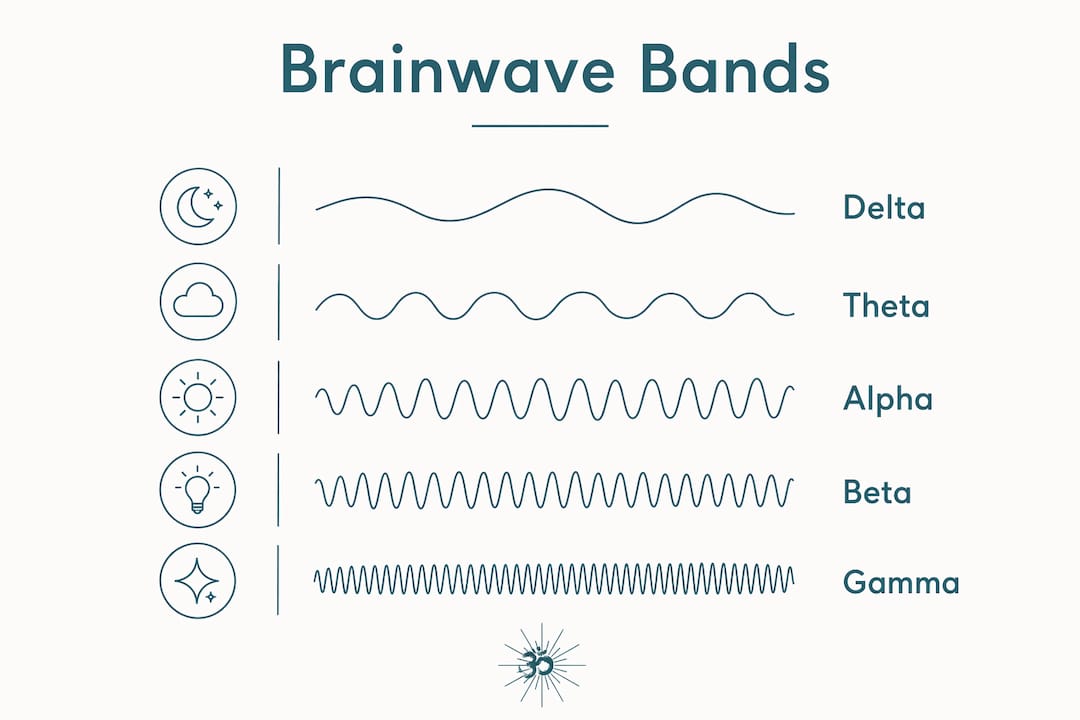
Brain oscillations span 0.5–100 Hz across five distinct bands, each linked to a different mental state. Think of them as gears in a car. You do not drive at motorway speed in first gear, and your brain does not meditate deeply in a high-alert state. The right frequency range shifts you into the right gear.

Here is a breakdown of the five core brainwave bands:
| Frequency band | Range | Associated mental/emotional state |
|---|---|---|
| Delta | 0.5–4 Hz | Deep sleep, physical restoration, unconscious processing |
| Theta | 4–8 Hz | Deep meditation, creativity, dreaming, emotional insight |
| Alpha | 8–13 Hz | Relaxed alertness, calm focus, light meditation |
| Beta | 13–30 Hz | Active thinking, problem solving, concentration |
| Gamma | 30–100 Hz | Peak cognition, memory consolidation, heightened awareness |
Each band is not just a label. Music tempo and complexity influence alpha, beta, theta, and gamma power in ways measurable by EEG. That means the music you choose is actively steering your brain state, not just providing background noise.
How does neural entrainment actually work?
Neural entrainment is the brain’s tendency to synchronise its electrical rhythms with an external rhythmic stimulus. Play a steady 6 Hz pulse, and your brain nudges itself toward the theta band. The effect is not instant, and it is not guaranteed for every listener. Individual differences in baseline brain activity, stress levels, and even caffeine intake all play a role. But the mechanism is real, and music drives neural entrainment in ways that shift mental states predictably across populations.
Slow, simple compositions tend to pull the brain toward alpha and theta. Fast, complex arrangements push it toward beta and gamma. This is why a frantic film score makes your heart race, while a slow orchestral piece at 60 beats per minute feels like a warm bath for your nervous system.
Pro Tip: Individual responses to frequency-based music vary. If a theta-targeted track leaves you feeling wired rather than calm, try an alpha-range piece first and work downward gradually.
How are solfeggio and other therapeutic frequencies applied?
The solfeggio scale is an ancient set of tones that has found a second life in modern sound therapy. The full solfeggio scale includes 174, 285, 396, 417, 528, 639, 741, 852, and 963 Hz, each with a distinct therapeutic association. Whether you approach this from a spiritual angle or a purely physiological one, the research behind several of these tones is genuinely interesting.
Here are the most widely studied solfeggio frequencies and their reported effects:
- 174 Hz. Associated with pain relief and a sense of physical security. Often used in vibroacoustic therapy.
- 285 Hz. Linked to tissue regeneration and cellular repair in traditional sound healing frameworks.
- 396 Hz. Traditionally associated with releasing guilt and fear, supporting emotional grounding.
- 417 Hz. Used to facilitate change and clear emotional blockages, often described as a “reset” tone.
- 528 Hz. Perhaps the most studied. A 2018 study by Akimoto demonstrated that 528 Hz reduces cortisol and increases oxytocin, the bonding hormone. That is a measurable physiological shift from a single frequency.
- 639 Hz. Associated with improving relationships and interpersonal harmony.
- 741 Hz. Linked to self-expression and problem solving.
- 852 Hz. Traditionally connected to spiritual awakening and intuition.
- 963 Hz. Often called the “frequency of the gods,” associated with higher states of consciousness and pineal gland activation.
For a deeper look at how each tone is applied therapeutically, the solfeggio frequency guide at Orchestralmeditations covers all nine tones in detail.
Solfeggio vs binaural beats: what is the difference?
Solfeggio frequencies are single tones played at a specific Hz value. You can hear them through speakers or headphones. Binaural beats, by contrast, require stereo headphones to work at all. They are a different mechanism entirely, which is worth understanding before you invest in either approach. The best solfeggio frequency for healing depends on your specific goal, whether that is stress relief, emotional release, or deeper sleep.
Pro Tip: Tuning forks and singing bowls can complement recorded solfeggio tracks. A 528 Hz tuning fork applied near the body during a listening session adds a tactile, vibrational layer that many practitioners find amplifies the calming effect.
How do binaural beats work and what do they actually deliver?
Binaural beats are one of the most misunderstood tools in sound therapy. Here is the mechanism, stripped of mysticism.
- Two separate tones enter each ear. Your left ear receives, say, 200 Hz. Your right ear receives 206 Hz.
- Your brain perceives a third frequency. The difference between the two tones (6 Hz in this example) is processed as a pulsing beat. That 6 Hz pulse sits squarely in the theta band.
- Entrainment follows. Your brainwaves begin to synchronise toward that 6 Hz theta frequency, nudging you toward a meditative, dreamy state.
- Stereo headphones are non-negotiable. Stereo headphones are essential for binaural beats to create the required phase difference. Playing binaural beat tracks through speakers completely negates the effect. The two tones mix in the air before reaching your ears, and the brain never receives the separate signals it needs.
- Results require consistency. A single session is unlikely to produce dramatic results. Sessions 3–5 times per week over one month are recommended for cumulative shifts in anxiety, sleep quality, or focus.
The most common misconception about binaural beats is that they work like a light switch. One listen and you are meditating like a Tibetan monk. The reality is more like going to the gym. The benefits are real, but they accumulate over time with regular practice. Theta-range binaural beats (4–8 Hz) are most commonly used for meditation and creative insight. Alpha-range beats (8–13 Hz) suit relaxed focus. Beta-range beats (13–30 Hz) are used for concentration and alertness.
What does the science say about frequencies and healing?
The scientific evidence for frequency therapy is genuine, though it is more nuanced than many wellness claims suggest. 40 Hz auditory stimulation enhances gamma brainwave activity linked to cognition, memory, and neuroprotection. Research at MIT has shown that 40 Hz sound can reduce Alzheimer’s hallmarks and stimulate neural synchronisation. That is a remarkable finding, and it has driven serious clinical interest in frequency-based interventions.
Vibroacoustic therapy uses low frequencies between 30–120 Hz to activate the parasympathetic nervous system and reduce cortisol. The parasympathetic response is your body’s “rest and digest” mode. Activating it through sound is a genuinely useful tool for stress management, pain modulation, and sleep support.
“Frequencies provide a container for nervous system grounding, enabling innate self-regulation and healing rather than acting as direct cures.” The distinction matters. Sound therapy supports the body’s own regulatory systems. It does not override them or replace clinical treatment.
The clinical picture is honest about limitations too. Frequency therapy is best viewed as a supportive, integrative practice and not a substitute for conventional medical care. Experts at Cedars-Sinai caution that frequency therapy claims are rooted in traditional experience and should supplement, not replace, medical treatment. That is a responsible framing. For practitioners interested in how sound therapy fits within broader integrative medicine, the longevity and integrative medicine guide offers useful clinical context.
Sound therapy is a low-risk, non-invasive practice that requires regular sessions for benefits such as improved sleep, focus, or pain relief. The low-risk profile is one of its genuine strengths. You are not taking a drug. You are not undergoing a procedure. You are listening to carefully designed sound, and the worst likely outcome is that you fall asleep (which, for many people, is exactly the point).
Key takeaways
Sound frequencies influence the brain and body through neural entrainment, with specific Hz ranges, solfeggio tones, and binaural beats each producing distinct and measurable effects on mental and physical states.
| Point | Details |
|---|---|
| Five brainwave bands | Delta through Gamma (0.5–100 Hz) each correspond to distinct mental states from deep sleep to peak cognition. |
| Solfeggio tones have physiological effects | 528 Hz demonstrably reduces cortisol and increases oxytocin in controlled studies. |
| Binaural beats need stereo headphones | Speakers negate the phase difference required for brainwave entrainment to occur. |
| Consistency drives results | Sessions 3–5 times weekly over at least one month produce cumulative improvements in sleep, focus, and anxiety. |
| Frequency therapy is integrative, not curative | Sound practices support the nervous system’s own regulation and should complement, not replace, medical care. |
Why I think most people are using frequencies the wrong way
Here is my honest observation after years of working with sound and meditation: most people treat frequency therapy like a vending machine. Insert one binaural beat track, receive instant enlightenment. Then they feel mildly relaxed, shrug, and conclude it “didn’t work.”
The problem is not the frequencies. The problem is the expectation.
What I have found, both personally and in watching how listeners engage with carefully crafted sound, is that intention and consistency matter as much as the Hz value. A 528 Hz track played half-heartedly while scrolling through your phone will do approximately nothing. The same track, listened to with headphones, in a quiet space, three times a week for a month, is a genuinely different experience.
This is why I have enormous respect for what Robert Emery and Moritz Schneider do with Orchestralmeditations. Robert Emery is a composer and producer whose orchestral work brings emotional depth and structural precision to meditation music. Moritz Schneider brings a similarly thoughtful approach to sound design, ensuring that frequency choices serve the listener’s state rather than just ticking a therapeutic box. Their compositions are not frequency therapy bolted onto a pretty tune. The frequency awareness is woven into the architecture of the music itself.
The other thing most people miss is the difference between a frequency that targets a state and a frequency that supports it. Theta binaural beats do not force your brain into meditation. They create conditions where meditation becomes easier. That is a subtle but important distinction. Think of it like good lighting in a room. It does not make you creative, but it makes creativity more likely.
My advice: start with alpha-range tracks if you are new to this. Build the habit before chasing the deeper theta states. And for goodness’ sake, use headphones.
— ROBERT
Orchestralmeditations: meditation music built on frequency principles
Orchestralmeditations produces meditation music that takes frequency design seriously, not as a marketing claim but as a compositional commitment. Recorded at Abbey Road Studios with the National Philharmonic, the tracks by Robert Emery and Moritz Schneider incorporate binaural beats, theta frequencies, and solfeggio-informed orchestral arrangements into music that genuinely supports relaxation and meditative depth.
The library covers a wide range of mental states, from light alpha relaxation to deep theta meditation, with 3D surround sound recording that makes the listening experience feel genuinely immersive. If you are ready to put frequency principles into practice with music that has been crafted with both scientific awareness and musical artistry, the Orchestralmeditations meditation music library is the place to start. You can also browse curated meditation selections tailored to specific wellness goals.
FAQ
What are frequencies and what do they do to the brain?
Frequencies are sound vibrations measured in hertz that synchronise brainwave activity through neural entrainment. Different Hz ranges shift the brain into distinct states, from deep sleep (delta) to peak cognition (gamma).
What is the solfeggio frequency list?
The solfeggio scale includes nine tones: 174, 285, 396, 417, 528, 639, 741, 852, and 963 Hz. Each is associated with a specific therapeutic or emotional effect, from pain relief to spiritual awareness.
Do binaural beats actually work?
Binaural beats produce measurable brainwave entrainment when used correctly with stereo headphones. Consistent sessions 3–5 times weekly over at least one month are needed for reliable improvements in sleep, focus, or anxiety.
What frequency is best for meditation?
Theta frequencies (4–8 Hz) are most closely associated with deep meditative states, creativity, and emotional insight. Alpha frequencies (8–13 Hz) suit lighter, relaxed focus and are a good starting point for beginners.
Are healing frequencies safe to use?
Sound therapy is a low-risk, non-invasive practice with no significant side effects for most people. Experts recommend treating it as a complementary wellness tool rather than a replacement for conventional medical treatment.