Bilateral stimulation music, in the sense that matters here, is orchestral binaural and theta music mixed for headphones and 3D listening to support calmness and focused meditative states. It is not the alternating left/right audio used in EMDR trauma therapy, which is a separate clinical tool with its own protocols. If you want the short version: put on headphones, try a 5 to 15 minute theta track, and see how your body responds before you build a whole practice or a paid product around it.
One practical place to start sampling that kind of material is a catalogue composed and produced with input from Robert Emery and Moritz Schneider.
TL;DR:
- Binaural beats require headphones to produce the phantom pulse within the theta range, as speakers cancel the binaural effect by mixing channels before reaching ears.
- Short, self-administered 6 Hz theta sessions, lasting around five to fifteen minutes, have shown measurable effects on calmness and focus in recent research.
- The effectiveness of binaural and theta music depends on exposure duration, with some EEG studies showing entrainment within 6 to 10 minutes, while others do not.
- Solfeggio frequencies are used as musical flavor and lack strong evidence for healing claims, serving more as compositional elements than therapeutic tools.
- Commercial use of such music requires careful licensing, with options for single tracks or subscriptions, and production details like live orchestral recordings at Abbey Road add value.
What binaural, theta and Solfeggio actually mean in this music
A binaural beat happens when your left and right ears each receive a slightly different pure tone. Your brain perceives a third, phantom pulse at the difference between the two, and when that pulse sits in the theta range (roughly 4 to 8 Hz), composers use it as the rhythmic backbone under an orchestral arrangement rather than as a stand-alone clinical signal.
Solfeggio frequencies are a set of tones associated with historical chant traditions. Treat them as compositional colour, not a guaranteed mechanism: a 2023 review of chanting and Solfeggio research concluded evidence for specific healing claims tied to these frequencies remains limited, and that they work better as an artistic choice than a promised outcome.
None of this is EMDR. EMDR bilateral stimulation is a therapist-led clinical technique for trauma processing, built around eye movement or tactile alternation, and it sits entirely outside what this article covers.
- Binaural beats need two channels and two ears working independently, so headphones aren’t optional here.
- Theta-range pulses (4 to 8 Hz) are the layer composers build the orchestral texture around.
- Solfeggio tones are best understood as a compositional flavour, not a clinical claim.
- Speakers blend the channels before they reach you, which cancels the binaural effect entirely.
What the research actually shows about binaural and theta listening
A 2018 meta-analysis of binaural beats across numerous studies reported a medium, statistically significant effect on cognition, anxiety and pain perception, with results depending heavily on frequency, exposure time, and whether the beats played before or during a task. That’s a genuinely encouraging number, but it’s an average across very different studies, not a promise for any one listener.
The picture gets murkier at the EEG level. A systematic review of binaural beat entrainment found some studies detected theta entrainment after 6 to 10 minutes of stimulation, while several others found no entrainment at all. Method and exposure duration varied so widely between studies that the review couldn’t call the effect reliable, only plausible under the right conditions.
More recent work narrows that gap slightly. A 2026 PLOS One study involving over 200 participants found that brief, self-administered 6 Hz theta beats reliably increased calmness and focus, and that embedding the beats in pink noise was the subjectively preferred format. It’s a naturalistic online study rather than a lab trial, so treat it as a strong hint about real-world listening rather than the final word.
Spatial audio adds its own wrinkle. A Frontiers in Psychology study on three-dimensional sound fields found that a genuinely 3D mix altered mood, felt emotion and respiration compared with flat headphone playback, though the findings are preliminary and comfort with immersive audio varies from person to person.
- Medium effects on cognition, anxiety and pain appear across binaural beat research generally, but exposure time and timing both matter.
- Theta entrainment shows up in some EEG studies within 6 to 10 minutes and fails to show up in others.
- Short, self-administered 6 Hz sessions have produced measurable calmness and focus gains in recent online research.
- 3D sound fields can shift mood and breathing, but not every listener finds that shift pleasant.
A short, repeatable way to listen
Nothing here needs special equipment beyond a decent pair of headphones, and that part isn’t negotiable: speaker playback merges your left and right channels before they reach your ears, which erases the binaural effect the whole track depends on.
- Put on headphones in a quiet space where you won’t be interrupted for 15 minutes.
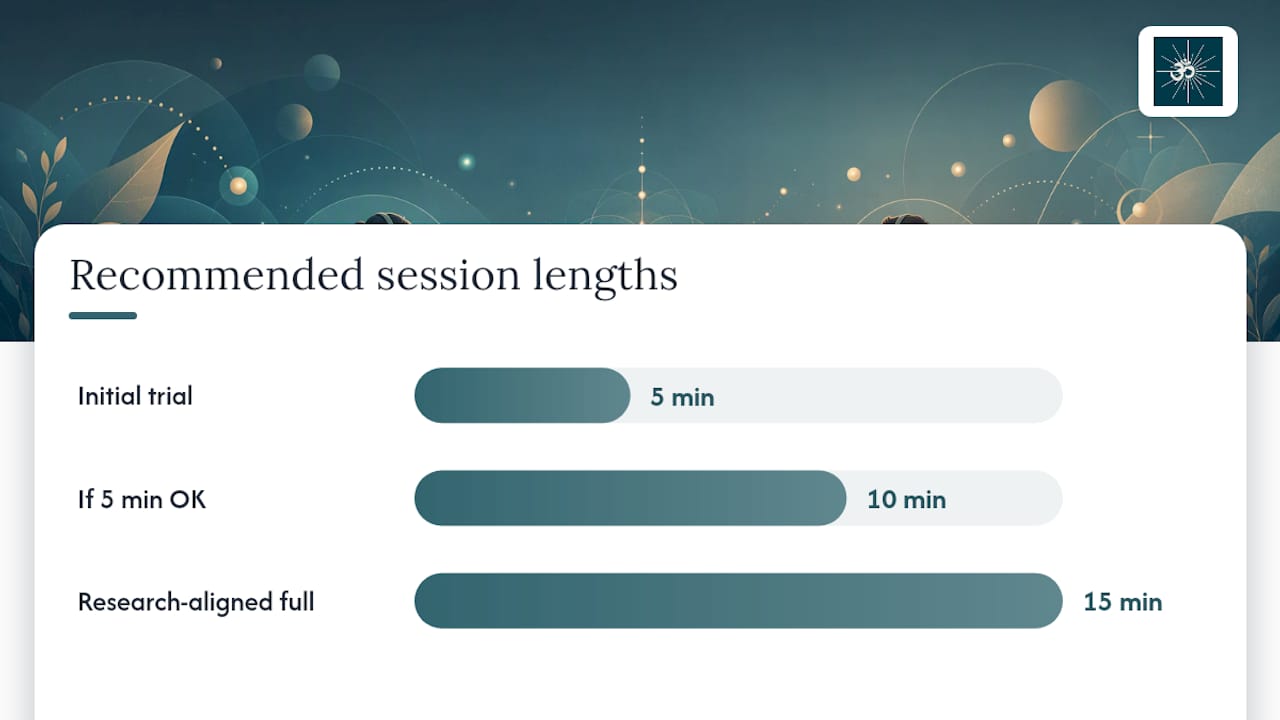
- Start with a single 5 minute trial at a comfortable, moderate volume rather than diving straight into a full session.
- Notice how you feel: calmer and settled is the goal; dizzy, nauseous or more anxious is your cue to stop immediately.
- If the first 5 minutes felt fine, extend to 10 or 15 minutes next time, which lines up with where researchers have actually observed theta effects.
- Pay attention to whether the track embeds its theta tone in pink noise. Recent listener research found that format subjectively preferable to a bare tone.
Composers building this kind of track often use carrier tones somewhere in the 250 to 400 Hz range as the audible layer that carries the theta pulse underneath. That’s a production detail worth knowing if you’re comparing tracks, since it affects how the beat actually sounds rather than just how it measures on paper.
Pro Tip: Keep a stereo (non-binaural) version of any track on hand for group settings, since not everyone in a room will have headphones or want the binaural version.
Choosing tracks you can actually license for professional work
If you’re building a class, an app or paid content, the production details matter as much as the listening experience. Live orchestral recording, a documented binaural or 3D mix, and metadata that states the carrier frequency and recommended session length all separate a professionally produced track from a generic loop.
On the legal side, check the licence wording carefully before you use anything commercially:
- Confirm the track is explicitly royalty-free for the use you have in mind, not just free to stream.
- Check whether the licence covers professional or commercial use, since personal-use licences rarely extend to paid classes or apps.
- Look for stated usage limits, such as caps on distribution or the number of end users covered.
- Note any attribution requirements written into the licence.
- Confirm the file formats on offer match what your platform needs.
Composer and studio credits carry real weight for professional buyers, not just marketing gloss. Robert Emery has composed and conducted for major film, television and live orchestral projects, and Moritz Schneider’s production work sits in that same high-fidelity orchestral tradition. Knowing who wrote and produced a track, and where it was recorded, tells you something concrete about the craft behind it, which matters when you’re putting your name next to it in front of clients.
| What you need | Single track licence | Subscription |
|---|---|---|
| Best suited for | One project or occasional use | Ongoing classes, apps or content |
| Billing | One-time purchase | Recurring monthly |
| Catalogue access | The track you buy | Full library while subscribed |
Orchestral Meditations: what backs the catalogue
Orchestral Meditations produces royalty-free meditation music recorded at Abbey Road Studios with the National Philharmonic, built around binaural, theta and 3D surround techniques. The catalogue carries composer and technical notes track by track, and buyers can choose a subscription or a single-purchase licence depending on how they plan to use the music.
- Recordings use live orchestral musicians rather than sample libraries, captured at Abbey Road Studios with the National Philharmonic.
- The production approach centres on binaural, theta and 3D surround sound as the core technical framework.
- Robert Emery and Moritz Schneider bring composing and production experience from large-scale orchestral work to the catalogue.
- Both subscription and single-track licensing routes are available for different buyer needs.
Sitting with a theta track before I recommend anything
I tried a short session before writing this: fifteen minutes, headphones on, phone face-down, no notifications sneaking in to ruin the mood. The first five minutes felt like nothing much, if I’m honest, mostly me wondering whether my breathing sounded too loud in my own head. By minute ten, something had settled. Not fireworks, just a quieter kind of attention, the sort where your shoulders finally admit they’d been up near your ears the whole time.
If you’re guiding a group through something similar, the timing cue matters more than any script. Tell people the first few minutes might feel uneventful, and that’s normal rather than a sign it isn’t working. Cue them to notice their breath around the ten-minute mark, not before, since that’s roughly where the research suggests the effect tends to land.
— ROBERT
Where to sample and licence tracks for your own sessions
If you liked what that trial session did, the practical next step is sampling the catalogue yourself rather than taking anyone’s word for it, mine included.
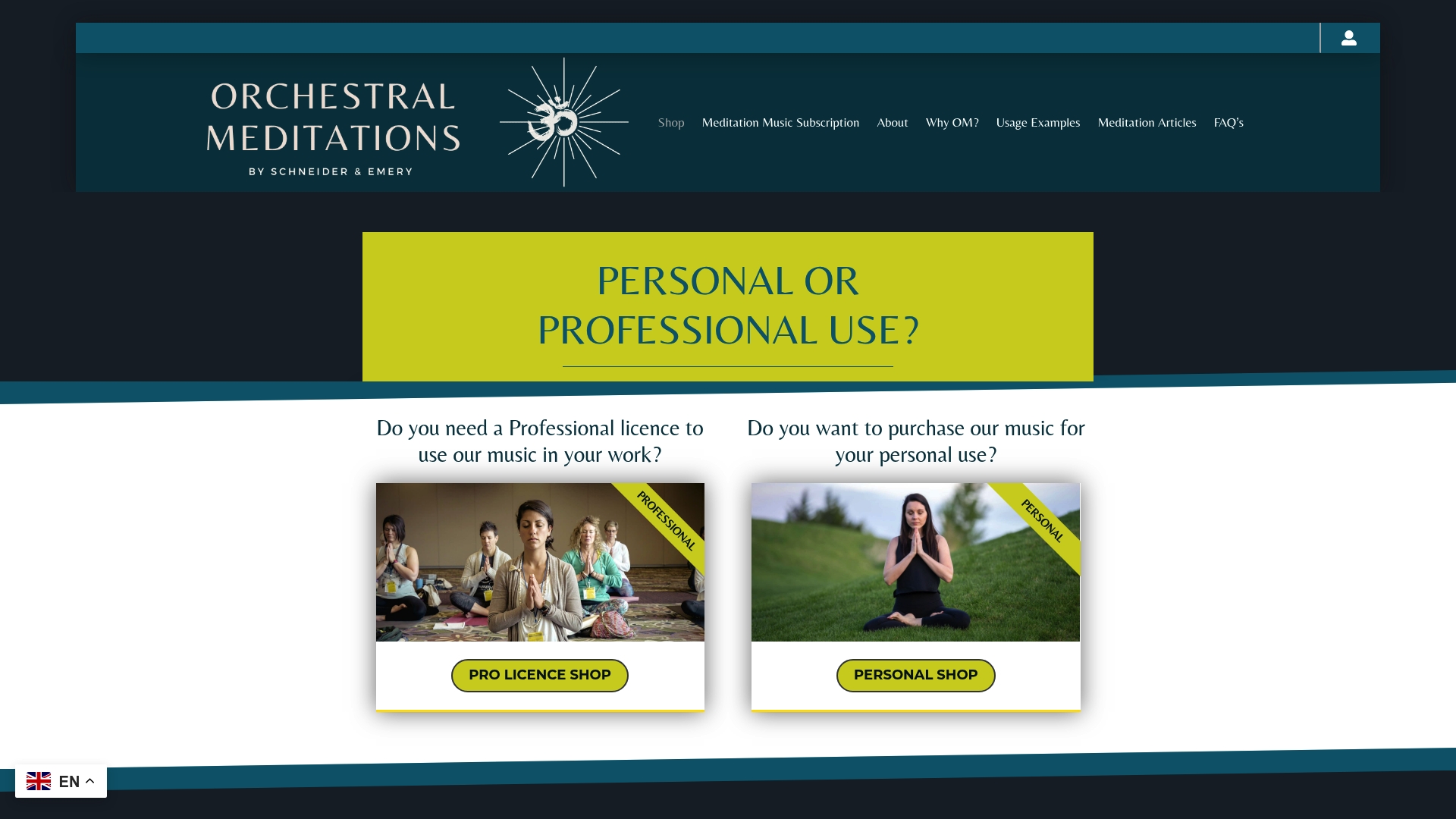
For personal practice, the Personal subscription at 21 EUR per month gives you ongoing access to the library while you figure out what actually works for your own listening habits. For classes, apps or paid content, the Professional subscription at 150 EUR per month covers commercial licensing, and the Royalty Free Meditation Music catalogue lays out single-purchase licence terms if a subscription isn’t the right shape for your business.
- Check each product page for licence scope, sample listens, available file formats and composer credits before buying.
- Compare a single track licence against a subscription based on how often you’ll actually need new material.
- Contact the platform directly if a licensing question isn’t answered on the page itself.
Have a listen, check the licence against your actual use case, and go from there.
FAQ
What is bilateral stimulation music in a meditation context?
In this context, it’s orchestral music mixed with binaural beats, often in the theta range, and sometimes 3D surround techniques, designed to support relaxation and focused meditative states. It’s a listening and production approach, not a clinical trauma therapy technique.
Do I need headphones for binaural or theta tracks to work?
Yes. Binaural beats depend on your left and right ears each receiving a slightly different tone, and speaker playback merges those channels before they reach you, which cancels the effect entirely.
How long should a first listening session last?
Start with a 5 minute trial at a comfortable volume, then extend to 10 or 15 minutes if it feels fine, since that window lines up with where researchers have observed theta-related calmness effects. Stop immediately if you notice dizziness, nausea or rising distress.
Can I use Orchestral Meditations tracks in paid classes or an app?
Yes, through the Professional subscription at 150 EUR per month, which covers commercial licensing for classes, apps and paid content. Single-track licensing is also available through the Royalty Free Meditation Music catalogue for occasional or project-based use.
Is this music a substitute for clinical trauma therapy such as EMDR?
No. This music supports relaxation and meditative focus as a wellness practice, and it is not designed or intended as a substitute for EMDR or any other clinical trauma treatment delivered by a qualified therapist.