417 Hz is a Solfeggio-associated frequency widely used in meditation and sound-healing practice to support clearing old patterns and easing transitions. People commonly report a sense of release, a lighter mood, or help moving through change while listening to it. We should say upfront though: most of that evidence is subjective, and expectation, tempo, and musical structure likely explain a good chunk of what listeners feel.
TL;DR:
- Most reported benefits of 417 Hz are subjective, influenced by expectation and musical structure, with little to no direct scientific evidence of specific healing effects.
- The historical connection of 417 Hz to ancient practices is contested, and labeling a track “417 Hz” differs from actual concert pitch tuning, which is usually 440 Hz.
- The structure and tempo of music, rather than the exact frequency, drive physiological responses like relaxation and parasympathetic activation.
- Using high-quality, professionally produced Solfeggio tracks can enhance perceptual experience, but lower-quality recordings often mask subtle overtones and textures.
- Treat frequency listening as an experiment; set clear intentions, control environment, and track personal shifts without relying solely on it as a definitive therapeutic tool.
What is 417 Hz? Its Solfeggio origin and modern use
The Solfeggio scale is one of those ideas that sounds ancient but is, in practice, a modern reconstruction. The frequencies got a huge second wind during the wellness revival of the last couple of decades. It is repackaged with chakra charts and YouTube thumbnails promising instant transformation.
417 Hz sits as the “RE” tone in most popular Solfeggio lists, usually tied to undoing situations and facilitating change. The trouble is, the historical chain connecting these specific numbers to ancient chant is genuinely contested. Skeptical reviews of the Solfeggio framework note that proponents themselves disagree about which frequencies came first or matter most, which tells you something about how solid the foundations are.
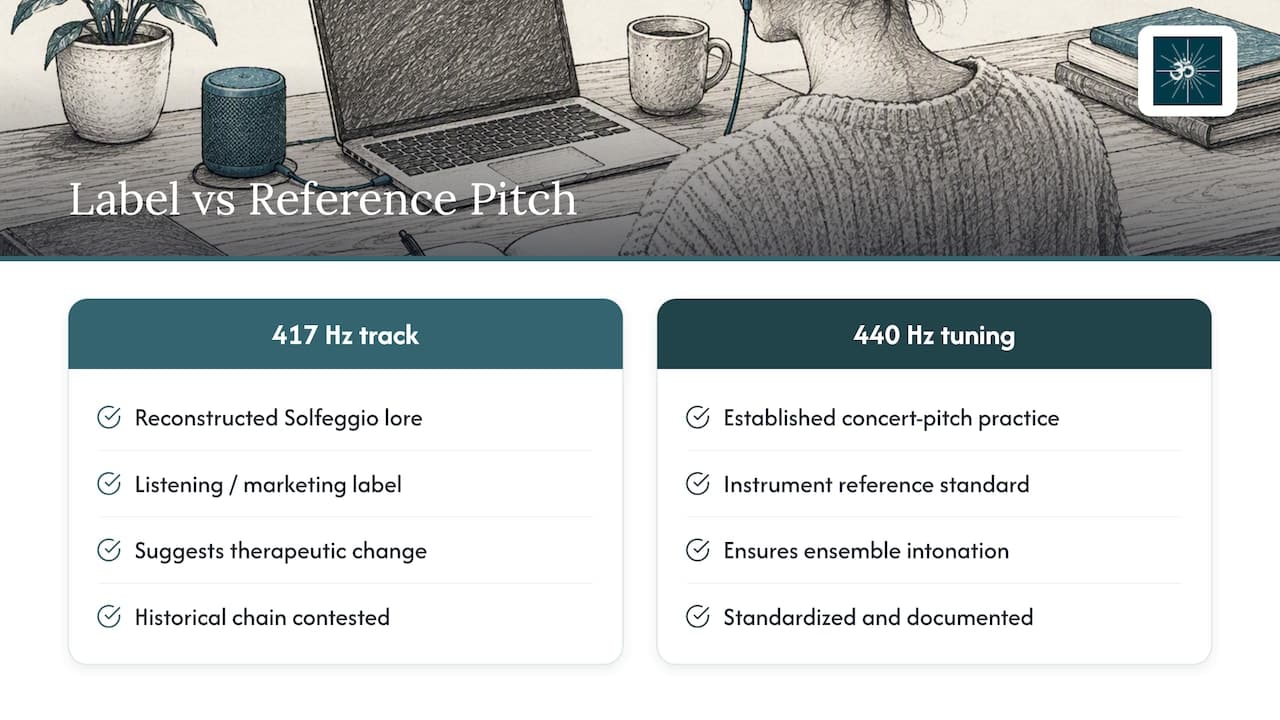
Worth separating two things here: frequency labelling (the marketing term stamped on a track) and concert-pitch tuning (the actual reference pitch an orchestra tunes to, commonly 440 Hz). A track labelled “417 Hz” is not the same kind of claim as an orchestra tuning decision, and conflating the two is where a lot of confusion creeps in.
What research and critical reviews actually show about frequency effects, placebo and tempo
Here’s where we put our straight-talking hat on, because this is the bit most wellness content glosses over.
A content analysis of therapeutic frequency claims in digital music found that a surprising number of popular “healing frequency” uploads do not technically contain the Hertz value they are labelled with. The same analysis pointed to expectation and tempo as more plausible drivers of reported benefit than the exact number in the title.
That matters, because:
- Slow tempo and simple melodic structure are linked to parasympathetic activation and lower stress responses, regardless of which number is on the label.
- Believing a track will help you relax is itself a meaningful contributor to actually relaxing: the expectation effect is real and well documented in music-physiology research.
- A randomized cross-over trial comparing 432 Hz and 443 Hz tunings in cancer patients found measurable differences in heart rate and blood pressure between the two tunings, yet the authors were careful to note that musical arrangement and overall structure might explain the effect as much as the single frequency itself.
- Music therapy research separates “music medicine” (you pressing play on a recording) from “music therapy” (a trained therapist guiding a session), and that distinction changes how seriously we should take any listening-only result.
The honest takeaway: subjective benefit from 417 Hz is common and real for the person experiencing it. Direct physiological proof that 417 Hz, specifically, causes healing is thin to non-existent.
Claimed benefits and precautions when using 417 Hz
People reach for 417 Hz for fairly consistent reasons. Reported experiences tend to cluster around:
- A felt sense of “clearing” or releasing stuck emotional patterns.
- Reduced everyday stress during or shortly after a listening session.
- Easier emotional release, sometimes described as a good cry or a mental exhale.
- Support during life transitions, from job changes to breakups to simply feeling stuck.
- Better wind-down before sleep, particularly when paired with slow breathing.
Individual variability is large here. What soothes one listener does little for another, and belief in the process genuinely shapes the outcome. None of this replaces medical or psychological treatment, and if you’re managing anxiety, depression, or a diagnosed condition, a frequency track is a complement, not a substitute, so loop in a qualified professional where that applies.
Pro Tip: Keep headphone volume moderate, around conversational level or lower; loud “healing” audio can strain your ears without adding any extra benefit.
How to try 417 Hz safely and effectively
If you’re curious, treat it like an experiment rather than a magic switch.
- Pick a session length to match your goal: five minutes for a quick reset between meetings, fifteen to twenty for a proper meditation sit, up to thirty if you’re journalling through something bigger.
- Choose your environment deliberately: headphones in a quiet room for binaural tracks, speakers for a fuller orchestral piece if you want the room to breathe with the music.
- Decide on format: single-frequency drones suit focused clearing work, full Solfeggio compositions suit general relaxation, and binaural tracks suit anyone specifically chasing a brainwave-entrainment effect.
- Set an intention before you start: one sentence, spoken or written, about what you’d like to release or shift.
- Breathe slowly and evenly for the first few minutes to settle your nervous system before the music does any of the work.
- Journal for two or three minutes afterwards, noting mood, tension, and anything that surfaced, so you can track patterns over repeated sessions rather than judging on one listen.
417 Hz, 432 Hz and 396 Hz compared
These three get lumped together constantly, so a quick comparison helps.
- 417 Hz: associated with clearing and change, often chosen before or during a transition.
- 432 Hz: associated with calm and “natural” listening, and the tuning that has actual trial data behind it, as the cross-over study comparing 432 Hz and 443 Hz found measurable cardiovascular differences, albeit with caveats about musical structure.
- 396 Hz: associated with grounding and releasing fear or guilt.
In practice, instrumentation, tempo, and recording quality often shape the experience more than the precise Hertz number does. The sensible move is to try more than one tuning and simply notice which leaves you feeling the way you were hoping for.
How professional production shapes Solfeggio listening
Production quality changes what you can actually hear, and therefore what you can actually feel. We record music using 3D surround sound and binaural techniques to preserve the overtones and stereo detail that cheap, heavily compressed uploads tend to flatten or mask.
Composer and producer Robert Emery and composer Moritz Schneider shape how our Solfeggio-informed tracks are written and recorded, bringing a trained ear to how live musicians interact around a target frequency rather than relying on a single synthesised tone. That matters for perception: a cleanly recorded orchestral piece lets you notice subtle shifts in texture and resonance that a flattened MP3 simply cannot carry.
A balanced view on the personal value of 417 Hz
We think the subjective side of this deserves respect, not dismissal. If a 417 Hz track genuinely helps you breathe easier or feel lighter after a rough week, that experience is real to you, whatever the underlying mechanism turns out to be.
What we’d push back on is treating it as a verified physiological treatment. Pair it with sleep, movement, and proper support rather than instead of them, and keep a simple log of what actually shifts for you over time.
— ROBERT
Where to get professionally recorded Solfeggio and 417 Hz tracks
If you want 417 Hz and other Solfeggio material without gambling on a random upload of unclear origin, we built our catalogue for exactly that.
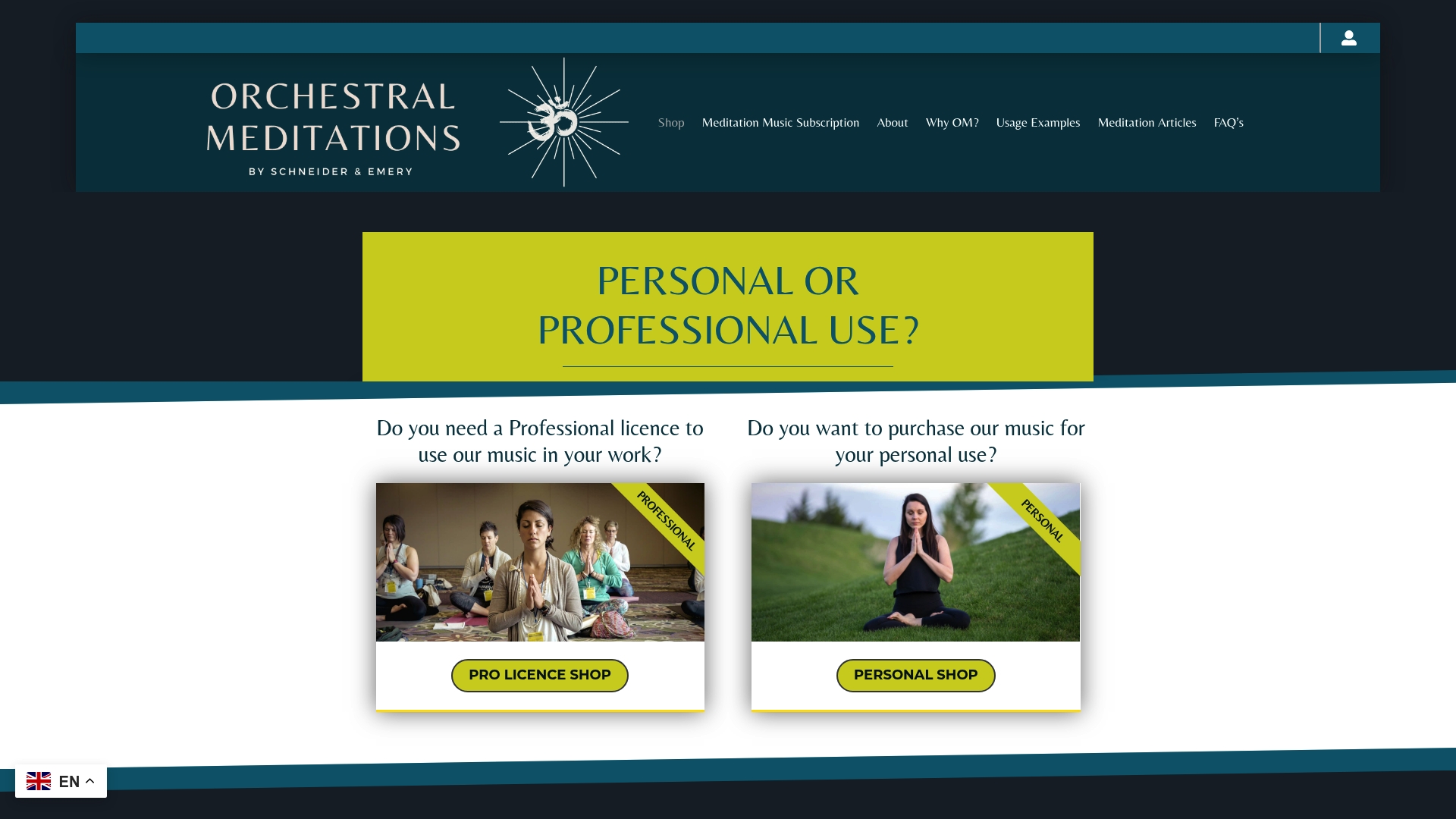
For personal listening, our Personal subscription gives you ongoing access to professionally recorded meditation and Solfeggio tracks for £21 a month. If you’re a therapist, yoga instructor, or meditation teacher who needs licensed audio for client sessions or your own content, our Professional subscription covers that licensing for £150 a month. Content creators and wellness professionals who prefer buying individual tracks outright can browse our Royalty Free Meditation Music line instead.
Licensing matters more than people assume here: using an unlicensed track in paid client work or commercial content can land you in trouble regardless of how good the recording sounds. Readers also exploring complementary approaches to energy work might find clinical and experiential evidence around Reiki sessions a useful companion read alongside frequency-based listening.
FAQ
What is 417 Hz?
417 Hz is a Solfeggio-associated frequency commonly used in meditation and sound work, linked to clearing old patterns and supporting change. Its claimed effects are largely subjective and tied to expectation and musical structure rather than confirmed physiological mechanisms.
What is the frequency of 471 hertz?
471 Hz does not appear in the commonly cited Solfeggio frequency lists. The recognised tone associated with clearing and transition work is 417 Hz.
What is God’s frequency in Hz?
There’s no scientifically or historically agreed “God’s frequency.” The idea is sometimes confused with the Schumann resonance, a natural electromagnetic resonance of the Earth around 7.83 Hz, but that’s a geophysical phenomenon, not evidence of a musical healing frequency.
What happens when you listen to 432 Hz?
Listeners commonly report a sense of calm with 432 Hz tuning, and a randomized cross-over trial found measurable reductions in heart rate and blood pressure compared with 443 Hz tuning. The study’s authors caution that musical structure, not the single Hertz value alone, may account for part of that effect.
Sources
- Therapeutic frequencies in digital music culture: A content analysis on technical accuracy and the expectation effect
- Solfeggio Frequencies – Skeptoid
- Differential effects of sound interventions tuned to 432 Hz or 443 Hz on cardiovascular parameters in cancer patients: a randomized cross-over trial
- Schumann resonances — Wikipedia