The best yoga nidra music is slow, sparse and quiet: think tracks with no clear beat, warm low tones, restrained highs and plenty of 空间 (breathing room, that is) between notes. Whether you practise for 11 minutes or a full half hour, the goal is the same: sound that recedes rather than demands attention. One place worth auditioning for a sense of what studio-grade calm actually sounds like is a catalogue featuring compositions by Robert Emery and Moritz Schneider.
TL;DR:
- Most effective yoga nidra music features slow tempos under 70 beats per minute, with warm, low-mid tones and minimal high-frequency content.
- Consistent practice of even 11 minutes daily over two months can produce measurable improvements in sleep quality and cortisol regulation.
- Use sparsest, softly curated tracks during body scans and breath awareness, gradually increasing warmth during visualization phases.
- Proper environment preparation and headphone playback enhance immersion, but relaxing music alone cannot replace professional treatment for sleep or mood disorders.
- Listening to studio-quality compositions by known composers like Robert Emery and Moritz Schneider offers longer-lasting calm and better production quality.
What to listen for in yoga nidra music
I once put on a “relaxing sleep playlist” that turned out to have a saxophone solo about four minutes in. It was like someone had smuggled a jazz club into my bedroom. The lesson stuck: not everything labelled calming actually is.
Good yoga nidra music tends to share a few traits, and once you know them you can spot the right track in about fifteen seconds of listening.
- Tempo and rhythm: ambient textures with no strong pulse, roughly equivalent to under 60 to 70 beats per minute, keep your attention soft instead of counting along.
- Frequency balance: warm low-mid presence with gentle highs feels grounding rather than piercing. Some tracks add theta-range or Solfeggio-style tones, which producers claim support deeper states, though you should treat these as a texture choice rather than a guaranteed effect.
- Instrumentation: sparse pads, soft strings, quiet piano or light field ambience. Orchestral textures, recorded properly, add richness without ever demanding your attention.
- Voice presence: instrumental-only works well if you already know the practice by heart; music built to sit under a guided voice needs to leave room, dynamically, for the words.
- Delivery format: binaural or 3D mixes can deepen immersion through headphones, while stereo speaker playback is gentler and perfectly fine for most sessions.
Pro Tip: If a track makes you want to tap your foot or hum along, it’s too active for yoga nidra. Save it for the gym.
Evidence-based guidance on session duration and timing
There’s a persistent myth that longer is always better, which is a bit like assuming a three-hour film is automatically more moving than a ninety-minute one. Sometimes it’s just longer.
A randomised controlled trial testing both 11-minute and 30-minute daily online Yoga Nidra sessions found measurable improvements in subjective sleep and diurnal cortisol patterns over two months of consistent practice, which suggests the short form is a genuinely useful option, not a compromise.
- Consistency beats duration: a daily 11-minute session tends to build the habit faster than an occasional 30-minute one.
- Give it weeks, not days: the trial measured biological change after two months of regular practice, so patience matters.
- Sleep versus daytime use: save deeper, slower tracks for pre-sleep sessions, and reserve slightly more textured pieces for a midday reset.
- End gently: fade-outs and soft musical closings help you surface slowly rather than being jolted back to alertness.
Setting up a session: from room to playback to structure
Getting the room right matters more than people expect. I’ve tried practising yoga nidra with my phone propped on a pile of laundry (don’t), and the constant fear of it toppling into my face rather undermined the “deep relaxation” bit.
- Prepare the space: dim the lighting, use a blanket or bolster, and switch your phone to do not disturb, because a stray notification chime is the enemy of every rotation of consciousness.
- Set your playback: keep music quieter than any guided voice, roughly background level, and decide upfront whether you’re using speakers or headphones. Binaural or 3D mixes need headphones to work as intended, so check the track notes before you commit.
- Match music to the structure: yoga nidra typically moves through preparation, intention setting, a body scan, breath awareness, feeling and emotion work, visualisation and a conclusion. Keep the music sparsest during the body scan and breath sections, where a wandering mind needs the least distraction, and allow slightly more warmth during visualisation. Our guide to guided meditation techniques walks through this staged approach in more detail.
- Troubleshoot as you go: if the music feels too busy, switch to something sparser rather than turning the volume down further. If you drift off entirely and miss the ending, that’s not necessarily a failure, though it does mean you’ve skipped the conscious “return” stage that yoga nidra is built around.
Pro Tip: Try a simple blueprint: two minutes of near-silence to settle, sixteen minutes of sparse orchestral or ambient sound under the guided voice, then a two-minute gentle fade to close.
What the research actually says about music and yoga nidra
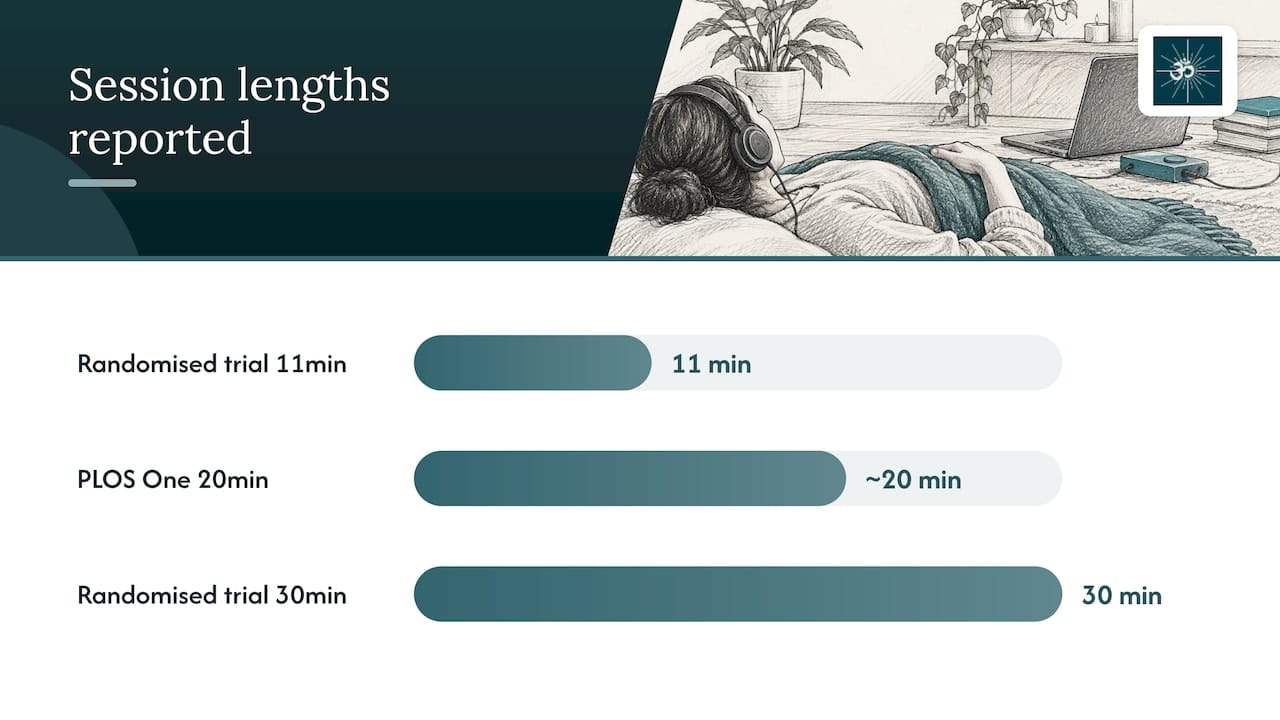
The same randomised controlled trial mentioned earlier used daily 11-minute and 30-minute audio sessions over two months and found reductions in total cortisol along with steeper, healthier diurnal cortisol slopes. Some trial designs even use music alone as an active comparison group, which tells you something important: music by itself is doing real work, not just providing atmosphere.
A systematic review and meta-analysis of 73 studies found moderate-to-large pooled effects of Yoga Nidra on stress, anxiety and depression, while cautioning that study quality varied and effects may be inflated. That caveat matters: treat the numbers as a promising signal, not a settled verdict.
- Stress, anxiety and depression all showed improvement when compared against active comparators in the review.
- A PLOS One study using roughly 20-minute sessions reported gains in sleep efficiency, reduced wake after sleep onset, and better accuracy on cognitive tasks in novices.
- None of this replaces clinical care. If you’re dealing with a diagnosed sleep or mood disorder, use music and yoga nidra as a support alongside professional guidance, not instead of it.
Why studio production and named composers matter here
Not all “calming music” is made equal, and the difference often comes down to who recorded it and how. Orchestral Meditations records at Abbey Road Studios with the National Philharmonic, and layers in binaural and 3D surround elements, which are meaningful production choices rather than marketing flourishes.
- Live orchestral recording, properly mixed, sustains long low-dynamic passages far better than a looped synthesiser pad ever manages.
- Composer Robert Emery, known for his work across film and orchestral scoring, and composer Moritz Schneider both bring a trained ear for pacing and restraint that generic stock music rarely matches. Checking composer credits before you commit to a track is a genuinely useful habit.
- Licensing matters too: personal use and professional or commercial use (for therapists, instructors, or app developers) are usually separate tiers, so check which one applies to you before you purchase.
A quick word on expectations
Music won’t fix a bad night’s sleep on its own, and not everyone responds to the same track the same way. What seems to matter more than any single piece of music is showing up daily, even briefly, rather than saving yoga nidra for the rare free evening. If something clinical is going on, sound is a helpful companion, not a substitute for proper support.
— ROBERT
Where to start listening with Orchestral Meditations
If any of this has you curious, the simplest next step is to actually listen. Orchestral Meditations’ catalogue lets you sample tracks and check composer credits, including work from Robert Emery and Moritz Schneider, so you can judge production quality for yourself before spending anything.
- Try a short-form track nightly for two weeks and notice whether your sleep or wind-down routine shifts.
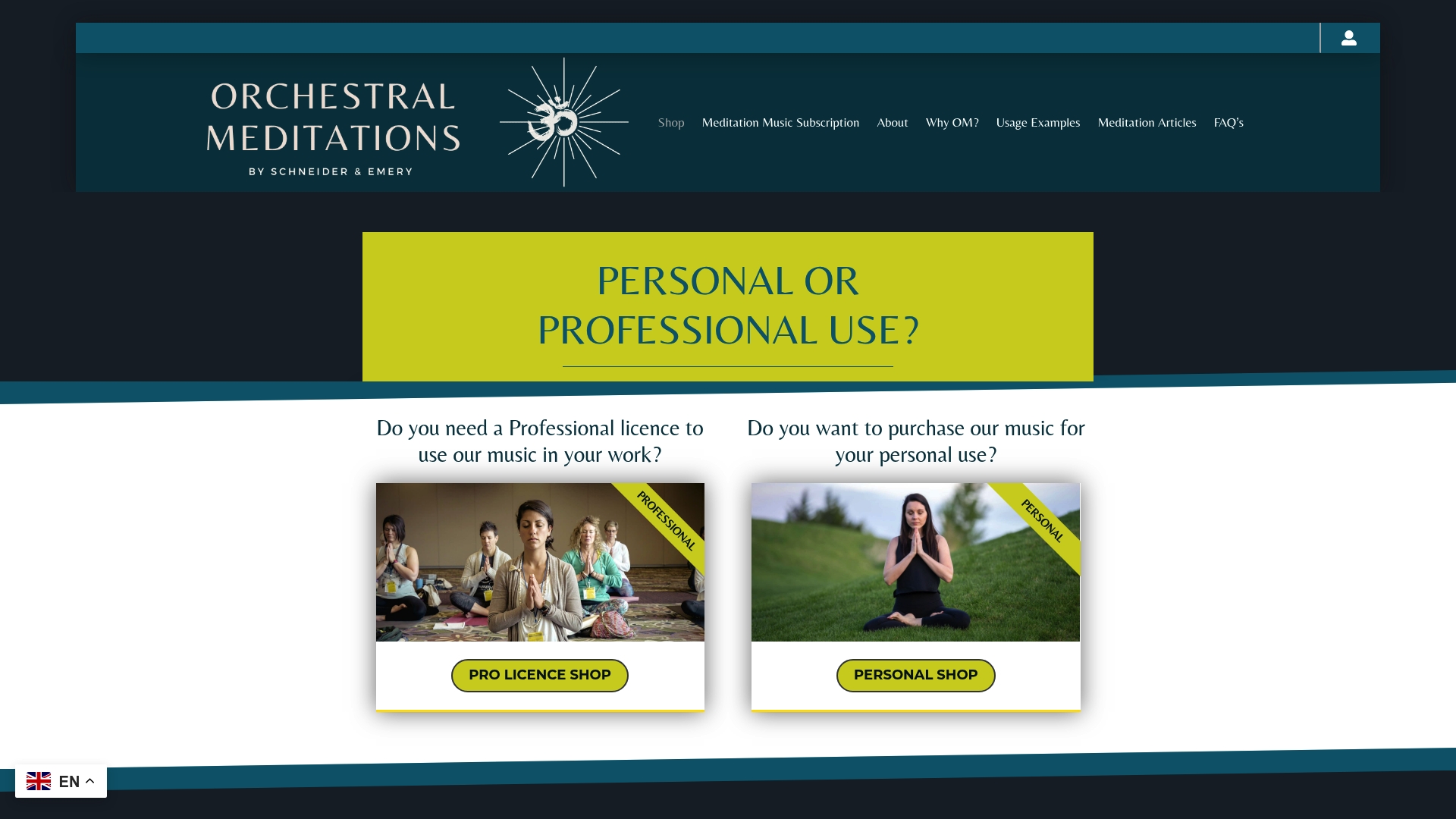
- The Personal subscription, priced at 21 EUR per month, suits individual practice.
- The Professional subscription, at 150 EUR per month, fits therapists, instructors and creators needing broader licensing.
- For one-off needs, the Royalty Free Meditation Music line covers individual track or album purchases with professional licensing.
After a fortnight of nightly listening, you’ll have a real sense of whether it’s worth subscribing, and you can browse the full catalogue any time.
Key studies and where to sample the music
- The Yoga Nidra cortisol trial, the systematic review, and the PLOS One sleep study underpin the claims above.
- For complementary stress-relief approaches, see this overview of evidence-based methods.
- Sample tracks directly at the Orchestral Meditations shop.
Sources
- The effects of an online yoga nidra meditation on subjective well‑being and diurnal salivary cortisol: a randomised controlled trial
- Effects of Yoga Nidra on stress, anxiety, and depression: a systematic review and meta‑analysis
- Improved sleep, cognitive processing and enhanced learning and memory task accuracy with Yoga Nidra practice in novices
FAQ
Can I practise yoga nidra every night?
Yes, daily practice is common and trial protocols have used nightly sessions over two months with measurable benefits to sleep and cortisol patterns, as shown in this randomised controlled trial. Starting with a short 11-minute session is a reasonable way to build the habit.
Is yoga nidra as effective as seated meditation?
They work differently rather than one simply beating the other. A systematic review of 73 studies found moderate-to-large effects of Yoga Nidra on stress, anxiety and depression, though the authors note variable study quality, so it’s best seen as a strong option rather than a proven superior one.
Does yoga nidra help with sleep?
It can. A PLOS One study found improved objective sleep measures including better sleep efficiency and less wakefulness after sleep onset in novices practising a standardised protocol, alongside better cognitive task accuracy.
What is the best yoga nidra music for sleep?
Slow, sparse, low-dynamic tracks with minimal rhythm and warm tones work best, whether instrumental or supporting a guided voice. Professionally recorded orchestral options, such as those from Orchestral Meditations featuring composers Robert Emery and Moritz Schneider, are worth auditioning for their sustained calm and studio-quality mixing.