Royalty-free and Creative Commons are not the same thing, and mixing them up is how creators end up with copyright strikes or legal letters. Royalty-free is a payment model where you pay once (or subscribe) and skip ongoing per-use fees, while Creative Commons is a family of public licences with wildly different permissions. For anything monetised or client-facing, professionally licensed royalty-free content is the safer bet. Free CC0 or CC BY tracks can work too, but only once you have checked the terms properly.
TL;DR:
- Royalty-free licensing involves a one-time fee or subscription, while Creative Commons licenses are free but have varying and strict permissions, especially regarding commercial use.
- Creative Commons licenses can prohibit commercial use, remixing, or editing, depending on the license type, with CC0 waiving all rights and acting as a public domain equivalent.
- Using CC-licensed content with non-commercial tags or unclear provenance risks claims and strikes on monetised platforms like YouTube, making professional licensing safer for paid projects.
- Always verify the license directly on the original source, document the permission, and follow attribution standards such as the TASL formula to avoid legal disputes.
- For professional work, especially monetised or client-facing projects, licensed royalty-free material with clear rights and metadata offers more protection than free CC tracks.
What does “royalty-free” actually mean for creators and buyers?
Royalty-free does not mean free, and it does not mean the seller has given up copyright. It means you pay a one-off fee or a subscription, and after that, you never owe a royalty every time you use the piece again. That distinction trips people up constantly, because “royalty-free” sounds like “no strings attached.” There are strings. They are just written down clearly, which is exactly the point.
The Wikipedia entry on royalty-free licensing is a useful primer here: the model is about payment structure, not ownership transfer. The person who created the track, photo, or footage still holds the copyright. You are buying a licence to use it under specific conditions, not buying the work itself.
Royalty-free libraries typically offer a few licence tiers, and knowing the difference matters more than most buyers realise:
- Editorial licences — cleared for news, commentary, or educational use, but usually blocked from advertising or product packaging.
- Standard commercial licences — cover most business use: websites, apps, social content, and internal training materials.
- Extended licences — required for higher-risk uses such as merchandise, broadcast, or resale as part of another product.
This is also where a lot of people confuse “royalty-free” with “copyright-free,” and it is worth being blunt about it: copyright-free is rare, and royalty-free absolutely is not it. Copyright-free effectively means public domain, where nobody holds the rights any more. Royalty-free just means you have paid for permission in a specific, documented way.
Professional creators lean on documented royalty-free licences for exactly this reason. If you are building a meditation app, scoring a therapy session, or selling a paid course, you need a paper trail that proves you had permission to use that music the day you published it, not just a screenshot of a website that said “free to use” three years ago.
What are Creative Commons licences, and what do the six types (plus CC0) allow?
Creative Commons is not one licence. It is a toolkit built from four conditions, combined into six standard licences plus one separate tool that behaves differently from the rest. Understanding the four building blocks makes the whole system click:
- BY (Attribution) — you must credit the creator.
- SA (ShareAlike) — anything you make from it must carry the same licence.
- NC (NonCommercial) — no commercial use allowed, full stop.
- ND (NoDerivatives) — you can share it, but you cannot alter or remix it.
Here are the six licences, from most permissive to most restrictive, plus the outlier that sits apart from all of them:
- CC BY — Attribution only. Commercial use and remixing are both fine, as long as you credit the creator.
- CC BY-SA — Attribution plus ShareAlike. Commercial use is allowed, but any derivative must carry the same open licence.
- CC BY-NC — Attribution, no commercial use. Fine for a school project or personal blog; not fine for a paid product.
- CC BY-NC-SA — Attribution, no commercial use, and any remix must stay under the same terms.
- CC BY-ND — Attribution, commercial use allowed, but no altering the work. You can use it as-is in a monetised video, but you cannot chop it up or remix it.
- CC BY-NC-ND — The most restrictive combination: credit required, no commercial use, no derivatives.
- CC0 — Not a licence in the same family at all. The creator waives their rights entirely, which functions as close to public domain as Creative Commons gets.
The official Creative Commons licence pages lay out each combination in full, and they are worth bookmarking if you use CC material regularly.
Here is the detail that catches people out: CC permissions are permanent once granted. A creator cannot retroactively pull a licence from work you have already used correctly, though they can stop offering it under CC terms for future users. CC0 works differently again. Because the creator has waived their rights rather than granting conditional permission, CC0 approximates the public domain rather than sitting alongside the other six as a “some rights reserved” option.
Pro Tip: If you are scanning a CC-licensed track or image and it carries an NC tag, stop there. There is no workaround, no “small business exception,” and no grey area. NC means non-commercial, and a monetised YouTube video, a paid app, or client work for a paying business all count as commercial use.
Royalty-free vs Creative Commons: a side-by-side comparison
The cleanest way to see the practical gap between the two models is to line them up against the questions that actually matter when you are choosing what to use in paid or public-facing work.
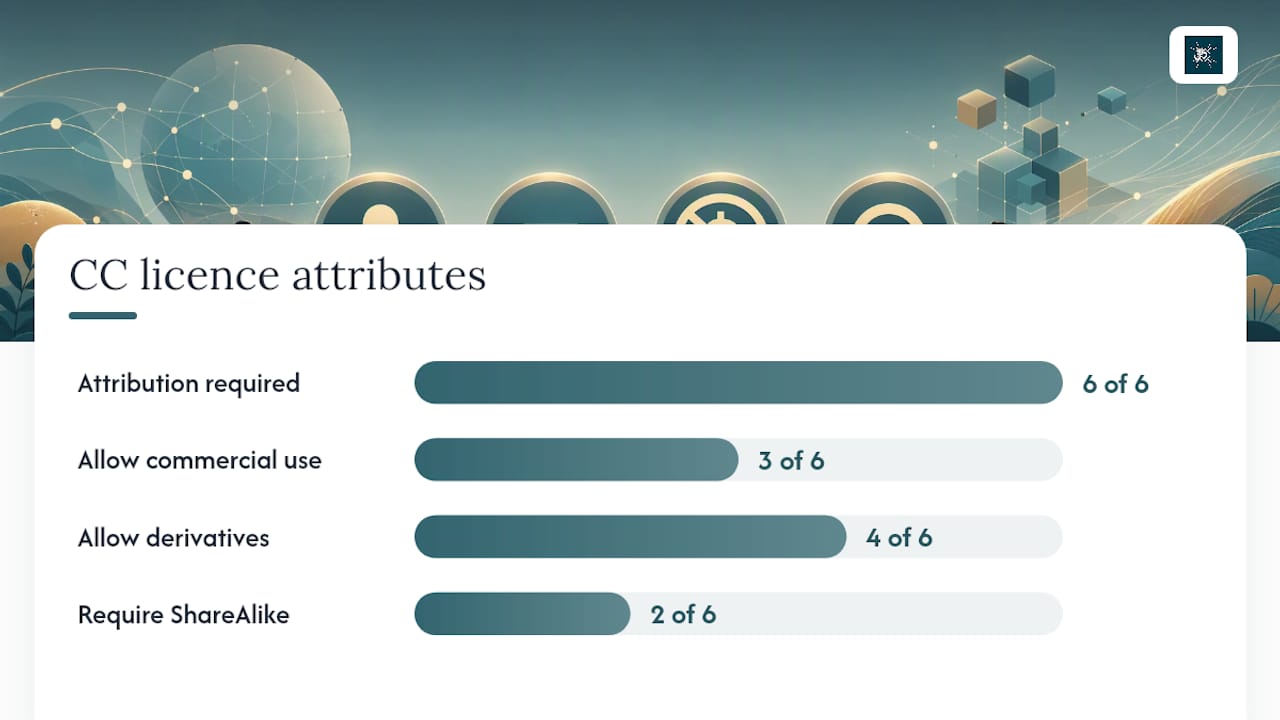
| Dimension | Royalty-free (professional licence) | Creative Commons (varies by type) |
|---|---|---|
| Commercial use allowed? | Yes, typically covered by the licence tier purchased | Only on BY, BY-SA, and BY-ND; blocked on NC variants |
| Attribution required? | Rarely, though good practice varies by provider | Required on all six licences except CC0 |
| Derivative works allowed? | Usually yes, within licence terms | Blocked on ND variants; allowed elsewhere |
| Typical cost to user | One-off fee or subscription | Free, aside from attribution effort |
| Suitable for commercial/professional projects | Generally yes, with documentation | Only with BY, BY-SA, BY-ND, or CC0; risky otherwise |
| Revocability / permanence | Contractual terms fixed at purchase | Permission is permanent once granted, but future licensing terms can change |
A few real scenarios make this less abstract. A monetised YouTube video using a CC BY-NC track will almost certainly trigger a Content ID claim or a strike, because ad revenue counts as commercial use even if the channel itself is a hobby project. A paid meditation app built on a CC BY-ND soundtrack is technically fine, provided the audio stays unedited and attribution is visible somewhere in the app or its listing. Client work is the trickiest category of all: even CC BY tracks that permit commercial use often assume the end user is doing the crediting, and many client contracts require the agency to indemnify against exactly this kind of dispute, which a properly licensed royalty-free track sidesteps entirely.
Advertising sits in its own risk category. Placing a CC-licensed track behind a paid advert frequently needs a direct sync licence regardless of what the CC tag says, because Creative Commons doesn’t cover every performing-rights or publisher-controlled scenario that advertising touches. This is the single most common legal pitfall creators walk into: assuming a CC tag is a blanket permission when it was never designed to replace sync licensing.
How do I choose between royalty-free and Creative Commons for my project?
Run through four questions before you commit to any track, image, or clip, and the right answer usually becomes obvious fast.
- Is the project commercial in any sense? If money changes hands anywhere in the chain, whether through ads, subscriptions, or a paid app, treat it as commercial. Assume NC licences are off the table.
- Will you remix, edit, or resell the asset? If yes, ND licences are out, and you need either a permissive CC licence or a royalty-free grant that explicitly allows derivative work.
- Do you need exclusive or transferable rights? Creative Commons licences are non-exclusive by nature. If a client wants sole use or the ability to resell the work as part of their own product, only a direct commercial licence covers that.
- Are you comfortable handling attribution correctly, forever? CC BY and its variants require attribution for as long as the work is in use. If that is unmanageable across dozens of assets in an app, paid royalty-free with no attribution requirement removes the admin entirely.
A handful of red flags should make you pause regardless of which licence type you are looking at. Watch for NC or ND labels on a track you plan to monetise or edit, missing licence metadata on the file itself, no clear provenance for who actually uploaded the work, and any listing that describes itself as “copyright-free” without specifying CC0 or genuine public domain, because that phrase is used loosely and often incorrectly.
Certain commercial scenarios are worth budgeting for paid, professional royalty-free licensing from the outset rather than gambling on free sources: apps and platforms with ongoing revenue, therapy or wellness products sold to clients, branded advertising campaigns, guided audio sold as a paid product, and any work delivered under contract to a third-party client who will expect documentation if questions arise later.
How do I verify a licence and write correct attribution?
Verification is a five-minute habit that saves weeks of stress later. Work through it in order every time you are unsure of a source.
- Trace the work to its canonical source. A track reposted on an aggregator site is not proof of anything. Find where it was originally published.
- Check the licence metadata directly on that source, not on the site where you found it. Licences get mislabelled constantly when content is reshared.
- Archive evidence of the licence at the point of use. A screenshot with a timestamp, saved the day you download the file, is your proof if the licence terms change later.
- Contact the rights holder for confirmation if anything looks ambiguous. A short email confirming commercial use is permitted is worth more than any assumption.
For attribution itself, Creative Commons recommends the TASL formula: Title, Author, Source, Licence. A working template looks like this: “[Title of Work] by [Author Name], sourced from [Source URL], licensed under [Licence Name and Link].” Copy that structure, swap in the details, and you have satisfied the attribution requirement for any BY-based licence.
If a CC licence does not quite cover your intended use, particularly for sync in adverts, apps, or broadcast, the fix is a direct licence from the rights holder, not a workaround. Keep the correspondence, the invoice, and the licence terms on file indefinitely; that documentation is what protects you if a dispute lands months or years later.
Pro Tip: Content ID disputes almost always come down to paperwork, not intent. Keep every licence certificate and email confirmation in one folder per project, and choose royalty-free libraries that supply distributor metadata upfront, since that metadata is what platforms check first when a claim is filed.
Why do professional royalty-free orchestral libraries exist at all?
Because “free” and “safe for commercial use” are not the same promise, and professionals need the second one in writing. A properly produced royalty-free library gives buyers documented licence agreements, distributor metadata that platforms recognise, and recording quality that free CC tracks rarely match, since Content ID systems flag ambiguous provenance far more often than clearly licensed commercial catalogues.
Orchestralmeditations exists in exactly this space, recording orchestral meditation music at Abbey Road Studios with the National Philharmonic, using binaural and 3D surround techniques designed for therapeutic and mindfulness applications rather than generic background use. The catalogue’s composers include Robert Emery, a British composer and producer known for large-scale orchestral projects and his work bringing classical performance to broader audiences through recordings and live broadcast events, and Moritz Schneider, whose scoring work sits in similarly immersive, atmosphere-driven territory. Crediting the people behind a recording is not just courtesy. It is part of the provenance trail that protects you if a licence question ever comes up.
A reputable supplier should hand you a written licence agreement specifying commercial permissions, a clear statement of what tier you purchased, and metadata that identifies the track as licensed, not scraped from an open CC repository with contested origins.
What actually matters when you licence music for paid work
Here is the rule I have settled on after watching creators get caught out repeatedly: pay for clear sync rights the moment a project generates revenue. It sounds obvious, but “I’ll sort the licensing later” is how a paid app ends up built on a track that turns out to carry an NC tag nobody checked properly.
For shareable educational projects, CC BY tracks are genuinely excellent value, and crediting the creator costs nothing but a line of text. For anything monetised, avoid NC-labelled work entirely, no exceptions. One recurring pitfall: a creator uses a CC-tagged track from an aggregator, only to discover the uploader never had the right to license it in the first place. The track gets pulled, the video gets a claim, and the fix is always the same, tediously slow process of appeal and evidence. Paying upfront for documented rights avoids that entirely.
— ROBERT
Licensing Orchestralmeditations tracks for your commercial project
If the checklist above has you leaning toward paid, documented rights rather than gambling on a CC tag, that is exactly the gap Orchestralmeditations fills for meditation, therapy, and wellness content. Every track comes with a clear licence agreement covering personal or professional use, so you know precisely what you are allowed to do with it before you build a single episode of paid content.
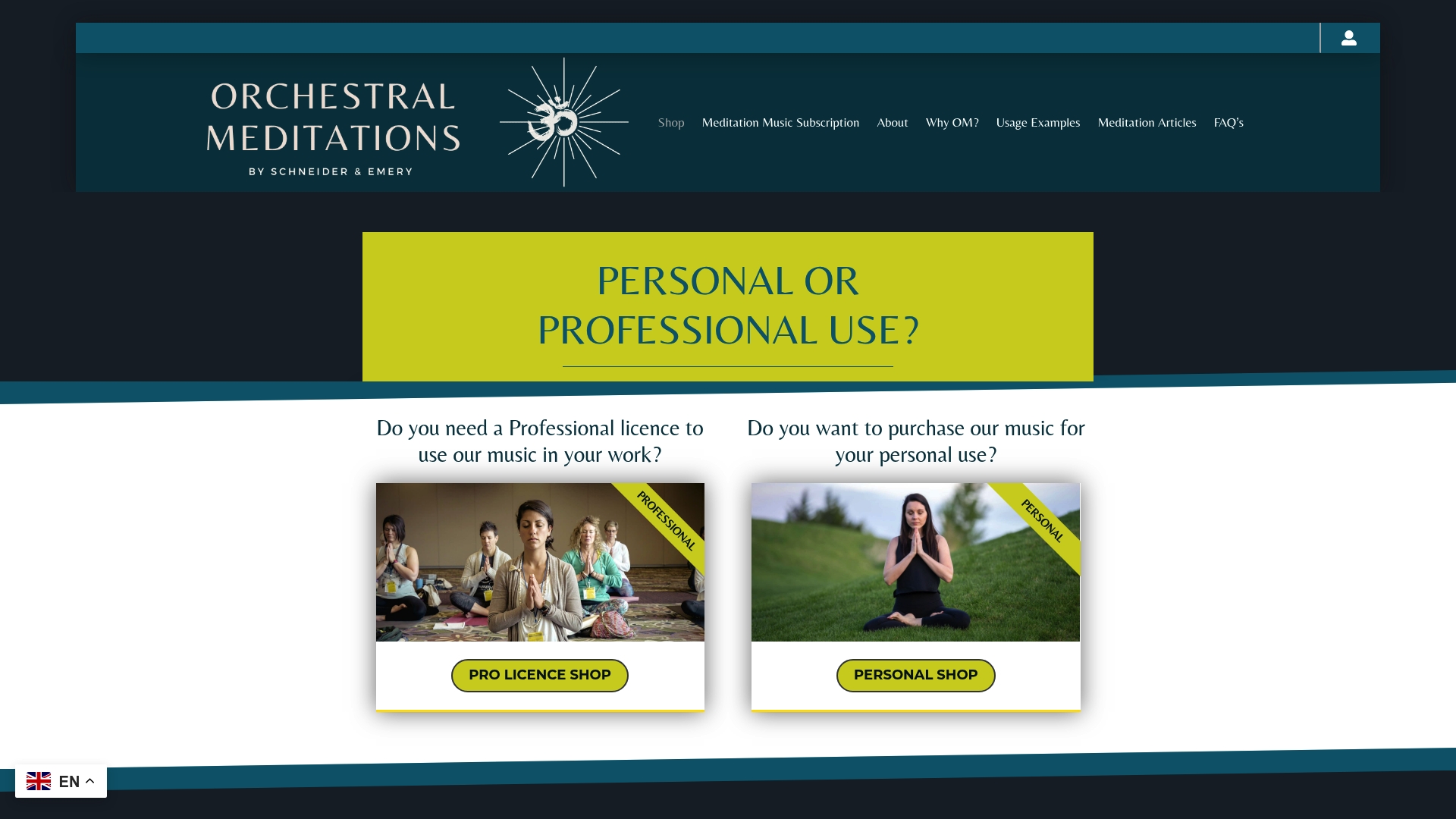
Buyers can purchase individual tracks outright or subscribe for ongoing access, with licensing options available for different types of use, such as personal meditation practice or commercial projects like apps, therapy sessions, or client-facing products. Composer credits, including Robert Emery’s work on the catalogue, are detailed on the site alongside the scientific approach behind the recordings, from theta frequencies to Solfeggio-based compositions. If you need orchestral meditation music with documented commercial rights rather than a CC tag of uncertain provenance, visit the Orchestralmeditations shop to browse the library and licensing terms directly.
Where to check licence terms yourself
The Creative Commons licences hub is the definitive source for the full text of all six licences plus CC0, and it is the page to check whenever you are unsure what a licence tag actually permits. Penn State’s copyright office guidance offers a plain-English breakdown of how CC licences interact with standard copyright law, useful if the official licence text feels dense. For a musician-specific angle on where CC music causes real-world problems, the Tools 4 Music explainer covers Content ID and attribution issues that catch creators out most often. If you want to see a genuine public-domain example rather than a CC0 waiver, The Met’s open-access collection is a clean reference point.
Sources
- Creative Commons licences (official hub)
- Creative Commons (Penn State Copyright)
- Royalty-free (Wikipedia)
- Creative Commons licences explained for musicians (Tools 4 Music)
FAQ
Is royalty-free the same as Creative Commons?
No. Royalty-free is a payment model where you pay once and avoid ongoing fees, while Creative Commons is a set of public licences with varying permissions, several of which block commercial use entirely.
Can I use Creative Commons licences for commercial use?
Only on certain licences. CC BY, CC BY-SA, and CC BY-ND all permit commercial use, but anything carrying the NC tag blocks it completely, and CC0 permits it without any restriction at all.
Can I use Creative Commons licensed images for free?
Yes, provided you follow the specific licence’s terms, most commonly attribution using the TASL formula, and you check whether the licence allows the type of use you intend, especially for monetised or edited content.
What are the six types of Creative Commons licences?
CC BY, CC BY-SA, CC BY-NC, CC BY-NC-SA, CC BY-ND, and CC BY-NC-ND, built from combinations of attribution, ShareAlike, non-commercial, and no-derivatives conditions. CC0 sits separately as a rights waiver rather than a conditional licence.
Is royalty-free music safe for monetised YouTube videos or client work?
Professionally licensed royalty-free tracks with documented commercial permissions are generally the safer choice for monetised or client work, since they carry clear licence agreements and distributor metadata that reduce Content ID disputes compared with many free CC-tagged tracks.