The three most reliable choices for music in mindfulness classes are Marconi Union’s Weightless (an ambient piece with measurable physiological effects), Arvo Pärt’s Spiegel im Spiegel (sparse solo cello and piano for short opening practices), and a 24-minute binaural or auditory beat stimulation mix for anxiety-focused sessions. Research backs that 24-minute duration specifically, so if you only change one thing about your current playlist, make it the length.
Quick top picks:
- Guided breathing (5–8 min): Pärt’s Spiegel im Spiegel — its unhurried, repeating cello line gives participants something to anchor breath to without demanding attention.
- Body scan (20–24 min): Marconi Union’s Weightless — a Mindlab International experiment found it produced the largest relaxation response of any track tested, with reductions in heart rate and breathing rate.
- Anxiety reset (24 min): A binaural or ABS-embedded orchestral mix — keep volume at a comfortable conversational level (roughly 50–60 dB in a group room) and always warn participants who use headphones that binaural tracks require them to work.
Key takeaways
The single most evidence-backed change you can make to your mindfulness class playlist is extending your main practice music to 24 minutes, using a track or mix with auditory beat stimulation embedded.
| Point | Details |
|---|---|
| 24-minute sweet spot | A 2025 PLOS Mental Health trial found 24-minute ABS music produced the strongest anxiety reduction. |
| Track selection by phase | Match music to session phase: sparse piano/cello for opening, continuous mix for main practice, slow fade for closing. |
| Licensing is non-negotiable | Streaming platforms do not cover public performance; confirm PRS/PPL or use a royalty-free professional licence. |
| Production quality affects outcomes | Live recordings with natural dynamics reduce distraction and support deeper relaxation than compressed loops. |
| Orchestralmeditations for class use | Orchestralmeditations offers professionally licensed, high-fidelity orchestral tracks with binaural options for paid classes and therapy settings. |
What music works best in mindfulness classes?
The short answer: slow, predictable, and largely wordless. But the longer answer is where it gets genuinely interesting, because the type of calm matters as much as the presence of it. Classic FM’s curated meditation list groups its recommendations by instrumentation and mood, which is a useful model for any instructor building a class playlist.
Here are ten tracks that consistently appear in professional mindfulness and yoga playlists, grouped by character:
Classical calm
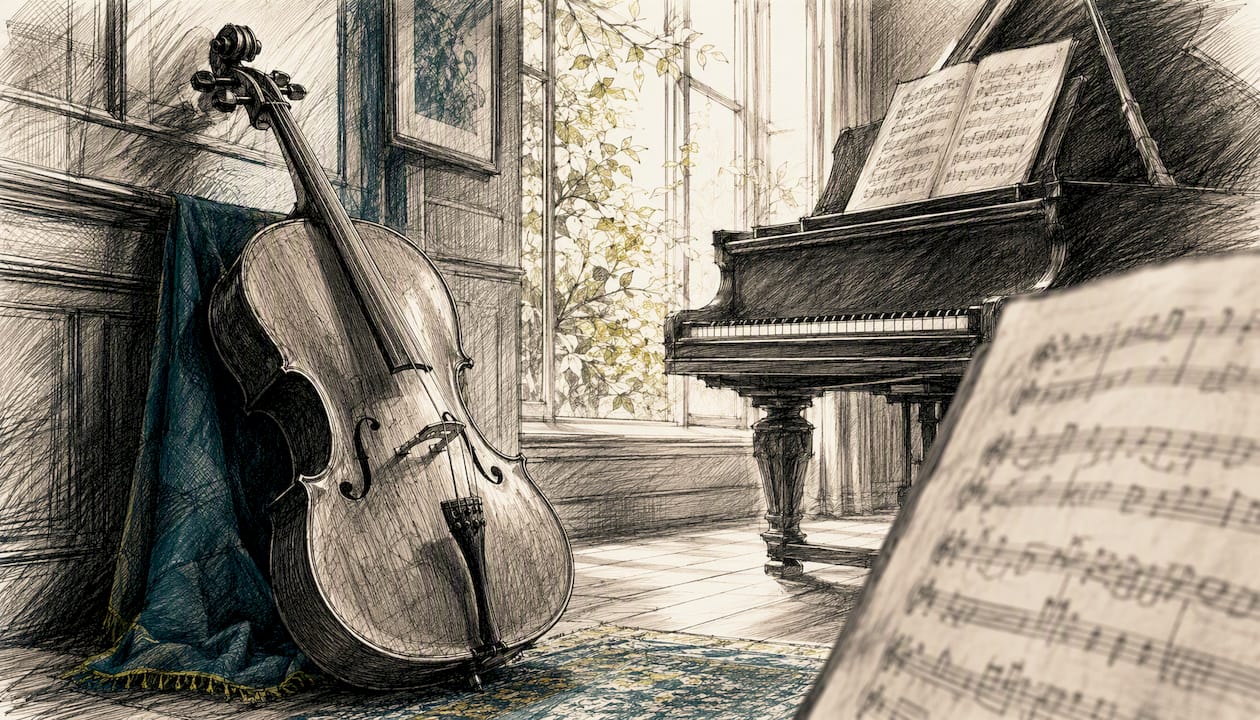
Arvo Pärt — Spiegel im Spiegel is the gold standard for opening a session. The title translates as “mirror in the mirror,” and that is exactly what it sounds like: a single cello melody reflected endlessly in a soft piano arpeggio. Tempo sits around 50–55 BPM, which nudges the nervous system toward parasympathetic territory without announcing itself.
Erik Satie — Gymnopédie No.1 is slower still, almost dreamlike. Its three-four waltz rhythm is gentle enough to feel like rocking, and the harmonic ambiguity (it never quite resolves where you expect) keeps the mind from latching on. Perfect for a settling phase at the start of class.
Claude Debussy — Clair de Lune is slightly more dynamic than the other two, which makes it better suited to a walking meditation or mindful movement section rather than a still body scan.
Ambient and modern orchestral
Marconi Union — Weightless was co-designed with sound therapists specifically to slow heart rate and reduce anxiety. At just over eight minutes in its original form (a 24-minute extended version exists), it uses a descending tempo, drone bass, and subtle binaural elements. The Mindlab data is the most cited evidence in this space for good reason.
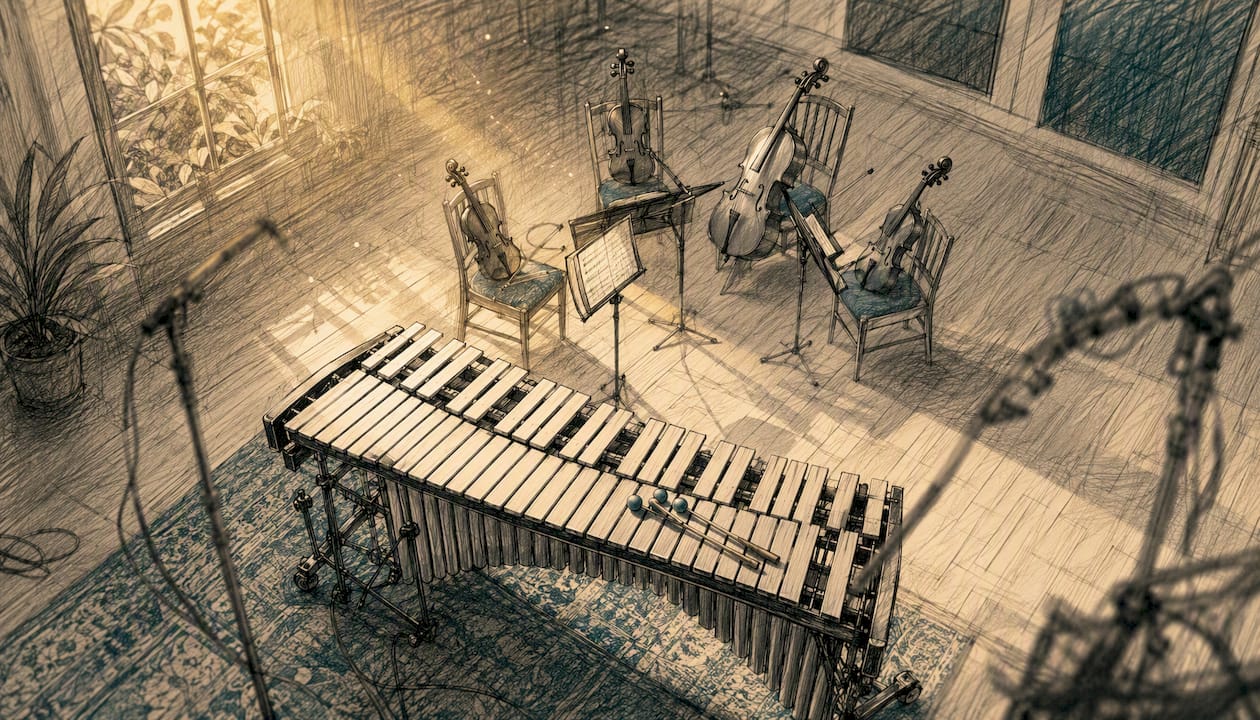
Max Richter — Dream 3 (In the Midst of My Life) is a string quartet piece from his Sleep album, recorded at a whisper. It works beautifully for a closing relaxation because it feels like the musical equivalent of someone turning the lights down very slowly.
Alexis Ffrench — Radiate is a modern solo piano piece with a slightly warmer, more hopeful quality than the Pärt or Satie. Good for classes where the mood needs lifting rather than deepening.
Thomas Newman — Any Other Name (from the American Beauty soundtrack) is deceptively simple: a repeating piano figure over soft strings. Its familiarity to many participants can actually help, because recognition reduces cognitive load.
Choral and tonal pieces for longer, reflective sessions
Eric Whitacre — Lux Aurumque is a choral piece with no sharp edges. The Latin text means “light and gold,” and the harmonic language is so smooth it barely registers as music in the intrusive sense. Ideal for a 20-minute silent sitting.
Morten Lauridsen — O Magnum Mysterium shares Whitacre’s harmonic warmth but carries more gravitas. Use it for grief-informed mindfulness or end-of-year reflection sessions where participants need permission to feel something.
John Tavener — The Last Sleep of the Virgin is a string quartet piece of extraordinary stillness. Tavener described his music as “holy minimalism,” and this piece earns that label. It suits a long, silent body scan or a closing savasana in a yoga-adjacent class.
Playlist templates by session length:
| Session length | Suggested approach | Example tracks |
|---|---|---|
| 5–8 min | One continuous piece, no fade | Spiegel im Spiegel or Gymnopédie No.1 |
| 12–15 min | Two complementary pieces, 5-second crossfade | Radiate into Dream 3 |
| 24–36 min | One continuous mix or three-piece arc | Weightless (extended) or ABS orchestral mix |
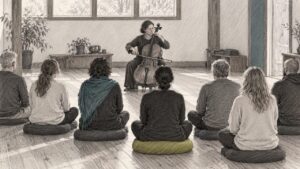
Short cello-led pieces are particularly effective for groups new to mindfulness, including children, because the contained duration removes the pressure of “how long is this going on for?”
Which musical qualities actually support a mindfulness practice?
Tempo is the most measurable variable. Tracks in the 50–60 BPM range tend to support deep calm and are often used for body scans or extended sitting. The 60–80 BPM range suits gentle focus work, breathing exercises, or mindful movement where participants need a little more energy without agitation. Anything above 80 BPM starts to feel like background music rather than a mindfulness aid.
Instrumentation matters almost as much. Sparse piano and solo strings (cello especially) work because they leave acoustic space around each note. That space is where the mind settles. Dense orchestration, busy percussion, or prominent bass frequencies can pull attention rather than release it. Soft synth pads and subtle choral textures occupy a similar role to strings: they fill the room without crowding it.
Harmonic simplicity is underrated. Tracks that avoid sudden key changes, dramatic dynamic spikes, or unresolved dissonance keep the nervous system from bracing. This is why Satie and Pärt have outlasted dozens of “relaxation” albums: their harmonic language is almost entirely predictable, and predictability is physiologically calming.
Natural soundscapes (rain, birdsong, flowing water) can work well, particularly for outdoor or nature-based mindfulness sessions. The caveat is cultural sensitivity: what reads as “peaceful nature” in one cultural context can feel unfamiliar or even unsettling in another. If you are teaching a diverse group, test nature-sound tracks with a few participants before committing to them in a paid class.
Pro Tip: Binaural beats require headphones to function as intended — the left and right ear must receive slightly different frequencies for the brain to perceive the beat. In a group room without headphones, use auditory beat stimulation (ABS) tracks instead, which embed the effect into a single stereo mix and work through speakers.
How to structure music across a class session
A session without a musical arc is like a film with the same lighting from opening credits to end titles. The music needs to move with the practice, not just sit underneath it.
A practical session map:
- Opening (1–3 min): Fade in gently from silence. Use a familiar, warm piece (Satie or Ffrench work well here). Volume at roughly 40–50% of your room’s comfortable maximum.
- Settling (5–8 min): Keep the same track or transition to something slightly slower. This is where participants arrive mentally, not just physically.
- Main practice (12–24 min): Your primary track or continuous mix. For anxiety-focused sessions, this is where a 24-minute ABS mix earns its place. Volume steady, no surprises.
- Closing (2–5 min): Fade out over 20–30 seconds. Return to near-silence or a single sustained note. Resist the urge to introduce a new piece here — it resets the nervous system in the wrong direction.
Fade lengths: A 10-second fade works for a short class (under 15 minutes). For a 24-minute or longer session, a 20–30 second fade feels more natural and less abrupt.
Pre-class tech checklist:
- Charge your device fully or plug in — Bluetooth speakers dying mid-body-scan is not the vibe.
- Test Bluetooth latency before class: some speakers introduce a 200–400ms delay that makes spoken cues feel out of sync with music.
- Set your volume before participants arrive and mark the level.
- Download tracks offline if you are teaching at a retreat or venue with unreliable Wi-Fi.
- Do a full run-through of your fade-in and fade-out at least once before the session.
Pro Tip: Start with music already playing softly as participants enter. It signals the shift in atmosphere before you say a word, and it removes the slightly awkward silence of people finding their mats.
What instructors need to know about sourcing and licensing
Here is the part most instructors skip until they get a letter they did not want. In the UK, playing recorded music in a class setting — even a small one, even online — typically requires a licence. The Performing Right Society (PRS) and Phonographic Performance Limited (PPL) cover different rights: PRS covers the composition, PPL covers the sound recording. A paid mindfulness class almost certainly needs both.
Streaming platforms like Spotify and YouTube are licensed for personal listening, not public performance. Their terms of service explicitly prohibit using their streams in a commercial class setting. This catches a lot of instructors off guard.
Practical licensing checklist for instructors:
- Confirm whether your venue already holds a PRS/PPL licence (some gyms and studios do).
- If teaching online or recording sessions, check whether your licence covers digital distribution.
- For royalty-free libraries, read the licence tier carefully: personal-use licences do not cover paid classes.
- Keep a record of which tracks you use and under which licence — useful if you are ever audited.
The commercial ambient music market continues to grow, with releases like Yoga Flow Sessions Vol. 1 by Pure Harmony Collective (available via Bandcamp with commercial licensing options) showing that class-ready, licensable music is increasingly accessible. The Orchestralmeditations royalty-free library offers professional licences that explicitly cover paid classes, therapy rooms, apps, and recorded content.
What the research actually says about music and stress
The most-cited study in this space is the Mindlab International experiment commissioned by Radox Spa, in which participants completed stress-inducing tasks while listening to various tracks. Marconi Union’s Weightless produced the largest relaxation response of any track tested, with a reported relaxation score of around 73% and measurable reductions in heart rate, breathing rate, and skin conductance. The sample was small, so treat it as a compelling signal rather than a clinical verdict — but it is a compelling signal.
More recently, a 2025 randomised trial published in PLOS Mental Health tested music with embedded auditory beat stimulation across 12-, 24-, and 36-minute exposures in participants with moderate trait anxiety. The 24-minute condition produced the strongest and most consistent anxiety reduction. The 36-minute condition showed similar benefit; the 12-minute condition was notably less effective. This is the clearest evidence yet for a practical session-length recommendation.
Broader evidence from PMC review articles links music to physiological and psychological relaxation outcomes across a range of clinical and wellness contexts, demonstrating why mindfulness helps ex-smokers stay smoke-free. The consistent finding is that music works best as a complement to other mindfulness techniques, not a replacement for them.
Practical takeaway: Build your main practice around 24 minutes when anxiety reduction is the primary goal. If your class runs shorter, 12 minutes of music still has value — it just produces a smaller effect.
Why production quality matters more than you might think
There is a meaningful difference between a track recorded in a professional studio with live musicians and a loop assembled from digital samples. In a group room, that difference is audible. Low-fidelity recordings introduce artefacts (digital noise, clipping, unnatural reverb) that the brain registers as subtle threat signals, even when participants cannot consciously identify them. High-quality recordings, by contrast, maintain a natural dynamic range that keeps the room feeling safe.
Concrete things to listen for when evaluating a track:
- Natural dynamics: does the piece breathe, or does it sit at a flat, compressed volume throughout?
- Low-frequency control: excessive bass can feel physically intrusive in a quiet room.
- Stereo field: a well-mixed stereo recording creates a sense of space that a mono or poorly panned track cannot.
- Mastering level: tracks mastered for streaming are often louder than ideal for a meditation context; look for recordings mastered at lower levels or with dynamic range preserved.
Orchestralmeditations records with live musicians, including sessions with the National Philharmonic at Abbey Road Studios, and produces binaural and Solfeggio-frequency options specifically for meditation contexts. The production team includes Robert Emery, a composer and arranger with extensive credits in orchestral and film music whose work spans major recording projects in the UK, and Moritz Schneider, a producer with a background in spatial audio and immersive sound design. Schneider’s expertise in binaural and 3D mixing is directly relevant to the scientifically crafted soundscapes Orchestralmeditations produces — the kind of spatial depth that makes a recording feel like it surrounds you rather than plays at you.
Pro Tip: *When auditioning tracks for class use, listen on the same speaker system you will use in the room, at the volume you will actually play them. A track that sounds beautiful on headphones can feel thin or harsh through a Bluetooth speaker at
volume.*
Choosing music for groups is not about your taste
There is a version of this that goes badly: the instructor who plays their favourite album because it relaxes them, then wonders why half the group looks tense. Teaching group mindfulness means your personal aesthetic is largely irrelevant. What matters is whether the music serves the participants in the room.
That means testing playlists. Genuinely. Play a new track to three or four willing participants before you use it in a paid class, and ask them afterwards — not “did you like it?” but “did anything pull your attention away from the practice?” Those are different questions with different answers.
Cultural sensitivity deserves more than a footnote. World-music elements, religious choral texts (even in Latin), and certain instrumental timbres carry associations that vary enormously across backgrounds. A piece like Lauridsen’s O Magnum Mysterium is musically neutral to many listeners but carries explicit Christian liturgical weight for others. Know your group.
For paid classes or clinical programmes, professionally licensed orchestral music is the right choice. Not because it sounds more impressive, but because it removes the legal and ethical risk that comes with using streaming tracks in a commercial setting.
Orchestralmeditations: royalty-free orchestral music built for class use
If you are running paid mindfulness classes, therapy sessions, or recorded wellness content, the licensing question is not optional. Orchestralmeditations offers a library of high-fidelity orchestral meditation music recorded with live musicians, including binaural, theta frequency, and Solfeggio-based tracks, with professional licences that explicitly cover paid classes, therapy rooms, app integration, and digital distribution.
The practical advantages for instructors:
- Downloadable tracks and continuous mixes ready for offline use at retreats.
- Professional licences covering public performance and commercial use.
- Binaural and ABS-embedded options for anxiety-focused sessions.
- Tracks mastered for meditation contexts, not streaming loudness.
Preview the library and try a sample track in a short class before committing to a licence. The best meditation music for personal and professional use is available to browse now.
Sources
- These are the best songs for reducing stress | World Economic Forum
- PLOS Mental Health (2025) study on music duration and anxiety
- The best classical meditation music for mindfulness and yoga | Classic FM
FAQ
What are some good examples of mindfulness music?
Arvo Pärt’s Spiegel im Spiegel, Marconi Union’s Weightless, and Eric Whitacre’s Lux Aurumque are among the most widely used tracks in professional mindfulness classes, covering short opening practices through to extended body scans.
What music helps calm anxiety?
Tracks with a tempo of 50–60 BPM, minimal lyrics, and steady harmonic progressions tend to reduce anxiety most reliably. A 2025 PLOS Mental Health study found that 24 minutes of music with auditory beat stimulation produced the strongest anxiety reduction in participants with moderate trait anxiety.
What is good music for mental relaxation?
Sparse instrumental music — solo piano, solo cello, or soft string ensembles — works well for mental relaxation because it occupies just enough of the auditory field to quieten internal chatter without demanding attention. Satie’s Gymnopédie No.1 and Max Richter’s Dream 3 are reliable choices.
Can I use Spotify or YouTube music in a paid mindfulness class?
No. Both platforms are licensed for personal listening only. Playing their streams in a paid class setting breaches their terms of service and likely requires a separate PRS/PPL licence. Royalty-free libraries with professional licences, such as the Orchestralmeditations library, are the appropriate route for commercial class use.
Do binaural beats work through speakers?
No. Binaural beats require headphones to function because they depend on each ear receiving a slightly different frequency. For group classes using speakers, use auditory beat stimulation (ABS) tracks instead, which embed the effect into a standard stereo mix.