
If you need affordable, royalty-free music for meditation or wellness projects, IndieMusicBox is a reasonable starting point. It specialises in ambient relaxation music suited to yoga and meditation videos, and its music packs offer savings compared to buying individual tracks. The composer behind it, Chris Collins, is a designer and artist producing genuinely peaceful, zen-atmosphere soundscapes. But it is a small catalogue, and once you have heard it, you have heard it.
The good news is that the UK market has several worthy alternatives, each with a different flavour:
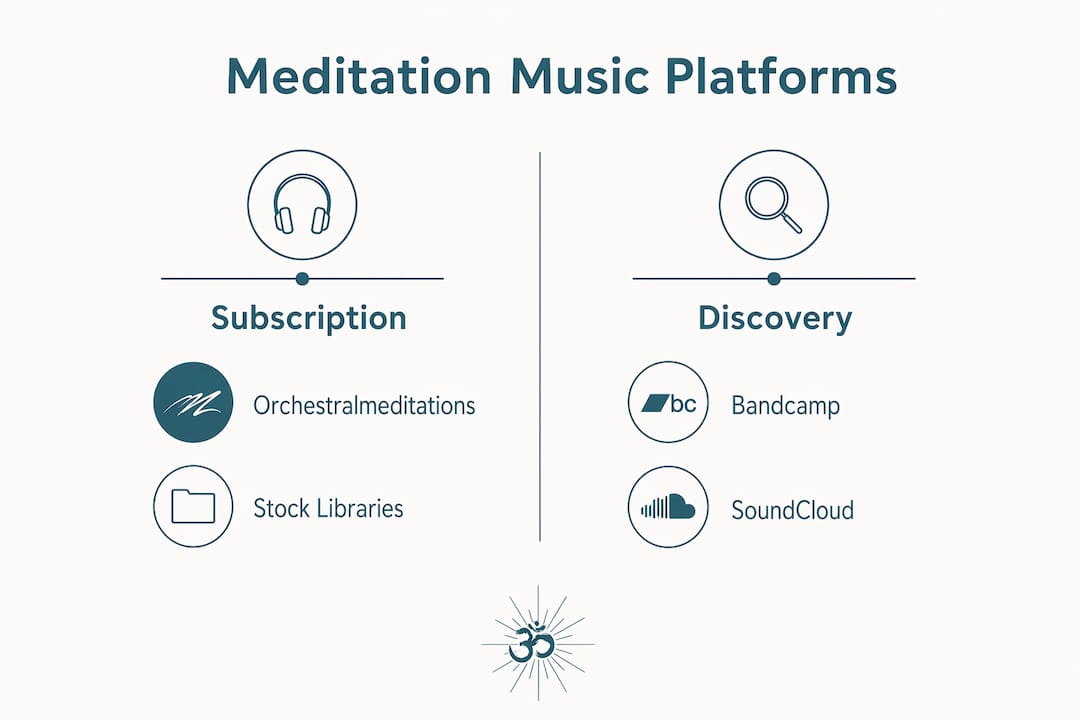
- Orchestralmeditations — orchestral recordings made at Abbey Road Studios with the National Philharmonic, using binaural beats, theta frequencies, and 3D surround sound; royalty-free and scientifically designed for deep meditation
- Ampwall — an artist-owned platform with lower fees, no ads, and a community-first ethos; excellent for discovering independent ambient and meditative music
- Bandcamp — tag-based browsing surfaces early-stage ambient and drone artists before they appear anywhere else; free to browse, pay-what-you-want on many releases
- SoundCloud — a vast pool of emerging indie artists uploading pre-distribution material, including lo-fi and meditative ambient tracks
Each of these is fully accessible from the UK, and each approaches licensing, pricing, and artistic values differently enough to warrant a proper look.
How do these platforms compare for meditation music?
The differences between these options come down to four things: what the music actually sounds like, how you pay for it, what you are legally allowed to do with it, and how much the platform cares about the artists making it.
| Platform | Music style / genre focus | Pricing model | Licensing for commercial use | UK availability | Artist-centric? |
|---|---|---|---|---|---|
| IndieMusicBox | Ambient, relaxation, yoga, meditation | Individual tracks or packs (packs offer savings) | Royalty-free; commercial use permitted | Yes | Yes (independent composer) |
| Orchestralmeditations | Orchestral, binaural, theta, Solfeggio frequencies | Individual purchases or subscription | Royalty-free; wellness and commercial use | Yes | Yes (named composers, Abbey Road) |
| Ampwall | Indie, ambient, experimental | Pay-what-you-want; artist-set pricing | Varies by artist; check per release | Yes | Strongly yes (artist-owned platform) |
| Bandcamp | Indie, ambient, folk, electronic | Pay-what-you-want; album purchases | Varies by artist; check per release | Yes | Yes (direct artist revenue) |
| SoundCloud | Underground, lo-fi, ambient, experimental | Free streaming; Go+ subscription optional | Varies widely; many tracks not cleared for commercial use | Yes | Partial (mixed corporate and indie) |
The licensing column is where most creators trip up. Bandcamp and SoundCloud are brilliant for discovery, but neither guarantees commercial clearance. You need to check each release individually, which gets tedious fast. IndieMusicBox and Orchestralmeditations both offer pre-cleared royalty-free licences, which is a genuine time-saver when you are producing content at any kind of pace.
Pro Tip: Before downloading anything for a wellness video or paid project, read the licence page, not just the “royalty-free” label. “Royalty-free” does not always mean “free for commercial use” — some licences restrict monetised YouTube content or require attribution.
How do you choose the right meditation music platform?
Choosing well comes down to being honest about what you actually need, rather than what sounds appealing in theory.
- Music quality and recording standard — a track recorded in a bedroom sounds different from one recorded in a professional studio. For wellness and meditation content, production quality shapes the listener’s experience directly.
- Style relevance — ambient synth pads suit some meditation styles; orchestral strings suit others. Know your audience before you commit to a catalogue.
- Licensing compatibility — if you are producing content for clients, teaching yoga classes, or monetising videos, you need a licence that explicitly covers those uses. Check the small print.
- Artist ownership and ethics — platforms owned by independent artists tend to pay creators more fairly and avoid the data-selling and ad-driven models that undermine smaller musicians.
- Platform usability — can you filter by mood, tempo, or frequency type? A well-organised library saves hours.
- Customer support — if a licensing dispute arises, you want a real person to contact, not a help-centre bot.
Human curation also matters more than most people realise. Curated platforms surface music with genuine emotional resonance for meditation, something an algorithm optimising for engagement simply cannot replicate. A playlist assembled by someone who actually meditates will almost always outperform one generated by a recommendation engine.
For creators building a wellness music library, the most practical approach is to use a pre-cleared royalty-free platform as your primary source, then supplement with Bandcamp or Ampwall for discovery and inspiration.
The composers shaping contemporary meditation music
The quality of meditation music lives or dies with the people making it. Two names worth knowing in this space are Robert Emery and Moritz Schneider.
-
Robert Emery is the composer and producer behind Orchestralmeditations, working with the National Philharmonic to create scientifically designed orchestral recordings at Abbey Road Studios. His work integrates binaural beats, theta frequencies, and Solfeggio-based compositions into full orchestral arrangements, a combination that is genuinely rare. Most meditation music producers work in isolation with digital instruments; Emery brings a live orchestra into the equation, which changes the acoustic texture entirely. His approach treats music as a therapeutic tool rather than background filler, and that intention comes through in the recordings.
-
Moritz Schneider represents the artisan end of the spectrum. His compositions are purpose-driven and emotionally layered, built around meditative sound design rather than conventional song structure. Where many producers chase volume and catalogue size, Schneider focuses on depth, crafting pieces that reward repeated listening during deep relaxation and mindfulness practice. His work exemplifies what happens when a producer treats meditation music as a serious compositional discipline.
Both composers sit at the opposite end of the spectrum from stock-library thinking. Their music is made with specific therapeutic intent, which is precisely what wellness creators need when the goal is genuine listener transformation rather than pleasant background noise.
Orchestralmeditations: a different kind of alternative
If IndieMusicBox’s ambient packs have served you well but you are ready for something with more depth, Orchestralmeditations offers a genuinely different proposition.
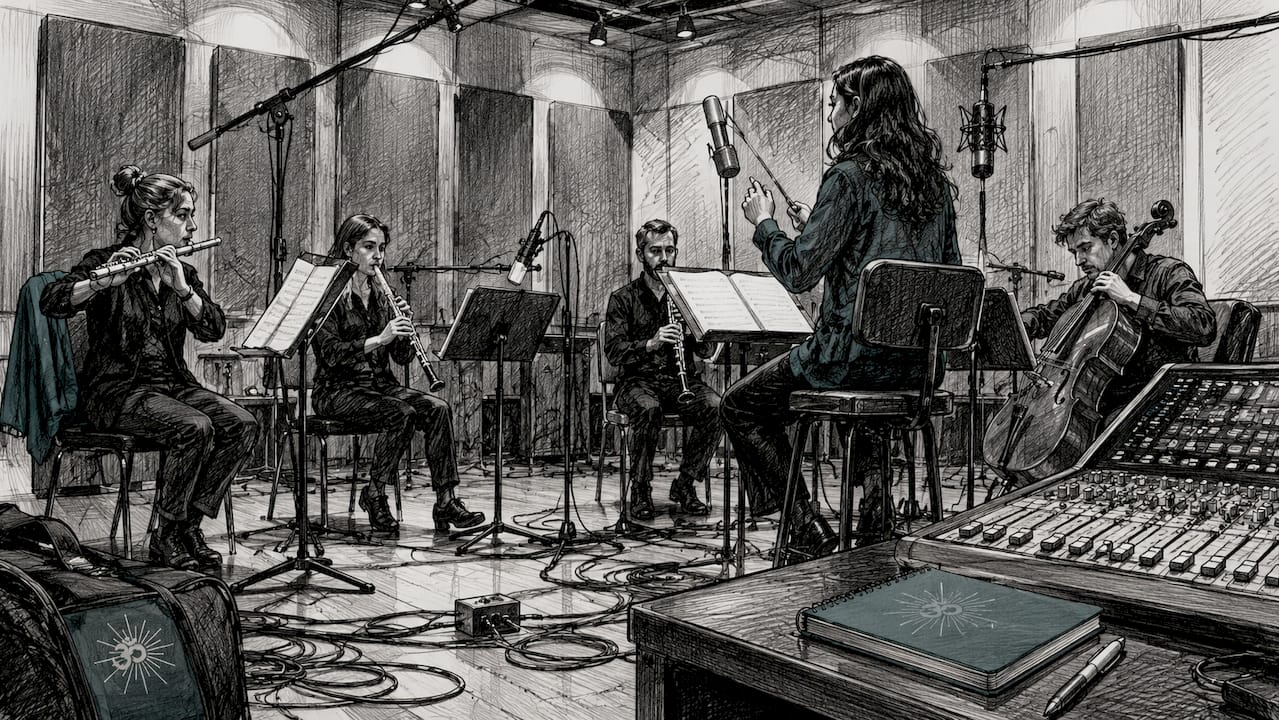
The recordings were made at Abbey Road Studios with the National Philharmonic, using advanced techniques including binaural beats, 3D surround sound, and theta frequency entrainment. That is not marketing language; it reflects a specific production philosophy rooted in how sound affects the nervous system. Listeners report profound relaxation and healing experiences that go well beyond what ambient synth tracks typically deliver.
The catalogue is royalty-free and available for wellness and commercial use, with options to purchase individual meditations or explore a subscription. Robert Emery’s involvement as composer and producer means every track carries a clear artistic and therapeutic intention. For creators producing yoga content, guided meditation recordings, or wellness programmes, that consistency of purpose is worth a great deal.
Explore the full library at Orchestralmeditations and see whether orchestral meditation music changes how your audience experiences your work.
Key takeaways
Orchestralmeditations stands apart from stock-library alternatives by combining live orchestral recordings at Abbey Road Studios with scientifically designed frequency-based audio, all under a royalty-free licence suited to wellness and commercial use.
| Point | Details |
|---|---|
| IndieMusicBox’s niche | Ambient relaxation music in pre-cleared packs, offering savings compared to individual track purchases. |
| Licensing is the critical variable | Pre-cleared royalty-free platforms save time; Bandcamp and SoundCloud require per-release licence checks. |
| Human curation beats algorithms | Curated platforms surface emotionally resonant meditation music that engagement-driven feeds miss. |
| Composer quality matters | Robert Emery and Moritz Schneider treat meditation music as a therapeutic discipline, not background filler. |
| Orchestralmeditations | Abbey Road orchestral recordings with binaural beats and theta frequencies, royalty-free for wellness projects. |
FAQ
What does IndieMusicBox specialise in?
IndieMusicBox focuses on ambient relaxation music for yoga and meditation videos, composed by Chris Collins. Music packs offer savings compared to individual track purchases.
Are Bandcamp and SoundCloud safe for commercial meditation projects?
Not automatically. Both platforms host music with varied licensing terms, so you must check each release individually before using it in monetised or client-facing content.
What makes Orchestralmeditations different from other royalty-free platforms?
Orchestralmeditations records with the National Philharmonic at Abbey Road Studios and integrates binaural beats, theta frequencies, and 3D surround sound into orchestral compositions, a combination not found in standard stock libraries.
Who are Robert Emery and Moritz Schneider?
Robert Emery is the composer behind Orchestralmeditations, known for scientifically designed orchestral meditation recordings. Moritz Schneider is an artisan producer whose purpose-driven compositions prioritise emotional depth and meditative utility.
Which platform is best for UK creators needing pre-cleared meditation music?
Orchestralmeditations and IndieMusicBox both offer pre-cleared royalty-free licences suited to wellness and commercial use, making them the most straightforward choices for UK creators who cannot afford licensing ambiguity.