Frequencies for meditation are defined as specific sound tones or brainwave-targeted audio signals that entrain the brain towards particular states of consciousness, supporting relaxation, focus, and deep inner awareness. Think of them as a tuning fork for your mind. Rather than forcing stillness through sheer willpower (we have all tried that, staring at the ceiling while our brain helpfully recites tomorrow’s shopping list), the right meditation sound frequency creates an acoustic environment that makes the desired mental state far easier to reach. Composers like Robert Emery and Moritz Schneider have built entire orchestral catalogues around this principle, weaving scientifically informed frequencies into rich, layered soundscapes that do the heavy lifting for you.
What are the main brainwave frequencies used in meditation?
The brain produces electrical activity in distinct frequency bands, and each band corresponds to a different quality of awareness. Understanding which band you are aiming for is the single most practical thing you can do before pressing play on any meditation frequency music.
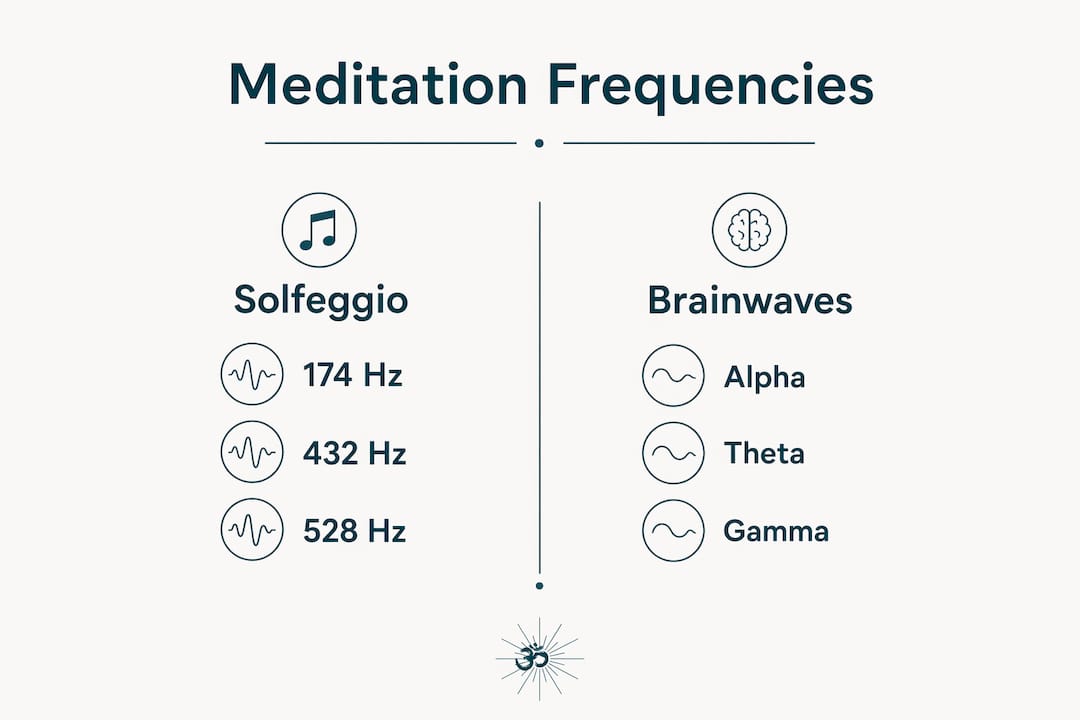
Alpha waves (8 to 12 Hz) are the sweet spot for most beginners and regular practitioners. Alpha-frequency auditory stimulation increases alpha brainwave power, reduces anxiety, and promotes a calm but alert state. That is the mental equivalent of a Sunday morning before anyone else is awake. Focused attention meditation, where you concentrate on the breath or a single point, correlates strongly with elevated alpha activity.
Theta waves (4 to 8 Hz) sit deeper. This is the territory of vivid imagery, subconscious processing, and the kind of meditation where you surface twenty minutes later genuinely unsure where you went. EEG studies on meditators show that open-monitoring styles, where awareness is broad and non-directed, correlate with increased theta and gamma activity. Experienced practitioners often describe theta states as the gateway to genuine insight.
Gamma waves (30 to 50 Hz) are the surprise entry on this list. Most people assume deeper meditation means slower brainwaves, but advanced practitioners, including long-term Tibetan Buddhist monks studied by neuroscientists at the University of Wisconsin, show extraordinary gamma bursts during compassion meditation. At the sharper end of this band, 40 Hz gamma stimulation is the primary frequency under investigation at MIT for neuroprotective effects, including reduction of amyloid plaques and neuroinflammation. That is not a small claim. It suggests that certain meditation frequency music may support long-term cognitive health, not just a pleasant afternoon.
Beta waves (13 to 30 Hz) are worth mentioning briefly. They dominate during active, analytical thinking. They are not the enemy, but they are rarely the goal during meditation. If you find yourself mentally drafting emails mid-session, congratulations: you are firmly in beta.
“Different meditation styles produce measurably distinct brainwave signatures. Matching your chosen frequency to your intended style is not mysticism. It is applied neuroscience.”
The practical implication is that matching frequency bands to your meditation style increases effectiveness. Focused attention practice benefits from alpha and beta support; open-monitoring and deep-state work benefits from theta and gamma. Knowing this saves you from playing a 40 Hz gamma track during a gentle wind-down session and wondering why you feel oddly wired.
How do Solfeggio and traditional frequencies like 432 Hz and 528 Hz support meditation?
Solfeggio frequencies are a set of ancient tonal frequencies, ranging from 174 Hz to 963 Hz, each traditionally associated with specific emotional and healing properties. The Solfeggio set is widely used in sound healing and meditation for emotional and physical well-being support, with 528 Hz being the most studied of the group.
Here is a quick comparison of the most popular options:
| Frequency | Traditional association | Practical use in meditation |
|---|---|---|
| 174 Hz | Pain relief, grounding | Body scan and somatic awareness sessions |
| 396 Hz | Releasing guilt and fear | Emotional processing and letting go |
| 432 Hz | Natural harmony, coherence | General relaxation and tuning in |
| 528 Hz | Healing, DNA repair (claimed) | Emotional healing and heart-centred practice |
| 852 Hz | Spiritual awakening | Advanced contemplative and insight practice |
| 963 Hz | Crown activation, unity | Deep spiritual and transcendent states |
The 432 Hz versus 528 Hz debate is one of the liveliest in the meditation world, and honestly, it can get a bit heated for a community that is supposed to be calm. Proponents of 432 Hz argue it resonates more naturally with the human body and the natural world, while 528 Hz advocates point to its nickname, the “miracle tone,” and a growing body of practitioner testimony about emotional release and physical ease.
The honest position is this: the scientific evidence for specific healing claims around Solfeggio frequencies is still developing. What is well-established is that consistent use of these tones as auditory anchors during meditation deepens focus and creates a reliable mental cue for entering a meditative state. Robert Emery, whose compositional work spans decades of orchestral and meditative music, incorporates these frequencies into layered orchestral arrangements rather than presenting them as bare sine waves. The result is something that feels genuinely immersive rather than like sitting next to a malfunctioning piece of laboratory equipment. Moritz Schneider, his collaborator at Orchestralmeditations, applies similar principles, building harmonic structures around these frequencies so the listener absorbs them through music rather than endures them as a tone.
Solfeggio sessions are typically most effective when run for 20 to 60 minutes, with consistency over weeks and months mattering far more than the occasional marathon session. That is genuinely good news for anyone whose schedule does not accommodate two-hour daily retreats.
Pro Tip: Start with a single Solfeggio frequency for two weeks before experimenting with others. Jumping between frequencies every session makes it nearly impossible to notice what is actually working for you.
Which frequencies are best suited for different meditation goals?
This is the question most people actually want answered, and the answer is more specific than “it depends” (though it does, slightly). Here is a goal-by-goal breakdown:
-
Relaxation and stress relief. Alpha waves (8 to 12 Hz) are your first port of call. Pair them with 432 Hz music for a session that feels like the mental equivalent of a long exhale. The combination supports the parasympathetic nervous system and reduces the physiological markers of stress.
-
Emotional healing and processing. The 528 Hz frequency has the strongest practitioner consensus for emotional work, particularly around releasing grief, resentment, or anxiety. Use it during body-scan or loving-kindness meditations for best results.
-
Deep meditative states and subconscious access. Theta frequencies (4 to 8 Hz) are the target here. Binaural beats and isochronic tones allow access to sub-audible frequencies like the Schumann resonance at 7.83 Hz, which corresponds to Earth’s electromagnetic cavity resonance and is associated with grounding and stability. To hear 7.83 Hz directly, you would need speakers the size of a small building. Binaural beats solve this elegantly by presenting two slightly different tones to each ear, with the brain perceiving the difference as the target frequency.
-
Cognitive enhancement and heightened awareness. The 40 Hz gamma frequency is the one to reach for here. It is not the most relaxing experience, but it is associated with peak mental clarity and, as MIT research suggests, potential neuroprotective benefits. Think of it as the espresso of meditation frequencies.
-
Spiritual practice and expanded awareness. Higher Solfeggio frequencies, particularly 852 Hz and 963 Hz, are favoured by practitioners working with contemplative or insight-based traditions. These are best approached after you have a stable meditation practice rather than on day one.
A progressive approach works particularly well across all these goals. Shifting from higher to lower frequencies during a single session, moving from beta-adjacent states down through alpha and into theta, better reflects the natural arc of how the brain transitions during meditation. Robert Emery and Moritz Schneider both apply this sequencing logic in their orchestral compositions, building tracks that guide the listener through frequency layers rather than holding a single tone for the entire session. You can explore healing frequencies in depth if you want to go further into the specific therapeutic applications of each band.
How to use meditation frequencies effectively in your practice
Knowing which frequencies to use is only half the job. How you use them determines whether you get genuine benefit or just a pleasant background noise experience.
-
Use headphones for binaural beats. This is non-negotiable. Binaural beats require each ear to receive a different tone, which only works with stereo headphones. Playing them through a single speaker or on a laptop produces nothing useful. Over-ear headphones at moderate volume work best.
-
Use quality speakers for orchestral meditation music. Conversely, rich orchestral recordings like those produced by Robert Emery and Moritz Schneider at Abbey Road Studios with the National Philharmonic are designed for full acoustic immersion. A decent pair of speakers or high-quality headphones will reveal harmonic layers that earbuds simply cannot reproduce.
-
Prioritise consistency over duration. Regular 30-minute sessions over weeks and months improve outcomes far more than occasional lengthy sessions. Your brain learns to associate the frequency with a meditative state, and that association deepens with repetition.
-
Engage actively rather than passively. The most successful practitioners treat frequencies as auditory anchors for focus, not as a passive healing mechanism. Bring your attention to the sound, return to it when the mind wanders, and use it as you would use the breath in traditional mindfulness. The frequency supports the practice; it does not replace it.
-
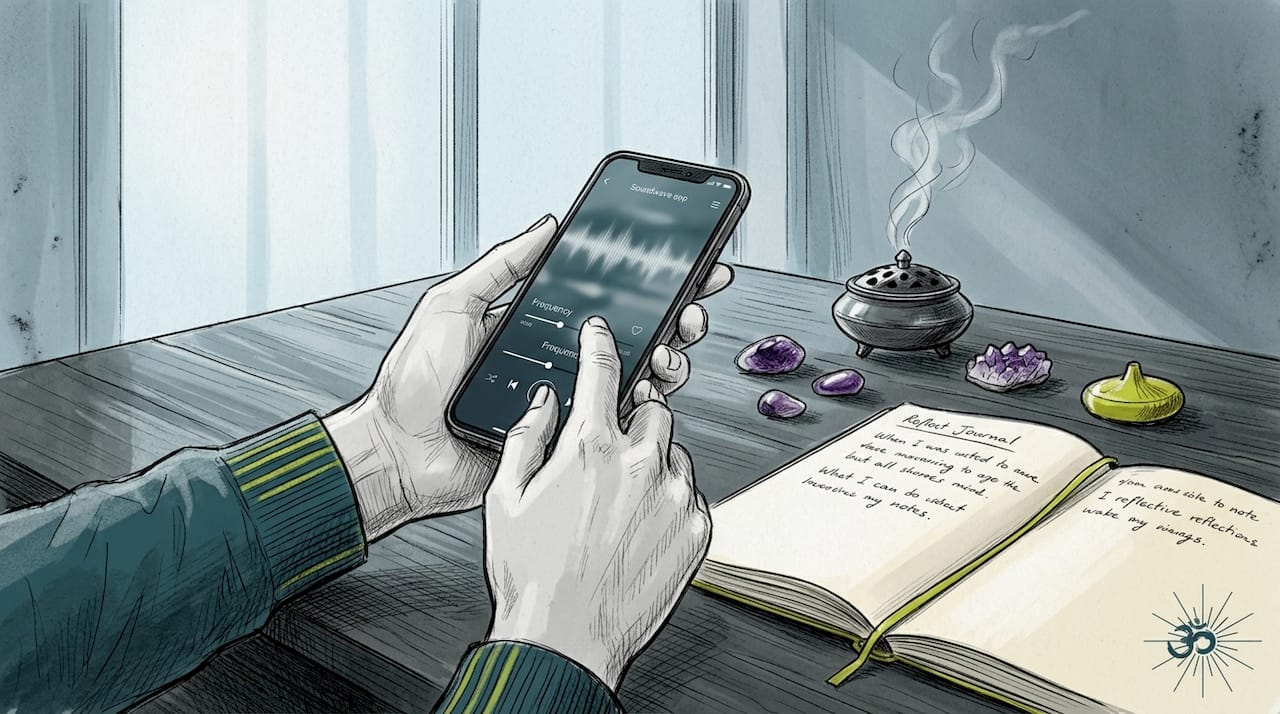
Track your responses. Keep a brief note after each session: which frequency, how long, and how you felt during and after. Patterns emerge surprisingly quickly, and you will discover which frequencies genuinely shift your state versus which ones you simply like the sound of (both are valid, but they serve different purposes).
Pro Tip: If you find binaural beats distracting rather than settling, try isochronic tones instead. They do not require headphones and many practitioners find them easier to habituate to during the early stages of frequency meditation.
Sound meditation also benefits from focus enhancement techniques that complement frequency work, particularly if you are combining sound with breath or visualisation practices.
Key takeaways
The most effective frequencies for meditation are those matched to your specific goal, whether that is alpha for relaxation, theta for deep states, or 40 Hz gamma for cognitive clarity, used consistently and with active mental engagement.
| Point | Details |
|---|---|
| Match frequency to goal | Alpha suits relaxation; theta suits deep states; 40 Hz gamma suits cognitive enhancement. |
| Solfeggio frequencies work as anchors | Use 528 Hz for emotional healing and 432 Hz for general harmony; consistency matters more than session length. |
| Binaural beats need headphones | Sub-audible frequencies like Schumann resonance (7.83 Hz) are only accessible via binaural or isochronic audio. |
| Progressive sequencing deepens sessions | Shifting from higher to lower frequencies during a session mirrors the brain’s natural meditative arc. |
| Active engagement is required | Frequencies support meditation; they do not replace the practice of returning attention to the present moment. |
Why I think most people are using meditation frequencies backwards
Here is something I have noticed after years of working with meditation music and watching how people approach it. Most people treat frequency tracks the way they treat a painkiller: take it, wait for it to work, feel vaguely disappointed when it does not. They press play on a 528 Hz track, sit back, and expect the frequency to do the meditating for them. Then they conclude that “frequencies do not work” and go back to scrolling their phone.
The research is clear on this. Frequencies act as brainwave entrainment anchors, but they require active mental participation to produce genuine benefit. The frequency creates a favourable acoustic environment. You still have to show up mentally.
What changed my own practice was encountering the orchestral work of Robert Emery and Moritz Schneider. Emery is a composer and conductor whose career spans concert hall work and deeply considered meditation music, and Schneider brings a similarly rigorous musical intelligence to the Orchestralmeditations catalogue. Their tracks are not just frequency generators dressed up in strings. They are genuinely composed music that happens to be built around specific frequency principles. The difference in experience is like the difference between eating a vitamin tablet and eating an actual meal. Both deliver nutrients; only one feels nourishing.
I would also push back gently on the idea that you need to choose between the scientific and the traditional. The Solfeggio frequencies have been used in contemplative practice for centuries. The neuroscience of brainwave entrainment is decades old. These are not competing frameworks. They are two lenses on the same phenomenon, and the best frequency for meditation is ultimately the one you will actually use with consistency and genuine attention.
My honest recommendation: start with alpha or theta, use orchestral music rather than bare tones if you find pure sine waves alienating (most people do, quietly), and give it at least three weeks before drawing any conclusions. Frequencies are not a shortcut. They are a very good set of directions.
— ROBERT
Explore orchestral meditation music built around effective frequencies
If you have been working with basic tone generators and wondering why the experience feels a bit clinical, the answer is probably that you are missing the harmonic richness that makes frequency meditation genuinely immersive.
Orchestralmeditations offers a curated library of orchestral meditation music recorded at Abbey Road Studios with the National Philharmonic, composed by Robert Emery and Moritz Schneider. These are not digital approximations of frequency work. They are full acoustic recordings built around alpha, theta, Solfeggio, and binaural principles, designed to carry you into deep meditative states through music that actually moves you. You can also explore the best meditation music from their curated collection to find the track that fits your practice right now.
FAQ
What are the best frequencies for meditation?
The best frequency for meditation depends on your goal. Alpha waves (8 to 12 Hz) suit relaxation and focused attention, theta waves (4 to 8 Hz) support deep states and open monitoring, and 40 Hz gamma is linked to heightened awareness and neuroprotective effects.
Do binaural beats for meditation actually work?
Yes, with an important caveat. Binaural beats entrain the brain towards a target frequency, but they require headphones and active mental engagement to produce measurable effects. They are a tool, not a passive treatment.
What is the difference between alpha and theta waves for meditation?
Alpha waves (8 to 12 Hz) produce a calm, alert state suited to focused attention practice. Theta waves (4 to 8 Hz) produce deeper, more receptive states associated with open monitoring and subconscious access. You can explore the alpha vs theta comparison in detail for a fuller picture.
How long should I use healing frequencies for meditation?
Sessions of 20 to 60 minutes are typical, but consistency matters more than length. Regular 30-minute sessions over several weeks produce better outcomes than occasional longer ones.
Are Solfeggio frequencies scientifically proven?
The scientific evidence for specific healing claims is still developing, but Solfeggio frequencies are well-established as effective auditory anchors that support focus and meditative depth when used consistently as part of an active practice.