Yes, your spa needs permission to play relaxing music in treatment rooms, reception, or the waiting area, and there are only two lawful routes to get it. Either you take out TheMusicLicence from PRS for Music and PPL, which covers mainstream commercial tracks, or you use rights-inclusive spa music that already carries clearance for commercial premises. Everything below explains how each route works, what it costs, and how to prove you’re covered if anyone ever asks.
TL;DR:
- Spa owners must obtain public performance licenses from PRS and PPL or use rights-cleared spa music subscriptions to legally play music in treatment rooms and communal areas.
- Tariff costs vary based on premises size, number of zones, and whether music is streamed or played live, with licensing typically achievable within days.
- Confirm proof of licensing before subscribing, ensuring the catalogue covers your specific use-case, territory, and multiple rooms or sites if applicable.
- Playing consumer streaming services like Spotify or Apple Music in a business setting violates terms and leaves you unlicensed, unlike licensed business-tier services offering clear rights.
- Live performances or DJ sets require separate licensing or notification, and music used in promotional videos needs specific synchronization rights beyond public performance licenses.
Which licences cover spa music licensing for public performance?
Playing music where clients or staff can hear it, even quietly through a ceiling speaker in a treatment room, counts as a “public performance” in copyright law. That single fact is the whole reason spa music licensing exists as a category. It doesn’t matter whether the room holds two people or twenty, or whether the volume is barely above a whisper during a hot stone massage.
Two separate organisations govern this in the UK. PRS for Music collects royalties for songwriters, composers, and publishers, the people who wrote the melody and lyrics. PPL collects for performers and record labels, the people who recorded that specific version. Because most commercial tracks involve both a writer and a recording artist, businesses typically need permission from both bodies, which is why they now sell a combined product called TheMusicLicence rather than forcing you to negotiate with each separately.
Public performance in a spa setting isn’t limited to your main lounge speaker system. It covers:
- Background playlists in treatment rooms and corridors
- Music audible in reception or shared waiting areas
- Hold music played to callers booking appointments
- Speakers in changing rooms, saunas, or relaxation pods
A PMC review of copyright and music rights confirms that public performance licensing applies broadly across commercial venues, not just to venues with obvious “entertainment” like live bands or nightclubs. One detail catches out more spa owners than any other: a personal Spotify Premium or Apple Music subscription is licensed for private, non-commercial listening only. Playing it in a business setting, however low the volume, breaches the streaming platform’s own terms and leaves you unlicensed under PRS/PPL rules simultaneously.
Lawful routes: TheMusicLicence versus rights-inclusive subscriptions
Spa owners essentially choose between two models, and the right one depends on what kind of music experience you want to build.
-
Route A: TheMusicLicence (PRS + PPL tariffs). This suits venues that want access to recognisable commercial music, chart tracks, familiar ambient artists, or a varied playlist pulled from a wide catalogue. You pay an annual tariff based on factors like floor area, whether music is live or recorded, and how many rooms play it. It’s the flexible option, but it comes with paperwork and periodic tariff reviews.
-
Route B: rights-inclusive or royalty-free spa music subscriptions. These suppliers pre-clear their entire catalogue for commercial use, so you pay the supplier directly and never touch PRS or PPL. Some rights-inclusive spa music suppliers build their whole pitch around this simplicity, offering fixed monthly costs and a certificate confirming coverage.
Whichever route you choose, keep proof. TheMusicLicence comes with a certificate and renewal correspondence you should file alongside your business insurance documents. Rights-inclusive suppliers should issue something equivalent: a written statement confirming the tracks are cleared for commercial premises, ideally naming the territory and use-case covered. Ask for this before you subscribe, not after a PRS inspector calls.
Pro Tip: Store your licence certificate or supplier confirmation in the same folder as your fire safety and insurance paperwork. Inspectors and franchise auditors will ask for it in the same breath as those documents, and “I’ll dig it out later” rarely lands well.
What does ‘royalty-free’ actually mean for a spa?
“Royalty-free” gets thrown around loosely, and the differences matter more than most suppliers admit. Royalty-free means you pay once (or subscribe) and don’t owe ongoing royalties per play. Public domain means copyright has expired entirely, usually for compositions over a century old. Creative Commons is a mixed bag: some CC licences explicitly forbid commercial use, and others require attribution you can’t easily display in a spa. The Creative Commons licence overview makes clear that terms vary licence by licence, so “it’s Creative Commons” is never itself proof you’re covered.
Before trusting any licence-free catalogue, check for:
- A written certificate of licence naming your business
- Confirmation the artists aren’t separately registered with PRS or PPL for those specific tracks
- Clarity on whether the licence covers multiple rooms or only a single premises
- A stated territory (UK coverage, not just “worldwide” marketing language)
Watch for vague phrases like “cleared for personal use” hiding inside a business-facing product page, or “non-exclusive licence” without a definition of what’s excluded. If a supplier can’t answer a direct question about PRS/PPL registration status, treat that as a warning sign rather than reassurance.
What does spa music licensing cost, and how fast can you comply?
Tariff-based licensing through TheMusicLicence typically scales with your premises size and how many zones play music, so a single-treatment-room boutique pays considerably less than a resort spa with a gym, pool area, and multiple therapy suites. Rights-inclusive subscriptions tend to run as flat monthly or annual fees, which some spa music suppliers market specifically as a predictability advantage over variable tariffs.
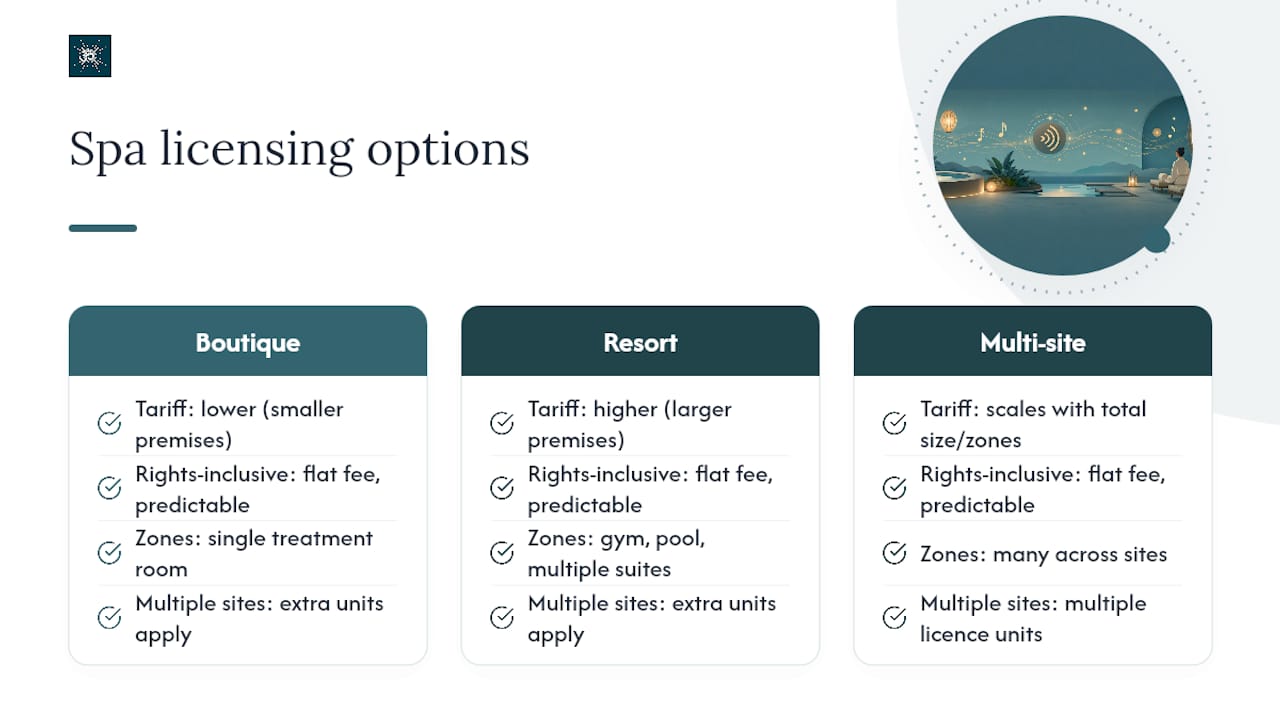
Multiple rooms or multiple sites usually mean multiple licence units, whichever route you take, so a chain of three spas budgets differently than a single site.
In practice, becoming compliant takes days, not weeks. Applying for TheMusicLicence online is usually the slowest step, since PRS/PPL need details about your premises to set the tariff. A rights-inclusive subscription can often be active the same day you sign up, with your certificate arriving by email immediately. Either way, the moment you have proof of coverage, file it and set a calendar reminder for renewal.
A step-by-step buying checklist for spa owners
Working through licensing shouldn’t feel like decoding a legal contract at 11pm before opening day. Use this sequence.
- Map your premises. List every room or zone where music plays, treatment rooms, reception, changing rooms, hold music, so you know the scope you’re licensing.
- Choose your route. Decide between TheMusicLicence and a rights-inclusive subscription based on whether you want mainstream tracks or curated ambient content.
- Ask suppliers direct questions. Is the catalogue registered with PRS/PPL under a separate agreement? Do you issue a certificate? What happens on renewal, and does the price change?
- Request proof before paying. A reputable supplier sends licence documentation without hesitation. Hesitation is itself a red flag.
- File and diarise. Keep the certificate accessible and set a renewal reminder at least a month before expiry.
Red flags worth walking away from: suppliers who can’t explain PRS/PPL status in plain English, catalogues with no written licence terms at all, and “lifetime licence” claims with no definition of what happens if the supplier changes ownership or shuts down.
Pro Tip: Keep a simple one-page “music compliance sheet” listing your licence type, supplier, renewal date, and where the certificate is stored. It takes ten minutes to create and saves considerable stress during a franchise audit or insurance renewal.
Does licensing differ between a small boutique spa and a large resort?
Size changes the mechanics of spa music licensing, not the underlying requirement. A single-room boutique with one treatment table and a small reception area still needs a licence, full stop, but the tariff calculation for TheMusicLicence factors in floor area and the number of separate zones playing music, so a compact venue typically pays less than a sprawling one.
Large resort spas complicate matters because they often run several distinct sound zones simultaneously: a pool area, a relaxation lounge, individual treatment suites, a gym, and a café, each potentially needing its own licence coverage or an extended tariff that accounts for multiple rooms. Chain operators with several locations should check whether TheMusicLicence needs a separate agreement per site or whether a multi-site tariff applies, since assuming one certificate covers every branch is a common and costly mistake.
Rights-inclusive subscriptions behave similarly. Some suppliers price per location or per number of simultaneous streams, so a five-site franchise negotiating a single subscription needs to confirm explicitly that the certificate names every branch, not just the flagship site. A day spa attached to a hotel faces an added wrinkle too: if the hotel already holds a music licence for its own common areas, that coverage almost never extends automatically to a leased or concession-operated spa business inside it. Separate legal entities generally need separate licences, even under one roof.
Can you legally use Spotify, Apple Music, or similar in a spa?
Standard consumer accounts on Spotify, Apple Music, YouTube Music, and similar services are built for personal, non-commercial listening. Playing them in a business setting, however peacefully in the background during a facial, breaches the platform’s terms of service and leaves you without PRS/PPL coverage at the same time. Guidance from spa industry sources is blunt about this: consumer streaming simply isn’t licensed for commercial premises, regardless of volume or intent.
The good news is that legitimate commercial alternatives exist. Some streaming and background-music providers sell business-tier accounts specifically built for in-venue play, bundling the underlying rights into the subscription price so you’re not separately liable for PRS/PPL tariffs. Business-focused in-store music services position themselves precisely around this gap, offering curated playlists cleared for commercial use rather than consumer catalogues repurposed illegally.
Before signing up to any streaming service for your spa, ask directly whether the plan is licensed for commercial or business premises, not just “unlimited skips” or “ad-free.” That single sentence in a sales conversation tells you more than the entire pricing page. If a provider can’t answer clearly, or the answer requires digging through fine print, assume it isn’t built for your use case and look elsewhere. The distinction between a consumer plan and a business plan is rarely obvious from branding alone.
Do live performances or DJ sets need separate licensing?
Yes, and this is where many spa owners underestimate the requirement. If you host a live musician for a wellness event, a sound bath practitioner playing crystal bowls to a backing track, or a DJ for a spa launch party, that’s a distinct public performance from your everyday background playlist and usually needs to be reflected in your licence.
TheMusicLicence tariff structure typically distinguishes between recorded background music and live or occasional performance events, so a one-off yoga retreat evening with a live cellist may require notifying PRS or adjusting your tariff band. The same logic applies to a DJ set: even if the DJ brings their own equipment and playlist, the venue hosting the performance generally carries the licensing responsibility, not the performer, unless your contract with them states otherwise explicitly.
Practically, this means two things for spa managers planning a special event. First, check your existing TheMusicLicence terms to see whether live or occasional performances fall inside your current tariff or need a top-up. Second, if you’re booking outside talent, ask them directly whether they carry their own performer’s liability or licensing arrangement, and get that confirmation in writing before the event, not during it. It’s a five-minute email that avoids a much longer conversation with a rights body afterwards.
Do you need synchronisation rights for spa videos or adverts?
If your spa uses music behind a promotional video, an Instagram reel showcasing your treatment rooms, or a welcome video played on a lobby screen, that’s a different right entirely from public performance, called synchronisation rights. Sync licensing covers pairing a piece of music with moving images, and it sits outside what TheMusicLicence or a standard PRS/PPL agreement covers.
This trips up wellness businesses constantly, because a track perfectly cleared for background ambience in your treatment rooms is not automatically cleared for use in a marketing video, even if it’s the exact same recording. Sync rights are typically licensed separately, either directly from the rights holder, through a specialist sync licensing platform, or bundled into certain royalty-free music subscriptions that explicitly state video and promotional use as covered.
The fix is straightforward: before adding any music to promotional content, check the specific licence terms for that track and confirm whether “synchronisation” or “video use” is named explicitly. Many rights-inclusive spa music suppliers do include sync rights within their standard packages precisely because wellness brands so often want music for both ambience and marketing, but you must confirm this rather than assume it. A licence that says “for commercial premises use” is not automatically the same thing as “cleared for video.”
How do you verify a spa music supplier is properly licensed?
Trust, but verify, applies directly here. Any supplier claiming their catalogue is royalty-free or rights-inclusive should be able to produce a written certificate naming what’s covered, for whom, and for how long. If they hesitate, dodge the question, or point vaguely to “industry standard practice” without documentation, that hesitation tells you what you need to know.
Ask specifically whether the artists and composers on their tracks are registered with PRS or PPL under separate agreements that might create a gap in coverage. A genuinely rights-inclusive supplier will have a clear, confident answer to this, usually because they’ve either bought out those rights entirely or built relationships directly with composers who aren’t independently registered. Some suppliers, like those offering business licences and lifetime rights structures, spell out exactly what tier of use is covered, which is the transparency you should expect as standard, not as a bonus.
Finally, check whether the certificate names your specific business, your territory, and whether it extends to multiple rooms or sites if that’s relevant to you. A generic “these tracks are royalty-free” statement with no business name attached offers considerably less protection than a certificate issued directly to your company. If in doubt, ask the supplier to confirm their claims in writing over email, dated, so you have a record if the question ever arises later.
Why quality production matters as much as the paperwork
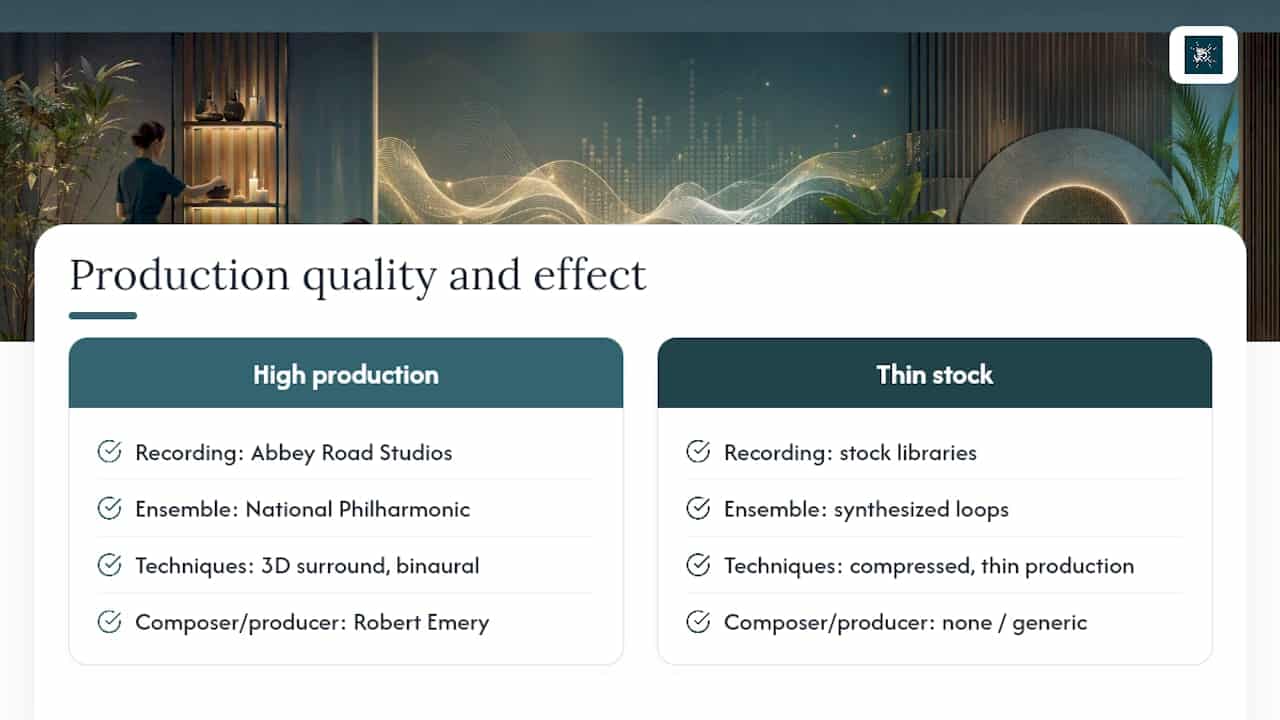
Getting the licensing right is only half the job. The other half is whether the music actually does what you’re paying it to do, which is calm a stressed client down within the first ninety seconds of a treatment. Research summarised in the same PMC review on music and therapeutic contexts points to measurable relaxation and stress-reduction benefits from ambient and orchestral music in wellness settings, and thin, compressed, obviously stock-library tracks rarely deliver that effect as convincingly as a properly recorded piece.
This is where Orchestralmeditations sits in an interesting position. Its catalogue is recorded at Abbey Road Studios with the National Philharmonic, using 3D surround and binaural techniques rather than synthesised loops, which matters practically because thin production is often what makes background music sound like background music rather than a considered part of the treatment experience. The composer and producer, Robert Emery, known for large-scale orchestral projects and his work bridging classical performance with broader audiences, has built a career on exactly this kind of high-production orchestral work, and his involvement in projects of this calibre is part of why the sound quality holds up under close listening rather than fading into forgettable wallpaper. For treatment-room ambience, guided meditations, or on-hold music, that difference is audible, and supplier commentary from in-store music services backs the broader point that better-produced audio supports premium positioning, not just legal compliance.
— ROBERT
A rights-inclusive route that also sounds premium
Certain rights-inclusive licensing services offer a balance between legal compliance and good audio quality. Tracks come as single-track licences for a specific room or use, or as a subscription covering your wider catalogue needs, with both personal and professional/commercial licensing options built in for treatment rooms, reception, guided meditations, and on-hold use.
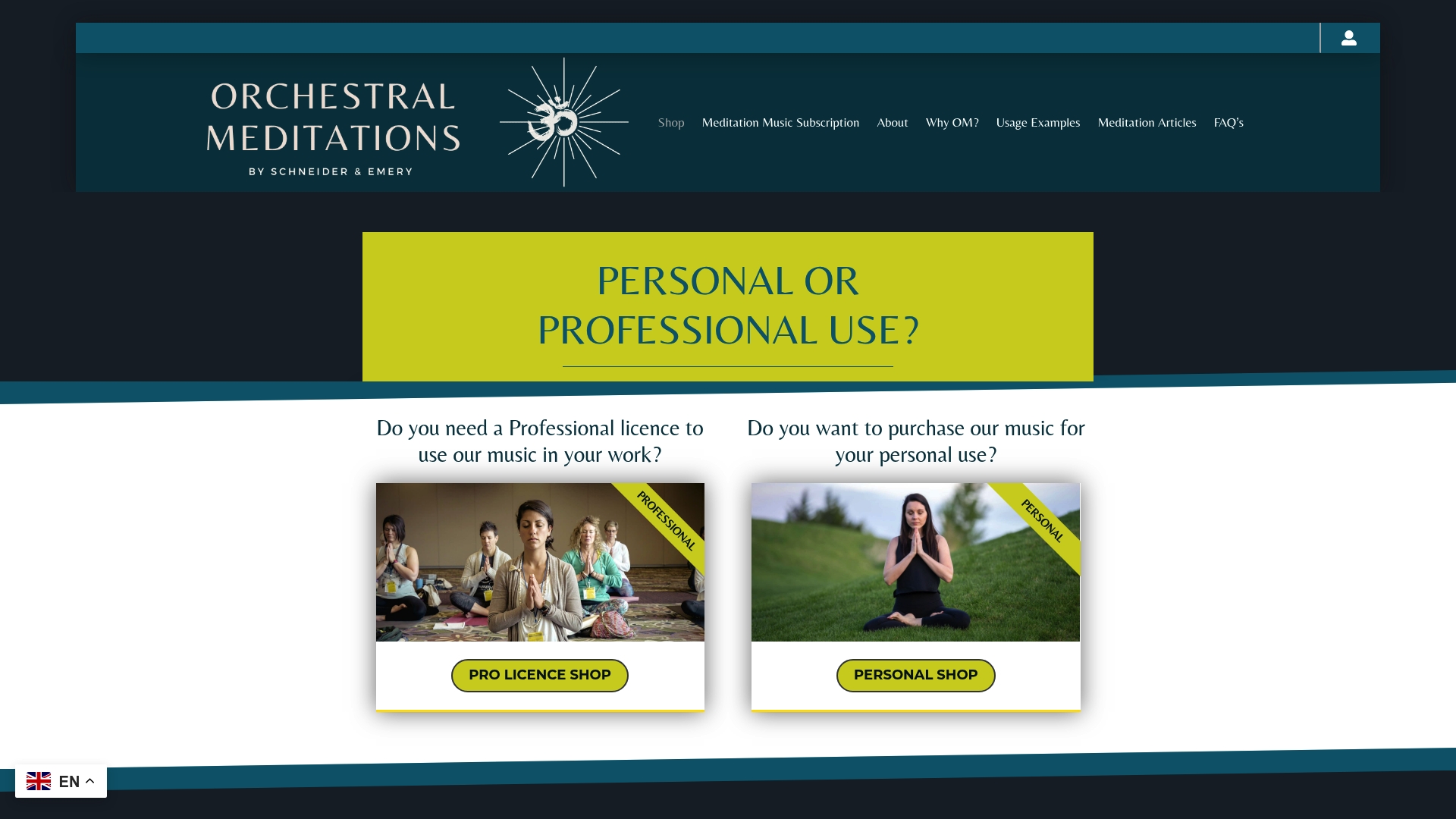
Before you subscribe anywhere, run through the checklist from earlier: confirm the licence scope, check whether multi-room or multi-site use is included, and get the certificate in writing. Some recordings are produced using advanced techniques like 3D surround and binaural sound, aiming to suit spa and wellness environments, with licensing terms intended for commercial premises.
If you’re ready to stop worrying about PRS inspectors and start building a treatment-room soundscape clients actually notice, browse the Orchestralmeditations shop and check licensing terms against your specific spa setup today.
Sources
- PMC article on copyright and music rights
- Creative Commons licences overview
- Relaxing background music for spas and therapy businesses
- Spa music guidance and supplier information
FAQ
How can I avoid paying PRS and PPL fees?
You can’t lawfully avoid a licence fee for playing music publicly, but you can avoid PRS/PPL tariffs specifically by using a rights-inclusive spa music subscription that has already cleared those rights on your behalf.
How much does spa music licensing typically cost?
TheMusicLicence tariffs scale with your premises size and number of zones playing music, while rights-inclusive subscriptions tend to run as flat monthly or annual fees; exact figures depend on your specific setup, so request a quote from your chosen route directly.
Do I need a licence to play music at a spa event?
Yes, live performances, DJ sets, and special events at your spa usually need coverage beyond your standard background music licence, so check your tariff terms or notify PRS before the event.
What music can I legally play without a separate licence?
Genuinely royalty-free or rights-inclusive spa music, cleared upfront by a supplier such as Orchestralmeditations or similar rights-inclusive catalogues, can be played without a separate PRS/PPL agreement, provided you hold proof of that clearance.