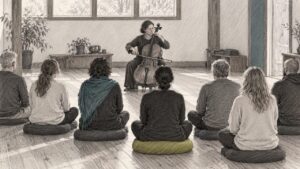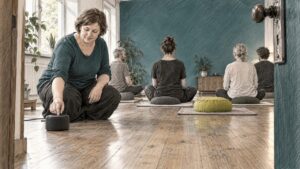
A mindfulness checklist in 2026 is a concise, practical set of daily actions designed to cultivate awareness, reduce stress, and sharpen mental clarity. Think of it less like a rigid to-do list and more like a gentle nudge from your wiser self. The good news is that the latest guidance confirms you do not need hour-long meditation retreats or a Himalayan cave to make this work. Short, consistent practice beats sporadic perfection every single time. Composers like Robert Emery and Moritz Schneider, whose orchestral meditation recordings are crafted specifically to support focused awareness, have shown that the right sonic environment can make even a five-minute session feel genuinely transformative.
1. what is a mindfulness checklist 2026 and why does it work?
A mindfulness practices checklist is a structured list of small, repeatable actions that anchor your attention to the present moment throughout the day. The concept is not new, but the 2026 approach is notably more practical and less precious about it. You are not aiming for enlightenment before breakfast. You are aiming for a slightly calmer, more deliberate version of yourself.

The reason checklists work is simple: they remove decision fatigue. When you already know the next step, your brain does not waste energy choosing. That freed-up mental bandwidth goes directly into the practice itself. Research consistently shows that habit formation relies on cue, routine, and reward, and a checklist provides all three in one tidy package.
The wellness checklist for meditation approach championed by Orchestralmeditations reflects this thinking precisely. Small actions, done consistently, compound into genuine shifts in mood, focus, and resilience.
2. the essential components of a morning mindfulness routine
The most widely recommended 2026 mindfulness guide structures a morning checklist into seven distinct phases. Each phase targets a different dimension of awareness, from physical to mental to environmental. Together, they take roughly 20–30 minutes, though you can trim each section to suit your schedule.
Here is what a complete morning mindfulness practices checklist looks like in practice:
- Immediate Awakening: Take three slow, conscious breaths before reaching for your phone. This single habit interrupts the automatic stress response that most people trigger within seconds of waking.
- Mindful Movement: Perform a slow, full-body stretch, paying attention to where tension lives. Upright posture during this phase signals alertness to your nervous system.
- Conscious Hydration: Drink a glass of water slowly, noticing its temperature and texture. Sensory awareness during ordinary acts is the backbone of mindfulness.
- Sensory Self-Care: Shower or wash your face with full attention on the physical sensations rather than running through your mental to-do list.
- Mental Grounding: Sit for a brief meditation of around five minutes. Focus on breath, body, or a single point of attention.
- Intentional Nourishment: Eat breakfast without screens. Notice flavour, texture, and pace.
- Environmental Connection: Spend two minutes observing something in your immediate environment, whether that is a plant, the sky, or the quality of morning light.
Pro Tip: Try pairing your Mental Grounding phase with a theta-frequency track from Orchestralmeditations. Composers Robert Emery and Moritz Schneider have produced recordings specifically calibrated to support the relaxed-yet-alert brainwave state that makes seated meditation far more accessible for beginners.
3. how beginners can build a sustainable mindfulness habit
Beginners consistently make the same mistake: they start too ambitiously and quit within a fortnight. The beginner mindfulness approach recommended in 2026 guidance is refreshingly modest. Start with five minutes. That is it.
Here is a seven-step sequence that works for complete beginners:
- Find a comfortable seat. You do not need a meditation cushion. A dining chair with your feet flat on the floor is perfectly fine.
- Scan your body for tension. Start at the top of your head and move slowly downward. Notice without trying to fix anything.
- Focus on your breath. Pay attention to the sensation of air entering and leaving your nostrils. Not the idea of breathing. The actual physical sensation.
- Notice when your mind wanders. It will. Probably within about eight seconds. This is not failure. This is the practice.
- Gently redirect your attention. No self-criticism. Just a quiet, internal “back to the breath.”
- Set a timer. Use your phone to mark five minutes so you are not clock-watching. Once the habit is established, extend the duration gradually.
- Log the session. Write down the date, duration, and one brief observation. Tracking your sessions builds accountability and reveals patterns over time.
The 5-4-3-2-1 grounding technique is a brilliant addition for anyone who finds breath-focused meditation too abstract. Name five things you can see, four sounds you can hear, three things you can touch, two smells, and one taste. It requires no equipment and works anywhere, including a crowded commuter train.
Phone reminders set 1–2 times daily are one of the most underrated tools for building consistency. Treat the reminder as a non-negotiable appointment with yourself, not a suggestion.
Pro Tip: Create a dedicated mindfulness playlist using tracks by Robert Emery or Moritz Schneider from Orchestralmeditations. Having the same music cue each session trains your brain to shift into a receptive state faster, which is particularly useful when you only have five minutes to spare.
4. how MBCT complements your daily mindfulness habits
Mindfulness-Based Cognitive Therapy, known as MBCT, is the gold standard evidence-based programme for anyone who wants to take their daily mindfulness habits for 2026 to a clinical level of depth. MBCT is an 8-week programme with weekly group sessions lasting 2–2.5 hours each. It combines formal mindfulness practices with cognitive behavioural therapy techniques.
The formal mindfulness elements include body scan meditation, sitting meditation, and mindful movement. The CBT elements include psychoeducation about depression and anxiety, and behavioural activation strategies. This combination is what makes MBCT more than a meditation course. It teaches you to recognise the thought patterns that drag you into low mood and to respond differently.
Both synchronous and asynchronous online MBCT formats effectively reduce depression and anxiety while increasing resilience and mindfulness. This means you can access the programme’s benefits whether you prefer live group sessions or self-paced learning. The synchronous format tends to have higher completion rates, while the asynchronous format offers greater scheduling flexibility.
Here is how MBCT maps onto a daily checklist:
| MBCT Component | Daily Checklist Equivalent | Duration |
|---|---|---|
| Body scan meditation | Sensory Self-Care phase | 10–20 minutes |
| Sitting meditation | Mental Grounding phase | 5–45 minutes |
| Mindful movement | Mindful Movement phase | 5–15 minutes |
| Psychoeducation | Weekly reflection journalling | 10 minutes |
| Behavioural activation | Intentional Nourishment phase | Ongoing |
If you are managing mild to moderate depression or anxiety, MBCT is worth pursuing alongside your personal checklist. Think of your daily checklist as the daily training run and MBCT as the coaching programme that teaches you proper form.
5. comparing mindfulness checklist formats: which suits you?
Not every mindfulness techniques 2026 format suits every person. A retired teacher with a quiet morning has different needs from a parent of three who gets approximately eleven minutes of silence per day. Choosing the right format is not about ambition. It is about honest self-assessment.
Here is a comparison of the three most common checklist formats:
| Format | Duration | Best For | Main Drawback |
|---|---|---|---|
| Full morning checklist | 20–30 minutes | Those with flexible mornings | Difficult to maintain on busy days |
| Short daily practice | 5–10 minutes | Beginners and busy schedules | Less depth without gradual extension |
| Structured programme (MBCT) | 8 weeks, 2–2.5 hrs/week | Clinical or deep-practice goals | Requires significant time commitment |
The short daily practice format wins on consistency for most beginners. The full morning checklist wins on depth and the sense of a genuinely mindful start to the day. MBCT wins when you need structured support and clinical-level skill-building.
A few practical considerations when choosing your format:
- If you travel frequently, the 5-4-3-2-1 sensory technique and a five-minute breath focus require nothing but yourself.
- If you have a dedicated space at home, the full seven-phase morning checklist is worth the investment of time.
- If you are recovering from depression or anxiety, pursue MBCT through a qualified provider alongside your personal routine.
You can also explore scientific meditation techniques to add variety and evidence-backed methods to whichever format you choose.
Pro Tip: Match your soundtrack to your format. For short daily practices, Robert Emery’s more compact orchestral pieces from Orchestralmeditations work beautifully. For longer morning sessions, Moritz Schneider’s immersive binaural compositions, recorded with the National Philharmonic at Abbey Road Studios, create an audio environment that genuinely supports sustained attention.
6. how to maintain mindfulness when life gets messy
How to maintain mindfulness is the question nobody asks when they start and everyone asks by week three. Life does not pause for your checklist. Meetings overrun, children wake early, and some mornings the most mindful thing you can do is accept that today’s practice will be two conscious breaths in the car park.
The key principle is non-negotiable: short, consistent practice builds sustainable mindfulness habits far more effectively than occasional long sessions. A two-minute body scan done every day for a month outperforms a forty-minute session done twice. This is not motivational fluff. It reflects how habit formation actually works in the brain.
Three strategies that genuinely help on difficult days:
Anchor to existing habits. Attach your mindfulness practice to something you already do without thinking, such as making tea, brushing your teeth, or sitting down at your desk. The existing habit becomes the cue.
Use a minimum viable practice. Decide in advance what your absolute minimum looks like. Three conscious breaths and one moment of gratitude counts. It keeps the habit alive on days when nothing else is possible.
Review your session log weekly. Logging date, duration, and observations reveals patterns you would otherwise miss. You might notice that Tuesday mornings are consistently your worst practice days, which tells you something useful about your Tuesday schedule.
For further guidance on building a routine that actually survives contact with real life, the meditation routine guide from Orchestralmeditations is worth bookmarking.
7. daily mindfulness tasks that take under five minutes
Daily mindfulness tasks do not need to be elaborate. The most effective ones are almost embarrassingly simple, which is precisely why people underestimate them. Here are seven that take under five minutes each and require nothing but your attention:
- Three conscious breaths upon waking, before any screen contact.
- One minute of body scanning while waiting for the kettle to boil.
- Mindful sip: drink your first cup of tea or coffee without doing anything else simultaneously.
- Gratitude note: write one specific thing you are grateful for. Not “my family.” Something specific, like “the way the light came through the window at 7am.”
- Posture check: once per hour, notice your posture and adjust it consciously.
- Sensory pause: use the 5-4-3-2-1 technique during any transition between tasks.
- Evening reflection: one sentence in a notebook about how the day felt. Not what happened. How it felt.
These micro-practices are the connective tissue of a mindfulness habits for 2026 approach. They do not replace a seated meditation practice, but they extend mindful awareness into the ordinary fabric of the day. That is where the real transformation happens. Not on the cushion, but in the queue at the supermarket.
You can find a step-by-step mindfulness guide from Orchestralmeditations that expands on several of these techniques with additional depth.
Key takeaways
A sustainable mindfulness checklist for 2026 works because it replaces willpower with structure, making consistent daily practice the path of least resistance.
| Point | Details |
|---|---|
| Start with five minutes | Short, consistent sessions build lasting habits more effectively than occasional long ones. |
| Use the seven-phase morning checklist | Cover breathing, movement, hydration, sensory care, meditation, nourishment, and nature connection. |
| Add MBCT for clinical depth | The 8-week programme combines mindfulness and CBT to reduce depression and anxiety measurably. |
| Log every session | Recording date, duration, and observations reveals patterns and builds accountability over time. |
| Match music to your practice | Orchestralmeditations composers Robert Emery and Moritz Schneider produce tracks calibrated for specific meditative states. |
Why my mindfulness checklist changed everything in 2026
I will be honest with you: I started my first mindfulness checklist the way most people start a diet in January. With tremendous enthusiasm, a colour-coded notebook, and absolutely no plan for what to do when I overslept. By day four, I had already decided I was constitutionally unsuited to mindfulness and that perhaps I was simply a person who thrived on low-grade chaos.
What changed things was not a revelation. It was a reduction. I stripped the checklist back to three items: conscious breaths upon waking, five minutes of seated meditation with a Moritz Schneider theta track from Orchestralmeditations playing softly in the background, and one line in a notebook before bed. That was it. No elaborate morning ritual. No aspirational journalling prompts.
Within three weeks, something genuinely shifted. Not dramatically. More like the difference between a slightly out-of-tune piano and one that has been properly tuned. The notes were the same. The quality was different. I noticed I was less reactive in difficult conversations. I was sleeping better. I was, improbably, enjoying my morning cup of tea more.
Robert Emery’s orchestral compositions, particularly the longer immersive pieces recorded at Abbey Road Studios with the National Philharmonic, became a genuine anchor for my practice. There is something about live orchestral sound, with its natural warmth and dynamic range, that recorded synth tracks simply cannot replicate. It is the difference between a photograph of a fire and an actual fire.
My advice is this: do not build the checklist you aspire to. Build the checklist you will actually do on a Wednesday when you are tired and slightly grumpy. Start there. You can always add more later. The self-care mindfulness guidance from Alvarado Therapy puts it well: consistency with small practices matters far more than perfection with large ones. I could not agree more.
— ROBERT
Deepen your practice with Orchestralmeditations
If your mindfulness checklist is the structure, then the right music is the atmosphere that makes the structure worth inhabiting.

Orchestralmeditations produces high-quality meditation music recorded at Abbey Road Studios with the National Philharmonic, featuring binaural beats, theta frequencies, and 3D surround sound. Composers Robert Emery and Moritz Schneider have crafted a library of orchestral soundscapes designed to support every phase of your daily checklist, from the gentle alertness of a morning body scan to the deep stillness of an evening wind-down. Explore the best meditation music collections curated specifically for focus, relaxation, and sustained mindful awareness. Your checklist tells you what to do. Orchestralmeditations creates the sonic environment that makes doing it genuinely pleasurable.
FAQ
What should a mindfulness checklist for 2026 include?
A 2026 mindfulness checklist should include conscious breathing, mindful movement, a brief seated meditation of around five minutes, sensory awareness practices, and an evening reflection note. The seven-phase morning checklist covers all core dimensions from physical to environmental awareness.
How long should a beginner’s daily mindfulness session last?
Beginners should start with five-minute timed sessions and extend duration gradually as the habit becomes established. Short, consistent practice is more effective than longer sessions done irregularly.
What is MBCT and how does it differ from a personal checklist?
MBCT is an 8-week structured programme combining mindfulness practices with cognitive behavioural therapy techniques, designed to reduce depression and anxiety. A personal checklist is a self-directed daily routine, while MBCT provides clinical-level structure and professional facilitation.
Can i practise mindfulness without any equipment?
Yes. Techniques like the 5-4-3-2-1 sensory grounding method require nothing but your attention and work in any setting, including public spaces. No cushion, app, or special environment is needed.
How do i stay consistent with mindfulness habits when life is busy?
Anchor your practice to an existing daily habit, define a minimum viable practice of two to three conscious breaths, and use phone reminders set once or twice daily. Logging sessions, even briefly, significantly improves long-term consistency.