Sound healing is the intentional therapeutic use of sound vibrations and frequencies to influence physical, emotional, and psychological states, promoting relaxation, emotional balance, and mindfulness. Practitioners and researchers use instruments including Tibetan singing bowls, tuning forks, gongs, and voice to deliver these vibrations directly to the body and nervous system. The field sits at the crossroads of ancient tradition and modern neuroscience, with clinical evidence now supporting specific techniques for anxiety, chronic pain, and mood regulation. Composers such as Robert Emery and Moritz Schneider have brought this science into the realm of orchestral music, crafting therapeutic soundscapes that make these benefits accessible to anyone with a good pair of headphones.
Which sound healing techniques are most effective?
Sound healing, also known formally as sound therapy or vibroacoustic therapy in clinical settings, encompasses a surprisingly varied list of techniques. Not all of them carry the same weight of evidence, so it is worth knowing which ones have actually been tested.
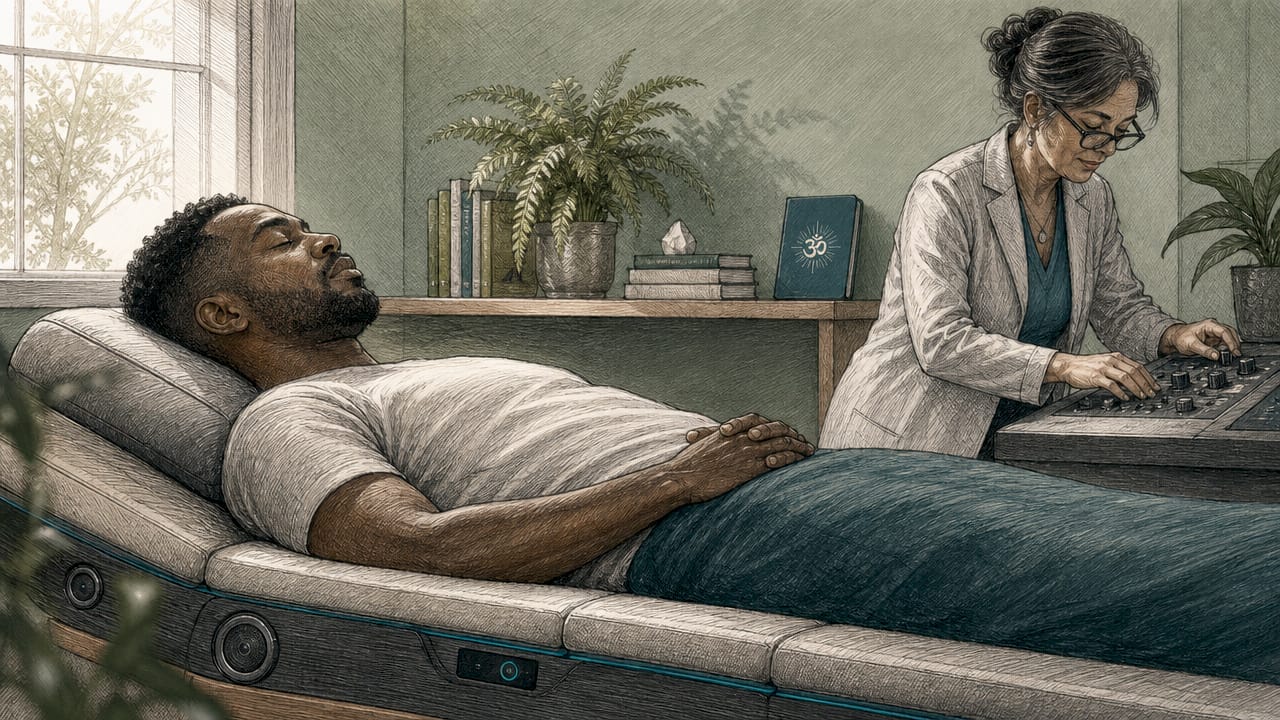
Vibroacoustic therapy is arguably the most clinically documented approach. It uses low-frequency vibrations between 30 and 120 Hz delivered through specialised mats, chairs, or beds, with sessions typically lasting 20 to 45 minutes. That frequency range is not arbitrary. It corresponds to the resonant frequencies of human tissue and bone, which is why the technique has shown measurable results for chronic pain, Parkinson’s disease symptoms, and anxiety reduction. Think of it as a full-body massage conducted entirely by sound waves.
Binaural beats work on a different principle. You play a slightly different tone in each ear, and your brain perceives a third, phantom frequency equal to the difference between the two. Brainwave entrainment with binaural beats requires continuous listening for at least 10 to 15 minutes through headphones, and more than 22 randomised controlled trials confirm modest but real benefits for relaxation and cognitive performance. It is a bit like tricking your brain into a calmer gear, and the trick actually works.
Singing bowls and sound baths are the most accessible entry point for most people. Singing bowl meditation reduces anxiety and depressive symptoms according to limited but promising clinical studies. A sound bath, where you lie in a room while a practitioner plays multiple bowls, gongs, and chimes around you, creates an immersive acoustic environment that most participants find deeply settling.
It is also worth clarifying one important distinction. Sound healing differs from music therapy in a meaningful way. Music therapy primarily targets social, emotional, and cognitive goals through musical engagement. Sound healing targets physiological responses, specifically vagal tone activation, brainwave states, and nervous system regulation, through specific sound vibrations. The two can overlap, but they are not the same thing.
- Vibroacoustic therapy: 30 to 120 Hz, 20 to 45 minute sessions, clinical support for pain and Parkinson’s
- Binaural beats: headphone-based, 10 to 15 minutes minimum, 22+ RCTs confirming relaxation benefits
- Singing bowls and sound baths: accessible, mood-lifting, anxiety-reducing, no equipment required on the listener’s part
- Vocal toning and chanting: uses your own voice as the instrument, activates the vagus nerve directly
- Tuning forks: applied to specific body points or held near the ears, used in clinical and complementary settings
Pro Tip: If you are new to this, do not try to do everything at once. Start with one technique, whether that is a 20-minute binaural beats session or attending a local sound bath, and give it at least four sessions before deciding whether it resonates with you.
What does research say about 432 Hz and solfeggio frequencies?
This is where things get interesting, and where a fair bit of wishful thinking has crept into the conversation. The internet is full of confident claims about specific healing frequencies: 432 Hz for harmony with nature, 528 Hz for DNA repair, 396 Hz for liberating guilt and fear. It sounds wonderful. The science, however, is considerably more cautious.
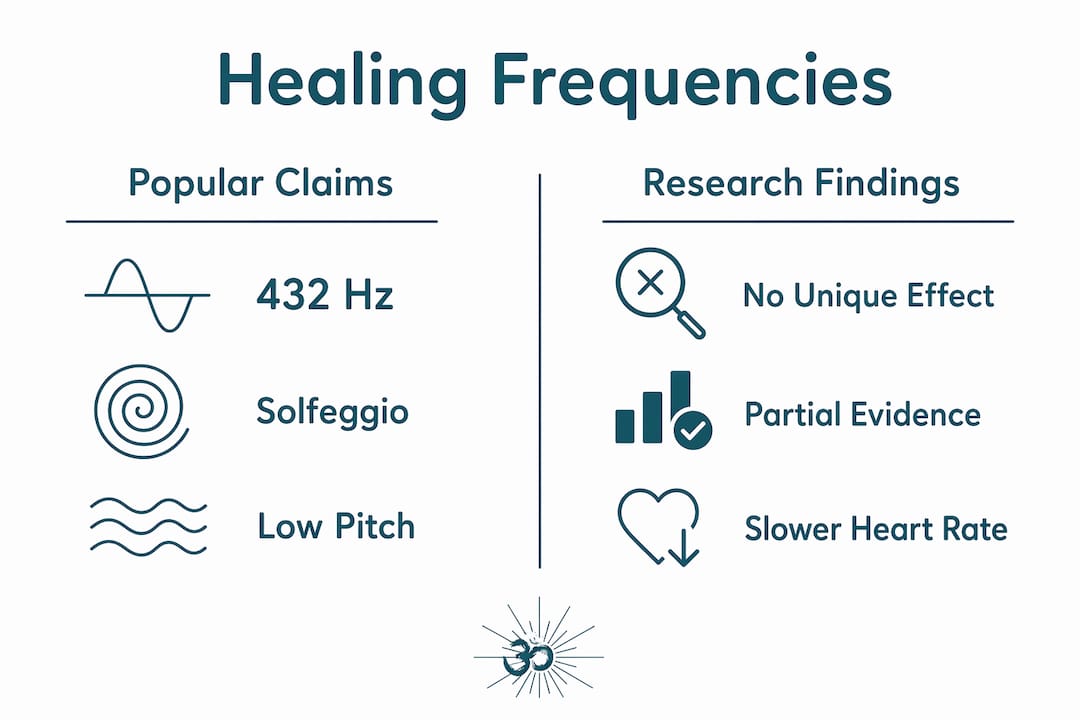
Claims about 432 Hz lack rigorous scientific support. Researchers have found that lower-pitched tones do slow heart rate and breathing, but that effect is a property of pitch in general, not of any specific frequency. There is no unique healing property identified at 432 Hz that would not also be present at 430 Hz or 435 Hz. The relaxation you feel listening to music tuned to 432 Hz is real. The specific frequency is not the cause of it.
That said, dismissing the entire conversation would also be wrong. Solfeggio tones and specific frequency-based compositions have genuine value as frameworks for intentional listening. When you sit down with the intention of listening to a 528 Hz track for 20 minutes, you are also practising focused attention, reduced stimulation, and deliberate relaxation. Those things have proven benefits regardless of the frequency involved. You can read more about the nuanced evidence around 432 Hz healing claims if you want to go deeper on this.
| Frequency | Popular claim | What research actually shows |
|---|---|---|
| 432 Hz | Harmonises with nature, promotes healing | Lower pitch relaxes; no unique property at this specific Hz |
| 528 Hz | Repairs DNA, promotes love | No peer-reviewed evidence for DNA effects; calming due to tone quality |
| 396 Hz | Liberates guilt and fear | No clinical evidence; relaxation likely due to sustained low tone |
| 40 Hz | Gamma stimulation for brain health | Strongest evidence base; linked to Alzheimer’s research and cognitive function |
| 174 Hz | Pain relief foundation tone | Anecdotal; vibroacoustic research supports low Hz broadly, not this specific tone |
The honest takeaway is this: personal subjective experience with sound frequencies matters more than strict adherence to any supposedly proven frequency. If a particular tone or composition consistently helps you relax, that is a meaningful result. You do not need a peer-reviewed paper to validate your own nervous system.
How does sound healing biologically influence relaxation?
Here is where the science gets genuinely fascinating. Sound healing does not work through magic or placebo alone. There are identifiable biological pathways through which specific sounds alter your physiology, and understanding them makes the whole practice feel considerably less mysterious.
The vagus nerve is the centrepiece of this story. Running from your brainstem down through your heart, lungs, and digestive system, it is the primary conduit of the parasympathetic nervous system. Vagus nerve stimulation through humming, chanting, and vibration sends biological signals of safety to the brain, enhancing emotional regulation and triggering the relaxation response. This is why a simple five-minute humming practice can shift your mood more effectively than most people expect. Your body is essentially receiving a message that says: everything is fine, you can stand down now.
Brainwave entrainment adds another layer. Entrainment technologies guide the brain from alert beta states (14 to 30 Hz) down to relaxed alpha states (8 to 14 Hz) and meditative theta states (4 to 8 Hz) through sustained sound stimulation. Binaural beats are the most studied delivery mechanism for this, but sustained tones from singing bowls and orchestral drones achieve similar effects through a slightly different route.
Sound activates the parasympathetic nervous system, reducing cortisol levels and lowering heart rate. This is the biological shift from fight-or-flight to rest-and-digest, and it is measurable. Studies using heart rate variability monitoring during sound bath sessions have recorded significant drops in physiological stress markers within the first 10 minutes of a session.
Here is a summary of the key biological mechanisms at work:
- Vagal tone activation: humming, chanting, and low-frequency vibration stimulate the vagus nerve, triggering parasympathetic dominance
- Brainwave entrainment: binaural beats and sustained tones shift brain activity from beta to alpha and theta states
- Cortisol reduction: parasympathetic activation lowers stress hormones, reducing physical tension and emotional reactivity
- Heart rate regulation: slow, low-pitched sounds synchronise with and gradually slow cardiovascular rhythms
- Interoceptive awareness: the physical sensation of vibration draws attention inward, reducing rumination and external mental chatter
Pro Tip: You do not need a singing bowl or a specialist recording to start activating these pathways. Simple everyday sounds like flowing water, birdsong, and your own humming can stimulate the nervous system’s relaxation response without any equipment at all. Try humming a single sustained note for three minutes and notice what happens.
How to incorporate sound healing into your wellness routine
Starting a sound healing practice does not require a gong the size of a dining table or a pilgrimage to a Himalayan monastery. It requires a bit of curiosity and a willingness to sit still for longer than most of us are used to.
-
Start with a sound bath. Many yoga studios, wellness centres, and community spaces now offer group sound bath sessions. Attending one live is the fastest way to understand what the practice actually feels like. Bring a mat, lie down, and let someone else do the work.
-
Invest in a quality singing bowl. A hand-hammered Tibetan or crystal singing bowl costs between £30 and £150 for a decent starter instrument. Five minutes of playing it before bed is a surprisingly effective wind-down ritual.
-
Use headphones for binaural beats. This is non-negotiable. Binaural beats require each ear to receive a different frequency, which only works through headphones or earbuds. Speakers will not produce the entrainment effect. A 20-minute session in the morning or before sleep is a practical starting point.
-
Practise vocal toning. This requires nothing except your voice. Choose a vowel sound, sustain it on a comfortable pitch for as long as your breath allows, and repeat for 10 minutes. It feels slightly absurd at first (you may sound like a confused monk) but the vagal activation is real and rapid.
-
Explore orchestral therapeutic music. Composers Robert Emery and Moritz Schneider have produced orchestral meditation music praised for its rich acoustic texture and therapeutic depth. Emery, a classically trained composer with a background in film scoring, and Schneider, known for his work integrating harmonic structures with meditative intent, have both contributed to a body of work that bridges concert-hall quality with genuine wellness application. Their recordings, some made at Abbey Road Studios with the National Philharmonic, offer a level of acoustic richness that digital synthesisers simply cannot replicate.
-
Respect your sensitivity. Some people find certain frequencies or high-volume sound baths overwhelming, particularly those with tinnitus, hyperacusis, or sensory processing differences. Start at lower volumes, take breaks, and consult a healthcare professional if you have any hearing conditions. Vibroacoustic therapy sessions of 20 to 45 minutes are the clinically studied range. Longer is not necessarily better.
-
Be consistent rather than intense. A 20-minute binaural beats session three times a week will serve you far better than a three-hour sound immersion once a month. The nervous system responds to regularity.
How does sound healing fit within broader wellness practices?
Sound healing is a complementary wellness tool. That word “complementary” carries real weight. It means sound therapy works alongside other practices and conventional care, not instead of them. Sound healing should complement but not replace conventional medical treatments, and any reputable practitioner will tell you the same.
Within a broader wellness framework, sound healing integrates naturally with several other modalities:
- Meditation and mindfulness: sound provides an anchor for attention, making it easier to sustain meditative states, particularly for beginners who struggle with silent sitting
- Yoga: sound baths are commonly offered as a closing practice after yoga sessions, deepening the physical relaxation achieved through movement
- Naturopathic care: the American Association of Naturopathic Medical Colleges recognises sound therapy as a legitimate complementary intervention, particularly for stress-related conditions
- Acupuncture: some practitioners combine tuning fork application with acupuncture points, using vibration to amplify the energetic effect of needling
- Nutritional and herbal medicine: stress reduction through sound therapy supports the body’s capacity to absorb and utilise nutrients more effectively by reducing cortisol’s suppressive effect on digestion
The key is intentionality. Sound healing used mindlessly as background noise is unlikely to produce the same results as a dedicated, focused session. The practice rewards attention. Treat it as you would a meditation session or a physiotherapy appointment: show up, be present, and give it your full engagement.
Key takeaways
Sound healing works through identifiable biological pathways including vagal tone activation, brainwave entrainment, and parasympathetic nervous system stimulation, making it a genuinely evidence-supported complementary wellness practice.
| Point | Details |
|---|---|
| Vibroacoustic therapy has the strongest evidence | Clinical trials support 30 to 120 Hz sessions of 20 to 45 minutes for pain, anxiety, and Parkinson’s symptoms. |
| Specific frequencies matter less than you think | Relaxation from 432 Hz or solfeggio tones comes from lower pitch and focused listening, not the precise frequency. |
| Biological mechanisms are real and measurable | Vagus nerve activation, cortisol reduction, and brainwave entrainment are documented physiological responses to sound. |
| Consistency beats intensity | Regular short sessions produce better nervous system adaptation than occasional long immersions. |
| Sound healing complements, not replaces, medical care | Use it alongside conventional treatment and other wellness practices for the most meaningful results. |
Why I think we are all overthinking the frequency question
I have spent a fair amount of time around therapeutic music, and the question I hear most often is some version of: “But which frequency should I use?” People arrive at sound healing with a spreadsheet mentality, as if there is a correct answer that, once found, will unlock everything. I understand the impulse. We are trained to look for the optimal setting.
Here is what I have actually observed, though. The people who get the most out of sound healing are not the ones who have memorised the solfeggio scale. They are the ones who show up, lie down, close their eyes, and stop trying to optimise the experience. The nervous system does not care whether you are listening to 432 Hz or 440 Hz. It cares whether you are present and receptive.
What composers like Robert Emery and Moritz Schneider understand, and what their work demonstrates beautifully, is that the quality of the sound matters far more than its precise frequency. Emery’s orchestral compositions carry a warmth and spatial depth that you simply cannot manufacture with a frequency generator app. Schneider’s harmonic structures create a sense of movement and resolution that guides the listener’s emotional state with genuine musical intelligence. That is not something a tone chart can replicate.
My honest advice: stop reading about sound healing and start listening. Pick one technique, give it three weeks of consistent practice, and pay attention to how you feel. The evidence will come from your own experience, which is, in the end, the only evidence that actually changes anything.
— ROBERT
Explore orchestral sound healing music with Orchestralmeditations
If you are ready to move from reading about sound healing to actually experiencing it, Orchestralmeditations offers a library of professionally produced meditation music designed specifically for therapeutic listening. Recorded at Abbey Road Studios with the National Philharmonic, the compositions by Robert Emery and Moritz Schneider bring genuine acoustic richness to your practice, whether you are exploring binaural beats, theta frequencies, or simply want music that supports deep relaxation without sounding like a screensaver.
You can browse the full collection of orchestral meditation recordings and find tracks suited to your specific wellness goals, from stress reduction to sleep support to focused mindfulness practice. If you want to understand why live orchestral sound produces a different quality of relaxation than digitally generated tones, Orchestralmeditations also explains the benefits of orchestral versus digital sound in detail. Start with one session and see what your nervous system makes of it.
FAQ
What is sound healing exactly?
Sound healing is the therapeutic use of sound vibrations and frequencies, through instruments, voice, or recorded audio, to promote relaxation, emotional balance, and physiological well-being. It targets the nervous system directly through mechanisms including vagal tone activation and brainwave entrainment.
Which sound healing technique is best for anxiety?
Vibroacoustic therapy and singing bowl meditation both have clinical evidence supporting anxiety reduction. Binaural beats also show modest benefits across more than 22 randomised controlled trials, making them a practical at-home option for managing stress and anxiety.
Do healing frequencies like 432 Hz actually work?
The relaxation effects attributed to 432 Hz are real but are caused by lower pitch in general, not by any unique property of that specific frequency. Personal subjective experience matters more than the precise number, so choose frequencies that feel calming to you rather than chasing a scientifically “correct” one.
How long should a sound healing session last?
Clinical research on vibroacoustic therapy uses sessions of 20 to 45 minutes. For binaural beats, a minimum of 10 to 15 minutes of continuous listening through headphones is required to produce brainwave entrainment effects. Shorter sessions can still be beneficial for relaxation.
Can sound healing replace medical treatment?
No. Sound healing is a complementary wellness practice that supports but does not replace conventional medical care. It integrates well with meditation, yoga, naturopathic care, and acupuncture, and is best used as part of a broader approach to health and well-being.