A guided meditation with music pairs spoken guidance with deliberately chosen music, using sound as an anchor for your attention rather than a backdrop. It works for stress relief in a spare ten minutes, for mindful pauses between meetings, or for winding the mind down before sleep.
The quickest way in: pick a track around ten minutes long, set the spoken voice slightly louder than the music underneath it, and simply follow the cues.
- Stress relief: short sessions taken at your desk or before a difficult conversation
- Mindful pauses: a few minutes of breath work between tasks
- Sleep preparation: longer sessions with music that fades into silence
TL;DR:
- Slow, unhurried music with no strong beats helps prevent attention from drifting away during guided meditation sessions.
- Repetitive musical phrases or sustained sounds provide a stable anchor, making it easier for beginners to stay focused and reduce stress.
- Choose ambient, orchestral, or harp tracks with clear voice-to-music balance and avoid lyrics or rhythmic beats that compete with spoken guidance.
- Longer sessions for deep relaxation or sleep require music that fades into silence, with fades timed to guidance cues rather than the clock.
- Licensing studio-quality orchestral recordings, such as those from Abbey Road, ensures optimal sound warmth and legal compliance for professional use.
Why guided meditation with music works so well
Music does something a silent meditation cannot: it gives your nervous system a stable, non-verbal signal to settle around. Slower tempos encourage slower breathing, and slower breathing tends to bring a calmer heart rhythm with it. You do not need to consciously manage any of that. The music does the pacing while the voice does the guiding.
There is also a psychological trick at play. A wandering mind needs something to return to, and a repeating musical phrase or a sustained pad of sound is far easier to return to than “nothing.” Practitioners who teach guided meditation with music often describe using sound as a supportive anchor, not something to analyse or judge, just something to rest attention on when thoughts pull away.
Music used this way can calm physiology and reduce subjective stress, which is part of why so many beginners find it easier to sit with music than in total silence.
- Breath naturally slows to match a gentler tempo
- Repetitive musical phrases give the mind something steady to return to
- Music reduces the “blank space” that makes silent meditation feel harder for beginners
Pro Tip: If your mind keeps drifting off the voice guidance, let it drift onto the music instead of fighting it. Following a musical phrase back to stillness is still meditation.
How do you choose the right music for meditation?
The wrong track can undo good guidance in seconds. A swelling string section at the wrong moment, or a beat that is too insistent, will pull attention away from the breath instead of supporting it. Choosing well comes down to four things.
- Tempo. Aim for something unhurried, ideally with no strong beat driving it forward. Think somewhere in the region of a resting heart rate or slower, so the music never rushes you.
- Instrumentation. Ambient pads, soft strings, harp, and gentle piano tend to work better than anything percussive or lyrical. Words in a song compete with spoken guidance; a driving rhythm competes with your breath.
- Frequency. Some meditation music tracks are built around binaural beats or theta-range frequencies, designed to encourage a slower brainwave state. These can genuinely deepen a session for some listeners, but they are not universal. Anyone with epilepsy, migraine sensitivity, or a history of sound sensitivity should approach them cautiously and stick to conventional ambient or orchestral tracks instead.
- Voice-to-music balance. The spoken voice needs to sit clearly above the music, not buried in it. Instructions should never require concentration to hear.
If you teach, run a wellness app, or produce guided content professionally, licensing matters as much as sound quality. Royalty-free meditation music tracks, cleared for commercial use, protect you from copyright issues that a personal Spotify playlist cannot.
Pro Tip: Test any new track at low volume through the speaker you’ll actually use. Music that sounds lush on studio headphones can turn thin and distracting on a phone speaker.
Ready-to-use session templates by length
Different lengths call for different structures, and the music should shift with them rather than staying static throughout. Shorter guided meditations, roughly five to fifteen minutes, work well for quick stress reduction, while twenty to thirty-minute sessions suit deep relaxation or sleep preparation better.
- Five-minute reset. Arrival and settling (one minute), a few breath cycles (two minutes), a brief closing cue (two minutes). Music: a single ambient pad, low in the mix throughout, never changing texture.
- Ten to fifteen-minute focus session. Centring breath (three minutes), a short body scan (six to eight minutes), a brief reflection to close (two minutes). Music: slow piano or strings, introduced gently after the first breath cue rather than at the very start.
- Twenty to thirty-minute deep relaxation or sleep session. Progressive muscle relaxation (eight to ten minutes), guided imagery (ten to fifteen minutes), then either silence or a sustained orchestral fade to close.
Time your fades to the guidance, not the clock. Bring music in about ten seconds after the first spoken cue, so the voice always arrives into stillness rather than fighting an existing wall of sound. Lower the volume whenever detailed instructions are given, and let it swell slightly during pauses meant for reflection. For sleep sessions, fade the music out entirely in the final two or three minutes so listeners drift off into quiet rather than a fresh musical phrase.
If you want a fuller walkthrough of building a consistent practice around these structures, this step-by-step guided meditation technique guide goes into more depth on pacing and repetition.
Why studio-recorded orchestral music changes the experience
Not all meditation music is built the same way, and the gap shows up the moment you compare a synthesised pad to a live string section. Recordings made at Abbey Road Studios with the National Philharmonic carry a warmth and texture that sample libraries struggle to replicate, because real instruments introduce tiny imperfections and dynamic swells that a synthesiser simply cannot fake convincingly.
Composer Robert Emery and producer Moritz Schneider have both built careers around large-scale orchestral and choral work, bringing that same production discipline to meditation music, treating a five-minute meditation track with the same care as a concert score.
Technical layers like 3D surround sound, binaural elements, and theta-frequency composition are designed to deepen immersion further, though as noted above, listeners sensitive to layered frequencies should ease in gradually rather than starting with the most intensive tracks.
Pro Tip: If you’re new to orchestral meditation music, start with a shorter track before committing to a thirty-minute session. It gives your ears time to adjust to the fuller sound.

Clear voice placement and careful spatial mixing genuinely improve how easily a listener can follow guidance without losing the sense of being surrounded by sound, which is one reason professionally produced tracks with proper studio provenance tend to outperform amateur recordings for sustained listening. For those licensing tracks professionally, that same production quality is available through personal and commercial licence options rather than a one-size-fits-all download.
Practitioner note: matching guidance to the swell
Leading a session with orchestral music teaches you to listen as much as you speak. When a string section builds, that is the moment to slow your cues, not speed them up. Working with composers such as Robert Emery has shown how a single sustained chord can hold a room in silence far better than any spoken instruction.

The rule I keep coming back to: never talk over a musical swell. Let it finish, then guide. Music given room to breathe does more of the work than people expect.
Where to find professional guided meditation tracks
If you have got this far and want the music itself, Orchestralmeditations is where the guidance above comes from in practice. The library holds individual tracks, full albums, and a rolling subscription, so you can buy a single sleep track for tonight or build a personal collection over time.
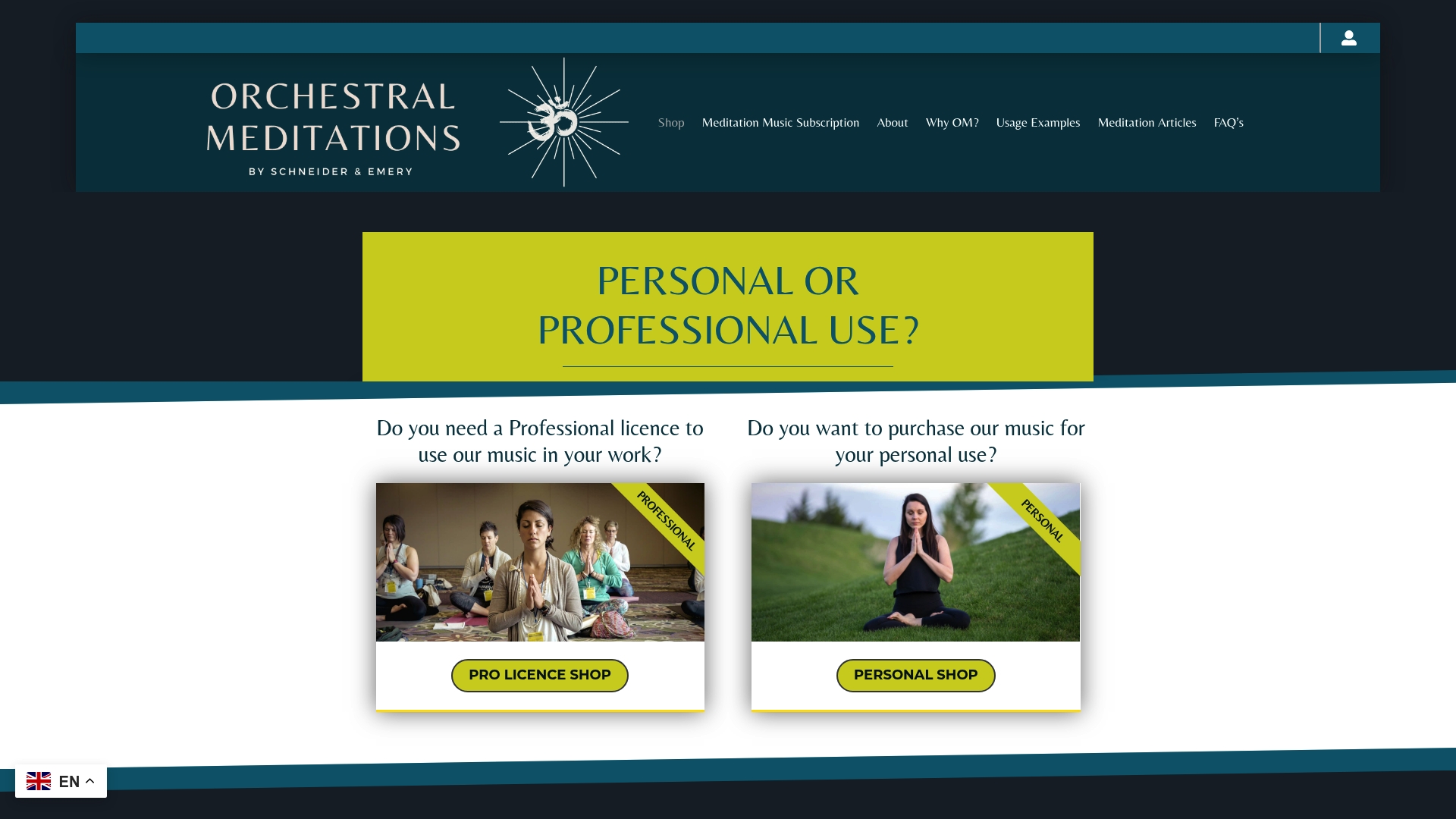
Licensing is split cleanly between personal and professional use, which matters if you teach yoga, run a therapy practice, offer massage, or build meditation content for an app or podcast. A therapist working one to one needs a different licence to a course creator selling access to thousands of students, and Orchestralmeditations lets you choose the right one rather than guessing.
Before buying, audition a track the way you would test any meditation music: play it at the volume you will actually use, and check that spoken guidance (if you are pairing it with your own voice) sits clearly above the orchestral layer rather than fighting it. For anyone wanting a deeper look at how sound techniques like binaural layering and 3D surround actually support mindfulness, this guide to science-backed sound and music is worth reading alongside the shop. Head to the Orchestral Meditations shop to browse tracks by length, mood, or licence type and find the one that fits your next session.
Key Takeaways
Guided meditation with music works because slower tempos and studio-grade instrumentation give the mind a stable anchor that spoken guidance alone cannot provide.
| Point | Details |
|---|---|
| Start short | A ten-minute session with voice slightly louder than music is the easiest entry point. |
| Match music to purpose | Slow ambient or orchestral tracks suit relaxation; avoid rhythmic or lyrical music that competes with guidance. |
| Time your fades | Bring music in after the first spoken cue and fade it during instructions, not during reflective pauses. |
| Use cleared tracks for teaching | Royalty-free or licensed meditation music protects instructors, therapists, and app developers from copyright issues. |
| Choose studio-grade recordings | Orchestralmeditations offers Abbey Road recordings with the National Philharmonic, plus personal and professional licensing. |
Sources
- Unwinding the body: guided meditation with music
- Meditation with Music: A Guide to Reduced Stress and More Calm
- The Music & Meditation Podcast – Available Episodes
FAQ
Is meditating with music actually effective?
Yes. Music can calm the body’s stress response and makes it easier for beginners to settle their attention than sitting in total silence.
What is the best free way to try guided meditation with music?
Streaming playlists and podcast series such as the BBC’s Music & Meditation series offer free, well-produced examples that model good pacing between speech and music.
What music genres work best for guided meditation?
Ambient pads, soft strings, harp, and gentle orchestral pieces tend to work best; anything with lyrics or a strong beat usually competes with spoken guidance rather than supporting it.
What sound actually calms the brain during meditation?
Slow, non-rhythmic music without lyrics tends to have the strongest calming effect, since it gives attention something steady to rest on without demanding active listening.
Where can I find professional, licensable meditation music?
Orchestralmeditations offers studio recordings made at Abbey Road with the National Philharmonic, available as individual tracks, albums, or a subscription with personal and professional licensing options.