You can legally use meditation music for personal or commercial projects only when the licence or rights holder explicitly permits your intended use. Free doesn’t mean clear, and “royalty-free” doesn’t mean rights-free. The single thing to do before you press publish: check the licence, then check whether synchronisation rights (needed any time music meets video) are actually included.
That’s the whole quiz in one paragraph. Everything below is us walking you through how to actually answer it, track by track, licence by licence, without needing a law degree or a very patient lawyer friend.
TL;DR:
- A public domain composition can still have a copyrighted recording, so verify the specific performance’s rights before using it in your project.
- Combining music with moving images requires separate synchronization clearance; an audio license may not cover videos, advertisements, or monetized guided sessions.
- GEMA may administer synchronization rights, but composers can manage them directly, advertising requires rights holder permission, and clearance can take weeks or months.
- Check commercial use terms in the track license, seek written clearance for your project when terms are unclear, and save dated proof of permission.
What legal use actually means: licence types and what they allow
Here’s where most of us get tripped up, because the language sounds simple and the reality is anything but. “Public domain” means the underlying composition’s copyright has expired, so nobody owns the melody itself. But the specific recording you’re listening to, the actual performance captured in a studio, can still carry its own separate rights. A Bach cello suite is public domain. A recording of a cellist playing it at Abbey Road may still carry separate rights.
Then there’s the jungle of licence labels that all sound reassuring and mean wildly different things:
- Royalty-free means you pay once (or nothing) and don’t owe ongoing fees, but it says nothing about whether commercial use, video syncing, or redistribution is allowed.
- Non-commercial licences let you use a track for personal projects but bar you from anything that generates revenue, including a monetised YouTube video.
- No attribution required just removes the need to credit the creator; it doesn’t expand what you’re allowed to do with the track.
- Full commercial licences are the only category that typically spells out permission for advertising, apps, and video synchronisation in plain terms.
The phrase that catches people out most is “royalty-free.” It describes a payment structure, not a scope of use. A royalty-free track bought for a podcast intro might say nothing at all about pairing it with video, which brings us to sync rights, the bit nearly everyone skips.
Practical checklist: how to verify a track is safe for your project
Before you build a project around a piece of music, run it through this sequence. It takes a little time and saves you from the kind of email you really don’t want to receive later.
- Read the licence page and the track’s metadata line by line, looking specifically for the words “commercial use” and “synchronisation.”
- Identify who actually holds the rights: the composer, a publisher, or a collecting society, and if Germany is involved anywhere in your use, check the GEMA repertoire directly.
- If the licence is vague, silent on video use, or you plan to monetise the work, request written sync clearance from the rights holder for your specific project and duration.
- Save everything: the licence document, the purchase invoice, or the email granting permission, noting the date and exactly what you said you’d use it for.
Pro Tip: Screenshot the licence terms the day you download the track. Licence pages get updated, and “it said so when I bought it” is a much weaker argument without proof.
That fourth step feels like overkill until the day it isn’t. A folder of PDFs is tedious to keep. A copyright claim on a video with many views is worse.
Synchronisation rights and GEMA: the rules that catch creators off guard
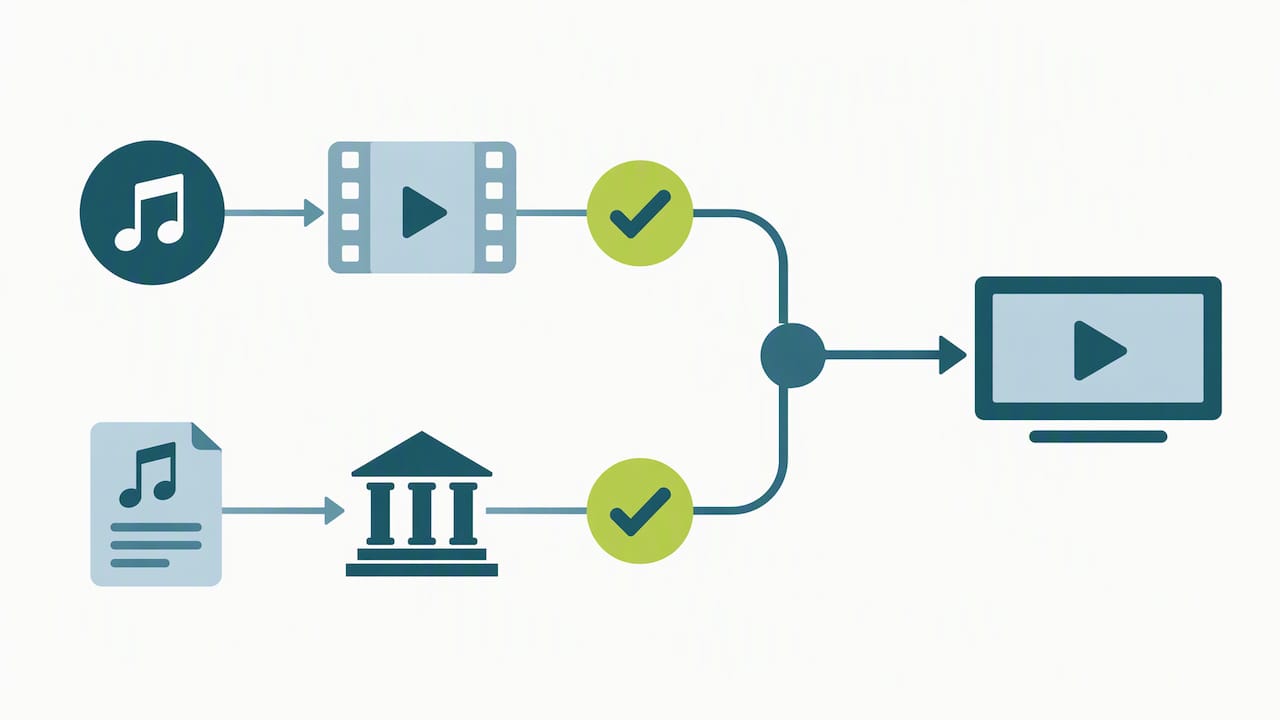
Synchronisation rights, sometimes called the “Herstellungsrecht” under German law, cover the specific act of combining a piece of music with moving images. It applies whether that’s a short film, a streamed workout video, or a downloadable guided meditation with visuals. This is separate from the right to simply play or distribute the audio on its own, and it’s the step most self-taught video creators forget exists.
GEMA’s own guidance is fairly direct about where responsibility sits:
- GEMA administers synchronisation rights for the repertoire it manages, but composers can recall and manage those rights themselves, granting them directly to a producer.
- Broadcasters often hold framework agreements with GEMA, but those agreements don’t automatically extend to third parties or standalone commercial products built outside that broadcast relationship.
- For commercial advertising specifically, GEMA notes that permission must come exclusively from the rights holder, since advertising use typically sits outside general repertoire management.
Clearance isn’t instant. Expect it to take anywhere from a few weeks to a few months depending on the use, and expect fees to vary with how and where the music will appear. If you’re planning a launch date, build that lag time in rather than discovering it the week before.
Where to source meditation music you can legally use
There are several broad routes, and each suits a different kind of project.
- Public domain recordings cost nothing upfront, but you still need to confirm the specific recording and performance aren’t separately copyrighted, which trips up more people than it should.
- Stock and royalty-free libraries are fast and affordable for most projects, provided you actually read the sync and commercial-use clauses rather than assuming “royalty-free” covers everything.
- Commissioning a composer directly gives you bespoke rights and a clear sync assignment from day one, though it costs more and takes longer to deliver.
For creators who want the clarity of a direct relationship without the wait or the custom-commission price tag, a professional library that names its composers and spells out licence terms up front does a lot of the legwork for you. Knowing exactly who wrote and produced a track, and having that written into the licence, turns a vague “probably fine” into something you can actually point to if anyone asks.
What creators get wrong about “no copyright” claims
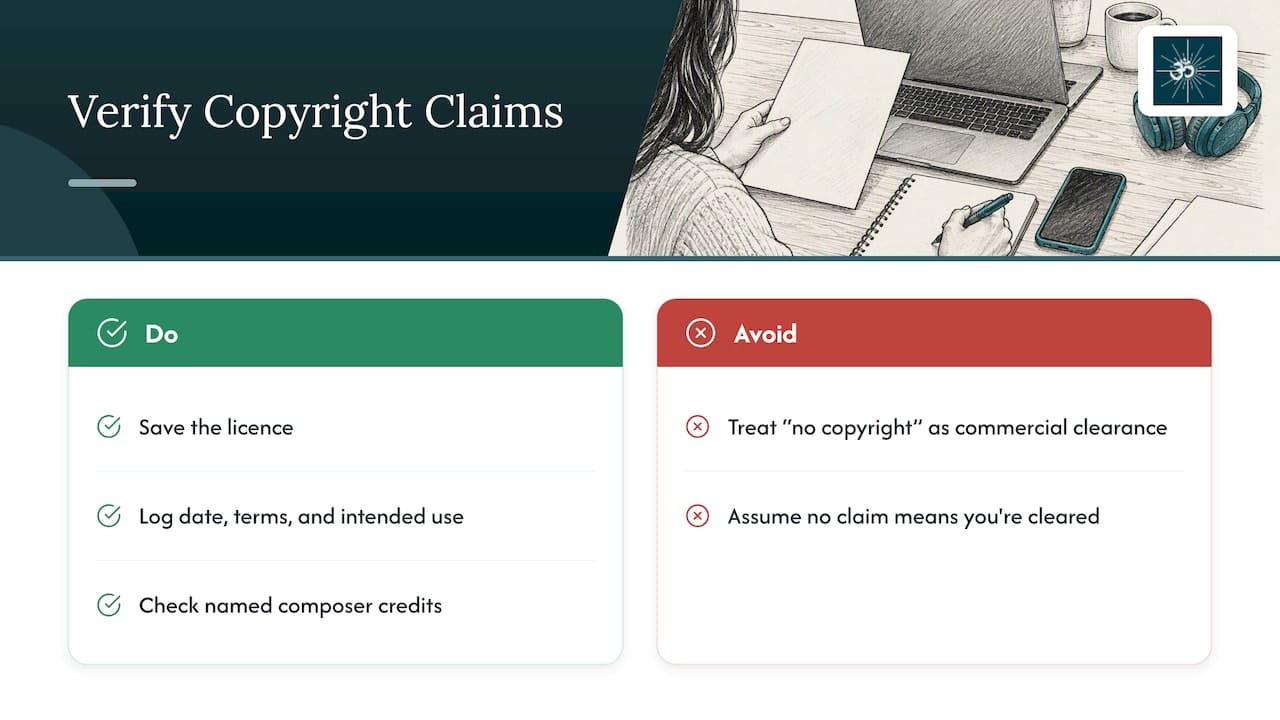
The mistake we see constantly: a video platform labels a track “no copyright,” and creators treat that as a green light for commercial use. It isn’t. “No copyright claim issued” often just means nobody’s flagged it yet, not that you’re cleared.
The one habit worth building: save the licence and log the date, terms, and intended use every single time. And when a track credits its composer, say Robert Emery or Moritz Schneider on a professionally produced release, that’s a gift. A named composer gives you more information about the music than an anonymous upload.
— ROBERT
How we make licence clearance straightforward
We built Orchestral Meditations around exactly this problem: finding meditation music where the rights are clear from the start. Our library features composers and performers, so you can learn more about the people behind the music. Our personal subscription is an option for personal listening, while our professional subscription is an option for creators, therapists, and app developers. Check the licence terms to confirm what uses are permitted.
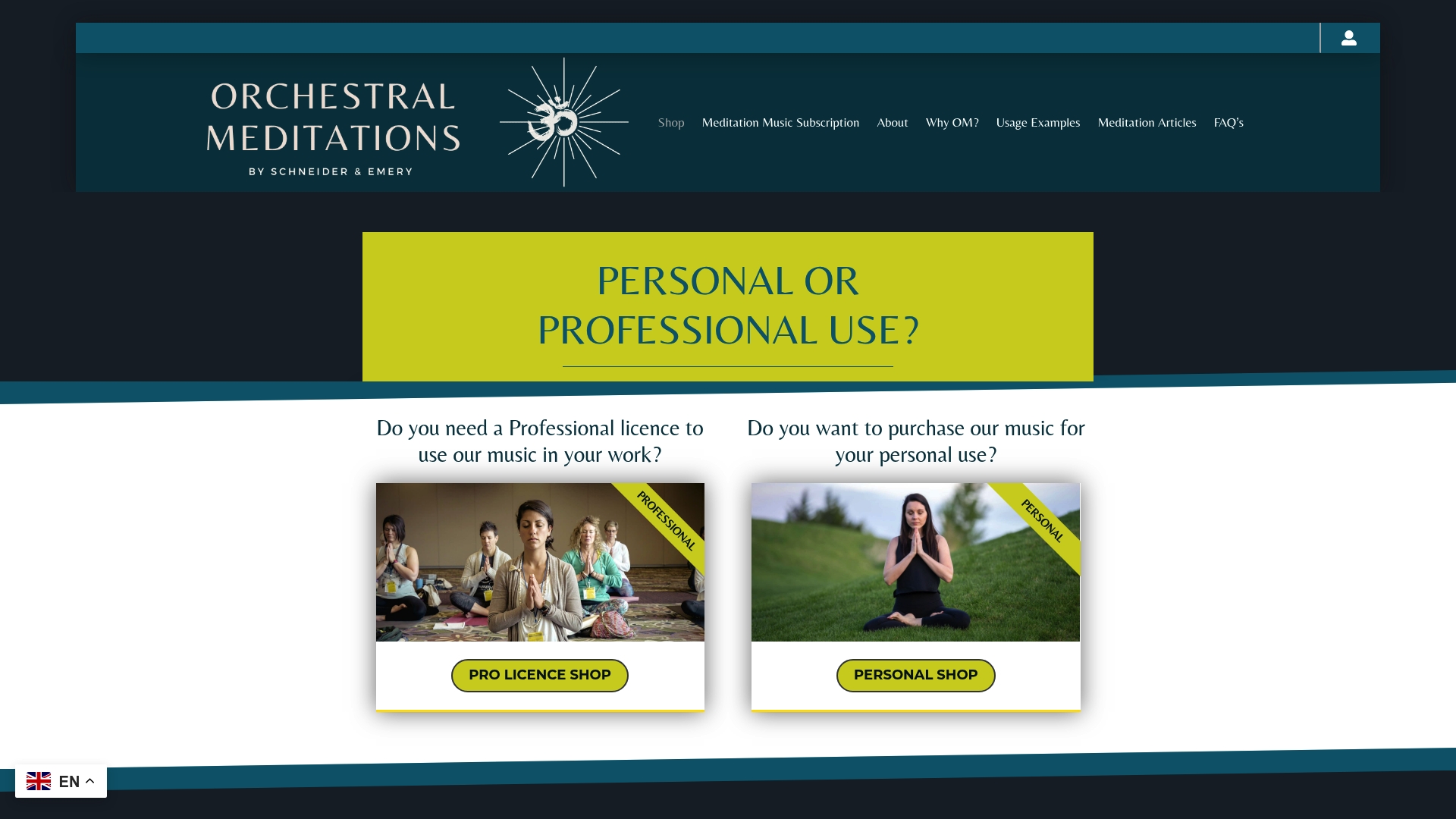
Our tracks are recorded at Abbey Road Studios with binaural and Solfeggio-frequency production, so the quality matches the clarity of the paperwork. Browse our Royalty Free Meditation Music collection for individual licensed tracks, or start with whichever subscription matches how you plan to use the music.
FAQ
Can you do meditation with music?
Yes, music is widely used alongside meditation practice to support relaxation and focus, and many guided and unguided sessions are built around a musical bed. The legal question isn’t whether you can meditate with music, it’s whether you have permission to use that specific recording for your intended purpose.
What are the top 10 copyright-free songs?
There’s no single official list, since copyright-free status depends on the specific recording and licence rather than the song title alone. Rather than chasing a ranked list, check each track’s licence page directly for explicit commercial and sync permissions before using it.
What is music for meditation called?
It’s generally referred to as meditation music or relaxation music, and within that category you’ll find subtypes like binaural beats, theta-wave recordings, and Solfeggio-frequency tracks. These terms describe the sound design, not the licensing, so they don’t tell you anything about legal use on their own.
Can I use copyright-free music for commercial use?
Not automatically. “Copyright-free” or “royalty-free” usually describes the payment structure, not the scope of permitted use, so you still need to confirm the licence explicitly allows commercial and synchronisation use for your specific project.