
A step by step music therapy session is a structured clinical process in which a certified therapist uses music-based activities to address emotional, cognitive, and physical health goals. The formal industry term is “music therapy,” defined by the American Music Therapy Association as a clinical and evidence-based practice. What most people picture, a person passively listening to soothing tunes, is about as far from the real thing as a kazoo is from a Stradivarius. The actual music therapy process is methodical, personalised, and genuinely fascinating. Composers like Robert Emery and Moritz Schneider, whose orchestral work is featured on Orchestralmeditations, produce the kind of immersive soundscapes that therapists increasingly draw on to create therapeutic atmospheres worth stepping into.
What does a step by step music therapy session actually involve?
A music therapy session follows a clear sequence: assessment, treatment planning, active and receptive interventions, and reflective closure. That structure is not bureaucratic box-ticking. It is what separates a clinically effective session from a pleasant afternoon with a playlist.
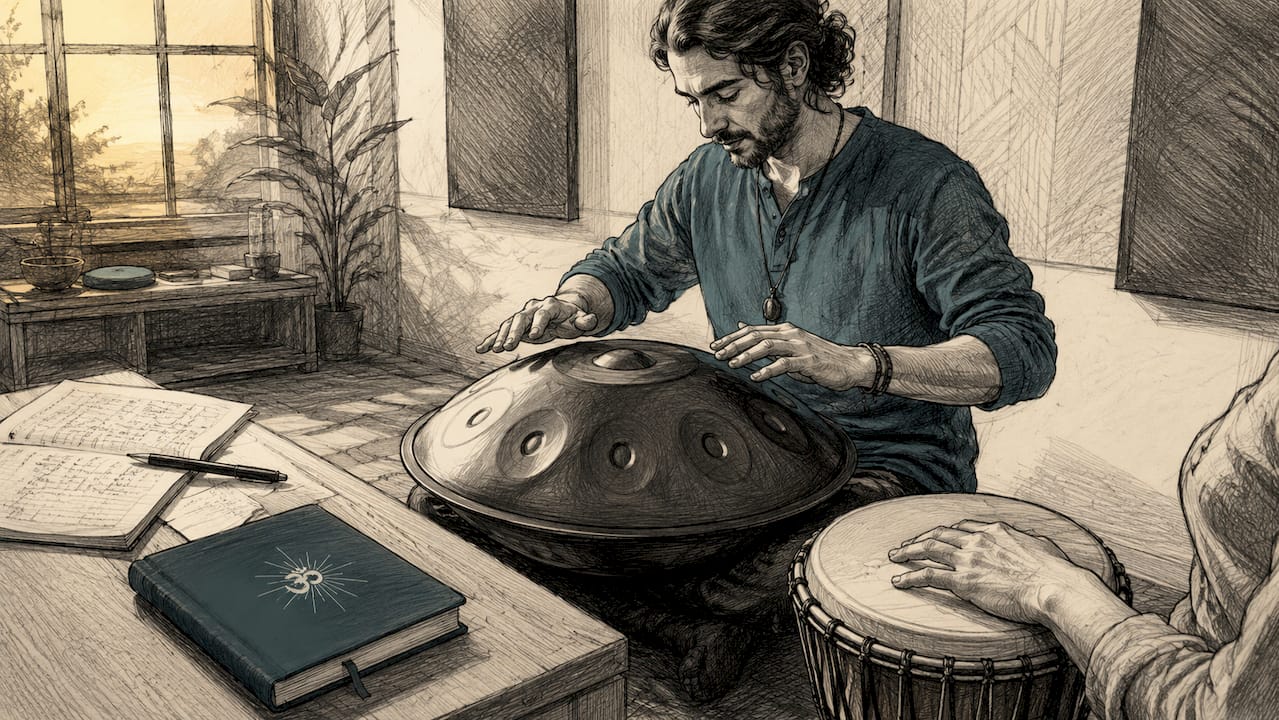
Typical sessions begin with a 15–20 minute initial conversation, followed by a comprehensive assessment lasting 60–90 minutes, and then regular sessions of 30–60 minutes each. That front-loaded assessment phase is where the real detective work happens. The therapist gathers a full picture of the client’s emotional history, physical health, cognitive function, and relationship with music before a single note is played in a formal intervention.
Certified music therapists tailor interventions using musical elements to target neurological and psychological goals that conversation alone cannot reach. That is not a marketing claim. Music activates motor, emotional, and memory networks simultaneously, which is why it reaches clients who have stopped responding to talk therapy. The music therapy checklist used during intake captures this breadth, covering emotional, physical, and cognitive history in one structured document.
What tools and preparations are essential before a session?
Good preparation is the unglamorous backbone of every effective session. Walk in underprepared and you will spend the first twenty minutes improvising in the wrong sense of the word.
Physical environment and instruments
The room itself is a clinical tool. A predictable, calm space reduces client anxiety before a single note is played. Starting sessions with familiar welcome songs reduces anxiety and builds safety, particularly for clients with PTSD or autism. That means the room layout, the instruments visible, and even the ambient sound level should be consistent from session to session.
Standard instruments for a well-equipped therapy space include:
- Percussion instruments: hand drums, shakers, tambourines, and xylophones for accessible, low-barrier engagement
- Melodic instruments: keyboard or guitar for harmonic support and melodic improvisation
- Audio playback equipment: a quality speaker system or headphones for receptive listening interventions
- Recording device: to capture improvised sessions for later reflection and progress tracking
- Songwriting materials: notebooks or a digital tablet for lyric work
Therapist credentials and client intake
The therapist must hold a recognised credential, typically MT-BC (Music Therapist-Board Certified) in the United States or an equivalent qualification in the UK. Credentials matter because the therapy intake process involves clinical decision-making that goes well beyond choosing a nice song. The intake form should cover medical history, current medications, sensory sensitivities, and the client’s existing relationship with music.
Orchestralmeditations features orchestral compositions by Robert Emery, whose arrangements are specifically crafted to create immersive, relaxing soundscapes. Playing one of Emery’s tracks quietly during room setup is a simple way to establish a calm, welcoming atmosphere before the client arrives.
Pro Tip: Set the ambient music at a low volume before the client enters. First impressions of the therapy space are formed within seconds, and a warm sonic environment signals safety before any words are exchanged.
How to conduct each step of the music therapy session effectively?
This is where the real craft lives. A well-run session moves through five distinct phases, each with its own purpose and its own pitfalls.
Phase 1: Initial conversation and comprehensive assessment
The first meeting is not a session in the full clinical sense. It is a structured conversation lasting 15–20 minutes, designed to establish rapport and gather preliminary information. Think of it as the therapist’s version of a GP taking a patient history, except with considerably more interesting follow-up questions about whether the client cried at a particular song in 1997.
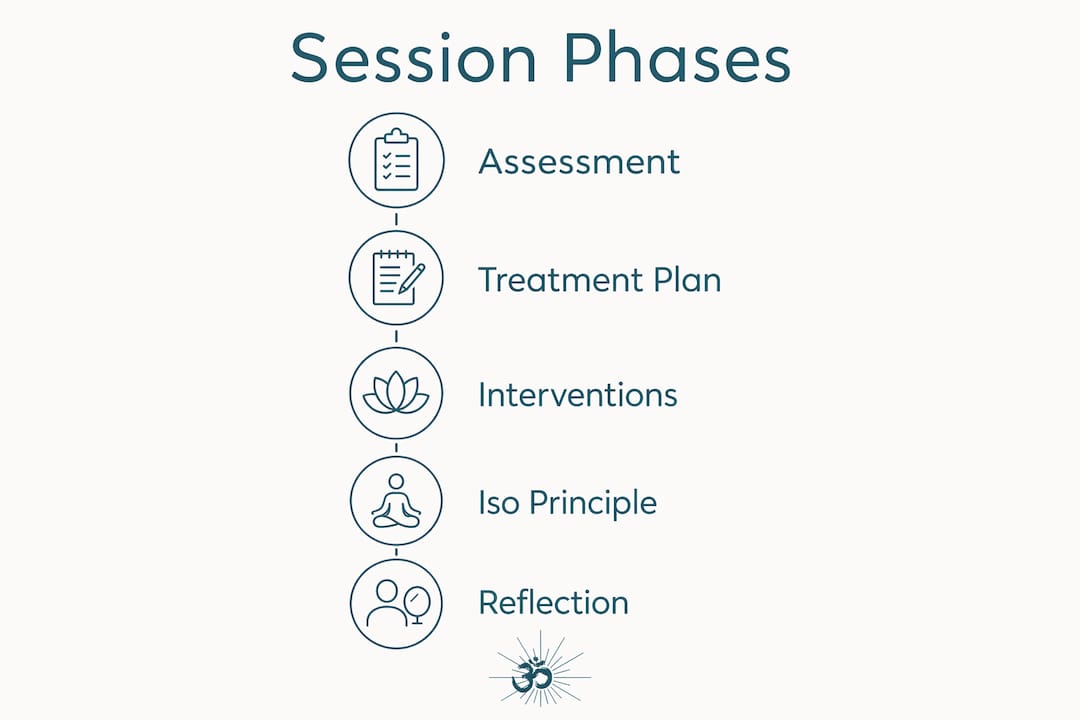
The comprehensive assessment that follows runs 60–90 minutes and uses several tools. One of the most revealing is the audio Tour of the Room, in which the therapist samples up to 24 different instruments and observes the client’s emotional and associative reactions to each. This is not a party trick. It reveals which timbres feel safe, which provoke anxiety, and which open emotional doors that verbal questioning cannot.
Phase 2: Personalised treatment plan
After assessment, the therapist writes a treatment plan with specific, measurable goals. Goals might include reducing physiological markers of anxiety, improving verbal communication in non-verbal clients, or processing grief through songwriting. The plan specifies which interventions will be used, at what frequency, and how progress will be measured.
The therapeutic soundscape process draws directly on this planning stage, matching the musical environment to the client’s clinical profile. A client processing trauma needs a very different sonic palette than one working on motor rehabilitation.
Phase 3: Active and receptive interventions
This is the heart of every session. Active interventions involve the client making music directly.
- Improvisation: The client plays freely on an instrument while the therapist mirrors, supports, or gently challenges. This externalises internal emotional states without requiring words.
- Therapeutic singing: Singing activates breath control, emotional release, and social connection simultaneously. It is particularly effective for clients with depression or social anxiety.
- Songwriting: Writing lyrics gives clients narrative control over their own story. For trauma survivors, this is clinically significant.
- Instrumental play: Structured playing on percussion or melodic instruments builds motor skills, attention, and emotional regulation.
Receptive interventions involve the client listening rather than playing.
| Intervention type | Client role | Primary clinical use |
|---|---|---|
| Active improvisation | Plays instrument freely | Emotional expression, self-regulation |
| Therapeutic singing | Vocalises with therapist | Depression, social anxiety, breath work |
| Songwriting | Writes and performs lyrics | Trauma processing, narrative identity |
| Receptive listening | Listens to curated music | Relaxation, guided imagery, pain management |
| Guided imagery | Listens and visualises | Anxiety, PTSD, deep emotional processing |
Receptive listening sessions often use orchestral compositions. Robert Emery’s work, produced with Orchestralmeditations, provides exactly the kind of layered, emotionally accessible soundscape that supports guided imagery without overwhelming the client.
Pro Tip: When using receptive listening, brief the client beforehand on what to notice, a colour, a memory, a physical sensation. This gives the mind a gentle anchor and makes post-listening reflection far richer.
Phase 4: The iso principle in action
The iso principle involves matching music to the client’s current emotional state, then gradually shifting tempo and intensity to guide them towards a calmer state. It is one of the most clinically elegant tools in the therapist’s kit. You do not walk into a room with an agitated client and immediately play something slow and gentle. That creates dissonance, not connection. You meet them where they are, then gently lead.
Phase 5: Reflection and emotional integration
The final 10–15 minutes of every session are reserved for verbal or musical reflection. The therapist invites the client to name what came up, what surprised them, and what they want to carry forward. This phase prevents emotional material from being left unprocessed at the end of the hour, which is a genuine clinical risk if skipped.
What are common challenges and how do you troubleshoot them?
Even the most carefully planned session will occasionally go sideways. A client arrives in a state of acute distress. A group member refuses to engage. The music that worked brilliantly last week lands completely flat today. Here is how to handle the most common situations.
Client agitation or emotional escalation
Apply the iso principle immediately. Match the client’s energy with music of a similar tempo and intensity, then reduce both gradually over 5–10 minutes. Do not attempt to impose calm. Therapists actively monitor breathing rate, muscle tension, and eye contact to guide music changes in real time. That feedback loop is what separates a trained therapist from a well-meaning friend with a Spotify playlist.
Client resistance or disengagement
- Offer choice rather than direction. Ask the client to pick an instrument or a genre rather than presenting a pre-set activity.
- Reduce the complexity of the task. A single drum and a simple rhythm is less threatening than a full instrument array.
- Use receptive listening as a low-demand entry point. Sitting and listening requires nothing from the client except presence.
- Revisit the welcome song. Familiar musical anchors restore a sense of safety when a client feels cornered or overwhelmed.
Group versus individual session differences
Group sessions require the therapist to manage multiple emotional states simultaneously. The how music supports mental health framework highlights the value of session predictability and familiar musical anchors for groups with mixed anxiety profiles. Individual sessions allow for deeper, more responsive work but carry a higher risk of emotional intensity without the social buffer of a group.
“The therapist’s job is not to make the music beautiful. It is to make the music useful.” This distinction, simple as it sounds, resolves most in-session dilemmas about what to play next.
How do you measure progress across multiple sessions?
Progress in music therapy is measurable, but not always in the ways you might expect. The metrics are behavioural, physiological, and self-reported, not just subjective impressions.
Neuroplastic changes are documented after four weeks of regular sessions, with clinical improvements in conditions like PTSD and depression typically emerging after 8–12 weekly sessions. That timeline matters for setting realistic expectations with clients and their families.
| Measurement method | What it tracks | Typical review point |
|---|---|---|
| Observational notes | Engagement, affect, motor response | Every session |
| Client self-report | Mood, sleep, anxiety levels | Weekly or fortnightly |
| Goal attainment scaling | Progress toward specific clinical goals | Every 4 sessions |
| Physiological markers | Breathing rate, muscle tension | During session |
| Reflective dialogue | Emotional insight, narrative change | End of each session |
An 8-session group model structures this formally: one introductory session, six core sessions, and a final reflective consolidation session. That final session is not a formality. It is where clients articulate what has changed, which consolidates neurological and emotional gains. Skipping it is like baking a cake and forgetting to let it cool before cutting.
Collaboration with the client on revising goals is not optional. Goals that made sense at assessment may shift entirely after four sessions. A client who came in to manage anxiety may find that grief is the deeper current. The treatment plan must follow the client, not the other way around.
Key takeaways
A structured music therapy process, moving from assessment through active interventions to reflective closure, produces measurable clinical outcomes that casual music listening cannot replicate.
| Point | Details |
|---|---|
| Assessment comes first | A 60–90 minute comprehensive assessment shapes every subsequent intervention and goal. |
| The iso principle guides emotional regulation | Match music to the client’s current state, then gradually shift tempo to achieve calm. |
| Active and receptive interventions serve different goals | Improvisation externalises emotion; receptive listening supports relaxation and guided imagery. |
| Progress is measurable | Neuroplastic and clinical improvements typically emerge after 8–12 weekly sessions. |
| Predictability builds safety | Consistent welcome songs and room setup reduce anxiety and improve engagement across all client groups. |
What I have learned from sitting in on music therapy sessions
I will be honest with you: the first time I watched a trained music therapist work with a client, I expected something that looked vaguely like a music lesson with extra feelings. What I actually witnessed was closer to a surgical procedure, except the scalpel was a hand drum and the anaesthetic was a piece of orchestral music that made the room feel three degrees warmer.
The thing that struck me most was the therapist’s restraint. She did not fill every silence. She did not rush to the next activity when the client went quiet. She let the music do the work, which sounds passive but is actually one of the hardest clinical skills to develop. Most of us are trained to respond to silence with words. She responded with a single, soft chord on the keyboard and waited.
I have spent a good deal of time with the orchestral compositions produced by Robert Emery for Orchestralmeditations, and I can tell you that his arrangements carry a particular quality that I have not found elsewhere. There is a structural patience to them, a willingness to let a phrase breathe before resolving, that mirrors exactly what a skilled therapist does in session. Moritz Schneider’s production work on the same platform adds a spatial depth, particularly in the binaural recordings, that makes the listener feel genuinely held by the sound. That is not a small thing in a therapeutic context. Feeling held is often the entire point.
The role of composers in therapeutic music is more clinical than most people realise. The tempo, the harmonic rhythm, the dynamic arc of a piece all function as therapeutic parameters. A composer who understands this is not just writing beautiful music. They are writing useful music.
My honest advice: if you are preparing to conduct music therapy sessions, spend as much time choosing your receptive listening material as you do planning your active interventions. The music you play when a client closes their eyes is doing clinical work. Treat it accordingly.
— ROBERT
Orchestralmeditations: music built for the therapy room
Choosing the right music for receptive listening is one of the most consequential decisions a therapist makes, and it is also one of the least discussed.
Orchestralmeditations offers a curated library of orchestral meditation music recorded at Abbey Road Studios with the National Philharmonic. Composer Robert Emery and producer Moritz Schneider craft each track with therapeutic application in mind, using binaural beats, theta frequencies, and 3D surround sound to create soundscapes that support deep relaxation and emotional accessibility. For therapists building a receptive listening library, the orchestral meditation collection provides professionally produced material that meets the clinical standard a therapy session demands. These are not background tracks. They are purposefully constructed sonic environments. The personal meditation music collection is also worth exploring for clients who want to continue therapeutic listening between sessions.
FAQ
What is a music therapy session?
A music therapy session is a structured clinical intervention delivered by a certified therapist, using active and receptive music-based activities to address emotional, cognitive, and physical health goals.
How long does a music therapy session last?
Regular sessions run 30–60 minutes, following an initial 15–20 minute conversation and a comprehensive assessment of 60–90 minutes.
What is the iso principle in music therapy?
The iso principle involves matching music to the client’s current mood and then gradually shifting tempo and intensity to guide them towards a calmer emotional state.
How many sessions does music therapy take to work?
Clinical improvements typically emerge after 8–12 weekly sessions, with neuroplastic changes documented from as early as four weeks of regular engagement.
Can I use orchestral music in a music therapy session?
Yes. Orchestral compositions, particularly those designed with therapeutic intent such as the recordings by Robert Emery on Orchestralmeditations, are well-suited to receptive listening interventions, guided imagery, and ambient session environments.