
Finding genuinely effective meditation music feels a bit like searching for a decent cup of tea at an airport. There is a staggering amount of choice, most of it disappointing, and the consequences of a bad pick are more significant than you might expect. Scroll through any streaming platform and you will find thousands of playlists labelled “meditation music,” many of which are little more than looping digital sine waves dressed up with a serene thumbnail. The difference between those and a properly curated orchestral meditation playlist is not just aesthetic. Orchestra music for meditation using acoustic instruments lowers cortisol by 22% more than digitised tones, which is a rather compelling reason to care about what you press play on. This article walks you through the science of curation, the best orchestral playlists available right now, and how to match them to your specific meditation goals.
Key Takeaways
| Point | Details |
|---|---|
| Use science-backed criteria | Prioritise curated playlists using acoustic instruments, harmonic complexity, and proven frequency strategies for relaxation. |
| Personalise your playlist | Choose violin/major key music for anxiety relief and piano or symphonic for calm or awe, based on your meditation goals. |
| Trust professional curation | Expert-led orchestral playlists offer deeper physiological benefits than generic or algorithmic app selections. |
| Enjoy true relaxation | Curated orchestral meditations deliver measurable stress reduction, improved focus, and greater emotional tranquility. |
How to evaluate meditation playlists: Science-backed criteria
Not all meditation playlists are created equal, and the gap between a thoughtfully curated orchestral recording and a randomly assembled digital loop is wider than most people realise. Before you commit to any playlist, it helps to know exactly what separates the genuinely effective from the merely pleasant.
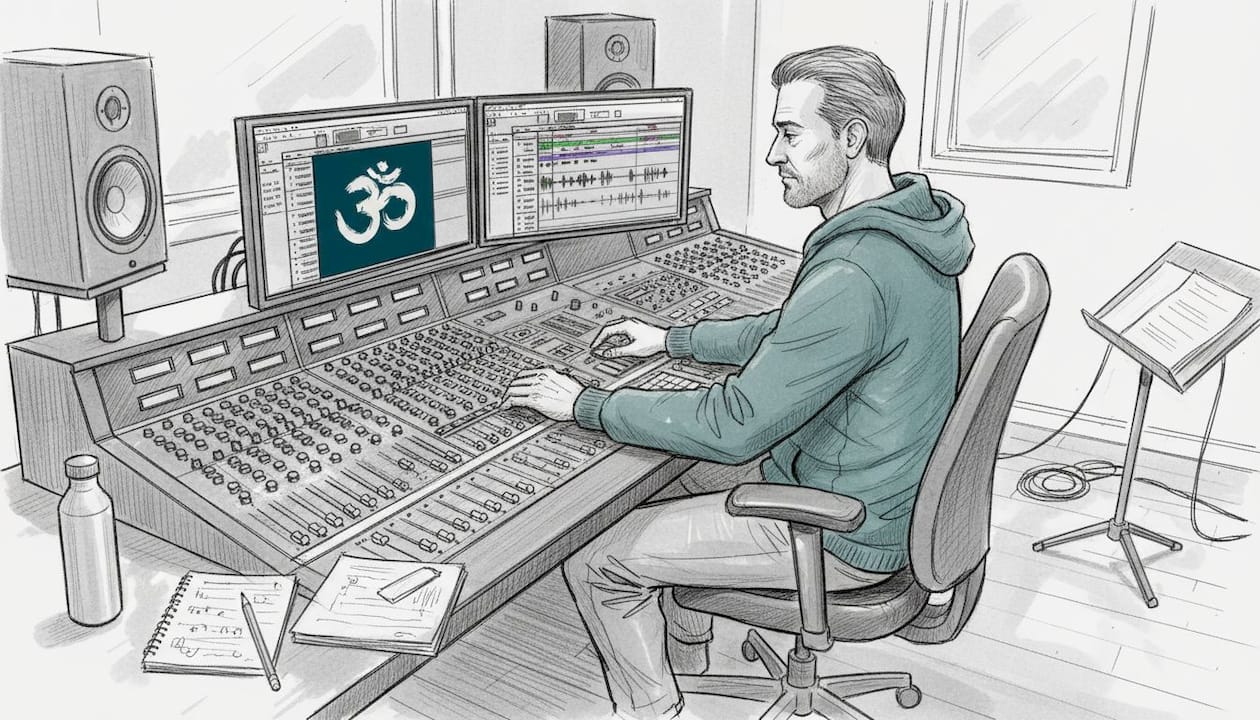
The first thing to look for is the source of the sound itself. Acoustic instruments produce what are called overtones, the rich, layered frequencies that sit above the fundamental note being played. These overtones interact with the human nervous system in ways that synthesised sound simply cannot replicate. A violin string vibrating in a room creates physical air movement. A digital approximation of that same note does not. That distinction matters enormously for relaxation outcomes.
Beyond instrumentation, orchestral meditation criteria include several compositional qualities that determine whether a piece of music actually facilitates a meditative state:
- Harmonic complexity: Music with layered harmonic content engages the brain’s pattern-recognition systems in a gentle, sustained way, preventing the mental restlessness that silence or repetitive loops can trigger.
- Breath-aligned dynamics: Effective compositions ebb and flow in volume and intensity to mirror natural breathing rhythms, guiding the listener’s nervous system rather than demanding it keep up.
- Frequency specificity: Certain frequencies carry measurable physiological effects. The healing frequencies guide explains how 528Hz is associated with cellular repair and 174Hz with pain reduction, both of which can be intentionally embedded within orchestral compositions.
- Emotional arc: A well-curated piece moves through tension and resolution in a way that mirrors and then deepens the listener’s relaxation journey.
The empirical evidence behind these criteria is genuinely striking. Live instrumental textures reduce cortisol by 22% more than digitised tones, according to a 2022 study. Separate research has linked orchestral listening to enhanced expression of dopamine-related genes and measurable reductions in inflammatory markers. These are not small effects.
Personalisation matters too, and this is where curation becomes genuinely nuanced. A violin anxiety study found that major-key violin music produces the strongest anxiety reduction in listeners who arrive in an anxious state, while piano-centric compositions are better suited to listeners who are already calm and seeking deeper focus. A playlist that ignores this distinction is essentially a lucky dip.
“True curation means every compositional decision, from key signature to dynamic arc to frequency tuning, serves the listener’s physiological and psychological state. It is not decoration. It is design.”
Pro Tip: Before choosing a playlist, take thirty seconds to honestly assess your current state. Are you arriving stressed and wound up, or are you already relatively calm and simply seeking depth? That single question should guide your instrument and key choice before you even consider anything else.
Professional curation also ensures that recordings are made in acoustically appropriate environments. The difference between a track recorded in a world-class studio and one assembled on a laptop is audible, and more importantly, it is felt. The physical resonance of a full ensemble in a proper recording space is part of what makes orchestral meditation music work at a neurological level.
Top curated orchestral meditation playlists for 2026
With these rigorous criteria in mind, here are the standout orchestral meditation playlists purpose-built for relaxation in 2026. Each one has been selected based on compositional intent, acoustic quality, and the specific outcomes it is designed to produce.
-
SAMSARA
SAMSARA is one of the flagship compositions from Orchestral Meditations, specifically designed for deep relaxation and inner stillness. The piece uses a sustained string-led harmonic foundation with slow, breath-aligned dynamic shifts. It is particularly effective for listeners who need to transition from a high-stress state into meditation, as the emotional arc moves deliberately from mild tension into profound release. The frequency tuning incorporates elements aligned with theta brainwave entrainment, making it ideal for those practising deeper, eyes-closed meditation. -
KAILASH
Named after the sacred Himalayan peak, KAILASH is composed for listeners seeking a sense of expansive stillness rather than active relaxation. The orchestration is broader and more spacious than SAMSARA, drawing on best meditation tracks principles of symphonic scale to trigger what researchers describe as the “awe response.” This physiological state, characterised by a sense of vastness and reduced self-referential thought, is associated with lowered inflammation and heightened mindfulness. KAILASH suits experienced meditators and those using music for spiritual practice. -
Entrance of the Shades
This composition leans into the more classical end of the orchestral spectrum, using a rich string and woodwind palette to create a slow, ceremonial quality. It is well suited to body scan meditations and yoga nidra practices, where the music needs to hold space without demanding attention. The top meditation music selection process identified this piece as particularly effective for listeners who find purely ambient music too sparse to anchor their attention. -
Frequency-specific healing compositions
Beyond named pieces, Orchestral Meditations offers a range of tracks built around specific healing frequencies. These draw on frequency meditation techniques and are particularly useful for listeners with specific therapeutic goals, whether that is pain management, emotional processing, or sleep preparation. The classical relaxation study supports the use of this type of music for measurable physiological outcomes.
Pro Tip: Structure a forty-five-minute session by opening with a frequency-specific track to settle the nervous system, moving into SAMSARA for the main meditation, and closing with five minutes of KAILASH to gently bring awareness back to the room. This arc mirrors the natural stages of a guided meditation without requiring a human voice.
A few things to look for across all of these:
- Recording environment: Abbey Road Studios quality matters for physical resonance.
- Instrument variety: A range of strings, woodwinds, and brass creates the harmonic complexity the brain needs.
- Absence of jarring transitions: Effective playlists flow without abrupt changes in tempo or key.
Comparing the best: Features, science, and outcomes
Choosing the right playlist depends on specific goals and contexts. Here is a head-to-head comparison of the leading options.
| Playlist | Primary instruments | Frequency focus | Best for | Relaxation depth |
|---|---|---|---|---|
| SAMSARA | Strings (violin, cello) | Theta / 528Hz | Stress relief, transition to meditation | Deep |
| KAILASH | Full orchestra | Awe response / symphonic scale | Experienced meditators, spiritual practice | Very deep |
| Entrance of the Shades | Strings, woodwinds | Classical harmonic | Body scan, yoga nidra | Moderate to deep |
| Frequency healing tracks | Mixed ensemble | 174Hz, 528Hz, 639Hz | Therapeutic goals, sleep, pain | Targeted |
The statistics behind these choices are worth pausing on. A study using Tissue Pulsatility Imaging found that relaxing classical music significantly decreased brain reactivity compared to silence, which overturns the common assumption that silence is the gold standard for meditation. The brain, it turns out, responds rather well to being given something beautiful and complex to rest against.
For deep relaxation music, the key outcomes to consider are:
- Cortisol reduction: Acoustic orchestral music outperforms digital by 22%, making it the clear choice for stress-related meditation goals.
- Brain Tissue Pulsatility: Classical music reduces neural reactivity, supporting deeper, less interrupted meditative states.
- Dopamine gene enhancement: Orchestral listening has been linked to upregulation of dopamine-related genes, contributing to the sense of wellbeing and motivation that follows a good meditation session.
- Inflammation reduction: The awe response triggered by symphonic scale lowers inflammatory markers, with KAILASH being particularly well positioned for this outcome.
For listeners dealing with anxiety specifically, the violin-led compositions in the SAMSARA family are the evidence-based choice. For those who are already calm and seeking transcendence, KAILASH’s full orchestral scale is where the real magic happens.
Choosing your ideal playlist: Matching to intent and situation
Armed with these comparison insights, here is how you can select or combine playlists to suit your meditation intent.
| Goal | Recommended playlist | Key feature | Supporting evidence |
|---|---|---|---|
| Stress relief | SAMSARA | Violin-led, major key, theta | Cortisol reduction, anxiety study |
| Deep meditation | KAILASH | Full orchestra, symphonic scale | Awe response, inflammation reduction |
| Body scan / yoga nidra | Entrance of the Shades | Strings and woodwinds, ceremonial pace | Classical harmonic structure |
| Therapeutic / healing | Frequency healing tracks | 174Hz, 528Hz, 639Hz | Cellular repair, pain reduction |
| Focus and calm | Piano-centric compositions | Non-anxious state optimisation | Violin/piano personalisation study |
Violin and major keys are optimal for anxiety reduction, while piano suits calmer states, and symphonic scale triggers the awe response that lowers inflammation. Knowing this means you are not guessing. You are choosing with intention.
Here is a simple decision workflow for getting started:
- Assess your state: Spend thirty seconds noticing whether you feel anxious, neutral, or already calm before you sit down.
- Select your goal: Are you meditating for stress relief, spiritual depth, physical healing, or focus?
- Choose your playlist: Use the table above to match state and goal to the appropriate composition.
- Run a test session: Commit to one full session without switching tracks. Your nervous system needs time to respond.
- Adapt based on results: Notice how you feel in the twenty minutes after the session. Adjust your choice next time based on what you observe.
For beginners, the simplest starting point is SAMSARA for the first two weeks. It is accessible, deeply effective, and provides a reliable baseline from which to explore the broader library. You can read more about the music healing benefits that support this approach. Once you feel comfortable with the format, introduce KAILASH for your longer weekend sessions and notice the difference in depth. The best meditation music resource is a useful companion for this exploration.
Why true curation and orchestral scale matter more than ever
Here is something I think gets lost in the conversation about meditation music: the word “curated” has been so thoroughly hijacked by algorithm-driven playlists that it has almost lost its meaning. When a streaming platform tells you it has curated a relaxation playlist, what it usually means is that a recommendation engine has grouped together tracks with similar tempo and loudness metadata. That is not curation. That is sorting.
Real curation, the kind that actually moves the needle on your meditation practice, requires someone to understand the emotional arc of a session, the physiological response to specific harmonic intervals, and the way breath naturally moves through different states of relaxation. Algorithms do not know that your exhale is longer than your inhale when you are anxious. A thoughtful composer does.
The acoustic overtones produced by live instruments massage cells at a physical level, the brain filters out repetitive digital loops as background noise over time, and symphonic scale triggers the awe response that lowers inflammation. These are not poetic claims. They are measurable outcomes that why acoustic curation works explains in detail.
Most meditation apps shortcut this entirely. They favour short, easily digestible tracks that keep engagement metrics high. What they sacrifice is the sustained, evolving harmonic journey that the brain actually needs to reach genuine neural relaxation. Full orchestral curation, with its diversity, complexity, and intentional design, is not a luxury. It is the mechanism by which the music actually works.
Explore more curated meditation music
If you have made it this far, you already know that the playlist you choose for your meditation practice is not a trivial decision. It is a tool, and like any tool, the quality of the craftsmanship determines the quality of the result.
Orchestral Meditations offers a library of curated orchestral playlists recorded at Abbey Road Studios with the National Philharmonic, each one composed with specific relaxation and mindfulness outcomes in mind. Whether you are after deep stress relief, spiritual depth, or targeted frequency healing, the top meditation music collection has something designed precisely for your needs. Browse the full library, find the compositions that match your meditation goals, and give your practice the acoustic foundation it deserves. Your nervous system will thank you rather promptly.
Frequently asked questions
What makes a meditation playlist ‘curated’?
A curated playlist is intentionally designed by experts who consider composition, frequencies, and listener outcomes rather than simply grouping tracks by tempo or mood. True curation aligns every musical decision with breath dynamics and relaxation physiology.
Is there a scientific basis for orchestral meditation music?
Absolutely. A 2022 study found that live orchestral textures reduce cortisol by 22% more than digitised tones, and TPI imaging research shows classical music measurably reduces heart rate and brain reactivity compared to silence.
How do I choose the right playlist for my needs?
Match your current state and goal to the appropriate composition: major-key violin is best for anxiety reduction, piano-centric tracks suit calmer states, and full symphonic compositions like KAILASH are ideal for deep or spiritual meditation.
Why not use popular meditation apps instead of curated orchestral playlists?
Popular apps favour short digital tracks optimised for engagement metrics rather than relaxation depth. Acoustic overtones in orchestral music produce measurably superior cellular and emotional effects compared to the repetitive digital loops that most apps rely on.