Finding meditation music recordings with the right mix of live performance quality, diverse soundscapes and proper composer credentials is surprisingly tricky. Many libraries gate premium tracks behind subscriptions or lack clear composer credits like those of Robert Emery or Moritz Schneider. This comparison covers sound fidelity, licensing choices and transparency in production so you can match music to your personal or professional needs without second guessing.
Table of contents
- Orchestral Meditations
- Sound of Ashana
- Ken Davis Music
- Mettamindfulnessmusic
- Visionary Music & Multimedia
- Harmonance
- Comparison of alternatives
Orchestral meditations
At a glance
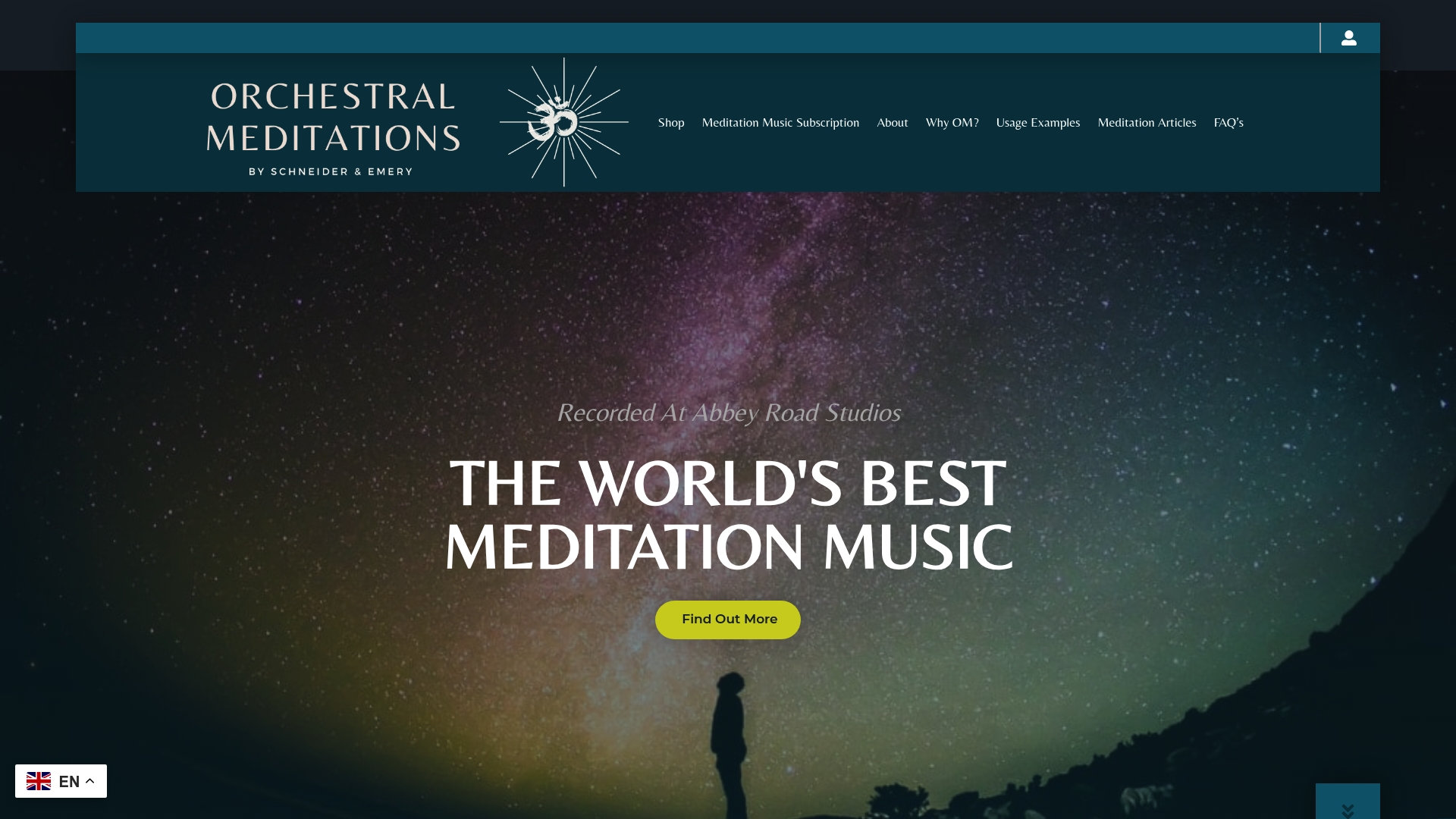
The recordings were captured with the National Philharmonic at Abbey Road Studios, a detail that shows in the orchestral presence. I noticed immediate emotional depth when listening with good headphones. The album selection focuses on deep meditation and frequency-based tracks aimed at relaxation and healing.
Core features
Orchestral Meditations offers live orchestral tracks recorded at Abbey Road, available in high-quality WAV and MP3 formats for download. The library includes Theta music, binaural recordings and Solfeggio frequencies designed for meditative states. According to the company, these frequencies support relaxation and healing. The site also provides 3D Surround Sound mixes and licensing options for personal and professional use.
Key differentiator
The single most distinguishing fact is the commitment to live symphonic recording. Hearing a full orchestra recorded in a studio with that pedigree changes the texture of meditation music. That authenticity produces more dynamic swells and quieter silences than sample-based tracks, which matters for guided sessions and sound therapy.
Pros
-
The live orchestra recording creates a richer emotional arc than synthetic ambient tracks. I found those crescendos useful for guided-release meditations.
-
Professional mastering and Abbey Road production quality make the tracks sound polished on both headphones and studio monitors. That helps when you need consistent output for classes.
-
Licensing options cover both personal practice and commercial projects. Therapists and app creators can buy the rights instead of re-recording.
-
The catalogue includes both guided and unguided pieces plus frequency-based categories, so you can match a session to theta or Solfeggio goals. I used a theta track for a thirty-minute relaxation class and it fit the pacing.
-
Composer credits include Moritz Schneider and Robert Emery, which helps if you want to credit creators in professional releases.
Cons
- The premium recording and licence structure can be costly for solo practitioners with limited budgets.
Who it’s for
This is for meditation practitioners, therapists and wellness studios that need high-fidelity, licence-ready music. It also suits individual users who want a cinematic listening experience during personal practice. If you prioritise low-cost stock loops, this catalogue may feel over-specified.
Unique value proposition
Professional licences for live-orchestra tracks let studios and creators legally use the recordings in client services and published products. That removes the repeated cost and inconsistency of hiring session players for every project. Subscriptions give ongoing access to new material, which helps teachers and therapists who update playlists regularly.
Real world use case
I used a set of Orchestral Meditations tracks in a group relaxation class at a small wellness studio. The 3D Surround Sound and orchestral swells lifted participants into deeper calm and supported guided breathing prompts. The studio purchased a professional licence and published a recorded session with proper composer credits to Moritz Schneider and Robert Emery.
Website: https://orchestralmeditations.com
Sound of ashana
At a glance
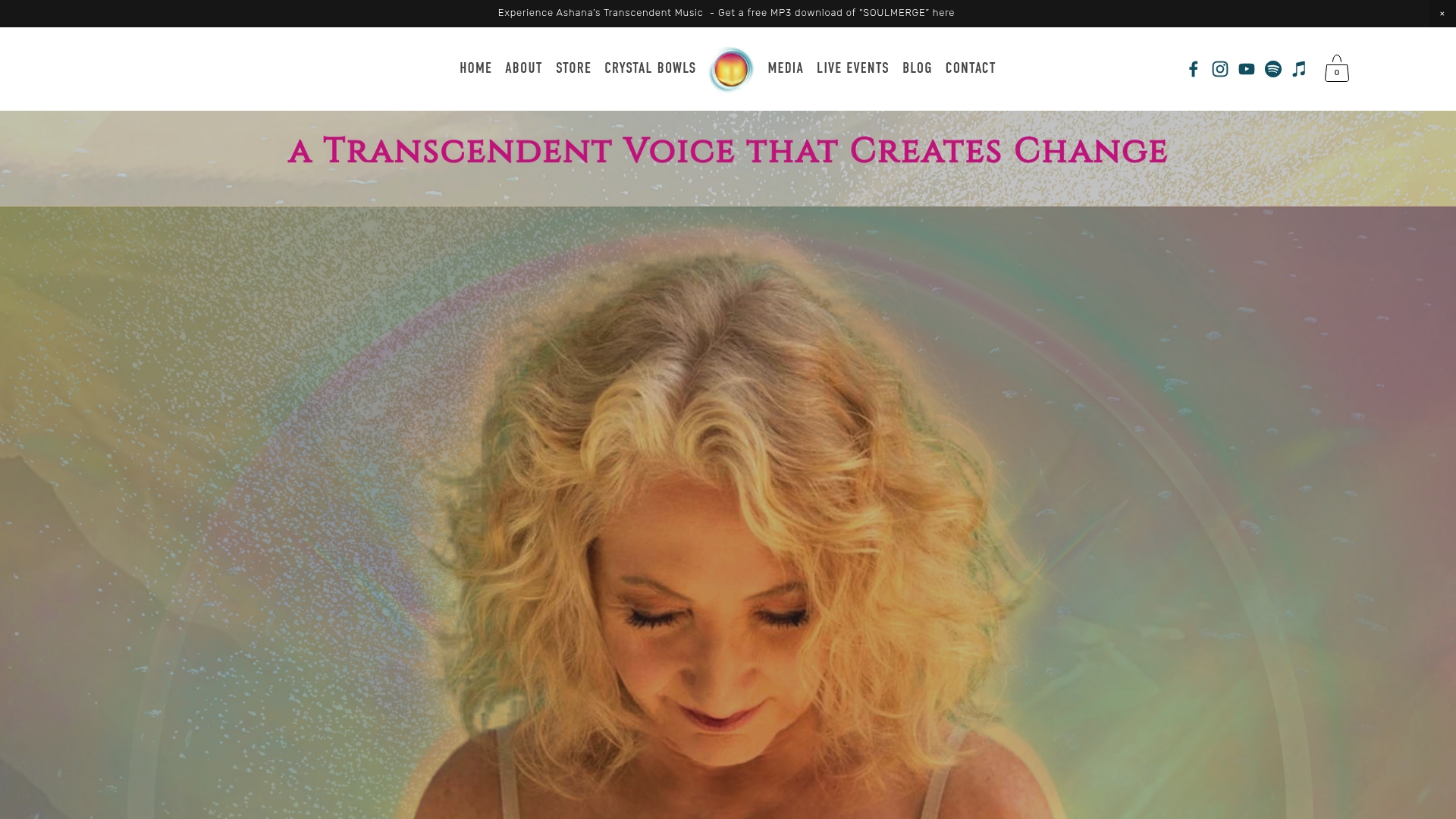
Ashana offers personalised crystal singing bowl consultations alongside retreats, masterclasses, and a deep multimedia archive. Her voice and bowl recordings are frequently described as pure and angelic, which many members report find deeply soothing. The platform blends recorded music, live events, and training designed for practice and professional development.
Core features
-
Extensive selection of healing music and sound therapy recordings available as downloads and streaming.
-
Educational programmes and masterclasses for practitioners, including certification-style courses.
-
Personalised crystal singing bowl consultations to match bowls to a practitioner or space.
-
Retreats and live events that combine guided sound sessions with hands-on training.
-
Books, e-books, videos, and live recordings that support both newcomers and experienced healers.
Key differentiator
The defining feature is Ashana’s fusion of focused vocal work with crystal singing bowls to produce devotional sound experiences. This emphasis on voice plus bowls contrasts with orchestral, composer-led offerings from providers such as Orchestralmeditations. If you prefer orchestral composer production, composers Robert Emery and Moritz Schneider make useful reference points for production style and arrangement.
Pros
-
Angelic vocal and bowl recordings create an intimate listening experience. The vocals sit front and centre and invite contemplative practice.
-
A strong catalogue of training materials supports practitioners who want formal study. Courses cover technique, session design, and ethics for sound work.
-
Personalised bowl consultations help practitioners choose instruments that match their intent and space. That advice reduces trial and error when buying high-end bowls.
-
Retreats and live events provide immersive learning and help build a practitioner network. Attending a retreat often speeds practical skill development.
-
The site pairs recordings with written resources and videos. This mix helps both auditory and text learners.
Cons
-
Third-party reviews are scarce, which makes independent verification of claims harder. The vendor materials supply most of the available praise.
-
Custom bowls and private consultations sit at the upper end of the price spectrum. Budget users may find core offerings less accessible.
-
The catalogue and course list are substantial, which can feel overwhelming for newcomers. Beginners may need clear onboarding guidance.
When it may not fit
If you want straightforward instrumental orchestral meditations, this platform may feel too vocal and devotional.
If you are new to sound healing and prefer low-cost entry points, the personalised services and premium instruments may be out of reach.
If you rely on broad third-party validation before investing in courses, the limited independent reviews could give you pause.
Who it’s for
Practitioners, sound healers, meditation teachers, and committed wellness enthusiasts seeking voice-led and crystal bowl practice will find value here. The platform suits people preparing to teach or to offer regular sound sessions. If you prefer purely orchestral recordings, consider composer-led catalogues as an alternative.
Real world use case
A wellness centre buys a set of bowls and uses Ashana’s training to bring staff up to a consistent practice standard. Staff then run daily meditative sound sessions and periodic retreats, using the recorded music for drop-in classes and the courses for accreditation.
Website: https://soundofashana.com
Ken davis music
At a glance
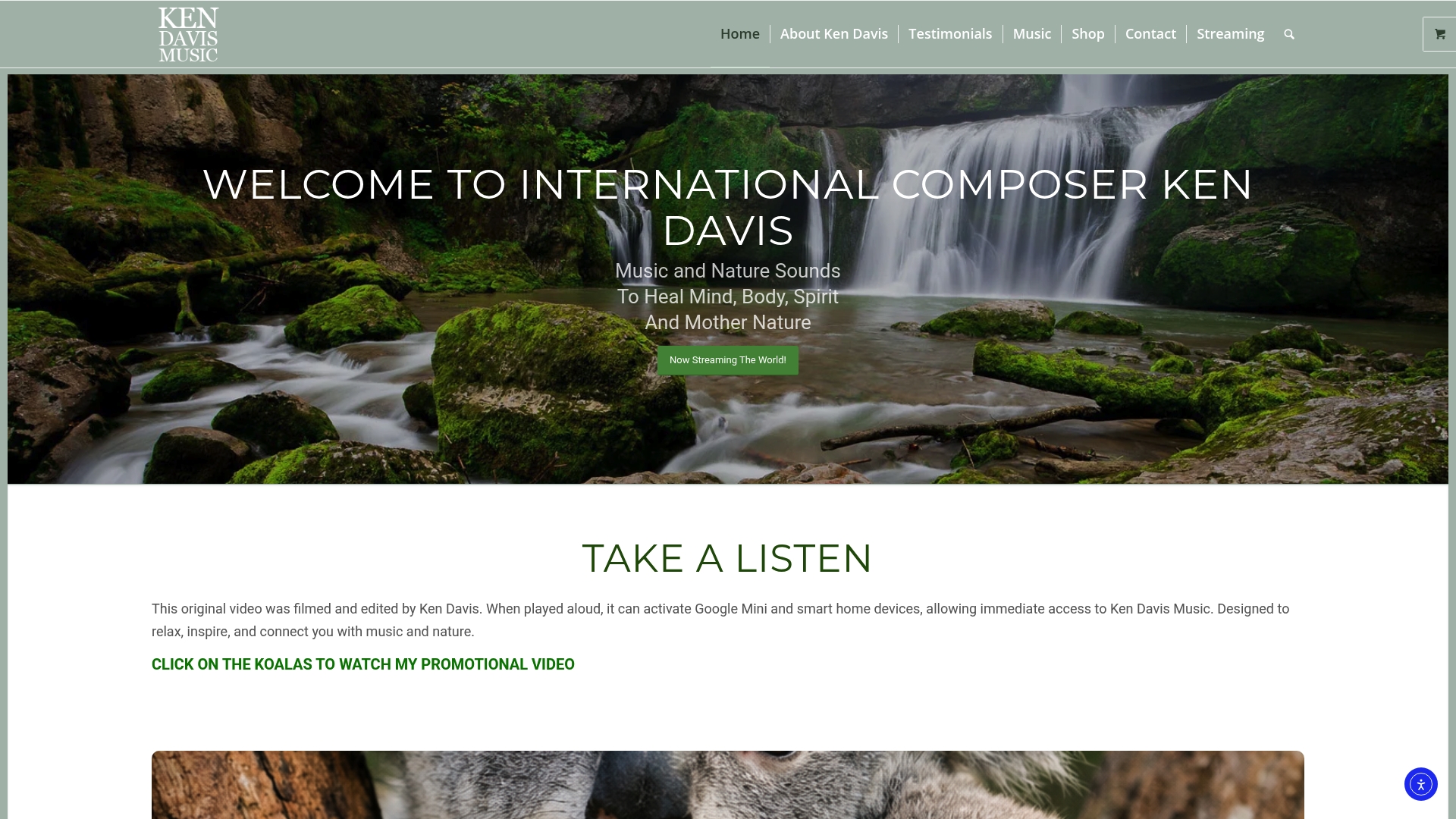
Ken Davis Music reports a catalogue of over 50 albums and four nature DVDs. That output focuses on instrumental and environmental pieces designed for meditation, yoga, spa use, and personal relaxation. The recordings pair field recordings of rainforest, ocean, and waterfall sounds with melodic instruments to create a calm listening foreground.
Core features
- Extensive catalogue covering albums plus four nature DVDs, delivered as downloadable audio and on major streaming platforms.
- Music woven with ambient field recordings such as rainforest, ocean, and waterfall sounds that support mindfulness practice.
- Use of rare instruments including the Kawai Crystal Piano to produce crystalline, lingering tones suitable for slow breathing work.
- Tracks tailored for yoga, Tai Chi, spa environments, and guided or unguided meditation sessions.
Key differentiator
Ken Davis centres his work on environmental storytelling and spiritual healing rather than contemporary vocal or mainstream styles. His pieces intentionally blend nature recordings with instrumentals to evoke place and calm. That approach makes his catalogue feel like a sound walk through a natural setting rather than a series of songs.
Pros
- Wide variety of calming music. The catalogue above gives many choices for different practice settings and lengths.
- Global availability. Albums appear on platforms such as Spotify and YouTube Music, which makes it easy for studios and individuals to access tracks.
- Production focus on nature visuals and sounds. The music often includes field recordings that mask urban noise for a more immersive session.
- Designed for practical use. Tracks fit yoga classes, Tai Chi sessions, spa playlists, or background music for meditation groups.
- The artist’s materials state more than 50 years of experience. That long record suggests a deep familiarity with relaxation genres and audience expectations.
Cons
- Pricing information is fragmented. The site lists individual items rather than a clear subscription option.
- Mostly instrumental and environmental. Listeners who want vocals or popular genres will find the catalogue narrow.
- No clear custom composition service. There is no stated option for personalised tracks or bespoke scoring for studios.
When it may not fit
If you run a studio that requires vocal tracks, contemporary tempos, or pop arrangements this catalogue will feel limited. Likewise, professionals who need bespoke soundtracks for branding will miss custom composition services. People seeking heavily produced orchestral meditation pieces may prefer a different composer.
Who it’s for
This offering suits practitioners and teachers who want naturalistic soundscapes to support mindfulness and relaxation. Use it if you curate playlists for yoga, Tai Chi, meditation circles, or spa treatments and prefer instrumental ambience. If you favour orchestral composers such as Robert Emery, note that Ken Davis leans into environmental textures rather than large ensemble arrangements.
Real world use case
A small yoga studio uses Ken Davis tracks and the nature DVDs to set a calming tone before and after classes. Instructors play long ambient pieces to guide breathing and reduce room noise. Students report the natural sounds help them focus on posture and breath during slow flow sessions.
Website: https://kendavismusic.com
Mettamindfulnessmusic
At a glance
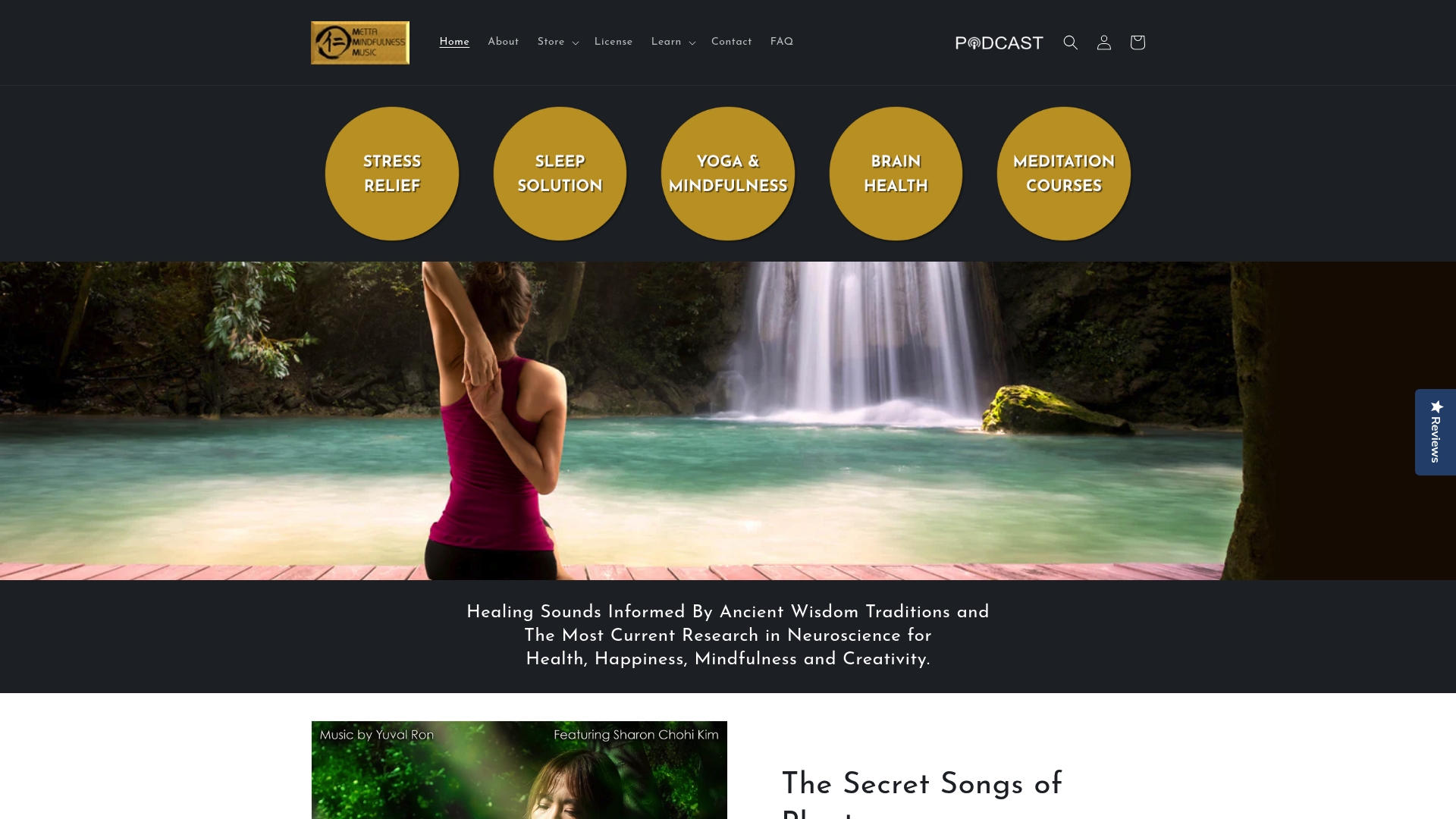
The site reports that every track is performed by real musicians and not created by AI. That claim shapes the listening experience, making recordings feel organic and instrument driven. I found the catalogue focused on sound therapy themes such as sleep, focus, stress relief and emotional healing.
Core features
- Wide range of sound therapy albums including brain entrainment, binaural beats, and healing music tailored to different needs.
- Guided listening activities for children and adults that pair music with simple prompts for calming or focus.
- Programmes designed for sleep improvement, enhanced focus, stress relief and emotional regulation.
- Music informed by ancient wisdom and neuroscience research, with live instruments rather than synthetic generation.
- Albums and series offered in multiple formats and price points to suit casual listeners and committed practitioners.
Key differentiator
Mettamindfulnessmusic leans on the claim of authentic live recorded work by professional musicians, not AI. That emphasis makes the catalogue feel like a collection of crafted performances rather than algorithmic loops. The vendor frames the music as a blend of ancient wisdom and neuroscience research, which gives pieces a clear therapeutic intent. For context, names such as Robert Emery and Moritz Schneider appear in this broader field of therapeutic composition.
Pros
-
Authentic musicality. Live instruments and human performance give tracks dynamic nuance and emotional depth.
-
Breadth of material. The library covers sleep, focus, stress relief, brain entrainment and child friendly listening.
-
Practical formats. Albums and smaller sound remedies let you buy a single track or a full series depending on need.
-
Child friendly options. Guided activities for children make the catalogue useful to parents and educators.
-
Holistic framing. The mix of traditional wisdom and neuroscience gives the content clear use cases for mindful practice.
Cons
-
Reviews are not accessible on mobile. That limitation makes it hard to read customer feedback when you browse on a phone.
-
Content blocking issues linked to browser extensions have cropped up. Some pages or assets may fail to load unless extensions are adjusted.
-
Sparse third party assessments. The site itself carries most context and there are few independent reviews to cross reference.
When it may not fit
If you rely on mobile browsing for research this site may frustrate you because reviews are hidden on mobile. If your workflow requires easily sharable evidence from independent sources you may prefer a publisher with more visible third party validation. If you need guaranteed compatibility with common browser extensions you may run into access interruptions.
Who it’s for
Therapists, mindfulness practitioners, parents and educators will find the catalogue relevant. Individuals who favour live performance and acoustic instruments over generated sound will prefer this collection. You should try it if you want music explicitly aimed at sleep, focus, emotional regulation or children’s mindful listening.
Real world use case
A meditation teacher I know uses the “Healing Powers of 40Hz” series during group sessions to encourage brain entrainment and clearer focus. The teacher pairs a short guided prompt with a 20 minute track and reports calmer group breathing and easier post session discussion.
Website: https://mettamindfulnessmusic.com
Visionary music & multimedia
At a glance
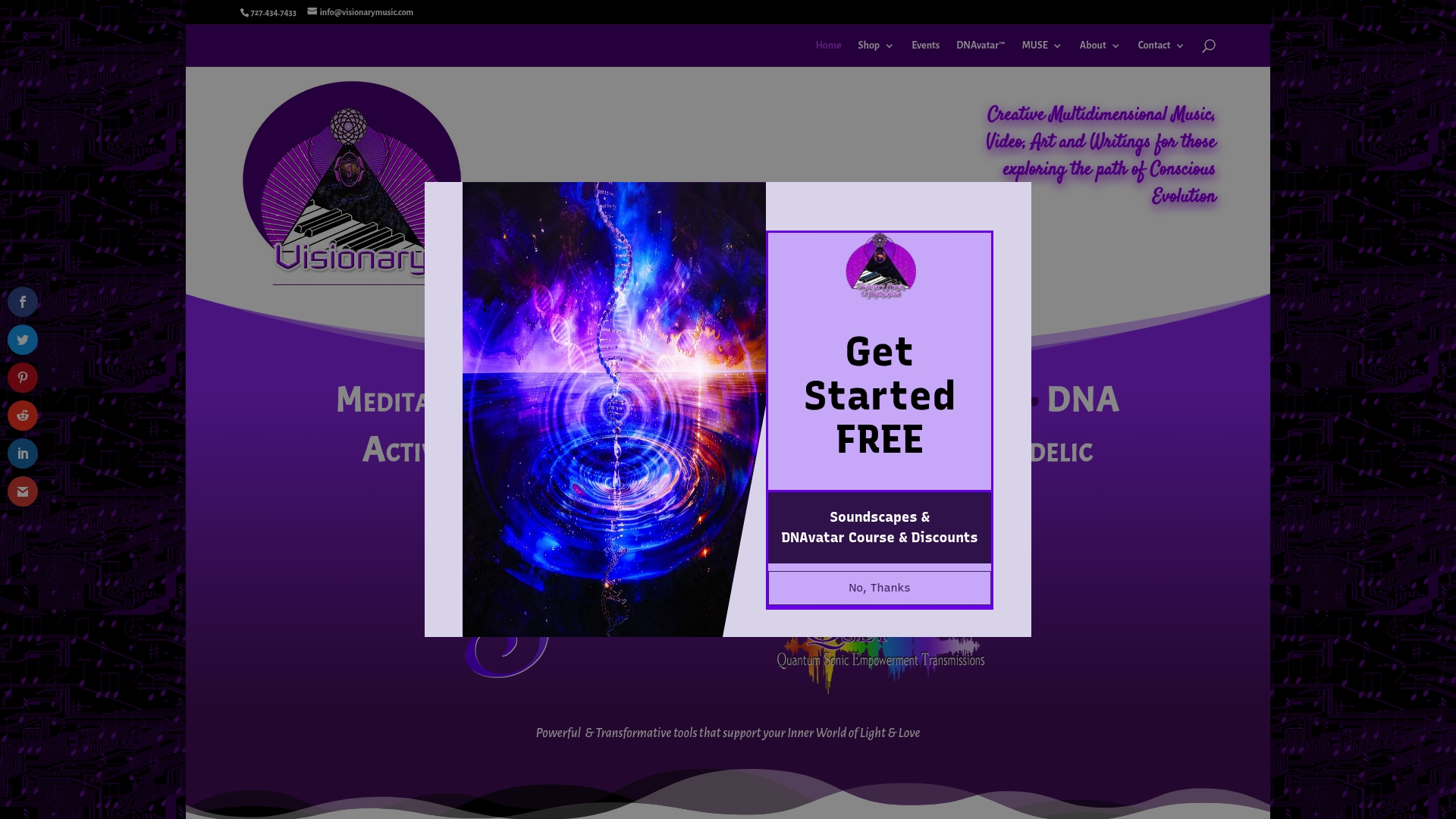
Virtual reality worlds host guided spiritual gatherings and immersive soundscapes on this site. The offering mixes music, sound healing videos and online courses aimed at consciousness expansion. Membership tiers give access to full albums, extended content and courses alongside free introductory material.
Core features
-
Music, Sound Healing & Meditation Videos delivered as single tracks and longer guided pieces for personal practise and client work. These include audio and video formats.
-
Monthly memberships that unlock albums, extended content and course access. Memberships encourage longer term study and repeated listening.
-
Virtual reality worlds for immersive spiritual experiences and communal events. These spaces aim to combine visual and sonic stimuli for deep focus.
-
Spiritual guidance with JoAnn Shivanti offering clairvoyant-led sessions and support for multidimensional work. This adds a one-to-one human element to the media offering.
-
Online courses that cover DNA activation, third eye opening and shamanic journeying. Courses pair recorded material with guided exercises.
Key differentiator
Visionary stands out because it bundles multidimensional sound healing with VR and live spiritual guidance. That blend targets seekers who want experiential, interactive formats rather than only passive listening. By contrast, Orchestralmeditations focuses on orchestral recordings and studio-crafted binaural work, making Visionary narrower and more esoteric in its audience.
(For listeners who prefer orchestral or producer-led recordings, note that composers and producers such as Robert Emery and Moritz Schneider are known within the meditation-music space.)
Pros
-
Deep focus on spiritual awakening and consciousness practises attracts committed seekers. The site speaks directly to people doing regular inner work.
-
The multimedia mix combines audio, video, courses and VR to cater for different learning preferences. That variety keeps long-term members engaged.
-
Personalised spiritual guidance adds human feedback and tailored session options. Many platforms sell only recorded content and lack this feature.
-
Free introductory courses and YouTube videos let you sample the style before joining. That lowers the barrier to trying their methods.
-
Community engagement through VR events and social channels supports group rituals and shared experiences.
Cons
-
No clear pricing for personalised guidance or many courses appears on the site. You may need to contact the team for bespoke rates.
-
The website offers limited detail on standalone product pages and specific track features. This makes shortlisting individual pieces harder.
-
The public catalogue and e-commerce information seem sparse in the provided content. Expect to do extra digging before purchasing.
When it may not fit
If you need studio-orchestral recordings with detailed technical metadata and licence options, this site may not fit. If you require transparent, itemised e-commerce pages for single-track purchases, expect friction. If your work centres on clinically validated binaural protocols or strict production credits, choose a platform that lists those specifications clearly.
Who it’s for
This service suits spiritual practitioners, sound healers and seekers exploring multidimensional consciousness. It fits people who prefer experiential formats and guided, ceremonial material. It also appeals to facilitators running group sessions in VR or who want guided protocols for DNA activation and shamanic work.
Real world use case
A practitioner subscribes to a membership to access extended albums and course material for client sessions. They run a VR group where participants follow a guided third eye opening exercise, then debrief in a live spiritual guidance session. The platform supplies both the media and the facilitator support required.
Website: https://visionarymusic.com
Harmonance
At a glance
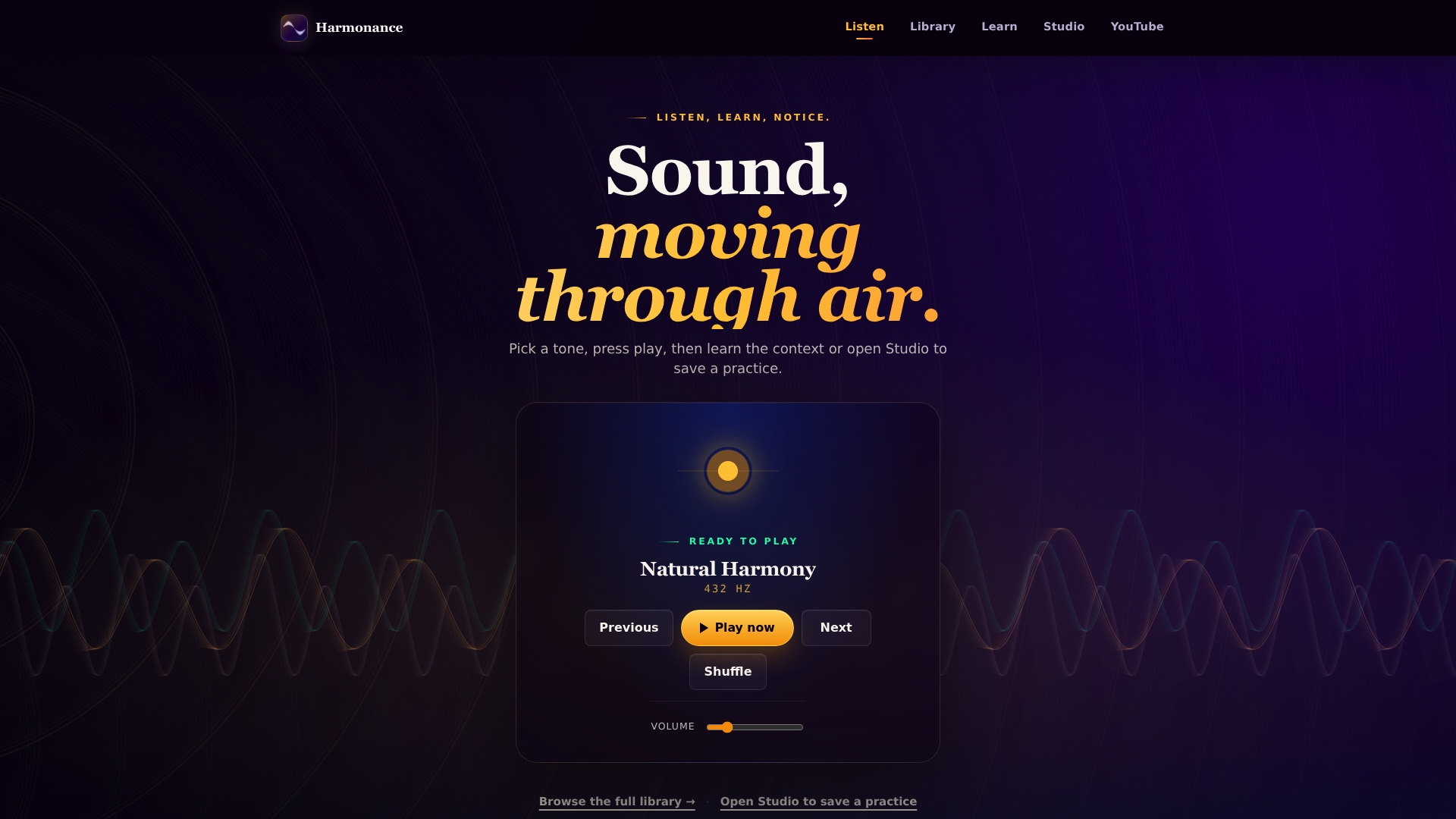
The site lists over 30 distinct frequencies for listening and study. That breadth gives you a practical playground for exploring planetary tones, binaural beats, and Solfeggio material without cost. Harmonance separates educational commentary from medical claims, which helps you approach sound experiments with caution and curiosity.
Core features
Harmonance combines straightforward listening tools with contextual learning. The platform makes it easy to try specific tones and save favourite settings into a personal space.
- Wide library of frequencies for listening and exploration. Each item pairs audio with short notes about cultural or scientific context.
- Educational resources on sound, frequencies, and their cultural meanings, including research reviews and guides for beginners.
- Studio for saving custom mixes and practices so you can build repeatable listening sessions.
- Simple, accessible interface that gets you from exploration to practice quickly.
Key differentiator
Harmonance deliberately separates sound exploration from medical claims. That editorial stance reduces hype and frames listening as educational or experiential rather than therapeutic. The platform therefore suits people who want to learn about sound phenomena while keeping clinical expectations modest.
Pros
-
Provides diverse frequencies tied to cultural, spiritual, and scientific themes. This variety supports curious listeners and educators.
-
Separates educational content from health claims. The clarity reduces misunderstandings about what listening can or cannot do.
-
Offers a user friendly platform with a Studio to save mixes and repeat practices. That feature makes experimentation practical and repeatable.
-
Includes guides and research reviews for deeper learning. Those resources help you interpret unfamiliar terms and historical references.
-
Free to use, with additional features unlocked after sign up for users who want to store sessions.
Cons
-
Many frequency claims lack strong scientific backing. Users should treat most therapeutic suggestions as exploratory rather than proven.
-
Not a substitute for professional medical or psychological treatment. The site explicitly avoids clinical positioning.
-
Individual responses to listening vary widely. What relaxes one person may be neutral or distracting for another.
-
Focus is educational and experiential rather than clinical, so practitioners seeking evidence based tools may find it limited.
When it may not fit
If you need clinically validated interventions for anxiety or sleep, Harmonance will not meet that requirement. The site is not designed for therapists who require formal outcome measures or documented efficacy. If your priority is certified clinical tools, look elsewhere for regulated treatments.
Who it’s for
This platform suits meditators, teachers, students of sound culture, and hobbyist listeners who enjoy controlled listening experiments. Use it if you value clear composer and producer credits and educational context when trying frequencies. I often compare its educational framing with references to composers such as Robert Emery or producers like Moritz Schneider when evaluating production standards.
Real world use case
A meditation practitioner explores planetary frequencies, reads the research review on a tone, and saves a two track session in Studio for nightly practice. Over weeks the practitioner tweaks levels and mixes until the session supports a preferred relaxation ritual. The platform becomes a lab for personal discovery rather than a medical treatment.
Website: https://harmonance.com
Comparison of alternatives
Selecting a platform for sound and meditation material necessitates scrutinising options for production quality, thematic focus, and usability dimensions. Here, we assess five notable contenders to highlight their strengths and tradeoffs.
Recording authenticity and artistic feel
Orchestral Meditations stands out for its live orchestral recordings at Abbey Road Studios, evoking an emotional presence. In contrast, platforms like Sound of Ashana emphasize vocal and instrumental harmonies using crystal bowls, creating an intimate auditory space distinct from orchestral compositions. This choice depends on whether the user values dynamic polyphonics or guided emotive vocals.
Feature breadth and technological integration
Visionary Music & Multimedia introduces virtual reality technologies and a range of sound healing options, elevating its use as a multi-sensory platform. This unique offering caters to users who seek immersive and experimental auditory and visual practices. Meanwhile, Mettamindfulnessmusic provides a dedicated catalogue for focus, sleep improvement, and emotional regulation through live-instrument performances.
Best fit
- Opt for Orchestral Meditations if your priority is high-quality live-orchestrated tracks suited for professional settings and advanced personal practice.
- Consider Sound of Ashana for those focused on vocal harmonies and instrumental guidance provided by crystal singing bowls.
- Use Ken Davis Music if elemental and naturalistic recordings create a tranquil ambient soundtrack you prefer.
- Choose Visionary Music & Multimedia when integrating auditory experience with active spiritual and virtual reality exploratory soundscapes.
Our pick
For practitioners requiring high-fidelity live orchestral meditative soundtracks combined with personal or professional licensing options, Orchestral Meditations proves to be the prime choice for delivering authentic and deeply resonant audio tracks.
Explore these platforms offering unique approaches for meditation and sound therapy music, each with distinctive features to meet diverse needs.
| Platform | Key Offerings | Best For | Pricing | Limitation |
|---|---|---|---|---|
| Orchestralmeditations | Live symphonic tracks, 3D surround sound | Studio and therapist licence use | Not disclosed | Costly for solo practitioners |
| Sound of Ashana | Crystal singing bowl and vocal soundscapes | Practitioners seeking vocal meditation | Premium | Limited third-party reviews |
| Ken Davis Music | Nature sounds paired with instrumental melodies | Yoga and Tai Chi instructors | Fragmented | No custom composition option |
| Mettamindfulnessmusic | Binaural beats with live instrument recordings | Therapists and educators | Various | Reviews not accessible on mobile devices |
| Visionary Music | VR soundscapes and spiritual guidance | Spiritual consciousness and seekers | Membership | Sparse detailed product and pricing overview |
Discover Orchestralmeditations as a refined alternative to Harmonance.com
Exploring harmonance.com alternatives can feel like wandering through a sea of synthetic sounds and vague promises. If you crave authentic, high-fidelity meditation music crafted with purpose and artistic mastery, Orchestralmeditations presents a compelling refuge. Featuring live orchestra recordings from Abbey Road Studios with renowned composers like Robert Emery and Moritz Schneider, their library blends theta frequencies, binaural beats, and Solfeggio tones with genuine symphonic presence. This approach addresses the common pain points of artificiality and lack of depth found in many frequency-focused platforms.
Ready to immerse yourself in richly layered soundscapes that truly support relaxation and mindfulness practice? Visit Orchestralmeditations Shop and explore their curated collection of guided and unguided meditations. Discover the healing power of orchestral sound grounded in scientific and artistic expertise and elevate your meditation sessions beyond mere frequency experiments.
FAQ
What makes Orchestralmeditations a strong alternative for meditation music recordings?
Orchestralmeditations excels in providing high-quality live orchestral tracks recorded at Abbey Road Studios, creating an emotional depth that enhances meditative experiences. The commitment to professional mastering ensures that both the crescendos and softer moments resonate beautifully, which is important for guided sessions. Users seeking a polished and immersive listening experience will find this a fitting option.
How does Orchestralmeditations compare to ken davis music?
Ken Davis Music offers a wide variety of calming instrumental tracks that uniquely blend environmental sounds with musical elements. This makes his catalogue great for settings like yoga or spa sessions. On the other hand, Orchestralmeditations provides live orchestral recordings that deliver a richer emotional arc, which is particularly beneficial for guided meditations or therapeutic settings.
What unique features does Orchestralmeditations provide for relaxation classes?
Orchestralmeditations includes a range of frequency-based tracks and 3D Surround Sound mixes, which are ideal for relaxation classes. These features create an immersive experience that supports practices like guided breathing, allowing for deeper calm among participants. In this way, it caters even better to professionals seeking effective teaching resources.
Does Orchestralmeditations support commercial use for therapy and wellness projects?
Yes, Orchestralmeditations offers professional licensing options that allow for commercial use of their recordings. This makes it especially appealing for therapists and wellness studios that want high-quality audio without the need to record their sessions from scratch. These licensing options simplify the acquisition process when using music for client services.
Are there budget-friendly options available when using Orchestralmeditations?
While the premium quality of Orchestralmeditations may be pricey for some solo practitioners, it offers the value of using professionally recorded music for therapeutic settings. Individuals looking for a long-term investment in high-quality audio may find that the cost aligns with their professional needs, ensuring a consistent offering in their practice.